An Unexpected Discovery Along a Quiet Forest Road
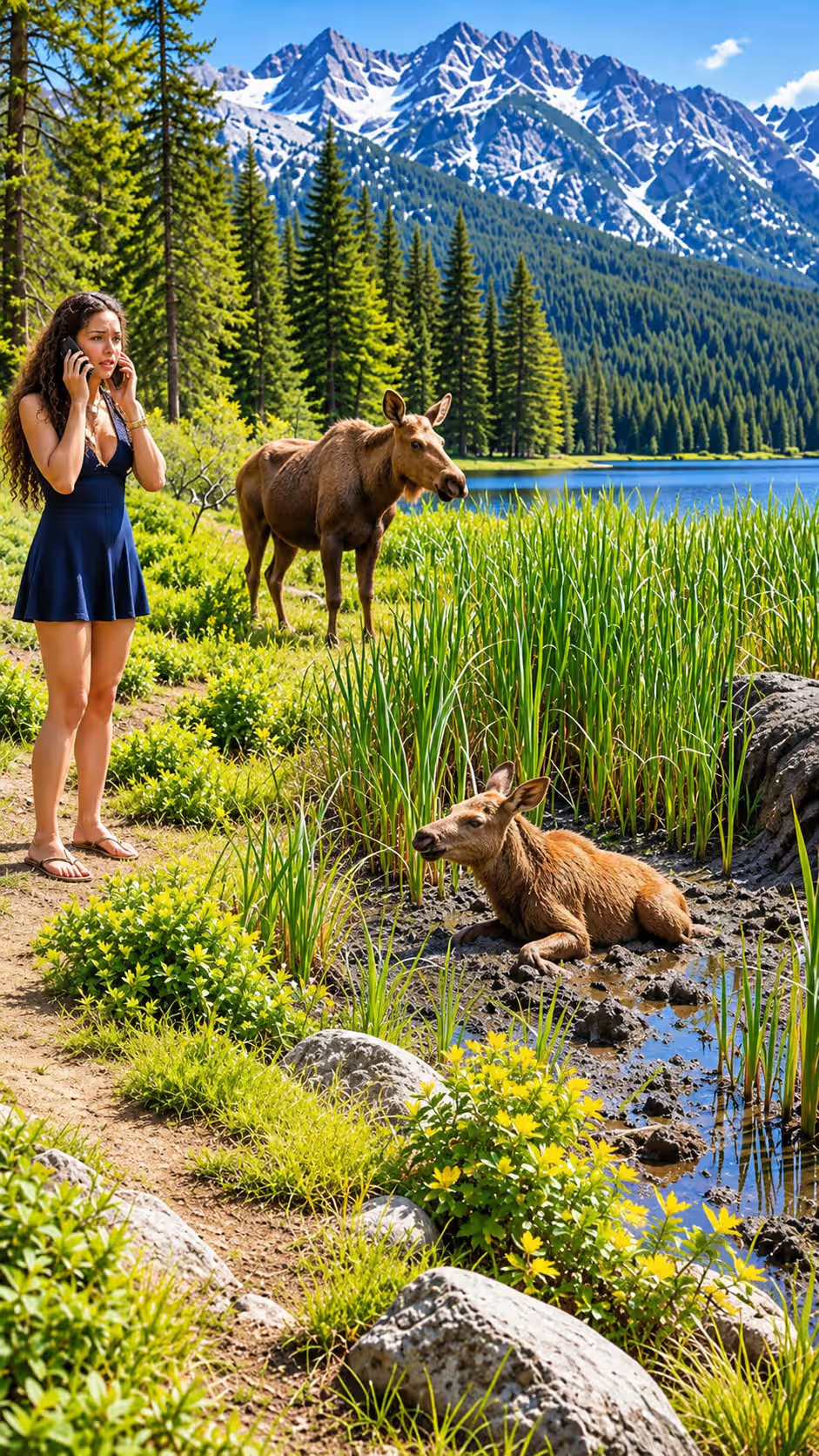
The young moose calf struggled in a narrow drainage ditch beside a remote forest road, its long legs slipping against the muddy ground.
Emma Wilson stopped walking when she heard a faint animal call coming from behind a cluster of bushes.
She moved closer and discovered the calf standing awkwardly in a deep section of the ditch.
Its front legs were pressed against the steep bank, but every attempt to climb ended with the animal sliding backward.
Emma immediately realized that the young moose could not escape without assistance.
She looked around the surrounding forest, aware that the calf’s mother might be nearby.
Rather than approaching the frightened animal, she stepped back and called the local wildlife rescue service.
Within minutes, she was speaking with a rescue coordinator who asked her to remain at a safe distance.
Emma watched the exhausted calf make another unsuccessful attempt to climb as she waited for professional help.
A Morning Walk Through the Northern Forest
Emma had traveled to the northern countryside for a weekend of hiking and wildlife photography.
She enjoyed visiting quiet natural areas where she could observe animals without disturbing their surroundings.
That morning, she followed a gravel road through a forest of spruce, birch, and pine trees.
The weather was cool, and patches of morning fog remained between the trees.
Emma carried a small backpack containing water, snacks, and a camera.
She had planned to spend several hours photographing birds and the changing autumn landscape.
The road passed through a protected woodland area where moose were occasionally seen.
Signs along the route reminded visitors to maintain a safe distance from wildlife.
Emma understood that large animals could react unpredictably, especially when protecting their young.
As she approached a bend in the road, she heard an unfamiliar sound.
At first, she thought it might be a bird calling from the undergrowth.
Then she heard it again.
The sound was lower and seemed to come from the roadside ditch.
Emma stopped and listened carefully.
When she looked through the bushes, she noticed movement near the muddy bank.
A Young Moose Struggles to Climb Out
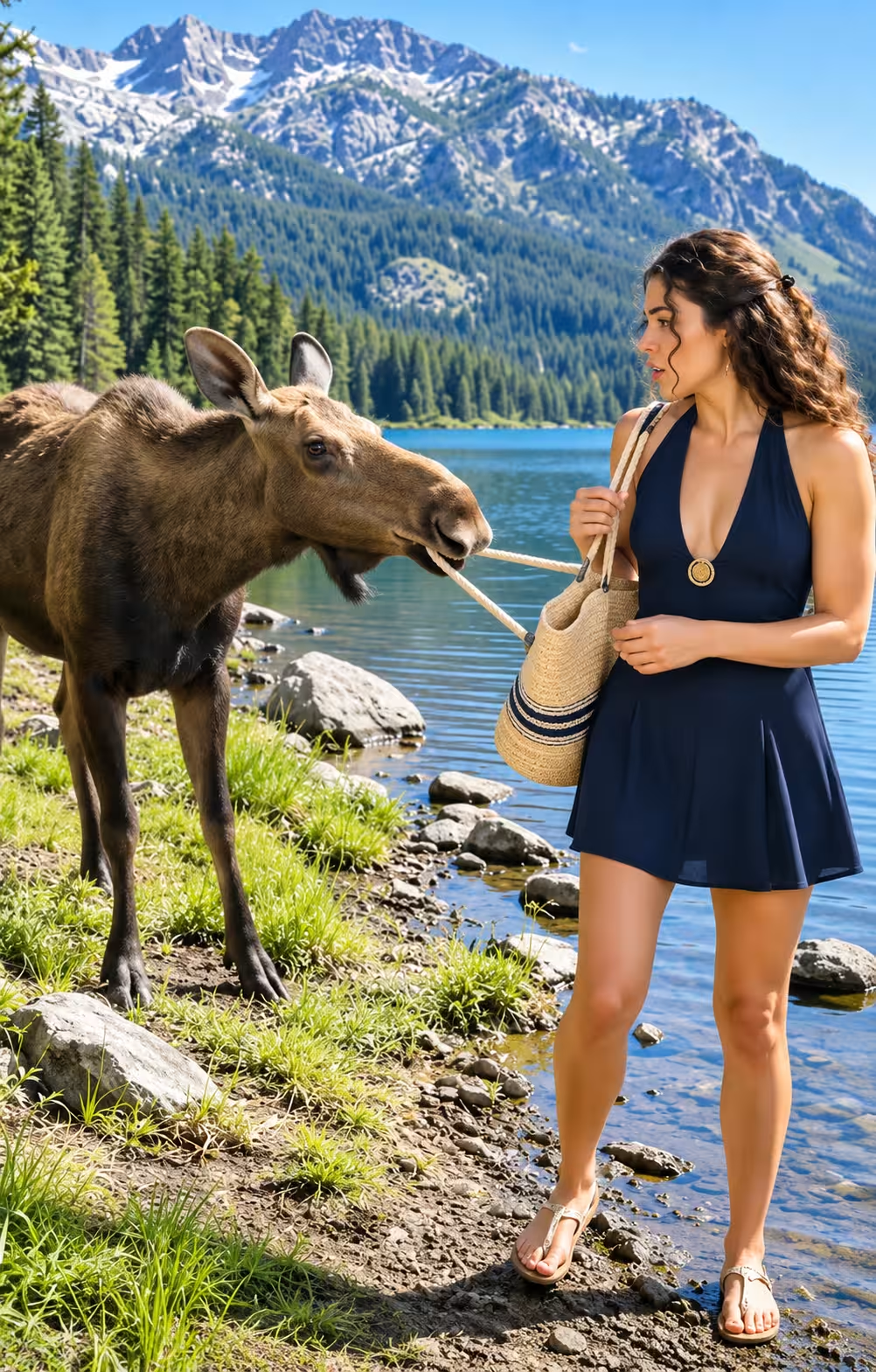
Emma carefully moved to a clear section of the road where she could see into the ditch.
A young moose calf stood several feet below the road surface.
Its brown coat was damp, and mud covered the lower portions of its legs.
The ditch had been designed to carry rainwater away from the road.
However, recent rainfall had softened the soil and made the sides unusually slippery.
The calf appeared to have entered the ditch near a shallow section before moving into a deeper area.
Now it was struggling to climb the steep bank.
Emma watched as the animal placed its front hooves against the muddy slope.
It pushed upward, briefly lifting its chest.
Then its hooves lost their grip, and it slid backward.
The calf remained standing but appeared increasingly tired.
Emma wondered whether its mother was somewhere nearby.
She scanned the forest without moving closer.
No adult moose was immediately visible, but she knew that did not mean the area was safe.
She decided that attempting to pull or guide the calf herself would be dangerous.
Instead, she contacted trained wildlife rescuers.
Wildlife Rescuers Prepare a Safe Response
Emma called the regional wildlife rescue hotline and explained what she had discovered.
She provided the road name, the nearest trail marker, and a description of the ditch.
The coordinator asked whether the calf was breathing normally and able to stand.
Emma confirmed that it was standing but repeatedly failing to climb out.
The coordinator advised her not to enter the ditch or approach the animal.
She was also reminded to watch for an adult moose from a safe location.
Emma moved farther down the road to a wider area where she could wait without disturbing the calf.
Approximately thirty minutes later, a wildlife rescue vehicle arrived.
Two trained responders, Daniel Brooks and Sarah Mitchell, stepped out carrying safety equipment.
Emma explained where she had seen the calf and described its attempts to escape.
Daniel used binoculars to observe the animal from the roadside.
Sarah examined the surrounding terrain and checked for signs of an adult moose.
The rescuers understood that a protective mother could return at any moment.
They contacted a local wildlife officer to assist with monitoring the area.
Before approaching the ditch, the team developed a plan to give the calf a safe route out.
A Careful Plan to Help the Calf Escape
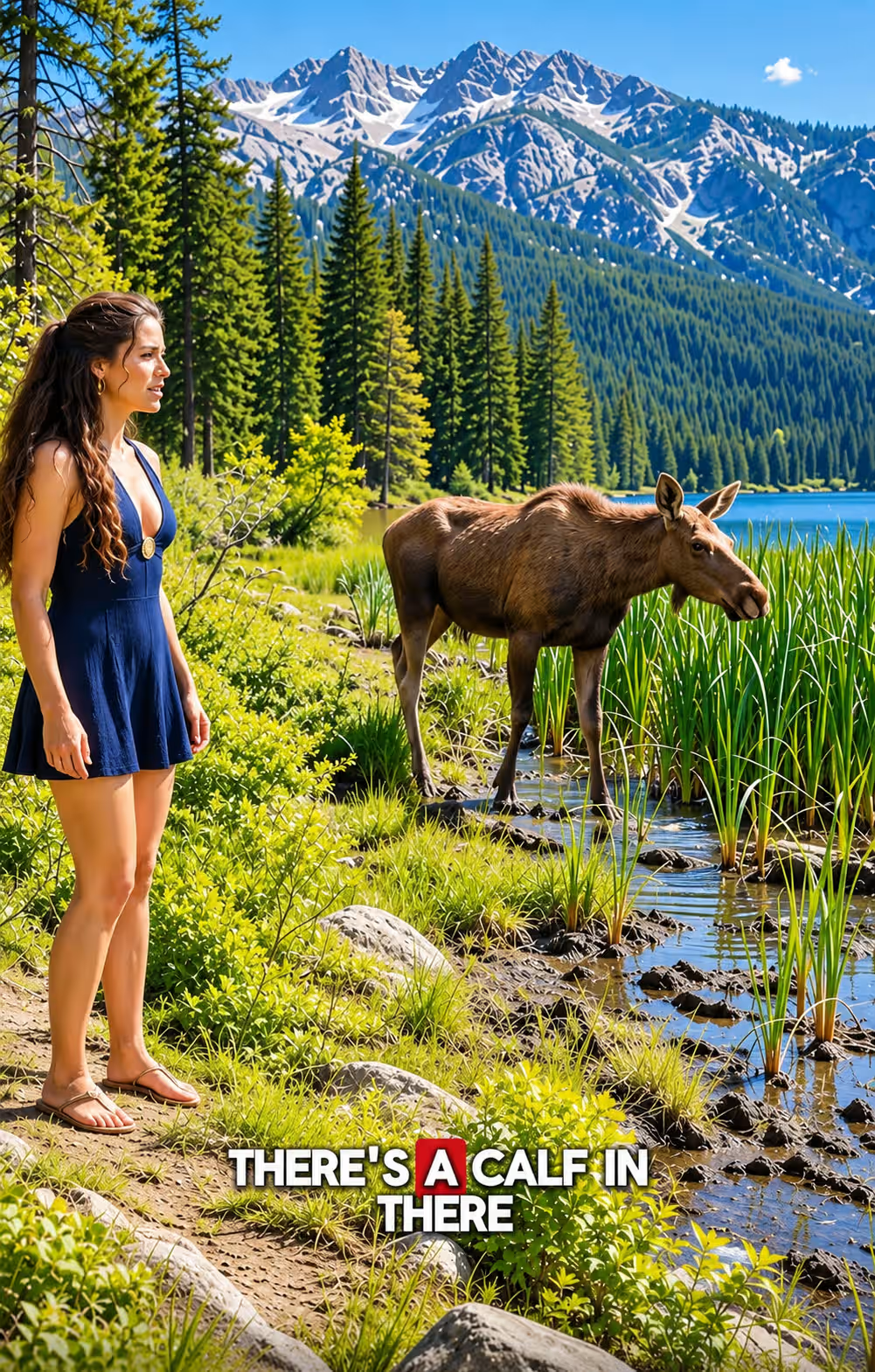
The wildlife officer arrived and helped the rescuers assess the situation.
The calf remained in the ditch, occasionally shifting its weight.
Daniel noticed that one end of the drainage channel had a gentler slope.
Unfortunately, fallen branches and accumulated mud blocked much of that route.
Sarah suggested clearing the obstruction while keeping the team at a safe distance from the animal.
The rescuers first checked that the surrounding road was free from traffic.
They then established a temporary safety area around the work site.
Emma remained behind the designated boundary.
Daniel and Sarah used long-handled tools to remove loose branches from the shallow end of the ditch.
They worked slowly to avoid startling the calf.
The animal watched them but did not attempt to move toward the workers.
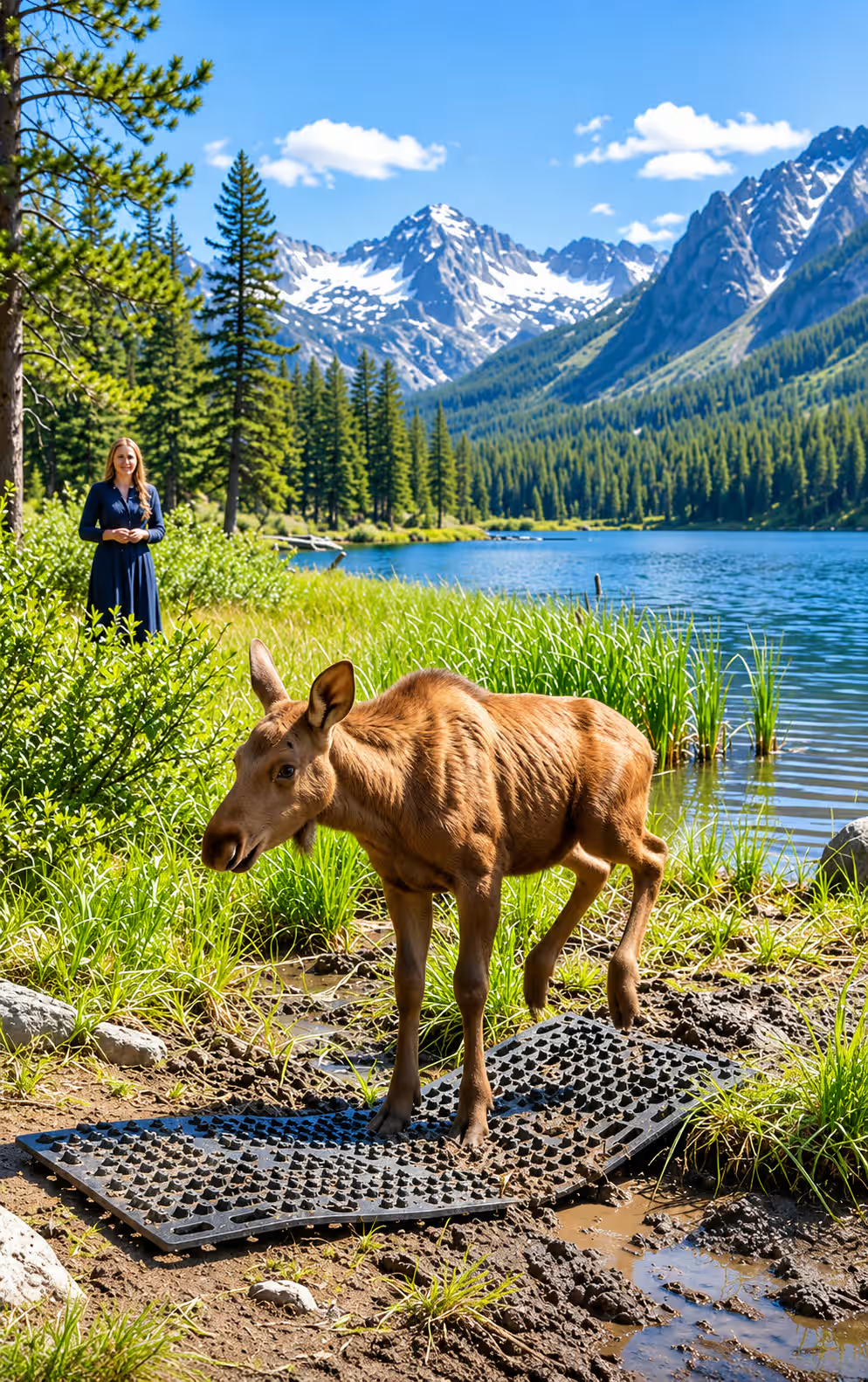
The team then placed stable traction material along the gentler slope.
Their goal was to create a route the calf could use under its own power.
The wildlife officer continued monitoring the forest for the mother.
The Moose Calf Makes Another Attempt
For several minutes, the calf remained near the deepest part of the ditch.
It looked toward the newly cleared slope but did not immediately approach.
Daniel explained that frightened wildlife sometimes needed time to respond to changes in their surroundings.
The rescue team stayed quiet and avoided unnecessary movement.
Eventually, the calf turned and began walking along the bottom of the drainage channel.
Its legs moved carefully through the soft mud.
When it reached the gentler section, it stopped and examined the slope.
Emma watched from a distance, hoping the new route would provide enough traction.
The calf placed one front hoof onto the prepared surface.
Then it shifted its weight and brought the other front leg forward.
For a moment, it appeared uncertain.
The animal stepped backward slightly before trying again.
This time, its hooves maintained their grip.
The calf pushed upward with its hind legs and climbed several feet.
A Safe Escape Into the Forest
The calf paused near a cluster of young birch trees.
It looked back toward the ditch before turning toward the forest.
The rescue team remained in position, giving the animal space to move freely.
Sarah observed that the calf appeared to be walking without an obvious limp.
However, she explained that they could not determine its full condition from a distance.
The wildlife officer recommended continued observation without approaching.
A few minutes later, movement appeared among the trees farther uphill.
An adult female moose stepped into a small clearing.
The rescuers immediately increased their distance and remained behind their vehicle.
The calf turned its head toward the adult.
It then walked slowly in her direction.
The female moose stood still as the young animal approached.
Emma watched quietly as the two animals moved closer together.
After a short pause, the adult turned toward the deeper forest.
A Small Rescue With a Lasting Impact
Before leaving, the wildlife officer inspected the drainage channel.
He explained that heavy rainfall had caused soil to accumulate near the lower section.
The fallen branches had made the gentler exit difficult for animals to use.
He arranged for the road maintenance team to inspect the drainage system.
The goal was to restore proper water flow and reduce the risk of wildlife becoming trapped.
Emma shared the photographs she had taken from a safe distance.
The images showed the calf standing in the ditch and later walking toward the forest.
The rescue team documented the incident for its records.
Several days later, Emma received a brief update confirming that the drainage obstruction had been cleared.
She was pleased to know that the location had been inspected.
For Emma, the most unforgettable moment was watching the exhausted young moose climb out of the ditch and disappear into the forest beside its mother, free to continue its life in the wild.