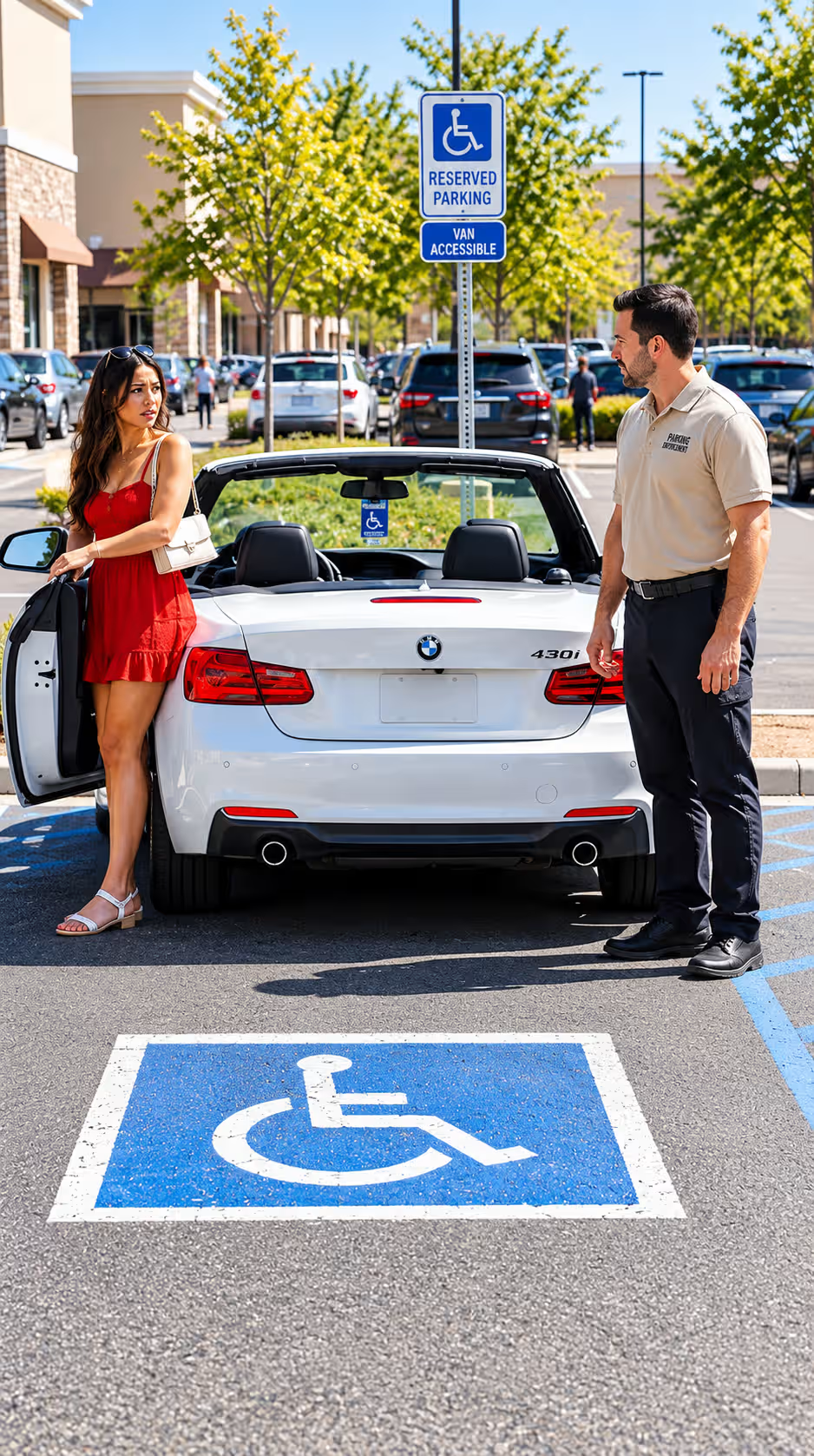
An Unexpected Confrontation in a Shopping Center Parking Lot
The woman had barely stepped out of her car when an unfamiliar man approached her.
“Excuse me, but you can’t park here unless you’re disabled.”
Thirty-six-year-old Emily Carter stopped beside her vehicle, holding the driver’s door for balance.
She wore a prosthetic leg beneath her trousers and had parked in an accessible space near the shopping center entrance.
“I have a valid permit,” she replied calmly.
The man, Daniel Harris, glanced at her windshield.
“I don’t see why you need this space. You walked out of your car perfectly fine.”
Emily looked toward the entrance, already uncomfortable with the attention.
Several shoppers were passing nearby.
She explained that her mobility was limited, particularly over longer distances.
Daniel continued questioning her.
Then another man wearing a parking management uniform approached.
“Is there a problem here?” he asked.
A Routine Shopping Trip Becomes Uncomfortable
Emily had visited the shopping center to purchase groceries and collect a prescription.
She had undergone a below-knee amputation several years earlier following a serious accident.
After rehabilitation, she learned to walk using a prosthetic leg.
She worked full-time and managed most daily activities independently.
However, walking long distances could cause discomfort and fatigue.
Uneven surfaces also required additional care.
Emily had received an accessible parking permit after completing the required assessment.
She used it when necessary, particularly during shopping trips involving extended walking.
That morning, she found an available accessible space near the entrance.
She parked carefully, displayed her permit, and prepared to enter the building.
Her trousers covered most of her prosthetic leg.
To someone unfamiliar with her circumstances, she might have appeared to walk without difficulty.
Daniel had been standing beside a nearby vehicle.
He noticed Emily leaving her car and assumed she was using the space improperly.
Without checking the displayed permit, he approached her.
His questions quickly turned an ordinary errand into an upsetting encounter.
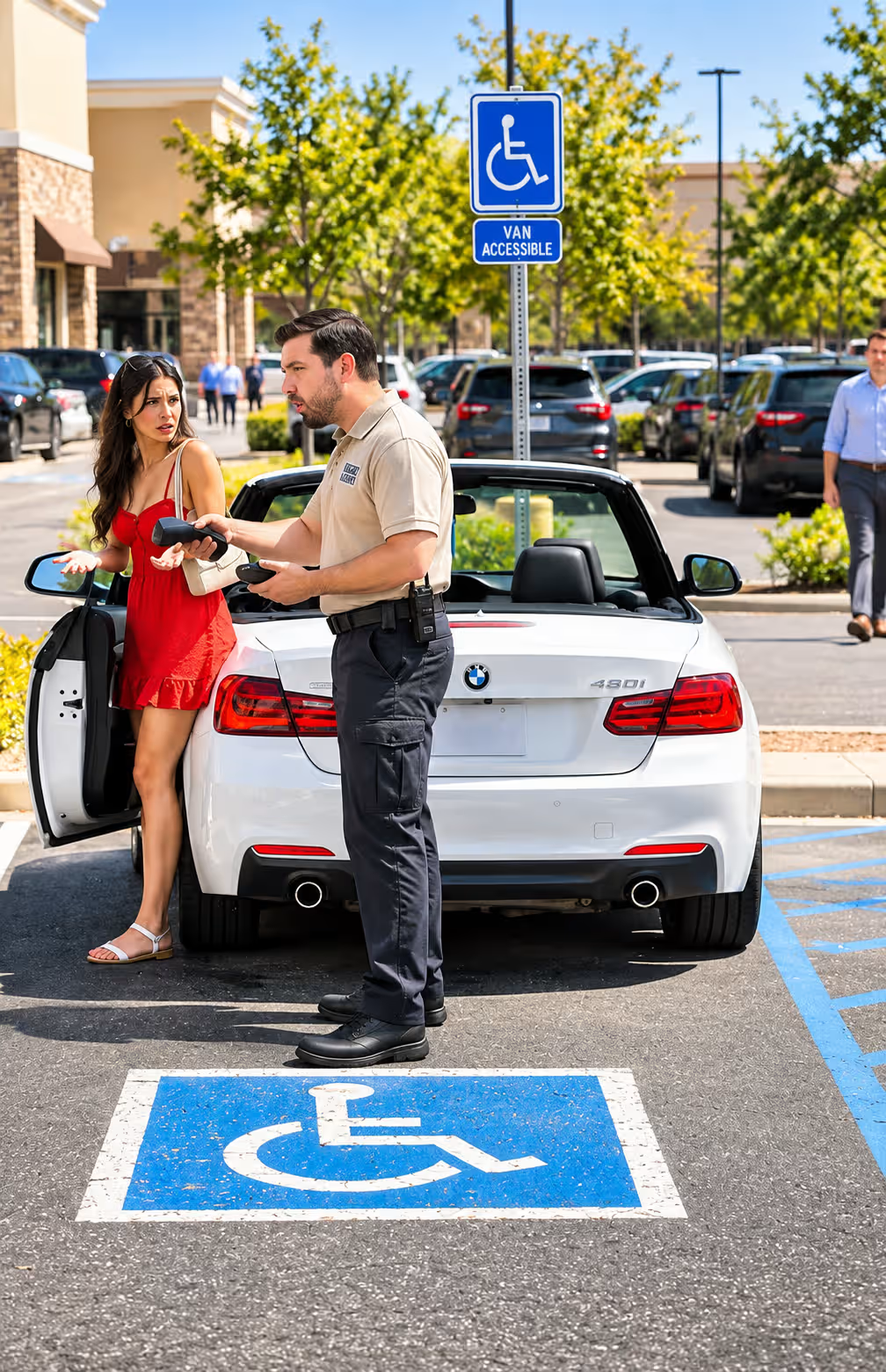
The Man Questions Her Right to Park
Daniel explained that he had previously seen drivers misuse accessible parking spaces.
He believed the spaces should remain available for people who genuinely needed them.
Emily understood the concern but objected to his assumption.
“I have the proper permit, and I’m entitled to use this space.”
Daniel looked toward the windshield again.
He noticed the permit hanging from the rearview mirror.
However, he questioned whether it belonged to Emily.
“How do I know that’s actually yours?”
Emily felt increasingly frustrated.
She had already explained that her permit was valid.
She didn’t believe she should have to discuss her medical history with a stranger.
“The permit was issued to me,” she replied.
Daniel pointed toward the shopping center entrance.
“You seem able to walk that distance.”
Emily explained that walking a short distance did not mean she could comfortably cross an entire parking lot.
She also reminded him that disabilities were not always immediately visible.
Daniel remained unconvinced.
He suggested that someone from parking management should check the permit.
Emily agreed that an authorized employee could verify it.
But she asked Daniel to stop blocking her path.
A Parking Supervisor Arrives to Investigate
The man approaching them was Michael Reynolds, the shopping center’s parking supervisor.
He had noticed the conversation while inspecting the accessible parking area.
Michael introduced himself and asked both individuals to explain the situation.
Daniel claimed that Emily might be using the space without authorization.
Emily explained that she had displayed a valid accessible parking permit.
Michael examined the permit through the windshield.
He confirmed that it appeared properly displayed and had not expired.
He then asked Emily whether she would be comfortable allowing him to verify the permit details.
Emily agreed.
She retrieved the permit and presented the accompanying identification required by the local parking program.
Michael checked the relevant information according to the facility’s verification procedure.
The details matched, and the permit was valid.
He returned the documents to Emily.
“Everything is in order, Ms. Carter. You’re authorized to park here.”
Daniel looked surprised.
Michael then explained that accessible parking eligibility could not be determined simply by watching someone walk
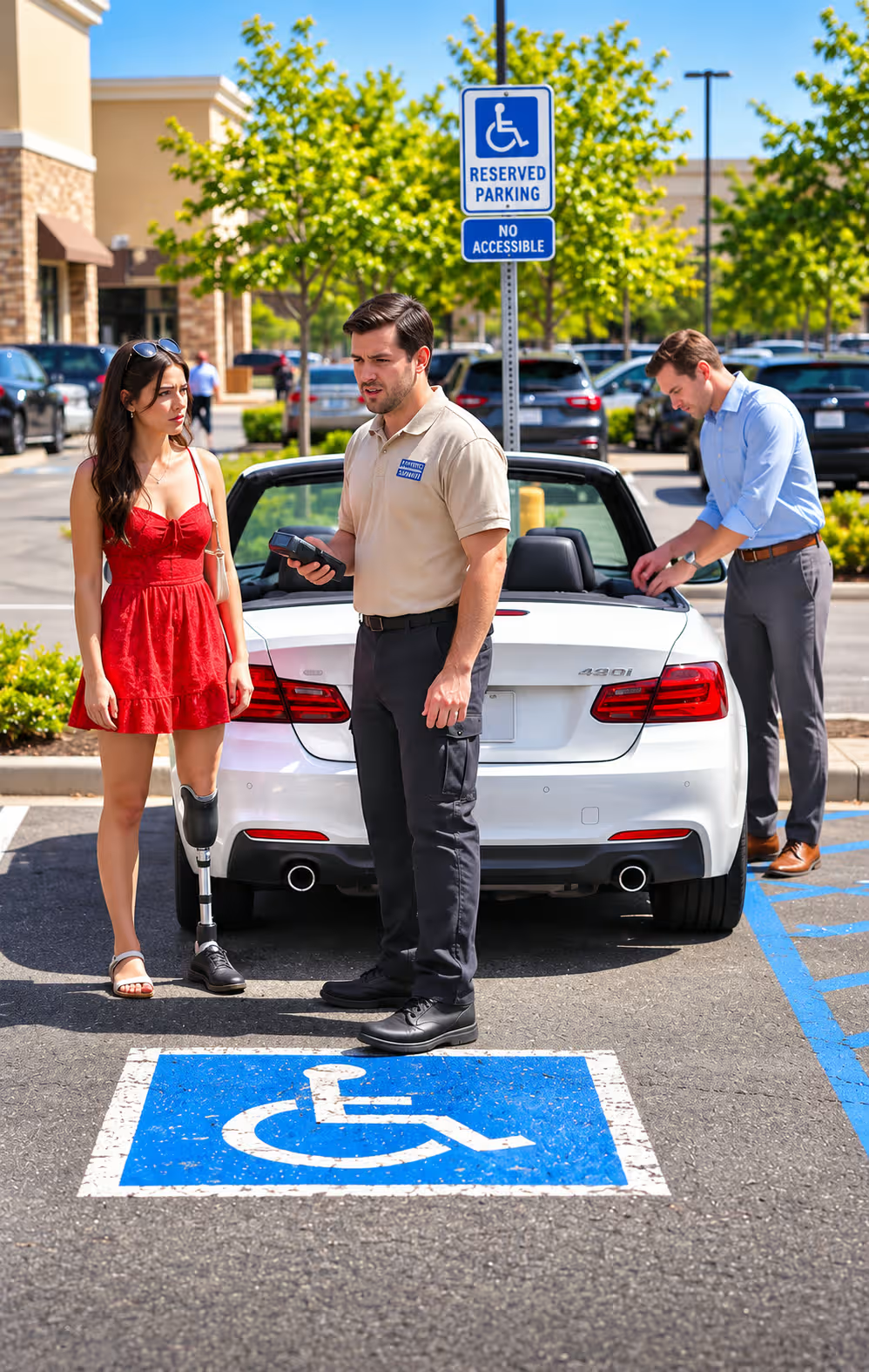
The Valid Permit Ends the Dispute
Michael addressed Daniel calmly but firmly.
“People can have significant mobility limitations without those limitations being obvious.”
Daniel glanced toward Emily.
He had assumed that her ability to walk independently meant she didn’t need accessible parking.
Michael explained that permit eligibility was determined through an established assessment process.
It was not something another shopper could judge from a brief observation.
Emily thanked Michael for confirming her permit.
She also explained that confrontations like this could make ordinary activities unnecessarily stressful.
“I already plan my trips around how far I can walk,” she said.
“I shouldn’t have to explain my disability every time I park.”
Daniel listened without interrupting.
He admitted that he had made an assumption based on her appearance.
“I’m sorry. I thought I was protecting the parking spaces.”
Emily acknowledged his apology.
She explained that reporting a genuine concern to authorized staff was different from confronting someone directly.
Michael agreed.
He reminded Daniel that parking enforcement should be handled by trained personnel.
The dispute ended, and Emily was free to continue her shopping.
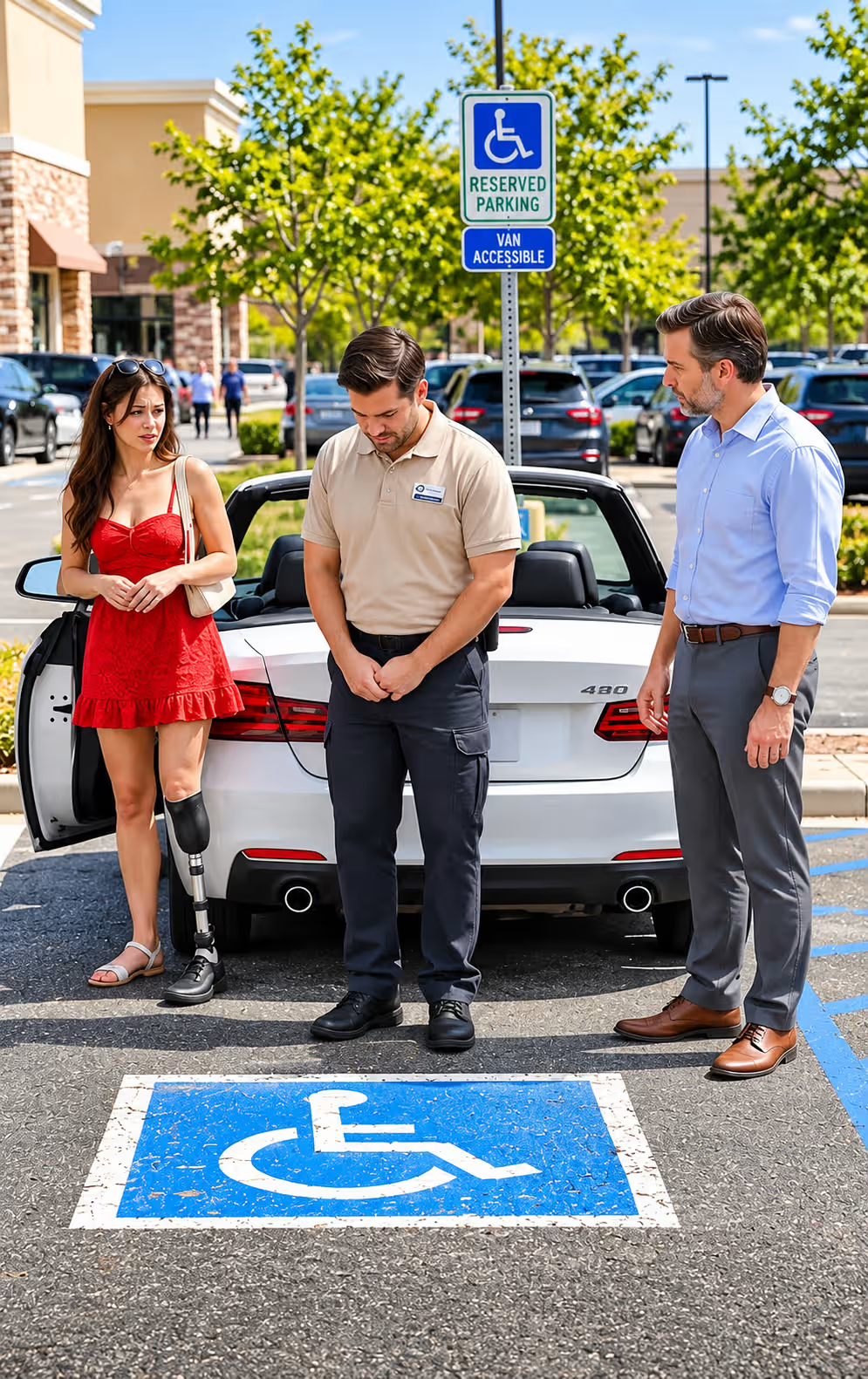
An Unexpected Conversation Changes His Perspective
Before Emily entered the shopping center, Daniel approached her again.
This time, his manner was noticeably different.
He asked whether he could apologize properly.
Emily stopped and listened.
Daniel explained that his father had used accessible parking during the final years of his life.
He had occasionally struggled to find available spaces.
Those experiences made Daniel sensitive to possible misuse.
However, he admitted that he had allowed his frustration to influence his judgment.
Emily appreciated his explanation.
She told him that many people with mobility limitations faced similar misunderstandings.
Some used prosthetic limbs, while others lived with conditions that were not visible.
The important issue was whether a person had the appropriate authorization.
Daniel nodded.
“I understand that better now.”
Emily thanked him for acknowledging his mistake.
Michael remained nearby but allowed the conversation to end naturally.
Afterward, he escorted Daniel toward the parking office to explain the facility’s complaint procedures.
Emily continued into the shopping center.
Although the confrontation had been unpleasant, she felt relieved that the situation had been resolved fairly.
A More Respectful Approach to Accessibility
Later that afternoon, Michael discussed the incident with the shopping center’s management team.
He recommended clearer signs explaining how to report suspected parking violations.
The goal was to discourage confrontations between customers.
Management agreed to update the signs near accessible parking areas.
The new information directed visitors to contact parking personnel with concerns.
It also reminded shoppers that mobility disabilities were not always visible.
Several weeks later, Emily returned to the same shopping center.
She noticed the updated signs near the accessible spaces.
Michael happened to be working nearby and greeted her.
He asked whether she had experienced any further difficulties.
Emily smiled and said the new instructions were helpful.
She appreciated that the shopping center had taken the issue seriously.
This fictional story began with a man confronting a woman who used a prosthetic leg.
He questioned her right to park in an accessible space because he misunderstood her mobility needs.
The disagreement ended when a parking supervisor verified her permit and confirmed that she was authorized to use the space.
The incident also encouraged better communication about accessible parking.
For Emily, the most meaningful outcome was being reminded that her independence did not make her disability less real, and that everyone deserved to be treated with dignity without having to prove their struggles to strangers.