
A Routine Parking Payment Turns Into a Heated Confrontation
The parking attendant held out a ticket as the woman lowered her car window.
“That will be twelve dollars, ma’am.”
The woman stared at him before shaking her head.
“I’m not paying twelve dollars just to park my car.”
Forty-eight-year-old parking attendant Marcus Hill stood beside the payment booth, maintaining a professional expression.
“The fee is based on how long your vehicle was parked.”
The woman, Vanessa Collins, pointed toward the shopping center behind her.
“I spend plenty of money here. You should be letting customers park for free.”
Marcus explained that the parking facility was independently operated.
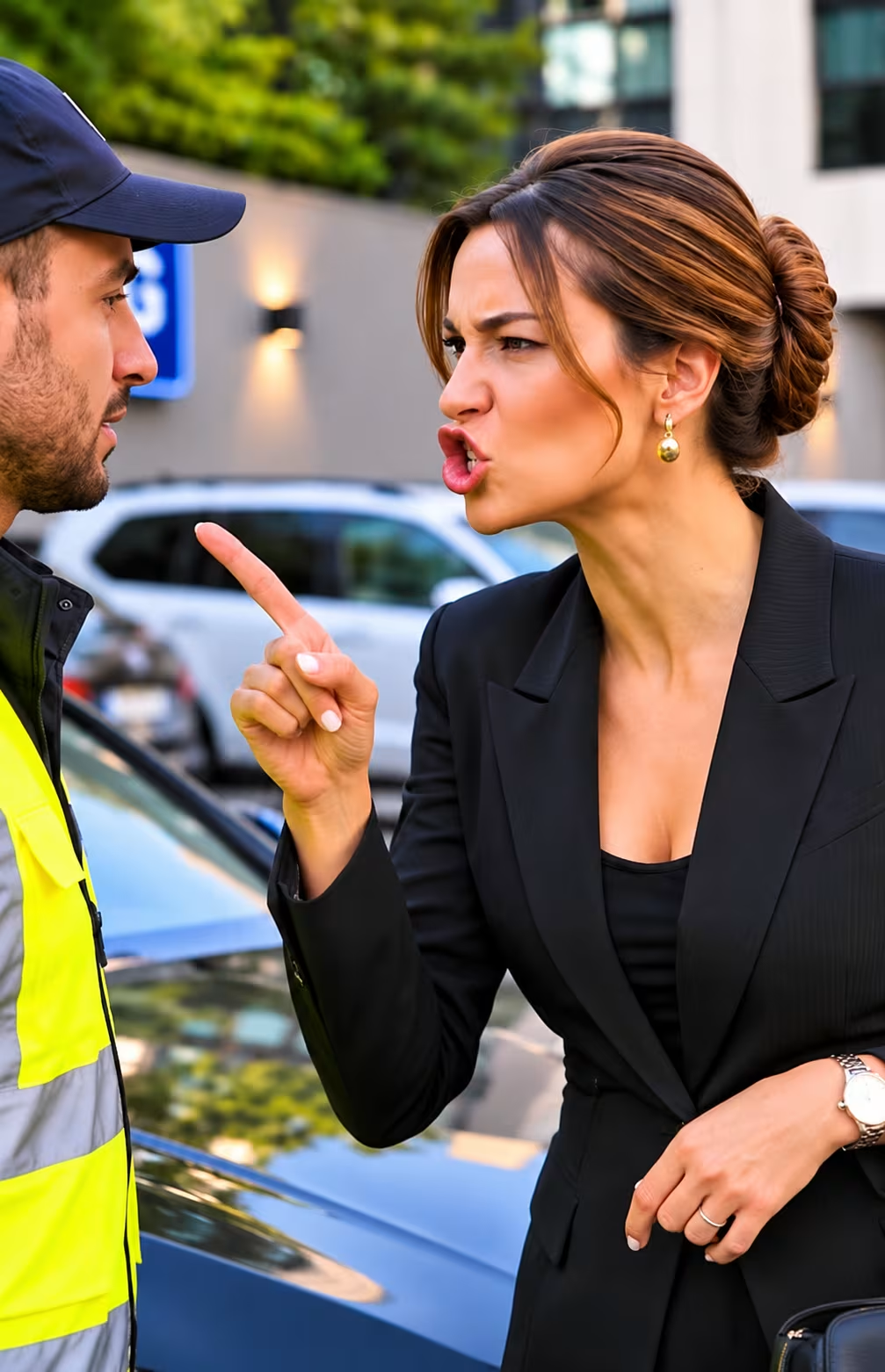
Vanessa leaned toward the window.
“Do you know who I am? One phone call, and you could lose your job.”
Several drivers waiting behind her began sounding their horns.
Marcus glanced toward the growing line.
Then a police patrol vehicle entered the parking area.
A Busy Afternoon at the Shopping Center
Marcus had worked at the downtown parking facility for nearly seven years.
His responsibilities included collecting fees, assisting drivers, and helping maintain an orderly flow of traffic.
The garage served a busy shopping center, several offices, and a nearby medical clinic.
Parking rates were displayed at the entrance and beside every payment station.
Drivers received a ticket when entering and paid according to the time their vehicles remained inside.
Marcus had encountered occasional complaints about the prices.
Most disagreements ended after he explained the posted rates.
That afternoon, the garage was particularly busy because several stores were holding weekend promotions.
Vehicles moved steadily toward the exit.
Marcus was completing a routine transaction when Vanessa approached in her silver sedan.
She handed him her ticket.
The system calculated a twelve-dollar charge.
Marcus informed her of the amount and waited for payment.
Vanessa immediately objected.
She insisted that customers who spent money at the shopping center should not have to pay for parking.
Marcus explained that the facility did not offer automatic free parking with purchases.
His explanation only seemed to increase her frustration.
A Customer Demands Special Treatment
Vanessa reached into her handbag and produced several shopping receipts.
She held them toward Marcus.
“Look at how much I spent today.”
Marcus glanced at the receipts but explained that they did not qualify for a parking discount.
Some businesses offered validated parking, but customers needed an approved validation code.
Vanessa had none.
“Then make an exception,” she demanded.
Marcus explained that he could not override the payment system without authorization.
He offered to contact the garage supervisor if she wished to dispute the charge.
Vanessa refused.
Instead, she demanded that Marcus open the exit barrier immediately.
When he declined, she began criticizing his job performance.
“You clearly don’t understand customer service.”
Marcus remained calm.
He repeated the payment options and asked her to move into a designated assistance lane if she wanted a supervisor.
Vanessa refused to move her vehicle.
The cars behind her began forming a long queue.
Several drivers attempted to use the second exit lane.
Others waited impatiently.
Marcus realized that the disagreement was now affecting the operation of the entire garage.
A Threat That Changes the Situation
Vanessa took out her phone and began recording Marcus.
She told him that she knew people involved in the shopping center’s management.
“I’ll make sure you’re fired before the end of the day.”
Marcus kept his hands visible and avoided raising his voice.
“You’re welcome to make a complaint, ma’am, but I still need to follow the parking rules.”
Vanessa demanded his full name.
Marcus pointed toward the identification badge on his uniform.
He also provided the customer service number printed on her ticket.
The woman continued arguing.
She claimed that Marcus was deliberately embarrassing her.
He explained that the fee applied to every customer under the same parking conditions.
Meanwhile, another employee contacted the garage supervisor.
The supervisor, Thomas Reed, arrived and attempted to resolve the disagreement.
He reviewed Vanessa’s ticket and confirmed the twelve-dollar charge.
He also explained that Marcus had correctly followed company procedures.
Vanessa rejected his explanation.
She again refused to pay and demanded that the barrier be raised.
Thomas informed her that blocking the exit could create a traffic and safety problem.
When she still refused to move, he contacted the police non-emergency line for assistance.
Police Officers Arrive at the Parking Exit
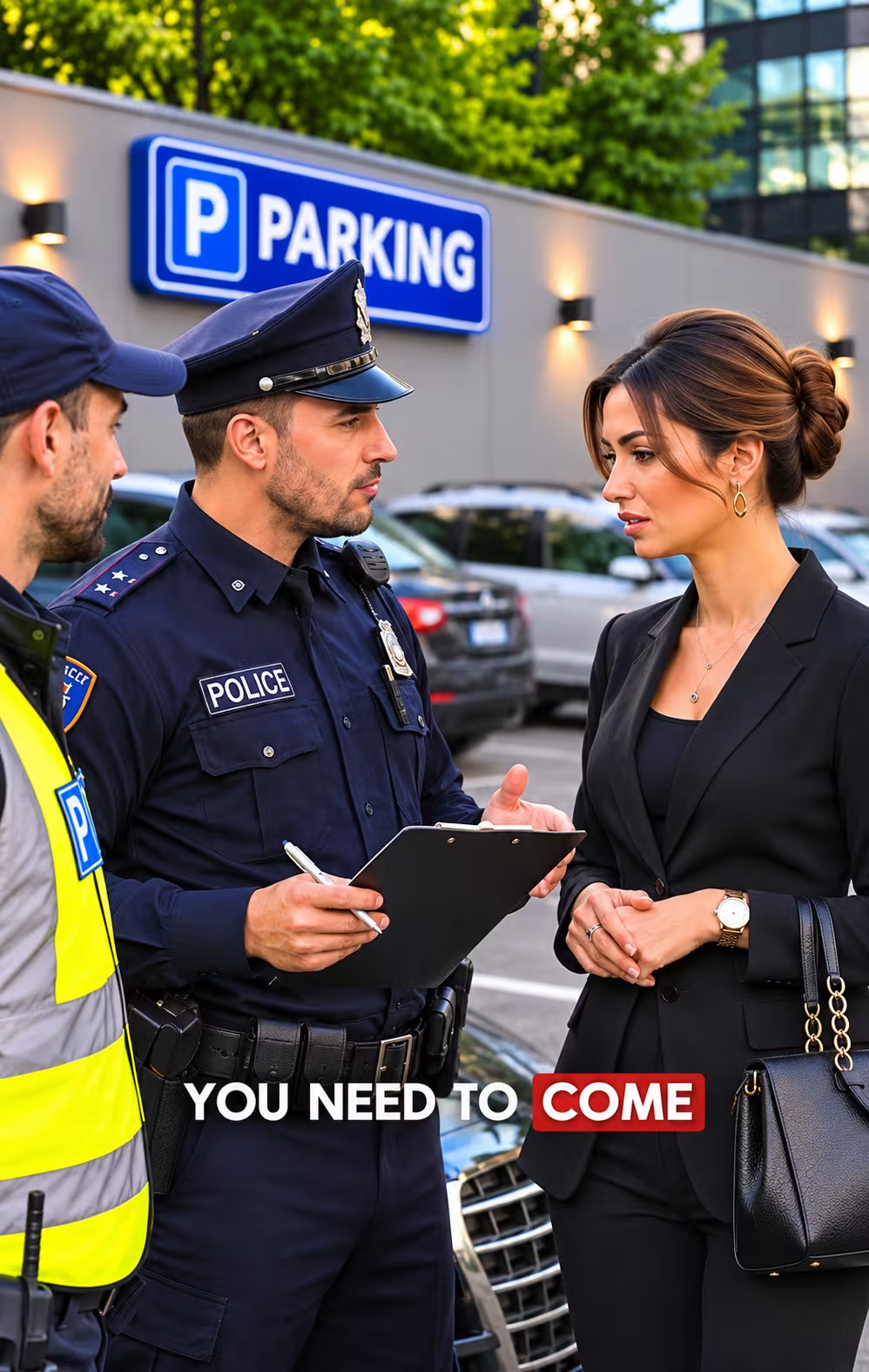
Two police officers arrived several minutes later.
Officer Rachel Morgan approached Vanessa’s vehicle while her colleague spoke with Thomas.
Rachel introduced herself and asked what had happened.
Vanessa immediately complained about the parking fee.
She insisted that the attendant had treated her unfairly.
Rachel listened before requesting the parking ticket and asking about the posted rates.
Thomas showed the officers the fee schedule displayed at the entrance.
He also provided the transaction record showing how long Vanessa’s vehicle had remained in the garage.
The twelve-dollar charge matched the published rates.
Rachel asked Vanessa whether she had received a valid parking discount or validation.
Vanessa admitted that she had not.
She argued that her shopping purchases should have been sufficient.
Rachel explained that the police could not create a discount or cancel a lawful private parking charge.
She also clarified that the disagreement over payment was generally a civil matter.
However, Vanessa could not continue obstructing the exit and creating a traffic hazard.
Rachel directed her to resolve the payment or move to the designated assistance area while the dispute was handled.
She told Vanessa that if she wanted to leave through the paid exit, she needed to pay the posted fee.

The Parking Fee Is Finally Paid
Vanessa looked toward the line of waiting vehicles.
Several drivers were watching the situation from their cars.
She appeared increasingly uncomfortable as the officers continued speaking calmly.
“You’re telling me I have to pay twelve dollars?”
Rachel explained that the garage was entitled to apply its published parking conditions.
She reminded Vanessa that she could submit a formal complaint afterward.
But refusing to pay did not automatically entitle her to leave without charge.
Thomas offered to process the payment immediately.
After a long pause, Vanessa reached into her handbag.
She removed her credit card and handed it to Marcus.
He processed the twelve-dollar transaction and provided a receipt.
The exit barrier lifted.
Before Vanessa drove away, Rachel addressed the earlier threats.
She explained that employees should not be intimidated for carrying out legitimate workplace responsibilities.
Vanessa looked toward Marcus.
“I was frustrated,” she admitted.
Marcus nodded without arguing.
Vanessa offered a brief apology.
Then she drove out of the garage.
Within minutes, traffic at the exit returned to normal.
A Professional Response Makes a Difference
After the incident, Thomas asked Marcus to step into the parking office.
He wanted to review what had happened and ensure that Marcus was comfortable continuing his shift.
Marcus admitted that the confrontation had been stressful.
He had worried that Vanessa’s threats might affect his employment.
Thomas reassured him that he had followed the correct procedures.
The supervisor reviewed the transaction records and the available security footage.
He confirmed that Marcus had remained professional throughout the disagreement.
The following week, garage management introduced clearer instructions for handling disputed parking fees.
Employees were encouraged to contact supervisors promptly when disagreements began affecting traffic.
Additional signs explained validation requirements and payment options.
Marcus appreciated the changes.
He understood that customers could become frustrated by unexpected expenses.
However, he also believed that employees deserved to perform their jobs without being threatened.
This fictional story began with a woman refusing to pay a clearly posted parking fee.
Her disagreement escalated when she threatened the attendant’s employment and blocked the exit.
Police officers helped restore order, explained the parking conditions, and directed her to resolve the payment.
Vanessa ultimately paid the twelve-dollar fee, allowing the garage to resume normal operations.
For Marcus, the most important outcome was not collecting the parking fee, but knowing that he could carry out his responsibilities calmly and respectfully without allowing threats or intimidation to determine how he treated others.