A Disagreement at a Busy Bus Stop
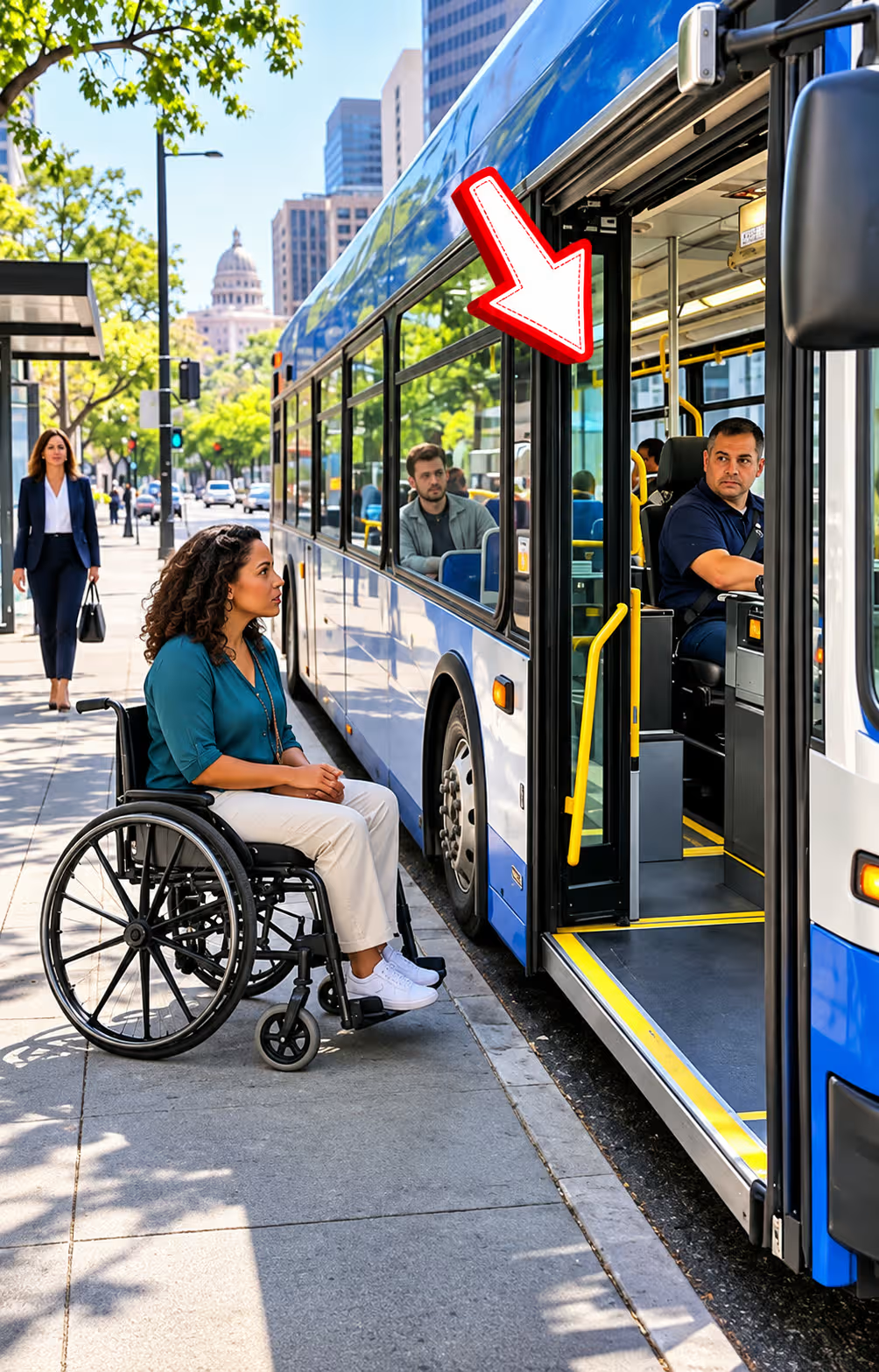
The bus doors opened, but the driver remained seated when he noticed the woman waiting in a wheelchair.
“Sorry, ma’am. You’ll have to take the next bus,” he said.
Thirty-six-year-old Rebecca Lawson looked toward the empty wheelchair space visible through the window.
“Why? This bus is accessible, isn’t it?”
The driver, Martin Keller, glanced at his dashboard.
“I’m already behind schedule, and the ramp takes time.”
Rebecca stared at him.
“I’ve been waiting here for twenty-five minutes.”
Martin shook his head.
“I can’t delay everyone else.”
Several passengers looked toward the open doors.
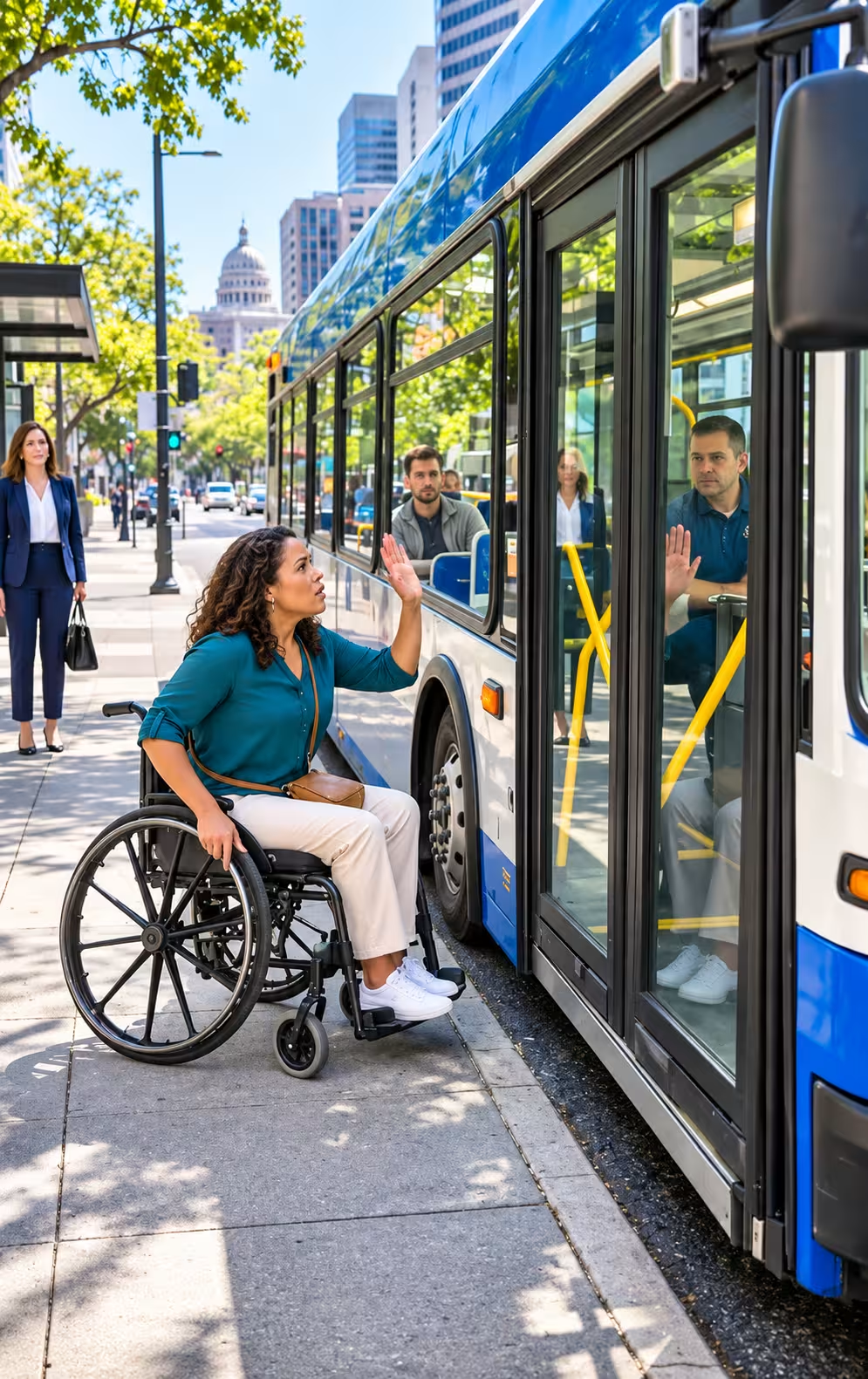
Rebecca moved closer to the curb.
“I’m asking you to let me board, just like everyone else.”
Before Martin could answer, a woman wearing a navy jacket approached from the sidewalk.
She had heard the exchange while walking toward the bus stop.
“Excuse me,” she said firmly. “Why are you refusing to let this passenger board?”
A Morning That Was Already Difficult
Rebecca had planned her journey carefully that morning.
She worked as an administrative coordinator at a community health center across town.
Although she usually traveled independently, the city’s unreliable bus schedules sometimes made her commute frustrating.
Rebecca used a manual wheelchair and depended on accessible public transportation.
She knew which routes operated low-floor buses and which stops provided enough space for safe boarding.
That morning, she needed to attend an important staff meeting.
She left home early and arrived at the bus stop with plenty of time.
However, the first scheduled bus never appeared.
A message on the transit information screen indicated that the service had been delayed.
Rebecca waited patiently.
When the next bus finally approached, she felt relieved.
The vehicle displayed the accessibility symbol near its front doors.
Its wheelchair boarding ramp was designed to extend toward the curb.
Rebecca expected the driver to deploy it.
Instead, he immediately told her to wait for another bus.
She could not understand why she was being refused when the designated wheelchair area appeared unoccupied.
The Driver’s Explanation Raises Questions
Martin had been driving city buses for almost twelve years.
He was familiar with the route and the challenges of maintaining a busy schedule.
That morning, traffic congestion had delayed several services.
Martin was concerned about arriving late at the terminal.
He had already received a message from dispatch asking drivers to report significant delays.
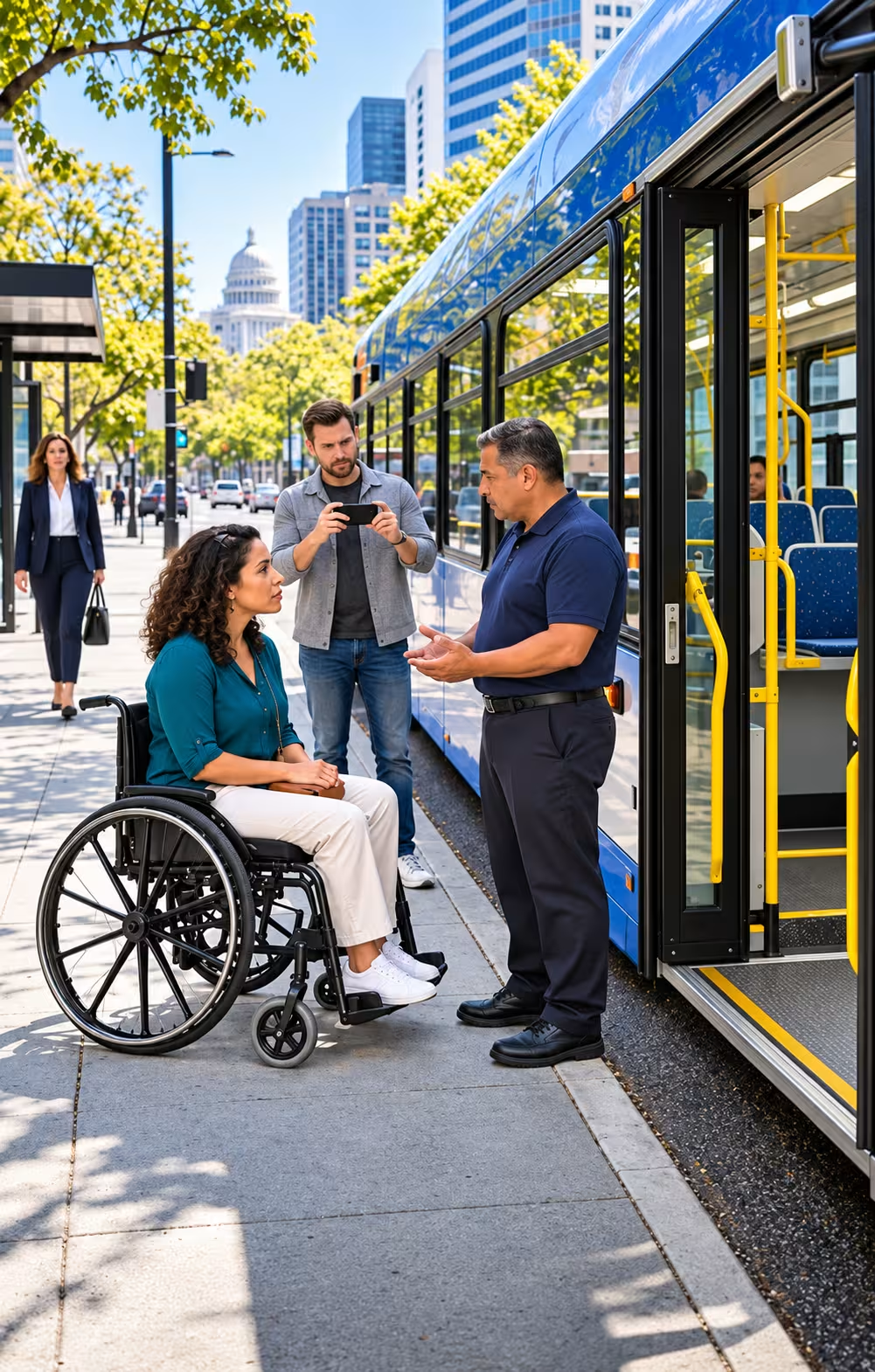
When he saw Rebecca waiting at the stop, he assumed deploying the ramp would make the situation worse.
Rather than checking whether boarding assistance could be provided safely, he told her to wait.
Rebecca calmly explained that she had already missed one service.
She also pointed out that the wheelchair space was available.
Martin continued insisting that another bus would arrive soon.
However, he could not confirm when that would happen.
A passenger near the front spoke up.
“There’s plenty of room. Why can’t she get on?”
Martin replied that he was trying to keep the route moving.
Rebecca felt increasingly uncomfortable as other passengers watched.
She did not want an argument.
She simply wanted to reach work.
That was when the woman in the navy jacket joined the conversation.
A Transit Supervisor Steps Forward
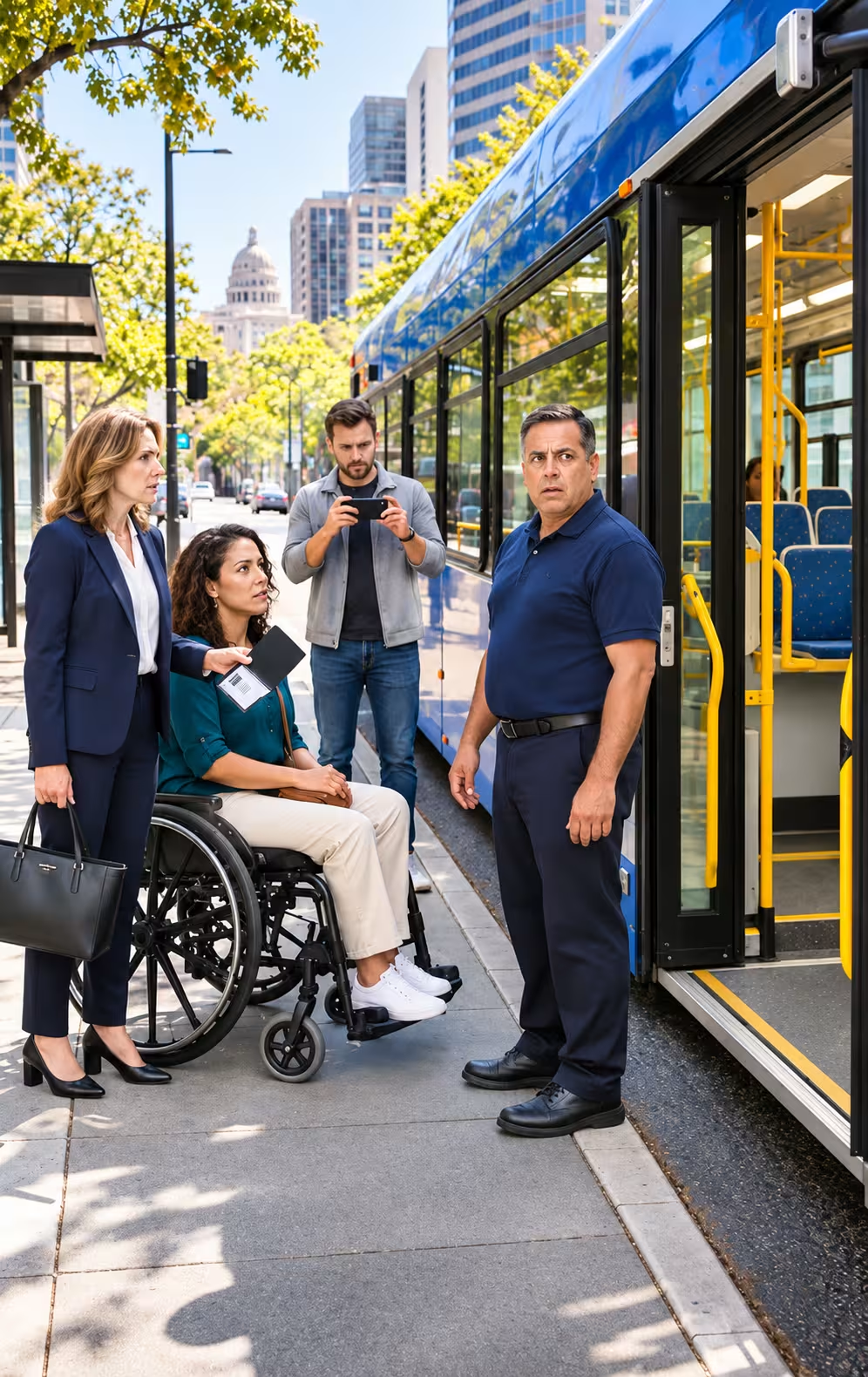
The newcomer introduced herself as Angela Price.
She worked as a field supervisor for the city’s public transportation authority.
Angela had been walking toward a nearby transit office when she noticed the dispute.
She showed Martin her employee identification.
Then she asked Rebecca to explain what had happened.
Rebecca described the driver’s refusal and his concern about the schedule.
Angela listened carefully.
She turned toward Martin.
“Is the wheelchair ramp functioning?”
Martin hesitated.
“As far as I know.”
“Is the designated wheelchair space available?”
He glanced toward the interior of the bus.
“Yes.”
Angela nodded.
“Then we need to follow the boarding procedure.”
Martin explained that he was already running late.
Angela acknowledged the delay but reminded him that accessibility requirements were part of normal transit operations.
A passenger’s use of a wheelchair was not a valid reason to deny boarding simply because assistance required additional time.
She asked Martin to secure the vehicle and prepare the ramp.
Rebecca watched quietly.
For the first time since the bus arrived, someone was addressing the problem directly.
A Simple Procedure Resolves the Dispute
Martin applied the parking brake and activated the bus’s boarding controls.
The front suspension lowered slightly.
He then deployed the wheelchair ramp toward the curb.
Angela checked that the ramp rested securely on the pavement.
She asked Rebecca whether she needed assistance.
Rebecca thanked her but explained that she could board independently once the ramp was positioned correctly.
She carefully moved forward.
The wheelchair rolled onto the ramp and into the bus.
Several passengers made room as she approached the designated seating area.
Martin followed the vehicle’s safety procedure to ensure her wheelchair was positioned appropriately.
He checked that the required securement arrangements were in place before preparing to continue the journey.
Angela remained nearby until the boarding process was complete.
The entire procedure took only a few minutes.
Martin looked toward Rebecca.
“I’m sorry for the inconvenience.”
Rebecca nodded.
“Thank you. I just needed to get to work.”
Angela reminded Martin to contact dispatch if delays became difficult to manage.
She explained that passengers should not be excluded because a driver felt pressured by the timetable.
Martin acknowledged her instructions.
A Conversation About Respect and Responsibility
Before the bus departed, Angela asked Martin to contact the operations center.
He reported the delay and explained that a supervisor had assisted with an accessibility-related boarding issue.
Dispatch confirmed that the delay would be recorded.
Angela also documented the incident for follow-up.
She wanted the transit authority to understand why the refusal had occurred.
Martin admitted that he had made a poor decision.
He had allowed his concern about the schedule to affect how he treated a passenger.
Angela explained that accessibility procedures were not optional tasks.
They were essential parts of providing public transportation.
She also emphasized that respectful communication mattered.
Even when equipment failed or a genuine safety problem prevented boarding, drivers needed to explain the situation clearly and arrange appropriate assistance.
Rebecca listened from her place inside the bus.
She appreciated Angela’s intervention.
However, she also hoped future journeys would not require someone else to defend her right to board.
Angela thanked Rebecca for her patience.
Then she stepped back onto the sidewalk.
Martin closed the doors and resumed the route.
A Better Approach to Accessible Transportation
Rebecca arrived at work later than planned.
She explained the delay to her supervisor, who understood the situation.
Although the morning had been stressful, Rebecca was relieved that she had been able to complete her journey.
Later that afternoon, Angela contacted her to follow up.
She explained that the transit authority was reviewing the incident.
The review confirmed that the bus had been equipped to accommodate Rebecca.
There had been no reported ramp malfunction or safety restriction preventing her from boarding.
Martin received additional instruction on accessibility procedures and passenger communication.
The transit authority also reminded drivers that schedule pressure should never override required boarding assistance.
Over the following weeks, supervisors conducted routine checks to ensure wheelchair ramps were functioning correctly.
They also reviewed how service delays were communicated to passengers.
Rebecca continued using the same bus route.
On a later journey, Martin was driving again.
When he saw her waiting, he stopped, secured the bus, and deployed the ramp without hesitation.
Rebecca boarded normally.
There was no argument and no unnecessary attention.
This fictional story began with a bus driver refusing to board a woman using a wheelchair because he was concerned about delays.
A transit supervisor intervened, clarified the accessibility requirements, and ensured the passenger could travel safely.
The experience encouraged better training and more consistent service.
For Rebecca, the most meaningful change was not the apology she received, but the ordinary morning when the bus stopped, the ramp lowered, and she boarded without having to explain why she deserved the same opportunity to travel as everyone else.