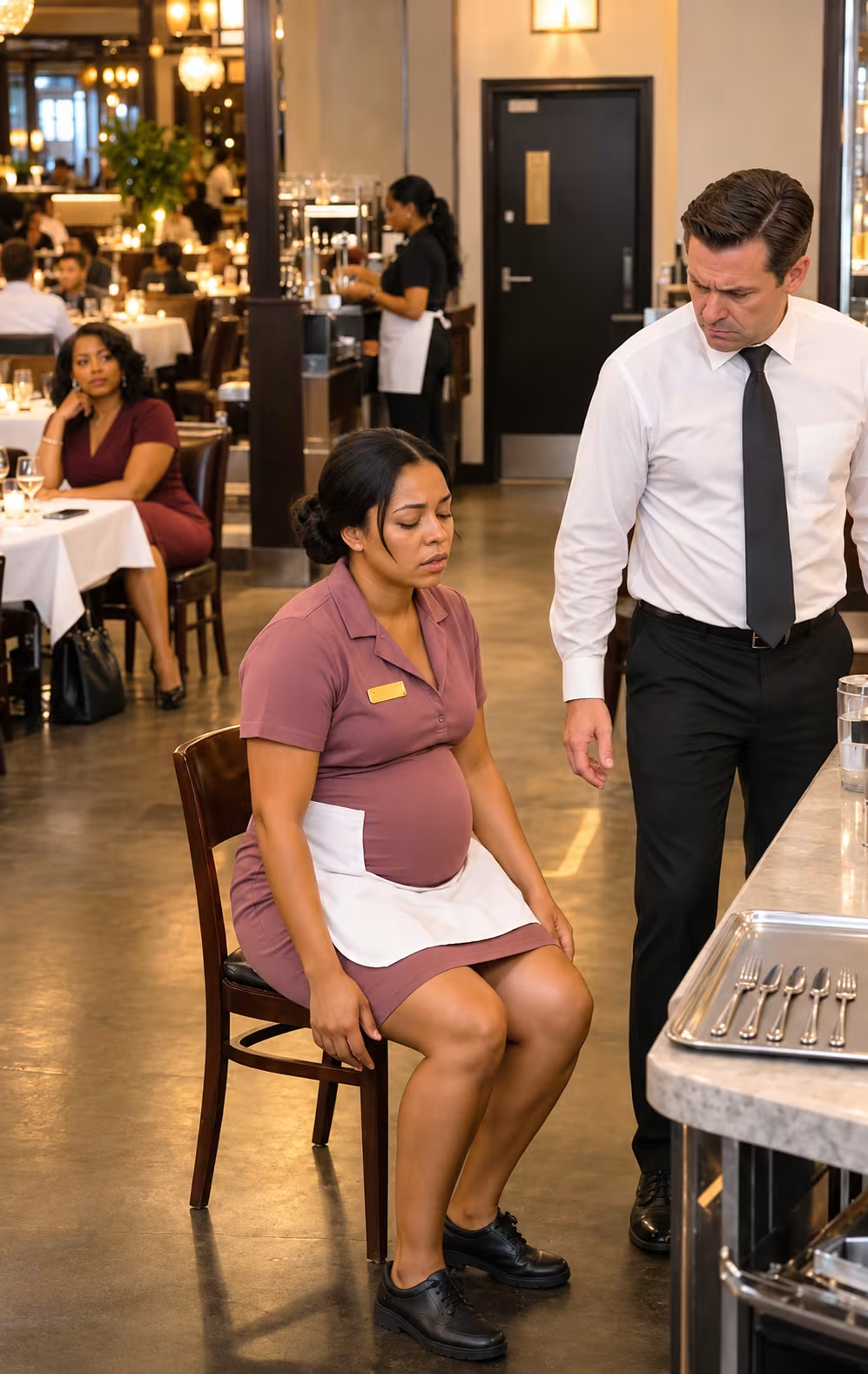
An Apron Falls to the Floor in Front of a Crowded Restaurant
“Take off your apron. You’re finished here.”
The manager’s voice carried across the restaurant as the pregnant waitress stood beside the service counter.
Twenty-eight-year-old Lily Parker stared at him, struggling to understand what she had done wrong.
“Mr. Collins, I only asked for a short break.”
The manager stepped closer.
“We’re busy, Lily. I can’t have employees disappearing whenever they feel tired.”
“I’m not disappearing,” she replied quietly. “I’ve been on my feet for hours.”
Before she could explain further, he pulled the apron she had just untied from her hands and threw it onto the floor.
“Then go home. I don’t need you on this shift.”
Several customers turned toward them.
Lily looked at the apron lying beside her shoes.
Her face reddened.
She was seven months pregnant, and this job helped pay her household bills.
As she bent slightly to retrieve the apron, a woman approached from the dining area.
“Don’t pick that up yet,” the woman said.
The manager turned sharply.
“Ma’am, this is an employee matter.”
The woman looked directly at him.
“Then perhaps you should explain why you’re treating your employee this way.”
A Waitress Trying to Keep Everything Together
Lily had worked at Harbor Table Restaurant for nearly three years.
She knew the regular customers, remembered their favorite orders, and often volunteered to help new employees learn the menu.
Her coworkers considered her dependable.
Even during difficult shifts, Lily rarely complained.
She lived with her husband, Ethan, in a modest apartment near the restaurant.
They were expecting their first child.
The pregnancy had brought excitement, but it also required careful financial planning.
Ethan worked as a delivery driver, and his hours varied from week to week.
Lily hoped to continue working as long as she could safely manage her duties.
Her healthcare provider had recommended regular opportunities to rest and avoid prolonged standing without breaks.
Lily had already informed management about these recommendations.
She had also requested minor adjustments to her schedule.
The restaurant’s previous supervisor had been understanding.
However, a new manager, Richard Collins, had recently taken responsibility for daily operations.
Richard focused heavily on speed and staffing costs.
He often treated requests for schedule changes as inconveniences.
That Saturday, the restaurant was unusually crowded.
Lily had spent much of the morning carrying orders, clearing tables, and assisting customers.
By early afternoon, she began feeling increasingly tired.
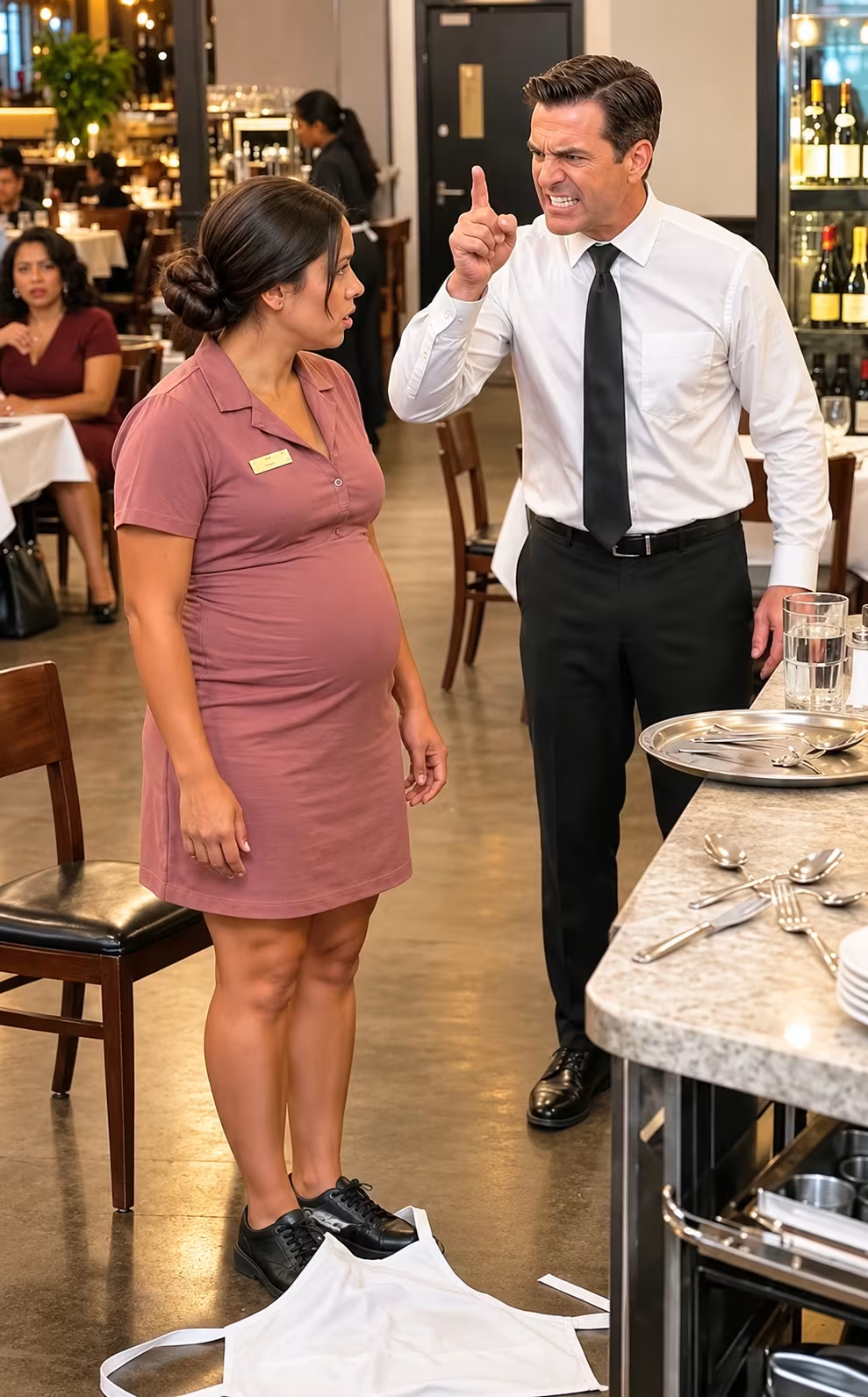
A Reasonable Request Becomes a Confrontation
Lily approached Richard near the kitchen entrance.
“Could someone cover my tables for ten minutes?” she asked.
Richard glanced at the order screen.
“Not right now.”
Lily explained that she needed to sit down briefly.
She had been working continuously through the busiest part of lunch service.
Richard shook his head.
“Everyone is tired. That’s restaurant work.”
Lily remained calm.
“I understand, but I need the break we discussed.”
Richard looked toward the dining room.
Two servers were carrying trays, and several customers were waiting for their meals.
He interpreted Lily’s request as another staffing problem.
Instead of arranging coverage, he told her to return to her section.
Lily hesitated.
She explained that she did not feel comfortable continuing without a short rest.
Richard became visibly frustrated.
“Then maybe you shouldn’t be working today.”
Lily reminded him that she had been scheduled for the shift.
She had arrived on time and completed her assigned duties.
Richard raised his voice.
The argument attracted attention from nearby customers.
When Lily untied her apron, intending to sit down while they resolved the disagreement, Richard took it from her hands.
He threw it onto the floor and ordered her to leave.
A Customer Refuses to Stay Silent
The woman who approached was forty-six-year-old Rebecca Lawson.
Rebecca had been having lunch with a colleague when she heard the confrontation.
She worked as an operations director for a regional hospitality company.
Although she had no authority over Harbor Table Restaurant, she recognized that the situation deserved immediate attention.
Rebecca approached carefully.
“Is everything all right?” she asked Lily.
Lily shook her head.
“I asked for a break, and he told me to go home.”
Richard interrupted.
“She’s refusing to work.”
Rebecca looked toward the apron on the floor.
“That isn’t what I heard.”
Richard insisted that he was responsible for managing his staff.
Rebecca acknowledged that responsibility.
“Then you should also be responsible for speaking to employees respectfully.”
She turned toward Lily.
“Would you like somewhere to sit?”
Lily nodded.
Rebecca asked a nearby employee whether an empty chair was available.
The employee brought one from the waiting area.
Lily sat down.
Rebecca then asked whether there was another manager or an owner who could review the situation.
Richard hesitated.
Finally, he said the restaurant owner was in the upstairs office.
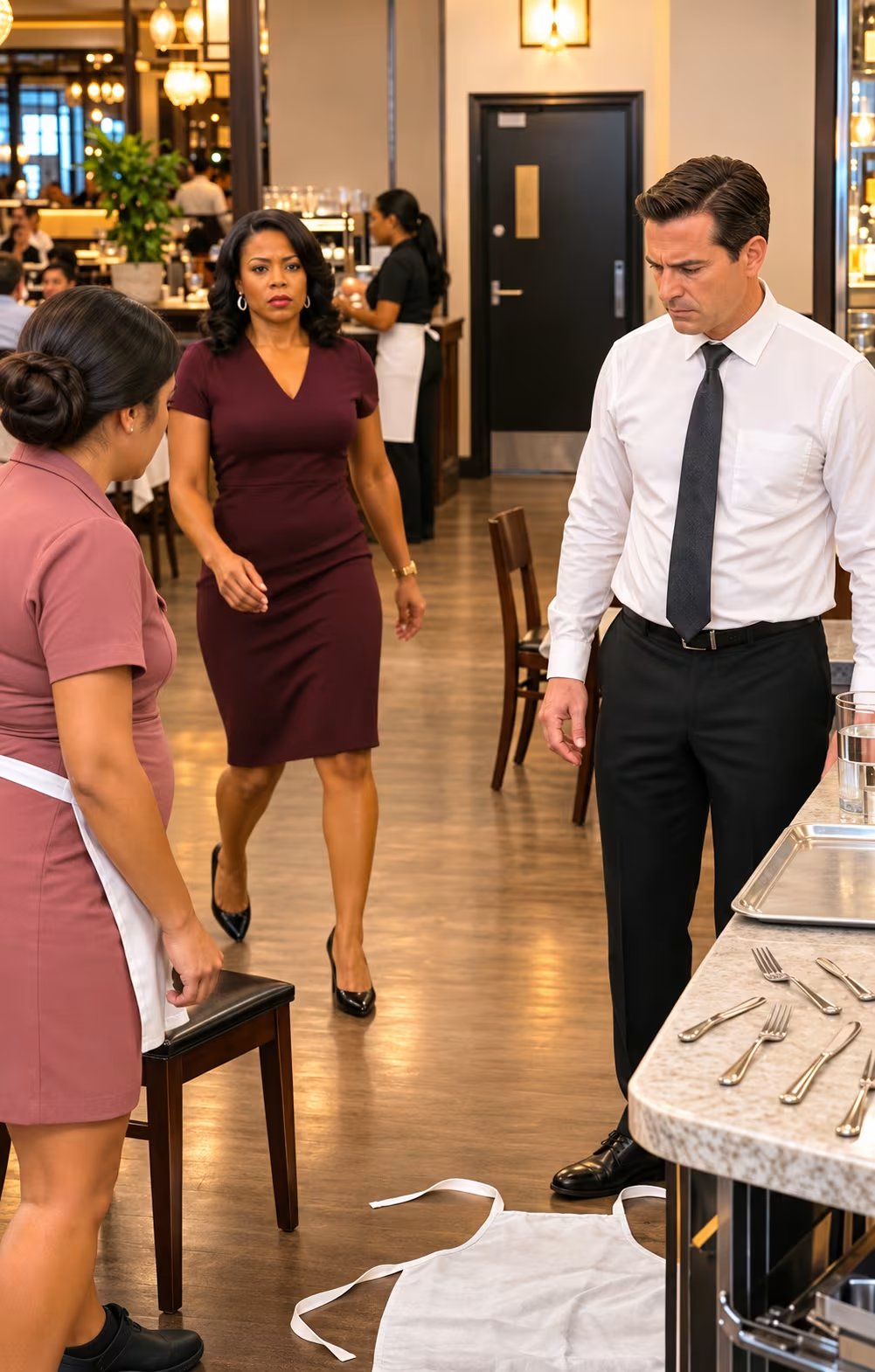
The Restaurant Owner Learns What Happened
A few minutes later, restaurant owner Patricia Wells entered the dining room.
She had operated Harbor Table for more than twelve years.
Patricia immediately noticed Lily sitting near the service counter.
She also saw the apron lying on the floor.
“What happened?” she asked.
Richard began explaining that Lily had refused to complete her shift.
Lily quietly described her request for a break.
Rebecca confirmed what she had witnessed.
Patricia listened without interrupting.
She then asked Richard whether he had reviewed Lily’s previously discussed work adjustments.
Richard admitted that he had not.
Patricia looked concerned.
She had approved the arrangements herself several weeks earlier.
The plan allowed Lily to take reasonable rest breaks and request assistance with physically demanding tasks.
Patricia asked another server to cover Lily’s tables.
Then she invited Lily into the office for a private conversation.
Rebecca offered to remain available if Patricia needed a witness.
Lily thanked her.
Inside the office, Patricia apologized for the public confrontation.
She assured Lily that she would not be penalized simply for requesting an agreed-upon break.
She also asked whether Lily needed medical attention or preferred to contact her healthcare provider.
Lily said she felt better after resting.
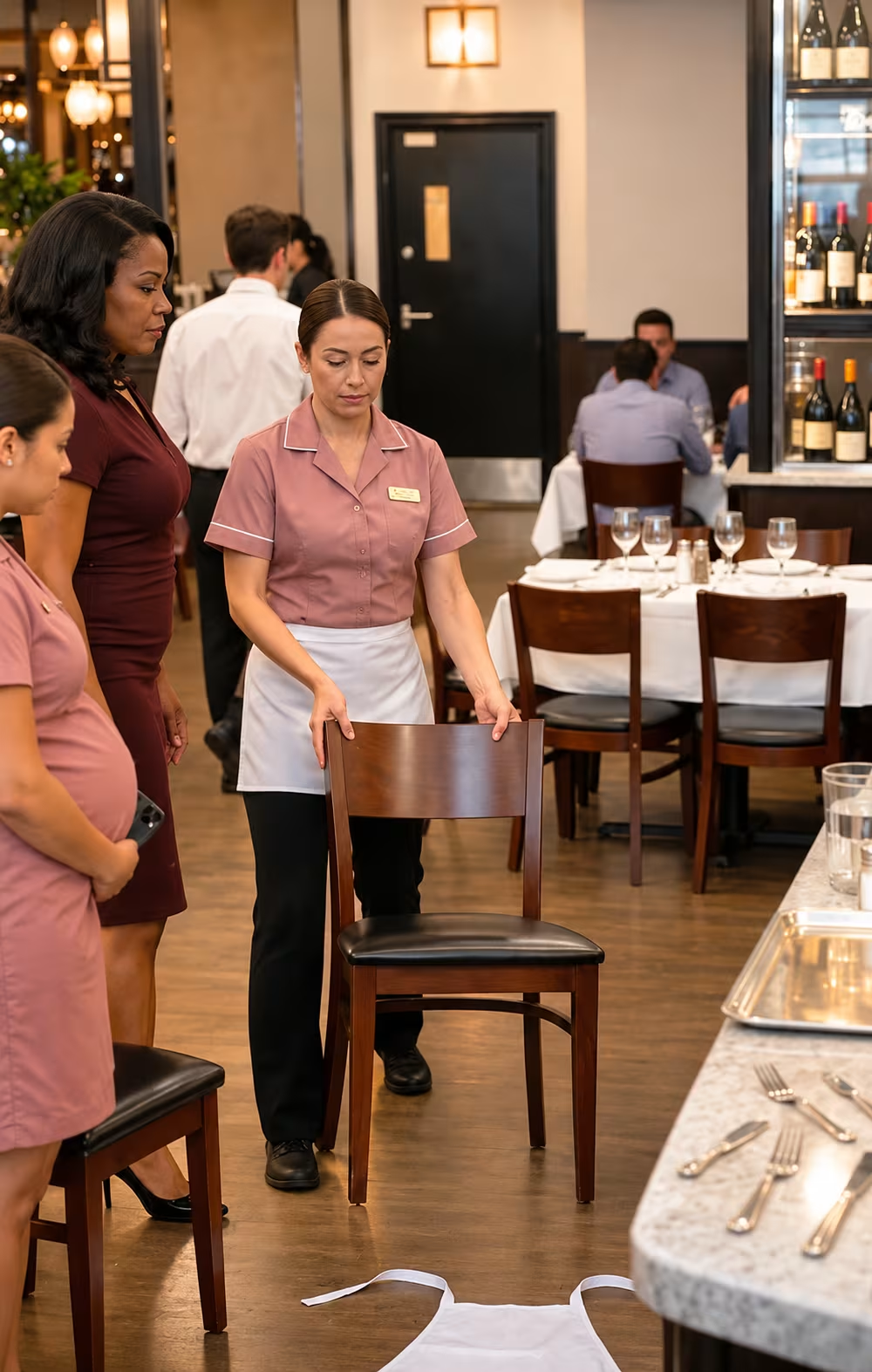
An Apology and a Decision About Accountability
Patricia met privately with Richard.
She explained that managing a busy restaurant did not justify humiliating an employee.
She also reminded him that approved workplace adjustments had to be respected.
Richard initially defended his actions.
He said he had been overwhelmed by the lunch rush.
Patricia acknowledged the staffing pressure but made clear that it did not excuse his behavior.
She began a formal review of the incident and temporarily removed Richard from supervisory duties while the facts were assessed.
Later, Richard approached Lily with Patricia present.
“I’m sorry for how I spoke to you,” he said.
He looked toward the counter.
“And for throwing your apron.”
Lily listened quietly.
“That was embarrassing,” she replied. “I was only asking for what we’d already agreed to.”
Richard nodded.
“I understand.”
Lily accepted that he had apologized but said she needed time to regain her confidence at work.
Patricia respected her response.
She arranged for another supervisor to manage the remainder of the shift.
Lily was given the option to rest and return when she felt ready.
She chose to go home that afternoon.
Before leaving, she thanked Rebecca for intervening.
Rebecca smiled.
“You deserved to be heard.”
A Workplace Begins to Change
Over the following week, Patricia reviewed the restaurant’s scheduling and break procedures.
She spoke with employees individually about their experiences.
Several workers explained that they sometimes hesitated to request assistance during busy shifts.
Patricia introduced clearer coverage arrangements so employees could take approved breaks without leaving tables unattended.
She also provided additional supervisor training on respectful communication and workplace accommodations.
Richard’s conduct was addressed through the restaurant’s formal disciplinary process.
Lily returned to work under a different supervisor.
Her schedule was adjusted to reduce unnecessary physical strain.
Coworkers helped with heavier tasks, and she continued serving customers comfortably.
One afternoon, Rebecca visited the restaurant again.
She was pleased to see Lily smiling behind the counter.
“How are you feeling?” Rebecca asked.
“Much better,” Lily replied.
She explained that the workplace changes had made a real difference.
Rebecca ordered lunch and wished her well.
Several months later, Lily began her planned maternity leave.
Her coworkers organized a small celebration before her final shift.
Patricia presented her with a card signed by the team.
Lily was touched by the gesture.
She had worried that speaking up would cost her the job she valued.
Instead, the incident led to a closer examination of how employees were treated.
This fictional story began when a restaurant manager confronted a pregnant waitress, threw her apron onto the floor, and ordered her away after she requested a break.
A woman who witnessed the confrontation intervened, helped the waitress find a place to rest, and brought the situation to the owner’s attention.
The restaurant subsequently addressed the manager’s conduct and improved its workplace procedures.
For Lily, the moment she would remember most was not the apron falling to the floor, but the stranger who stepped forward when everyone else remained silent and reminded her that asking for respect was never something to be ashamed of.