An Unexpected Delay at the Bus Stop
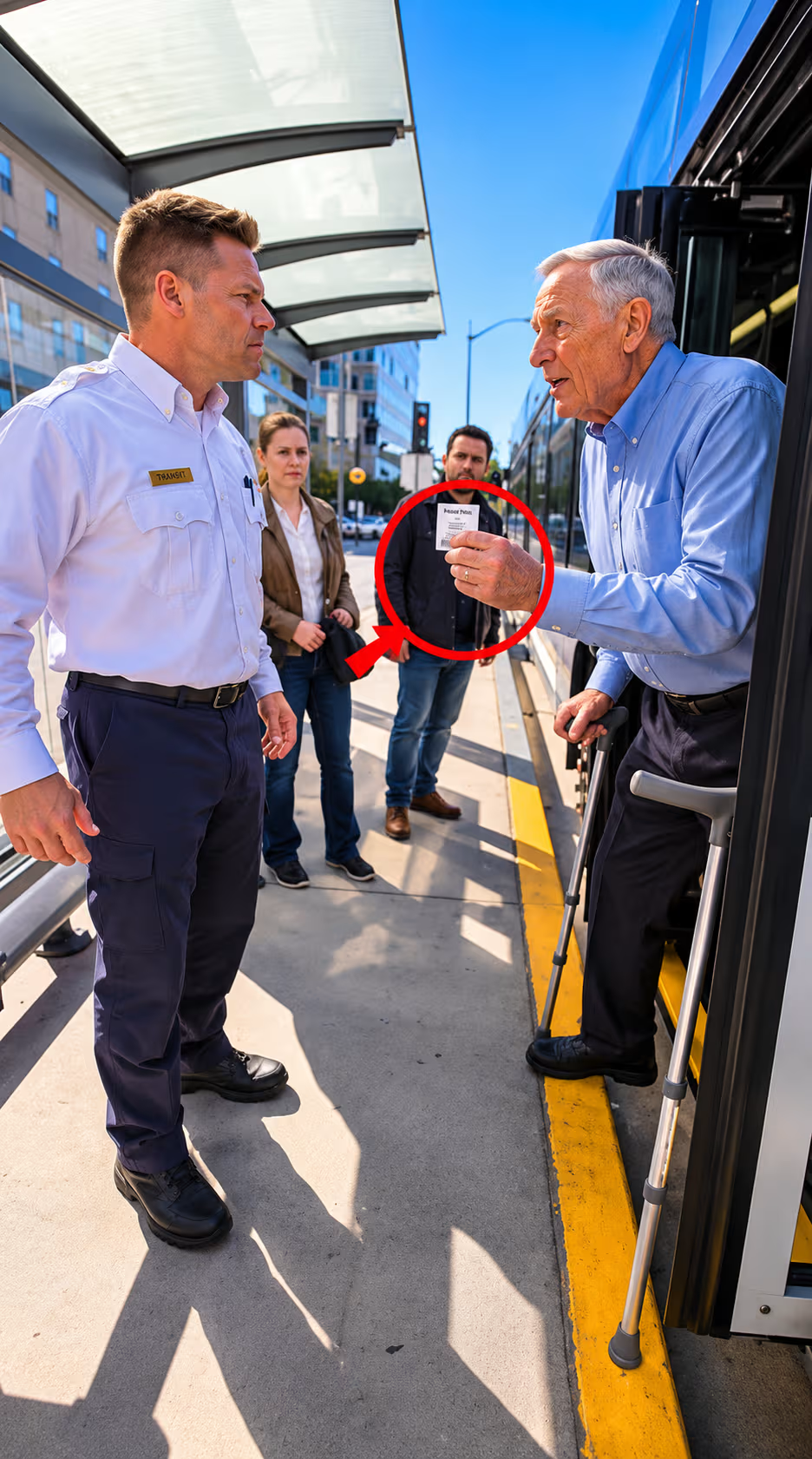
The elderly man reached for the bus handrail, but his walker caught against the edge of the first step.
“Sir, please wait,” the driver called from behind the steering wheel.
Arthur Bennett stopped immediately, gripping the handles of his walker.
He had been waiting nearly forty minutes for the bus that would take him to a medical appointment.
The driver, Michael Turner, leaned toward the open doorway and examined the situation.
Arthur explained that he could manage the steps if someone steadied his walker.
Michael hesitated because the bus’s accessibility equipment was not responding normally.
Several passengers watched from their seats as the conversation continued.
Arthur glanced at his watch, worried about missing his appointment.
Then another transit employee appeared near the front of the bus.
She noticed Arthur standing beside the doorway and immediately approached to ask what was happening.
A Difficult Morning at the Bus Stop
Arthur was seventy-eight and had recently begun using a walker after undergoing knee surgery.
Although his recovery was progressing, climbing steps remained uncomfortable and difficult.
He normally traveled with his daughter, but she was working that morning.
His medical appointment had been scheduled several weeks earlier.
Missing it could mean waiting considerably longer for another available time.
Arthur had checked the bus schedule carefully before leaving home.
He arrived early and positioned himself beside the designated boarding area.
When Michael opened the doors, Arthur approached slowly with his walker.
The driver noticed that Arthur would struggle with the steep entrance.
He attempted to activate the bus’s wheelchair-accessible lift, but the control panel displayed an error.
Michael tried the approved reset procedure without success.
He explained that he could not safely allow Arthur to climb while carrying his walker.
Arthur misunderstood the explanation and feared the driver intended to leave without him.
He asked whether there was another way to board.
Michael assured him that he was trying to find a safe solution.
The Driver Explains the Problem
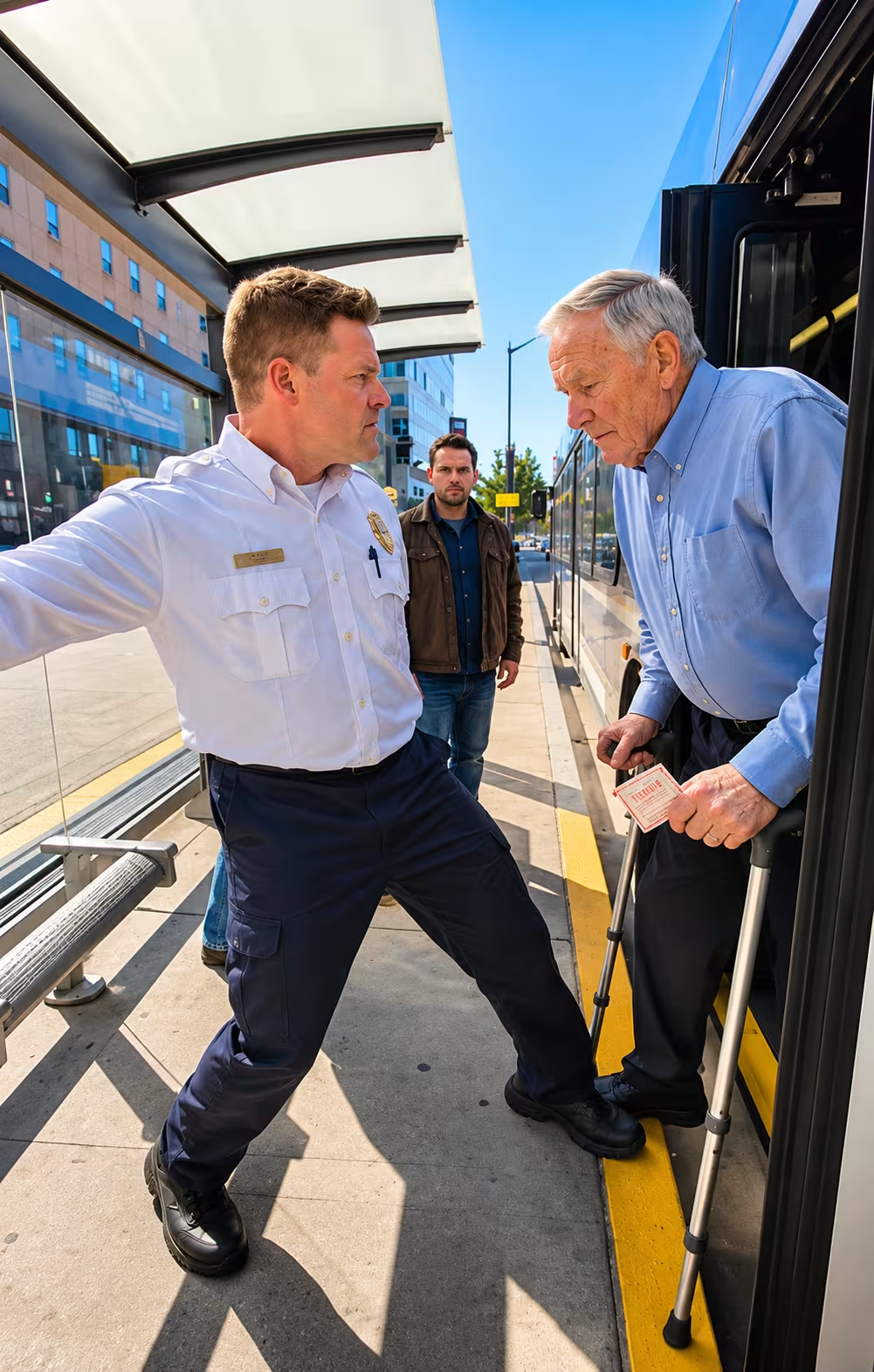
Michael contacted the transit dispatch office using his onboard radio.
He reported that the accessibility lift was malfunctioning and requested assistance.
Dispatch instructed him to keep the bus stationary while they checked nearby resources.
Arthur remained on the sidewalk, leaning against his walker.
He asked whether another accessible bus could arrive before his appointment.
Michael explained that dispatch was checking the available vehicles.
A passenger near the front offered to help lift Arthur onto the bus.
Michael politely declined because manually carrying a passenger could cause serious injury.
He explained that the boarding process needed to follow established safety procedures.
Arthur appreciated the concern but remained frustrated by the delay.
He had already experienced several difficult weeks adjusting to reduced mobility.
Being unable to board an ordinary bus made him feel unexpectedly dependent.
Michael noticed his disappointment and continued speaking with him through the open doorway.
He asked whether Arthur had someone who could be contacted about the appointment.
Arthur explained that his daughter was unavailable during working hours.
Before Michael could suggest another option, dispatch announced that a transit accessibility employee was nearby.
Another Employee Arrives With a Solution
Transit employee Sarah Collins arrived in a service vehicle several minutes later.
She had been assisting passengers at a nearby transportation center when dispatch contacted her.
Sarah introduced herself to Arthur and asked about his mobility needs.
Arthur explained that he could stand and walk short distances but needed his walker for stability.
Sarah examined the bus’s accessibility controls and spoke briefly with Michael.
The lift remained unresponsive despite the driver’s earlier reset attempt.
She confirmed that the equipment should not be operated until maintenance inspected it.
Arthur asked whether that meant he would miss his appointment.
Sarah reassured him that they were exploring another safe boarding option.
She contacted dispatch and requested a replacement low-floor bus with a functioning boarding ramp.
The dispatcher confirmed that one was available nearby.
Michael informed the waiting passengers about the delay and offered transfer information.
Sarah remained beside Arthur while they waited for the replacement vehicle.
She also helped him contact the medical clinic.
The receptionist confirmed that a short delay could be accommodated.
Arthur finally relaxed, knowing that his appointment had not been lost.
A Safe Boarding Procedure Begins
The replacement bus arrived approximately fifteen minutes later.
Its driver parked beside the accessible curb and activated the boarding ramp.
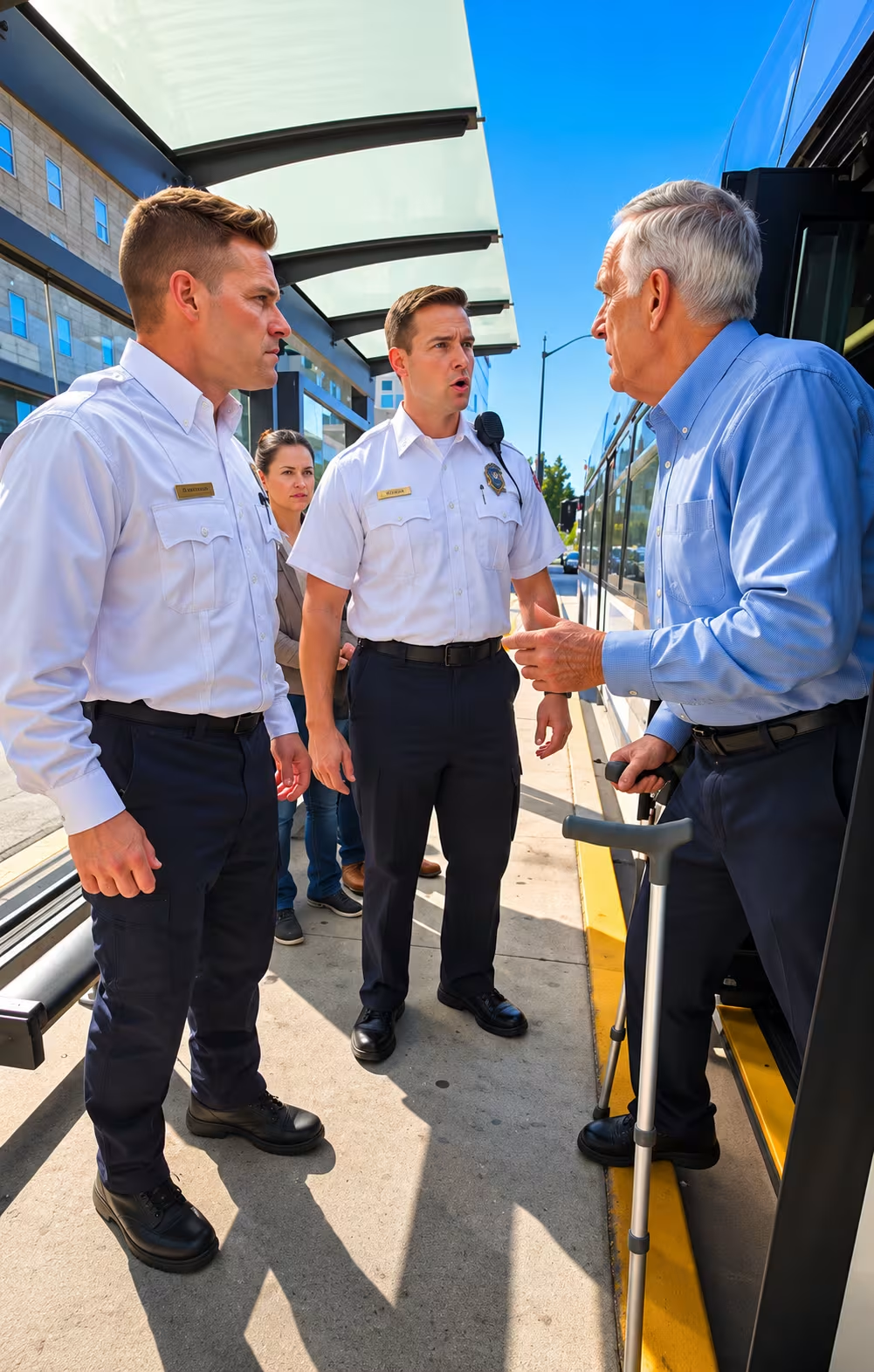
Sarah checked that the ramp was fully deployed and properly positioned.
She then asked Arthur whether he felt comfortable proceeding.
Arthur nodded and adjusted his grip on the walker.
Sarah stood beside him, ready to provide guidance without pulling or lifting him.
Michael stepped down from the original bus to assist with the transfer arrangements.
Arthur slowly guided his walker onto the ramp.
He paused halfway to regain his balance.
Sarah encouraged him to take his time and confirmed that the surface was secure.
After several careful steps, Arthur reached the bus entrance.
He continued into the designated accessible seating area.
Sarah helped position his walker where it would not obstruct the aisle.
The replacement driver ensured that Arthur was seated safely before preparing to depart.
Arthur looked through the window toward Michael.
He raised one hand in appreciation.
Michael returned the gesture, relieved that the passenger could continue his journey safely.
The Journey Continues Without Further Trouble
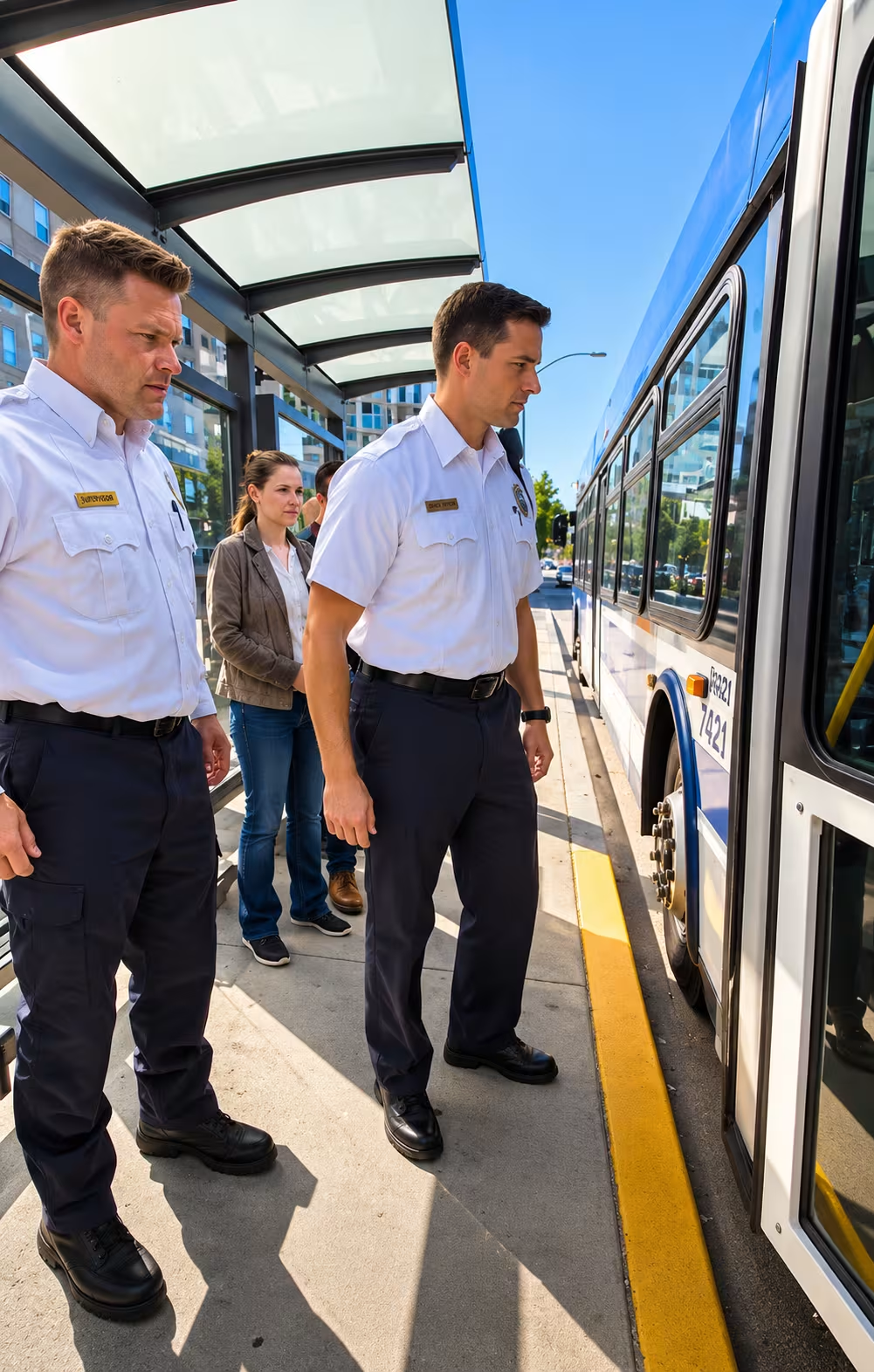
Once Arthur was seated, Sarah explained the remaining stops along his route.
She confirmed that the replacement bus would stop near the medical clinic.
Arthur thanked her for arranging the transfer and helping him board.
Sarah explained that the transit service had procedures for accessibility equipment failures.
She acknowledged that the delay had been inconvenient and apologized for the disruption.
Arthur admitted that he had initially believed Michael was refusing to help him.
Sarah explained that the driver had been protecting him from an unsafe boarding attempt.
Arthur understood the difference more clearly after experiencing the replacement procedure.
Meanwhile, Michael returned to the original vehicle and completed the equipment failure report.
Maintenance staff later inspected the lift and identified a faulty electrical connection.
The bus was removed from passenger service until the problem was repaired and tested.
Arthur reached the clinic with enough time to check in for his appointment.
The receptionist welcomed him and confirmed that his doctor was still available.
For the first time that morning, Arthur felt the pressure of the journey disappear.
A Small Gesture That Changed the Day
Several days later, Arthur visited the transit office with his daughter.
He wanted to thank the employees who had helped him reach his appointment.
Sarah was working at the customer assistance desk when they arrived.
She recognized Arthur immediately and asked how his appointment had gone.
He explained that his doctor was pleased with his recovery progress.
Arthur also mentioned that he was becoming more confident using his walker.
His daughter thanked Sarah for helping her father travel independently.
Sarah explained that accessible transportation should allow passengers to maintain that independence safely.
Arthur asked whether Michael had received his message of appreciation.
The supervisor confirmed that the driver had been informed.
The transit office also reviewed the equipment failure and reinforced its inspection procedures.
This fictional story followed an ordinary journey interrupted by an unexpected accessibility problem.
Michael had recognized the danger of an unsafe boarding attempt and requested assistance.
Sarah had coordinated a replacement vehicle, helped Arthur board, and protected his medical appointment.
Arthur left the office feeling more confident about using public transportation again.
He understood that asking for assistance did not mean surrendering his independence.
What Arthur remembered most was not the broken lift or the delay, but the people who made sure he could continue his journey with safety and dignity.