A Difficult Moment at the Bus Station
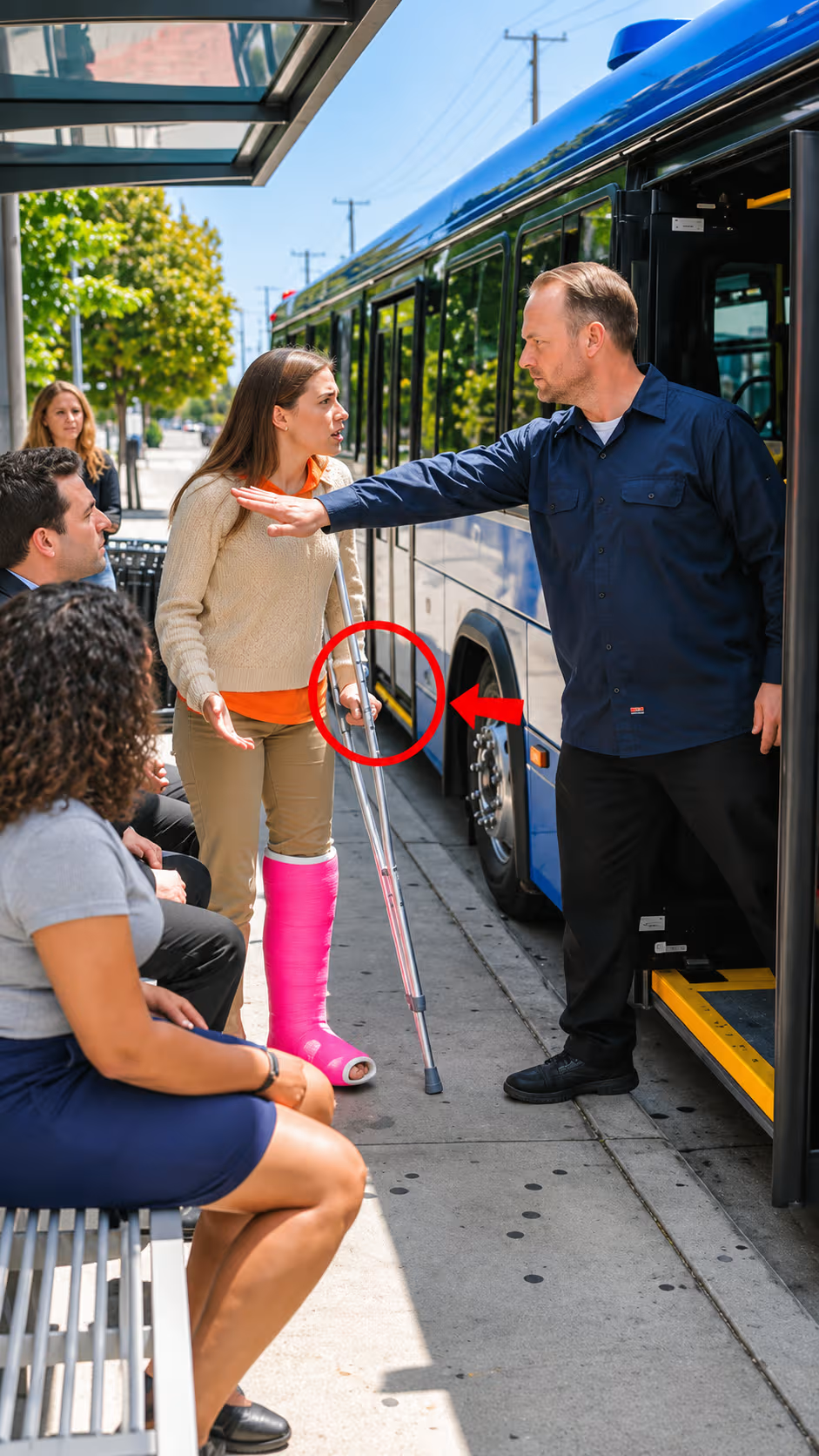
The woman tightened her grip on both crutches as the bus driver questioned whether she could board safely.
“I have a ticket. I just need a little more time,” she explained.
Thirty-four-year-old Rachel Morgan stood beside the open bus door, struggling to balance her handbag and boarding pass.
Her injured ankle throbbed beneath a protective medical boot.
Driver Thomas Reed glanced toward the narrow entrance and the passengers waiting behind her.
He was concerned about the steep steps and Rachel’s ability to reach a seat.
Rachel insisted that she had traveled on buses before.
But when she attempted the first step, one crutch slipped slightly against the pavement.
Thomas immediately asked her to stop.
Their conversation drew the attention of a station employee standing nearby.
A Journey Rachel Could Not Postpone
Rachel had injured her ankle three weeks earlier while descending a staircase at work.
Her doctor had provided crutches and advised her to avoid unnecessary pressure on the injured foot.
She had been recovering at home when her mother called with unexpected news.
Rachel’s father was scheduled for surgery at a hospital two hours away.
Although the procedure was planned, Rachel wanted to arrive before he was admitted.
Her brother offered to drive her, but an urgent work assignment prevented him from leaving.
Rachel purchased an afternoon bus ticket instead.
She checked the company’s website for information about traveling with mobility aids.
The instructions recommended requesting boarding assistance in advance.
However, Rachel overlooked that detail while arranging her journey.
She arrived at the station carrying a small overnight bag and her crutches.
The terminal was crowded with passengers preparing for several departures.
Rachel slowly made her way toward the correct platform.
By the time she reached the bus, her arms were aching.
She hoped to board quickly and rest during the journey.
The Driver Raises an Important Concern
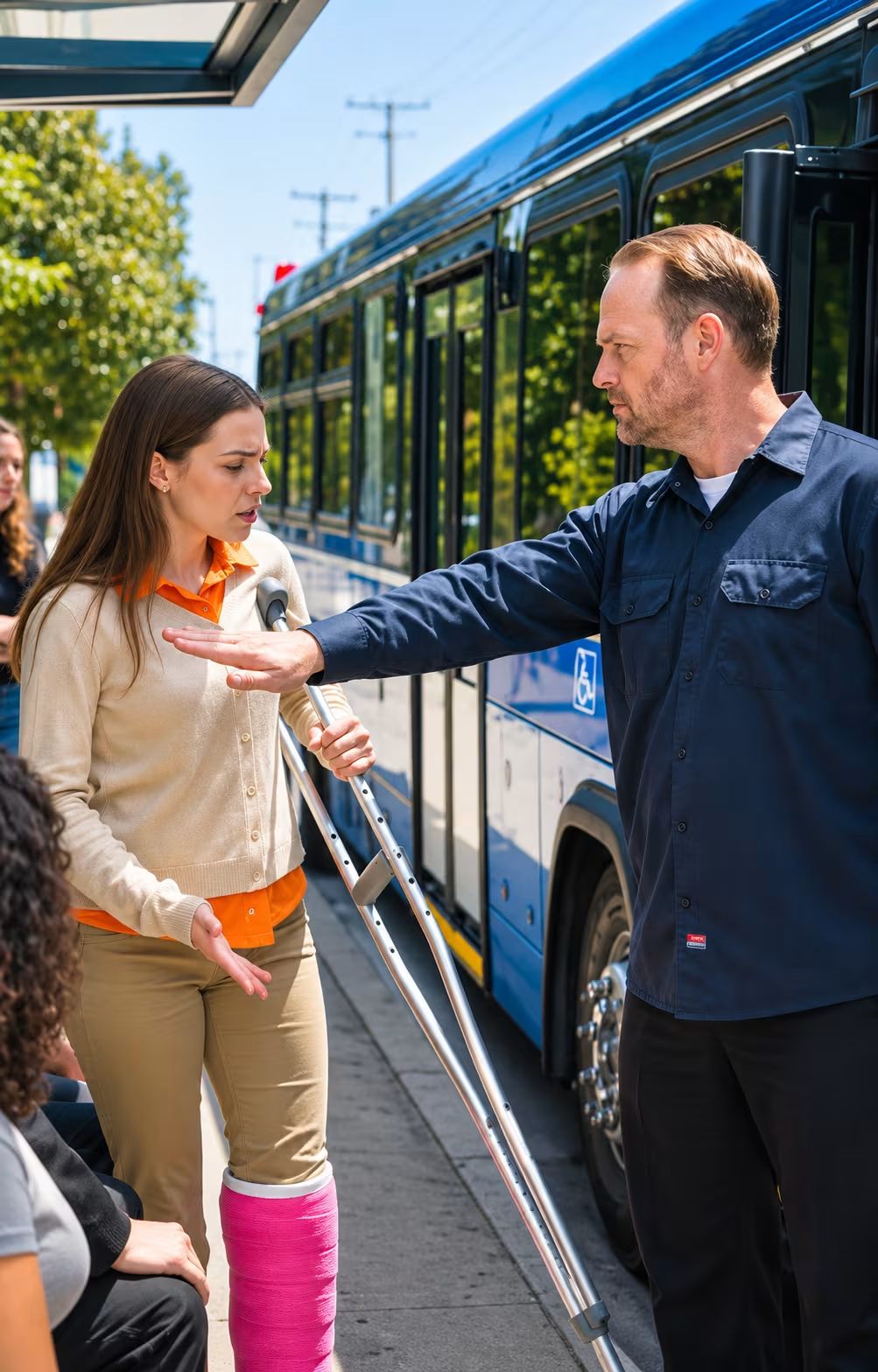
Thomas greeted Rachel and examined her ticket.
He noticed the medical boot and asked whether she needed assistance.
Rachel explained that she could manage if someone allowed her extra time.
Thomas looked toward the bus steps, which were higher than those on the city buses she usually used.
He asked whether she could safely climb them while holding both crutches.
Rachel admitted that she was uncertain.
She had expected the bus to have a lower entrance.
Thomas explained that he did not want her to lose her balance.
Rachel interpreted his hesitation as a suggestion that she should not travel.
She reminded him that her ticket had already been purchased.
Thomas assured her that he was not refusing her journey.
He wanted to arrange suitable boarding assistance before she attempted the steps.
Behind Rachel, several passengers began shifting impatiently.
She became embarrassed by the attention and tried moving forward.
Her crutch slipped slightly, forcing her to grab the handrail.
Thomas immediately asked her to remain on the platform.
He then contacted the station supervisor for help.
A Station Employee Notices the Situation
Station employee Olivia Bennett was assisting passengers at a neighboring platform.
She heard Thomas requesting mobility assistance over the radio.
Olivia approached the bus and introduced herself to Rachel.
She asked whether Rachel was comfortable standing or needed somewhere to rest.
Rachel admitted that her ankle was hurting after walking through the terminal.
Olivia guided her toward a nearby bench while Thomas continued boarding other passengers.
Rachel sat carefully and placed her crutches beside her.
Olivia asked about her destination and whether she had requested assistance when booking.
Rachel explained that she had been distracted by her father’s upcoming surgery.
Olivia listened without criticizing her.
She checked the vehicle’s accessibility information on her handheld device.
The bus had an approved boarding lift, but it required trained staff to operate.
Olivia contacted the platform team to prepare the equipment.
Rachel was surprised because she had not noticed the lift beneath the passenger entrance.
Thomas explained that the equipment was stored out of sight when not in use.
Olivia reassured Rachel that they would follow the proper procedure.
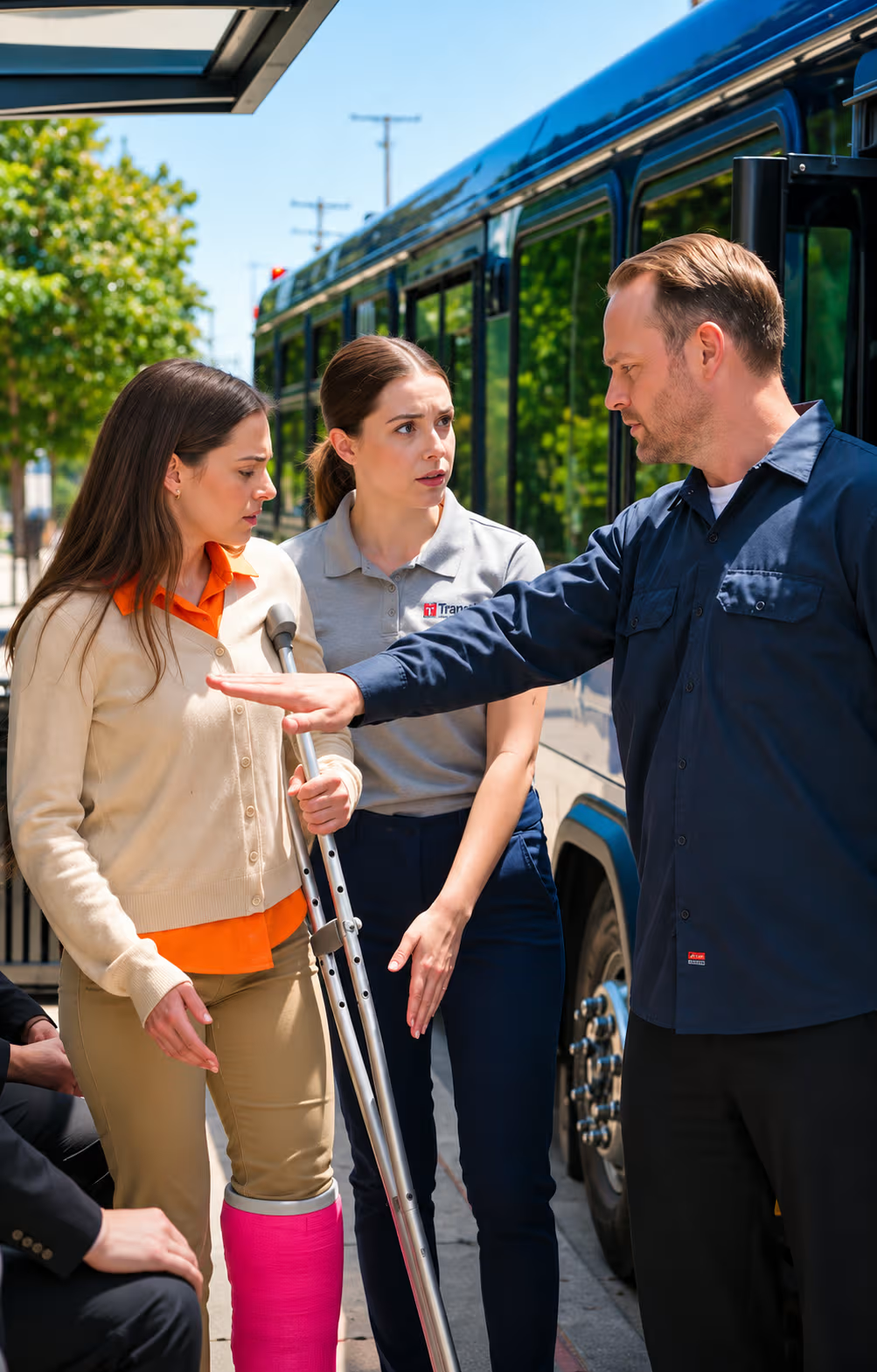
The Employee Helps Rachel Reach Her Seat
A second station employee arrived to assist with the boarding lift.
Olivia explained each step before moving the equipment into position.
Rachel listened carefully and confirmed that she understood the procedure.
The employees prepared the lift according to the vehicle’s operating instructions.
Olivia helped Rachel position herself safely while keeping her crutches within reach.
Thomas remained nearby, monitoring the boarding area.
Once the lift reached the passenger entrance, Rachel moved into the bus with assistance.
Olivia guided her toward an available priority seat near the front.
Rachel lowered herself carefully, keeping her injured foot supported.
She released a long breath as the pressure on her ankle eased.
Olivia placed her crutches where they could be secured without blocking the aisle.
She also arranged for Rachel’s overnight bag to be stored safely.
Thomas approached and asked whether she was comfortable.
Rachel nodded and thanked him for arranging assistance.
He explained that his earlier questions had been about preventing an injury.
Rachel apologized for misunderstanding his concern.
Thomas assured her that she had nothing to apologize for.
Olivia checked that Rachel could reach her belongings before returning to the platform.
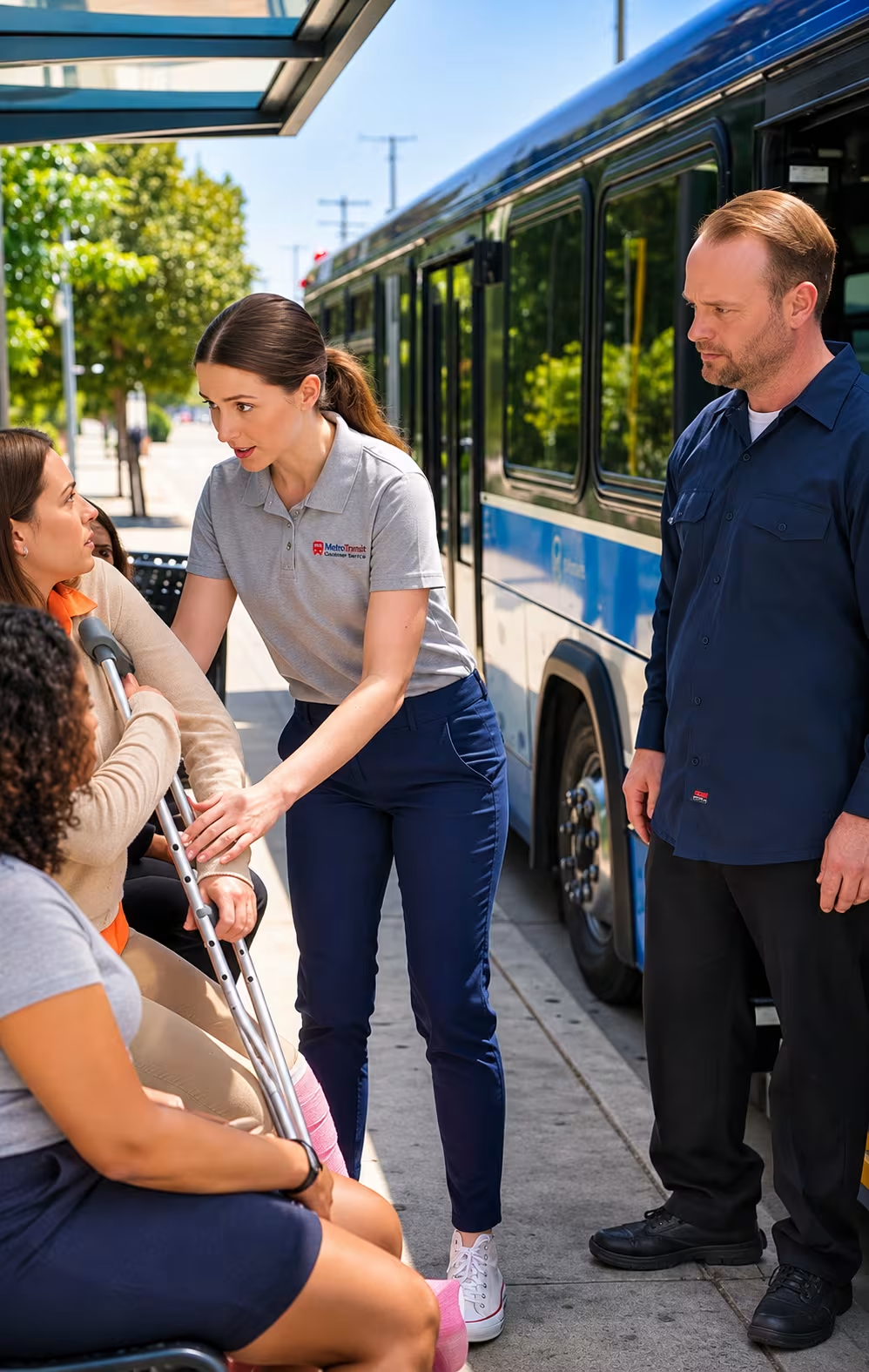
A Conversation Changes the Mood
With Rachel safely seated, the remaining passengers finished boarding.
Thomas completed his departure checks and prepared to leave the station.
Before returning to the driver’s seat, he asked Rachel whether someone would meet her at the destination.
She explained that her brother would collect her near the hospital.
Thomas suggested contacting him before arrival so she would not need to wait outside.
Rachel appreciated the advice and sent her brother a message.
During the journey, she looked out the window as the city gradually disappeared behind them.
Her ankle still ached, but she no longer worried about balancing on the bus steps.
At a scheduled stop, Thomas checked whether she needed anything.
Rachel thanked him and explained why the journey mattered so much.
She told him about her father’s surgery and her hope of seeing him beforehand.
Thomas wished her father a successful procedure.
He also arranged for assistance at the destination through the transport company’s dispatch office.
Rachel was grateful that the staff had considered how she would leave the bus.
For the first time that afternoon, she felt able to relax.
A Safe Arrival and a Meaningful Reminder
The bus reached its destination shortly before evening.
Rachel’s brother, Michael, was waiting near the designated passenger pickup area.
Thomas contacted the terminal staff and confirmed that assistance was available.
An employee prepared the boarding lift while Rachel gathered her belongings.
She followed the instructions and exited the bus safely.
Michael approached once she reached the platform.
He thanked the employees and took responsibility for her overnight bag.
Rachel turned toward Thomas and expressed her appreciation again.
She admitted that the conversation at the departure station had initially upset her.
Thomas explained that safe travel sometimes required additional preparation.
Rachel agreed that asking for help had been better than risking another injury.
Michael drove her directly to the hospital.
Rachel arrived in time to visit her father before his scheduled procedure.
He smiled when she entered the room with her crutches.
Later, Rachel sent a message to the bus company praising the employees’ assistance.
The company shared her feedback with Thomas, Olivia, and the destination staff.
This fictional story followed a woman whose injury made an important journey more difficult.
The driver’s initial concern led to a misunderstanding, but trained employees provided appropriate assistance.
Rachel reached her destination safely and learned the value of arranging accessible travel support.
What Rachel remembered most was not the difficulty of boarding the bus, but the people who made sure she could continue her journey with dignity and confidence.