A Birthday Celebration Interrupted
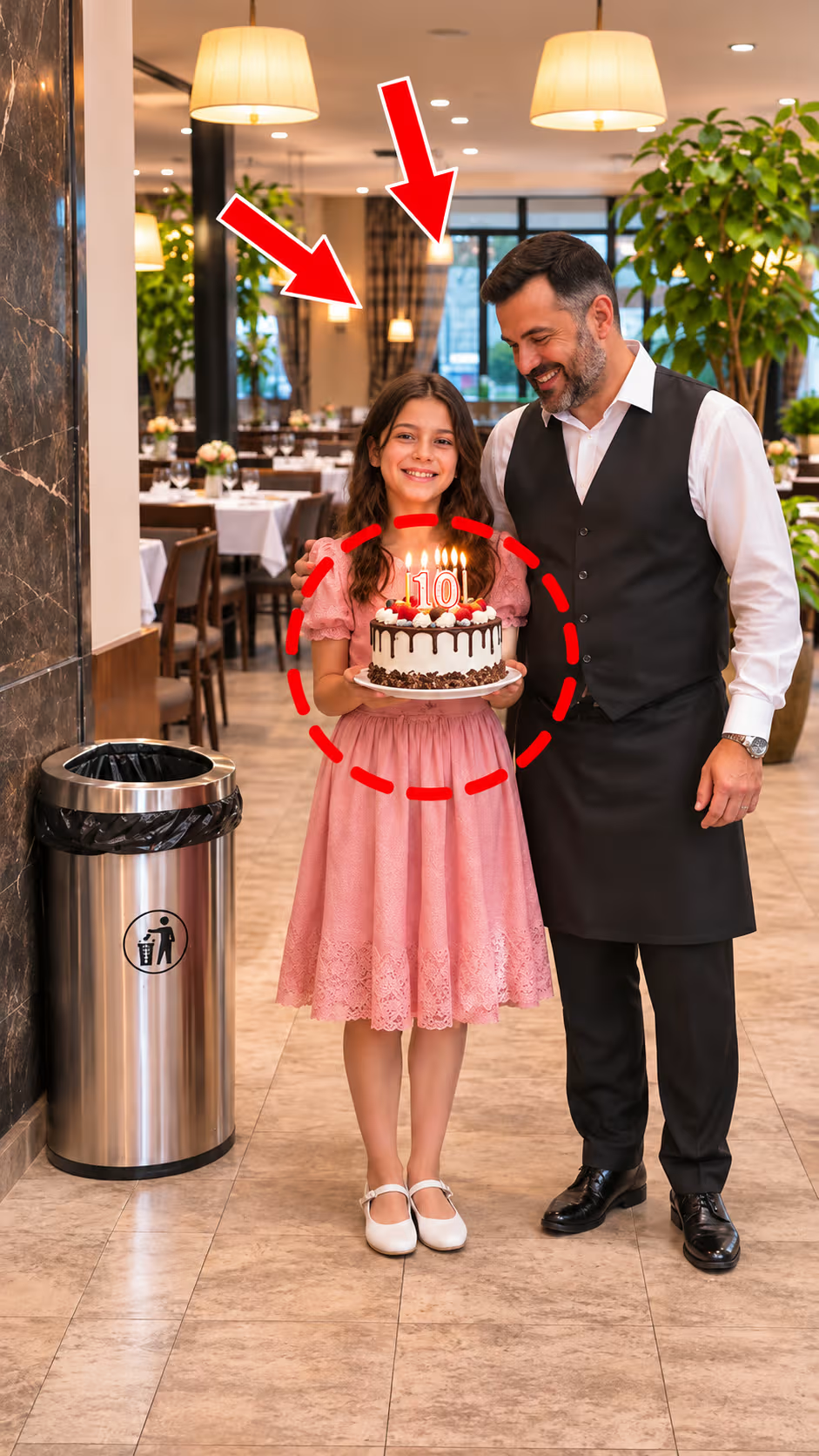
The birthday cake had barely reached the restaurant table when the manager demanded its removal.
Twelve-year-old Lily Morgan stared at the white frosting and pink decorations.
Her mother, Rachel, had brought the cake for a small family celebration.
They had reserved a table for six and ordered dinner.
But manager Victor Hale stood beside them, pointing toward the cake box.
“Outside food isn’t permitted here,” he said firmly.
Rachel apologized and offered to keep the cake closed until they left.
Victor refused.
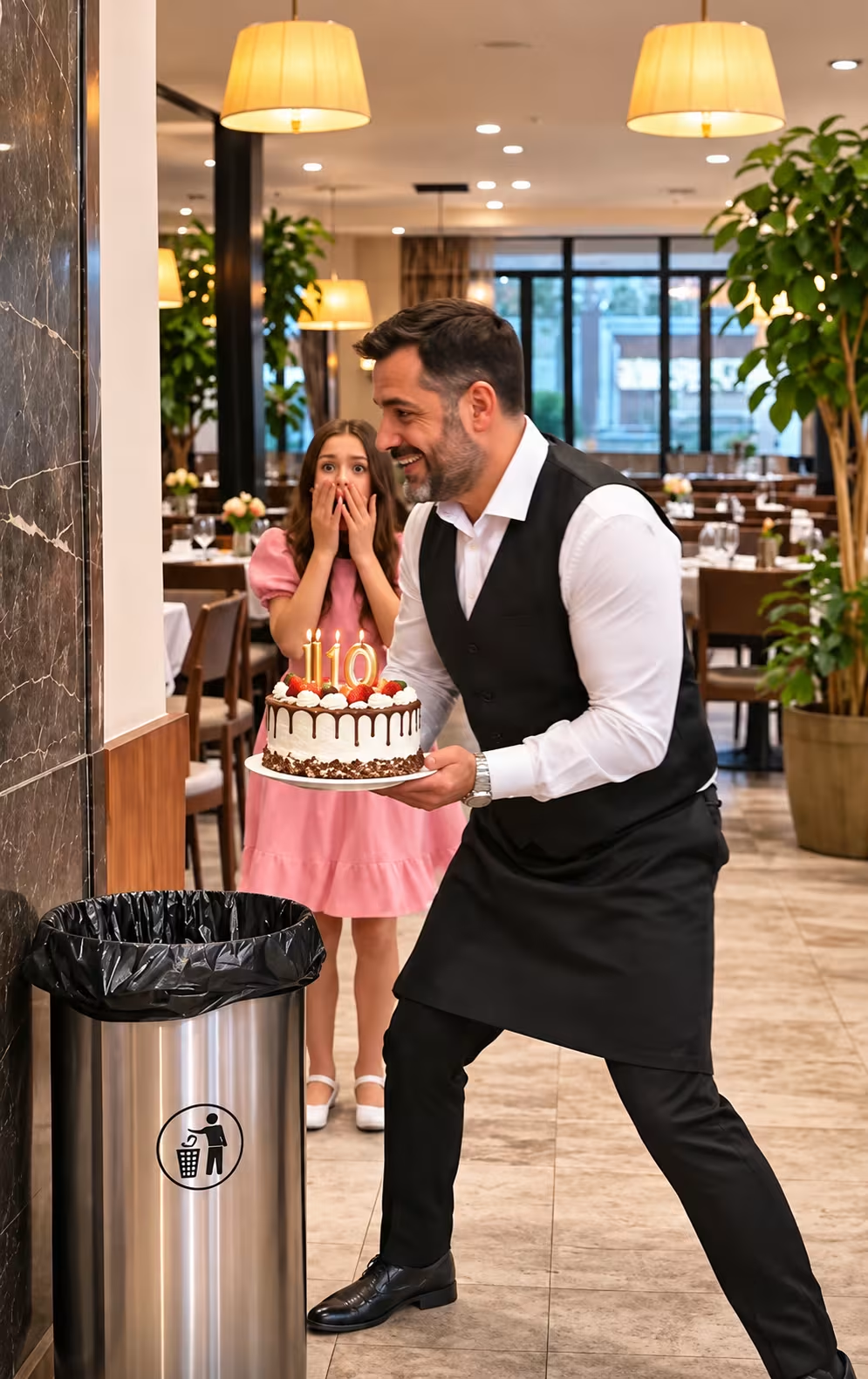
Before anyone could intervene, he grabbed the box and carried it toward the kitchen.
Lily watched him drop it into a large trash container.
Then he returned and ordered the family to leave.
Several customers fell silent.
Near the entrance, a waitress reached for her telephone.
She knew someone who needed to hear what had happened.
A Rule Enforced Without Compassion
Rachel remained seated, struggling to understand the manager’s reaction.
She had mentioned the birthday cake when making the reservation.
The employee who answered had said the family could bring it.
Victor insisted that the employee had misunderstood restaurant policy.
“We prepare our own desserts,” he explained. “Customers cannot bring competing products.”
Rachel pointed out that the family had already ordered meals.
They had also purchased drinks and appetizers for everyone.
She offered to pay an additional service charge for the cake.
Victor dismissed the suggestion.
“The rules apply to everyone.”
Lily’s grandmother, Margaret, asked why he had thrown away something they had purchased.
Victor claimed that unauthorized food could not remain in the restaurant.
Margaret explained that the cake had been made by a neighborhood bakery.
It carried a handwritten birthday message and twelve small decorations.
Lily had chosen the design herself.
Victor responded that the discussion was over.
He instructed the family to settle their bill and leave immediately.
Rachel requested a refund for the meals they had not received.
Victor refused to discuss payment until they gathered their belongings.
At the neighboring table, a customer quietly asked for the manager’s name.
The Waitress Who Contacted the Owner
Waitress Anna Lopez had worked at the restaurant for nearly four years.
She remembered taking Rachel’s reservation two days earlier.
Anna had specifically asked the shift supervisor about bringing a birthday cake.
The supervisor had approved it, provided the family purchased meals.
Anna had written the arrangement in the reservation notes.
When Victor confronted the family, she attempted to explain.
He interrupted before she could finish.
“Employees don’t make exceptions without my approval.”
Anna retrieved the reservation book from the service counter.
The written note confirmed that the cake had been authorized.
She showed it to Victor.
He glanced at the entry but refused to reconsider.
Anna knew the situation involved more than a disagreement about restaurant policy.
The family had followed the instructions given during booking.
She contacted Thomas Whitmore, who owned the restaurant property and operated the building’s commercial leasing office.
Thomas had recently visited to discuss complaints about Victor’s management.
Anna explained what had happened and asked whether he could come.
Thomas requested that the family remain nearby until he arrived.
Anna returned to Rachel and quietly explained that someone was coming to help.
A Family Waiting for an Explanation
Rachel had already begun gathering her daughter’s birthday gifts.
Lily remained silent, looking toward the kitchen where her cake had disappeared.
Her younger brother, Noah, asked whether they could celebrate somewhere else.
Rachel promised that they would find another place.
However, Margaret suggested waiting a few minutes.
Anna had explained that the property owner wanted to speak with them.
Victor approached again and demanded that they leave.
Rachel showed him the reservation note Anna had provided.
The handwriting clearly mentioned permission for an outside birthday cake.
Victor examined it briefly.
He argued that the employee who approved it lacked authority.
Rachel asked why the family should suffer because of an internal misunderstanding.
Victor had no satisfactory explanation.
Instead, he threatened to call security if they remained.
Anna stepped forward and offered to move the family into the waiting area.
That would allow other customers to continue their meals.
Rachel agreed, hoping to avoid further embarrassment for Lily.
As they moved toward the entrance, a silver sedan stopped outside.
An older man wearing a gray jacket stepped out.
Anna immediately recognized him.
Thomas Whitmore had arrived.
The Owner Demands an Explanation
Thomas entered the restaurant and noticed the family standing near the reception desk.
Anna introduced Rachel and explained the birthday reservation.
Thomas listened before approaching Victor.
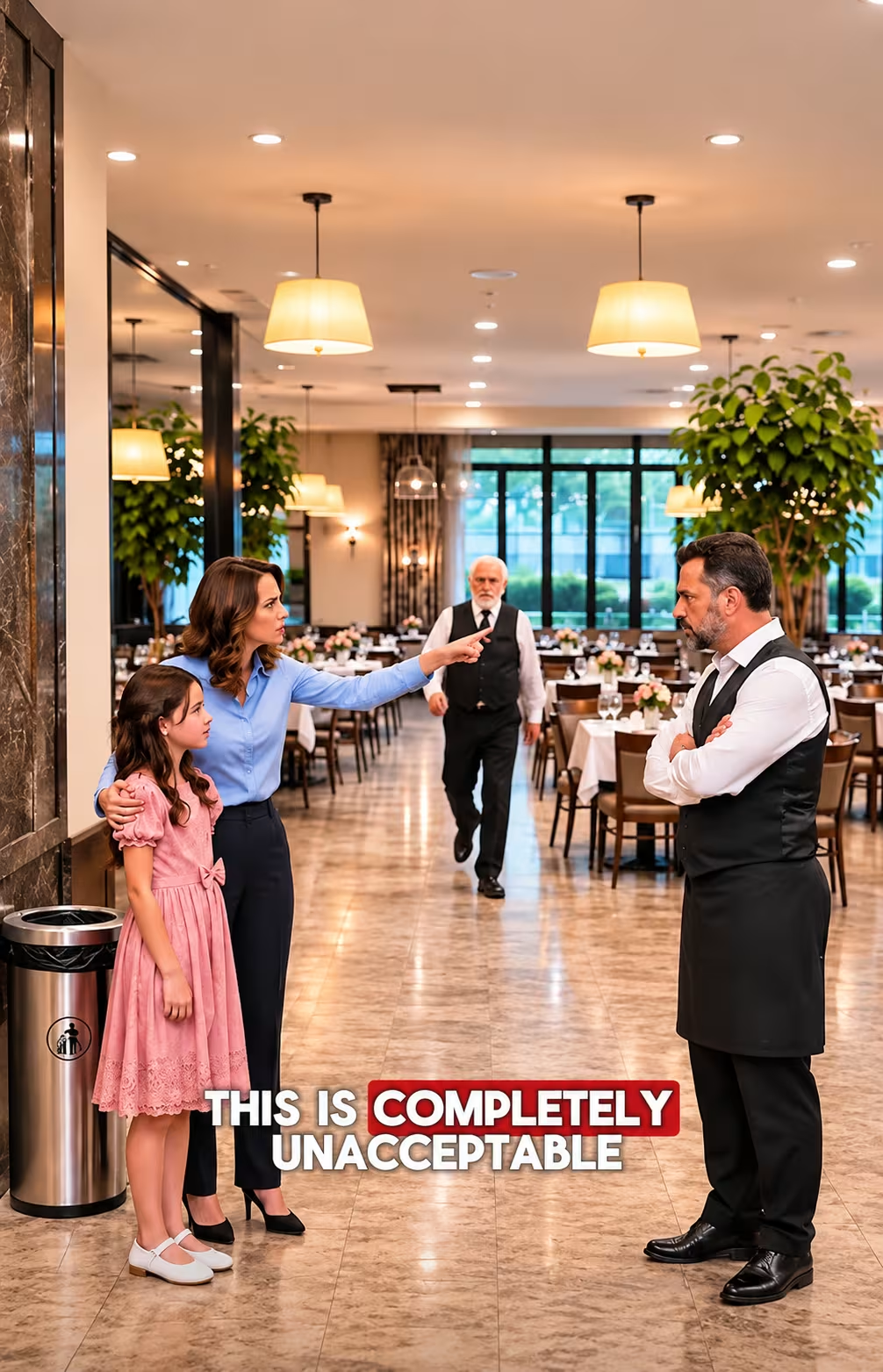
“I understand you removed a customer’s birthday cake,” he said.
Victor acknowledged throwing it away.
He defended his decision by citing the restaurant’s outside-food policy.
Thomas asked whether the family had been warned before arriving.
Anna presented the reservation book.
Thomas read the handwritten approval and looked toward Victor.
“Then why was the cake destroyed instead of returned?”
Victor hesitated.
He claimed that enforcing the rule required immediate action.
Thomas disagreed.
He explained that Victor operated the restaurant under a commercial lease for the premises.
Although Victor controlled daily operations, the lease required lawful conduct and compliance with certain customer-service and property provisions.
Thomas could not simply dismiss Victor as an employee.
However, he could review whether the incident and previous documented complaints constituted lease violations.
“I will have our attorney examine your lease,” Thomas said.
“If there are grounds for termination and this behavior continues, I will pursue that option.”
Victor’s expression changed.
He had expected the property owner to support his authority.
Instead, Thomas requested a written account of the incident and the restaurant’s reservation policy.
Then he turned toward Rachel.
“Your daughter deserves an apology and a proper birthday celebration.”
A Birthday Cake Replaced
Thomas asked Rachel whether the family would consider staying.
She looked toward Lily before answering.
The girl admitted that she still wanted to celebrate with her grandparents.
Thomas offered to cover their meal personally.
He also asked Anna whether the kitchen could prepare a replacement cake.
The pastry chef explained that a small vanilla cake could be assembled from available ingredients.
However, it would not match Lily’s original design.
Rachel thanked him but explained why the discarded cake mattered.
Lily had selected its decorations with her grandmother.
Margaret had helped arrange the order several days earlier.
Thomas asked whether the bakery was still open.
Anna checked the receipt attached to the original cake box.
The bakery’s telephone number appeared at the bottom.
Thomas called and explained the situation.
The baker remembered preparing Lily’s cake and agreed to make a smaller replacement.
It would take approximately forty minutes.
Thomas arranged to collect it and pay the full cost.
Meanwhile, Victor approached Rachel and apologized for his conduct.
He acknowledged that throwing away the cake had been unnecessary.
Rachel accepted the apology but made clear that the incident had upset her daughter.
Victor agreed to refund the family’s original charges.
The Celebration That Almost Never Happened
Forty-five minutes later, Anna returned carrying a fresh birthday cake.
The bakery had recreated the pink decorations and handwritten message.
Lily recognized the design immediately.
Her grandmother smiled as Anna placed it carefully on the table.
The family gathered around while twelve candles were arranged across the frosting.
Thomas remained near the entrance, giving them space to celebrate.
When the candles were lit, Lily’s family began singing.
Several nearby customers joined quietly.
Lily closed her eyes, made a wish, and blew out the candles.
Rachel took a photograph before anyone cut the cake.
The evening finally resembled the celebration they had planned.
After dinner, Thomas met privately with Victor.
He requested copies of the restaurant’s written policies and relevant reservation records.
He also explained that any lease action would depend on documented violations and applicable legal requirements.
Victor agreed to review employee training and establish clearer procedures for special reservations.
Thomas promised to follow up on those commitments.
The following week, Rachel received a letter confirming that the restaurant had introduced a written birthday-cake policy.
Employees would now document exceptions and obtain management approval before customers arrived.
This fictional story illustrates how a preventable confrontation can be addressed through accountability and practical action.
For Lily, the lasting memory was not the argument but the moment her family gathered around her replacement cake.
A birthday nearly ruined by one person’s harsh decision became a celebration remembered for the people who chose to make things right.