An Uncomfortable Encounter in a Busy Restaurant
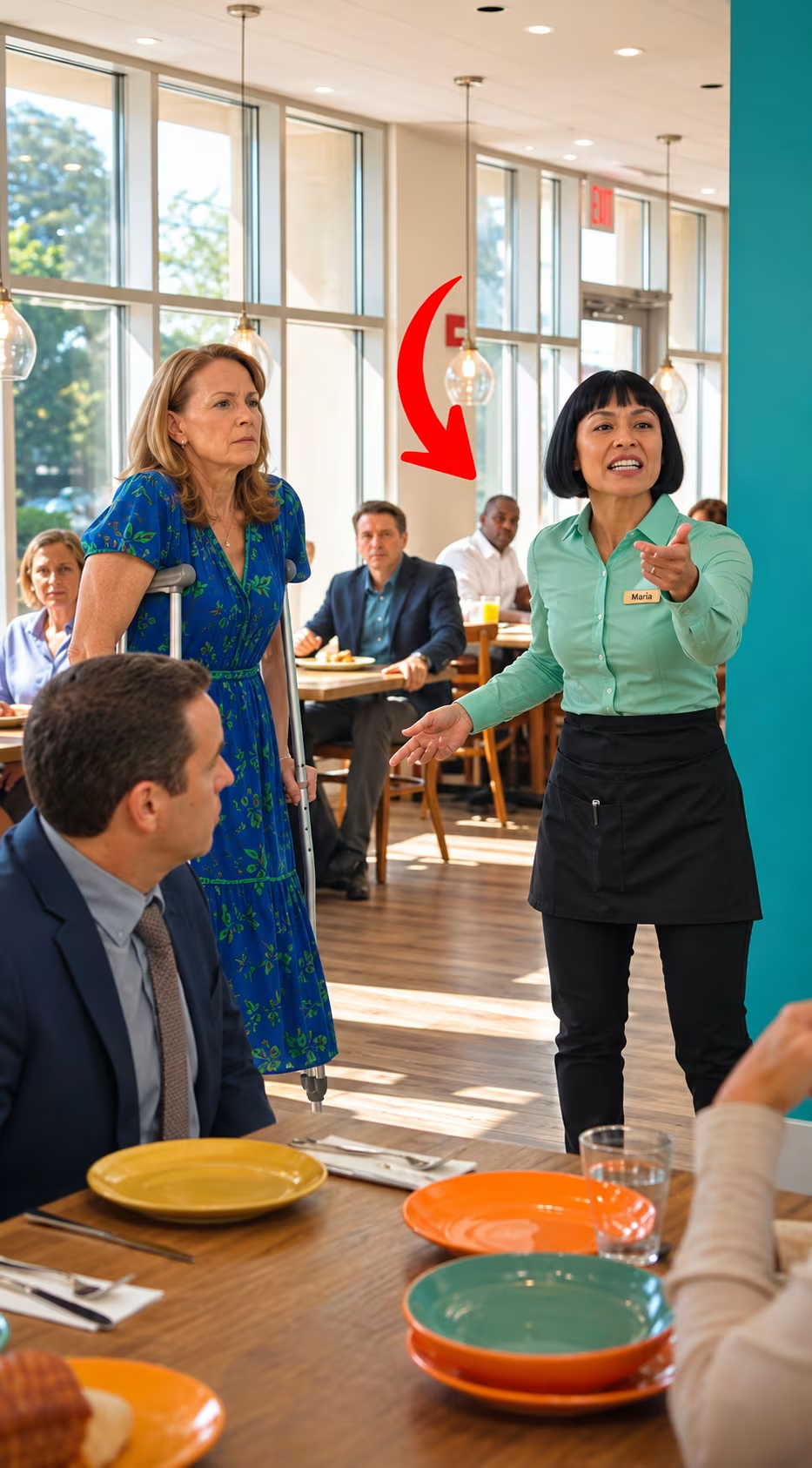
The woman stopped beside an empty table when a restaurant employee stepped directly into her path.
“Ma’am, you can’t leave those crutches in the dining area.”
Laura Bennett looked down at the two crutches supporting her weight.
She had been carefully making her way toward a table near the window.
“I’m not leaving them anywhere,” she explained. “I need them to walk.”
The employee, Patricia Collins, pointed toward the narrow aisle.
She insisted that the crutches could create a problem for other customers.
Laura offered to keep them beside her chair.
Patricia refused and suggested that Laura wait near the entrance instead.
Several diners turned toward the conversation.
Laura felt increasingly uncomfortable as the employee continued questioning her.
Then a man wearing a restaurant manager’s badge approached from the service counter.
He had heard enough to realize that something needed to change.
A Simple Lunch Becomes Complicated
Laura had arranged to meet her sister for lunch at Riverside Grill.
The restaurant was located near a small shopping district.
She had visited several times before and enjoyed its quiet afternoon atmosphere.
Three weeks earlier, Laura had injured her ankle in a household accident.
Her doctor had advised her to limit weight-bearing while recovering.
For that reason, she relied on crutches whenever she left home.
She had become accustomed to moving carefully through doorways and crowded spaces.
However, navigating unfamiliar furniture arrangements remained challenging.
When Laura entered the restaurant, the hostess greeted her and checked her reservation.
Her sister, Emily, had not yet arrived.
The hostess directed Laura toward a table near the window.
Laura thanked her and began walking through the dining area.
Several chairs extended slightly into the aisle.
She moved slowly, avoiding contact with nearby tables.
Patricia noticed her approaching while carrying menus.
The employee had recently been reminded to keep walkways clear.
Unfortunately, she misunderstood how that instruction should apply to customers using mobility aids.
Instead of offering assistance, she questioned Laura’s presence in the aisle.
A Request That Becomes a Confrontation
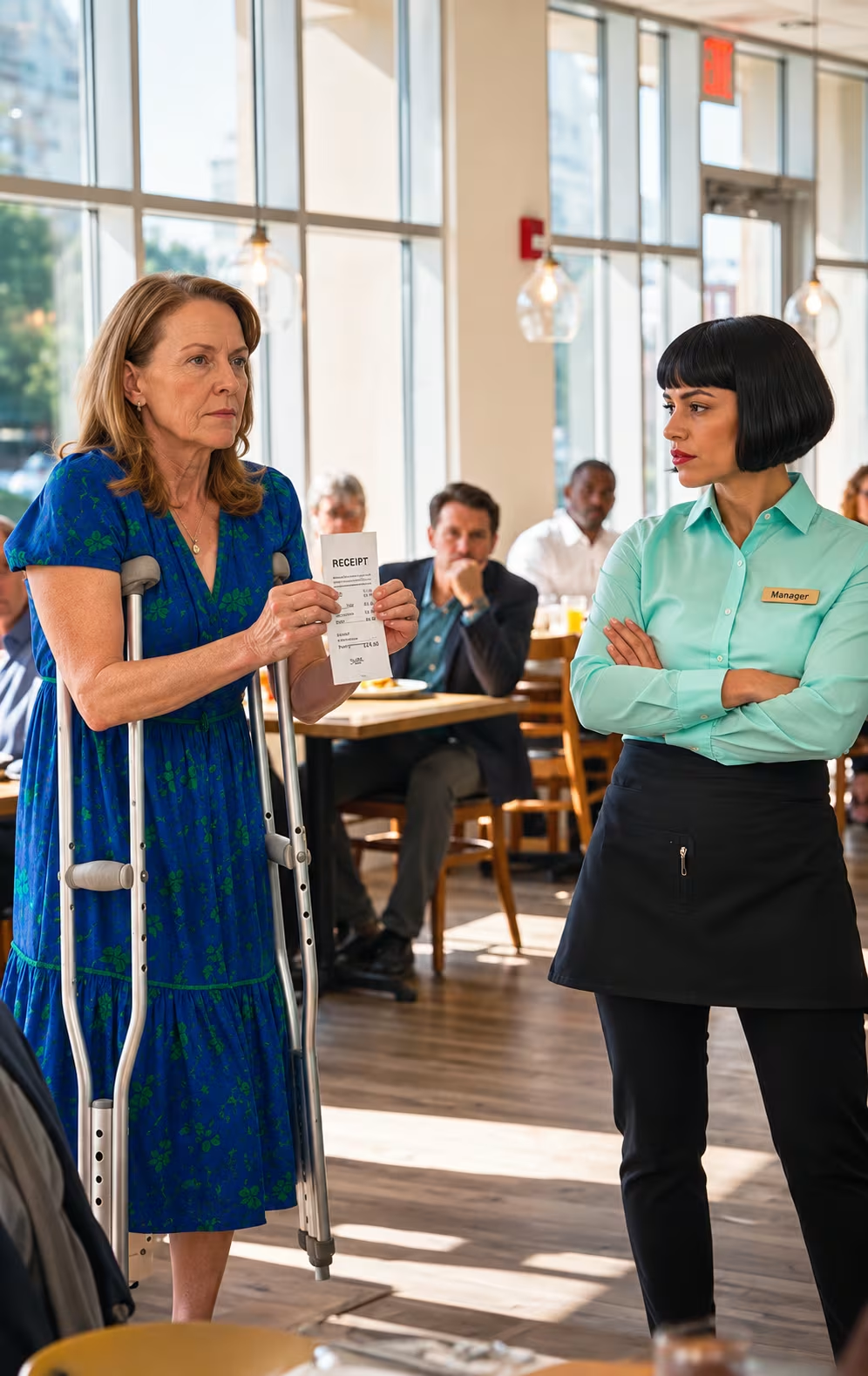
Patricia approached Laura before she reached the reserved table.
She pointed toward the crutches and asked where Laura intended to put them.
Laura explained that she would position them safely beside her chair.
Patricia shook her head.
“We can’t have equipment blocking the dining area.”
Laura looked toward the empty table.
There appeared to be enough room beside it for her crutches.
She suggested placing them against the wall within easy reach.
Patricia insisted that they should be kept near the entrance.
Laura explained that she could not walk safely without them.
The employee responded that another staff member could help her whenever necessary.
Laura was surprised by the suggestion.
“I need to be able to move independently,” she replied.
Patricia appeared frustrated.
She claimed that the restaurant had rules about keeping aisles clear.
Laura agreed that safety mattered.
However, she questioned why her crutches were being treated differently from other necessary personal items.
The conversation attracted attention from nearby diners.
A customer quietly offered to move an unused chair.
Patricia declined the suggestion before Laura could respond.
The disagreement had become more public than either woman intended.
The Manager Notices the Disagreement
Restaurant manager Daniel Brooks was reviewing reservations when he heard raised voices.
He approached the dining area and noticed Laura standing with her crutches.
Patricia immediately explained her concerns about the narrow aisle.
She said that she was trying to prevent a possible accident.
Daniel listened before asking Laura what had happened.
Laura described the conversation without raising her voice.
She explained that she had a reservation and simply wanted to sit comfortably.
She also emphasized that her crutches needed to remain accessible.
Daniel looked toward the table near the window.
He noticed an unused chair occupying part of the available space.
The chair could easily be moved without affecting other guests.
He turned toward Patricia.
“Did we offer to adjust the seating arrangement?”
Patricia admitted that she had not considered that option.
Daniel explained that maintaining clear walkways should include accommodating customers who used mobility aids.
He also reminded her that guests should not be asked to surrender equipment they needed for safe movement.
Patricia appeared uncertain.
She insisted that she had only been following safety instructions.
Daniel acknowledged her concern but explained that the proposed solution was inappropriate.
Then he addressed Laura directly.
A Different Approach to the Same Problem
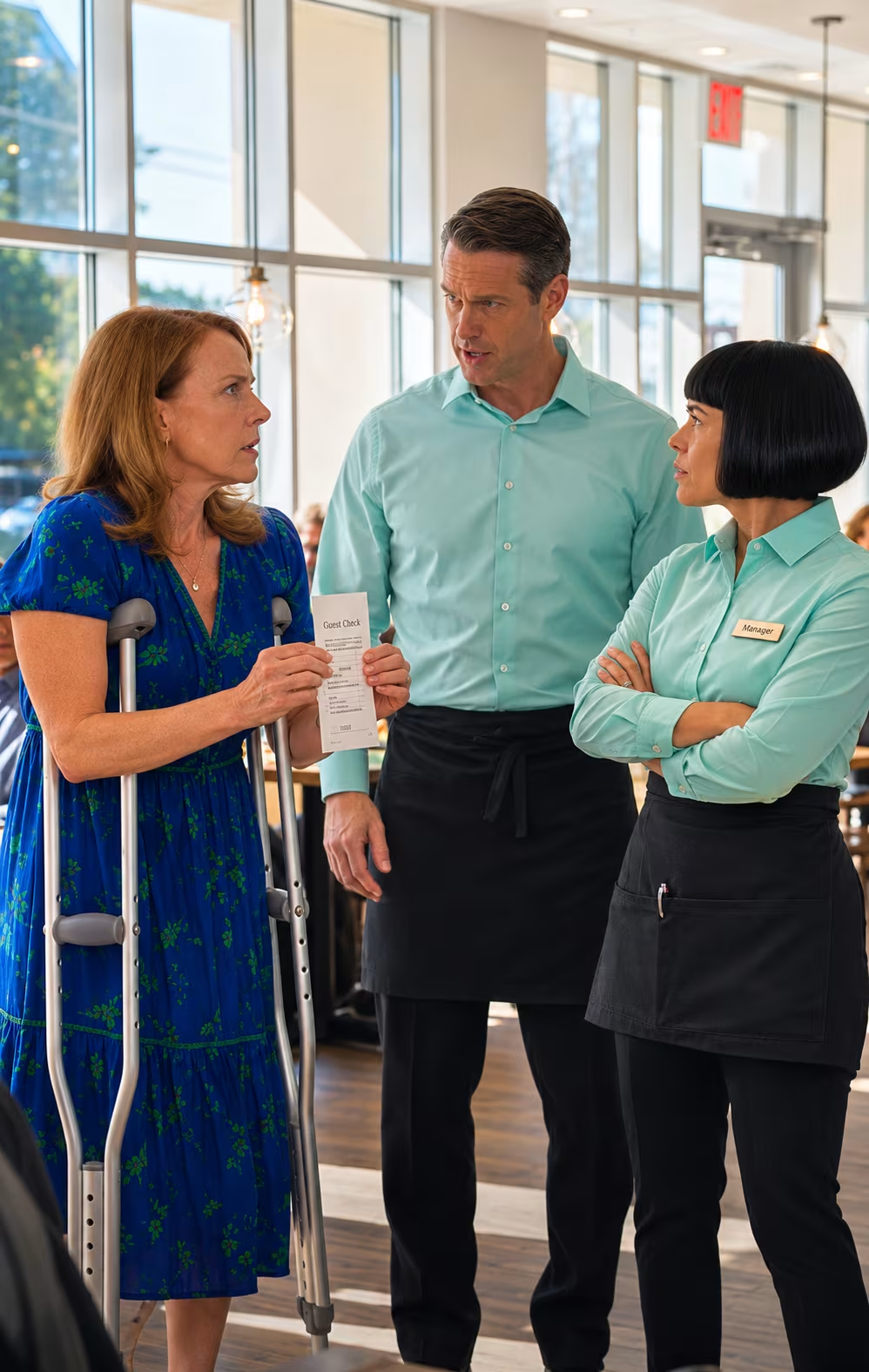
“I’m sorry this became uncomfortable,” Daniel said.
He asked Laura whether she would prefer the original table or another available location.
Laura appreciated being given a choice.
She explained that the window table would be suitable if the unused chair were removed.
Daniel agreed.
He asked another employee to clear the extra chair and check the surrounding aisle.
Within moments, the space was more accessible.
Laura carefully approached the table while Daniel remained nearby.
He did not touch her crutches or offer physical assistance without permission.
Instead, he asked whether she needed anything else.
Laura thanked him and explained that she could manage independently.
She positioned her crutches against the wall beside her chair.
They remained within reach without extending into the walkway.
Daniel checked the arrangement from the aisle.
There was enough space for customers and employees to pass safely.
He then spoke privately with Patricia.
He explained that a customer’s mobility aid was not simply an object that could be stored elsewhere.
It was essential equipment supporting that person’s independence.
Patricia listened more carefully.
She began to understand why her earlier suggestion had been upsetting.
An Apology at the Window Table
A few minutes later, Emily arrived for lunch.
She found Laura seated comfortably beside the window.
Laura explained what had happened before her sister arrived.
Emily expressed concern but was relieved that the manager had intervened.
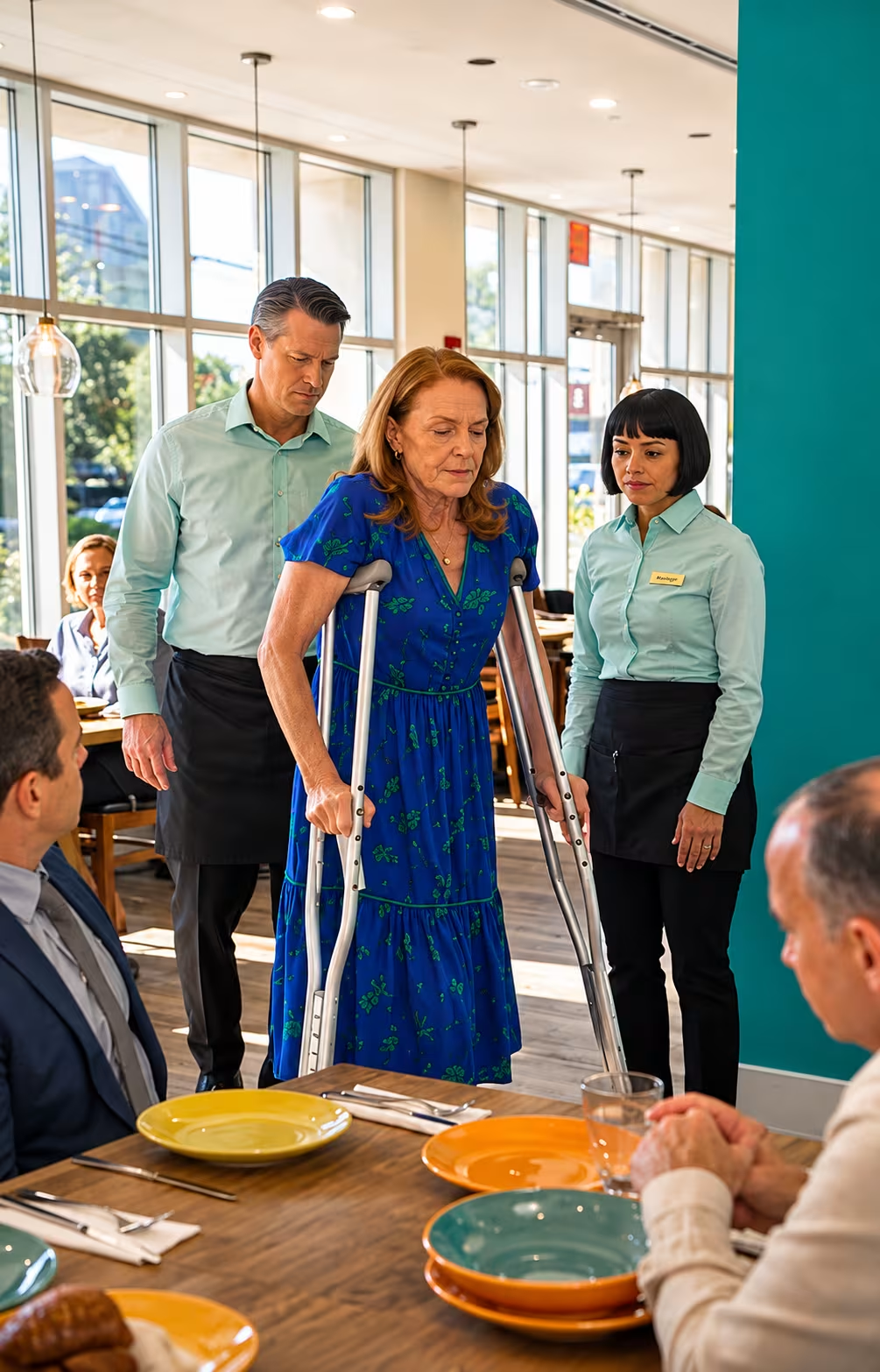
Patricia approached the table carrying two menus.
She paused before speaking.
“Ms. Bennett, I’d like to apologize.”
Laura looked up.
Patricia acknowledged that she had made assumptions about the crutches.
She also admitted that she should have offered to adjust the seating arrangement.
“I was concerned about the aisle, but I handled it poorly.”
Laura appreciated the apology.
She explained that she understood the importance of keeping walkways safe.
However, being asked to leave her crutches at the entrance had made her feel unwelcome.
Patricia acknowledged that concern.
She promised to approach similar situations differently.
Emily thanked her for taking responsibility.
The women then placed their lunch orders.
Daniel checked on them once during the meal.
He asked whether the seating arrangement was comfortable.
Laura confirmed that everything was fine.
For the first time since entering the restaurant, she could simply enjoy lunch with her sister.
A Small Change With Lasting Meaning
After the lunch rush, Daniel gathered the restaurant employees for a brief meeting.
He discussed the incident without blaming Patricia publicly.
Instead, he focused on how staff could respond more effectively.
He explained that mobility aids should remain accessible to the people using them.
He also emphasized the importance of asking customers what assistance they preferred.
Employees were encouraged to identify practical solutions rather than make assumptions.
Daniel reviewed the dining room arrangement with the team.
Several tables had unnecessary chairs positioned close to the main walkway.
The staff adjusted those areas to create more space.
Daniel also arranged additional accessibility training for the following month.
Meanwhile, Laura and Emily finished their lunch without further difficulty.
Before leaving, Laura thanked Daniel for addressing the situation respectfully.
He acknowledged that the restaurant should have handled her arrival better.
Laura carefully collected her crutches and stood.
Patricia held the entrance door open after asking whether Laura wanted assistance.
Laura accepted the gesture with a smile.
Several days later, she received a message from the restaurant thanking her for sharing her experience.
The manager confirmed that the staff had reviewed its seating procedures.
Laura appreciated the follow-up.
She hoped the changes would help other customers feel more comfortable.
True hospitality is not simply making room at a table, but ensuring every guest feels welcome, respected, and free to move with dignity.