An Uncomfortable Moment on a Crowded City Bus
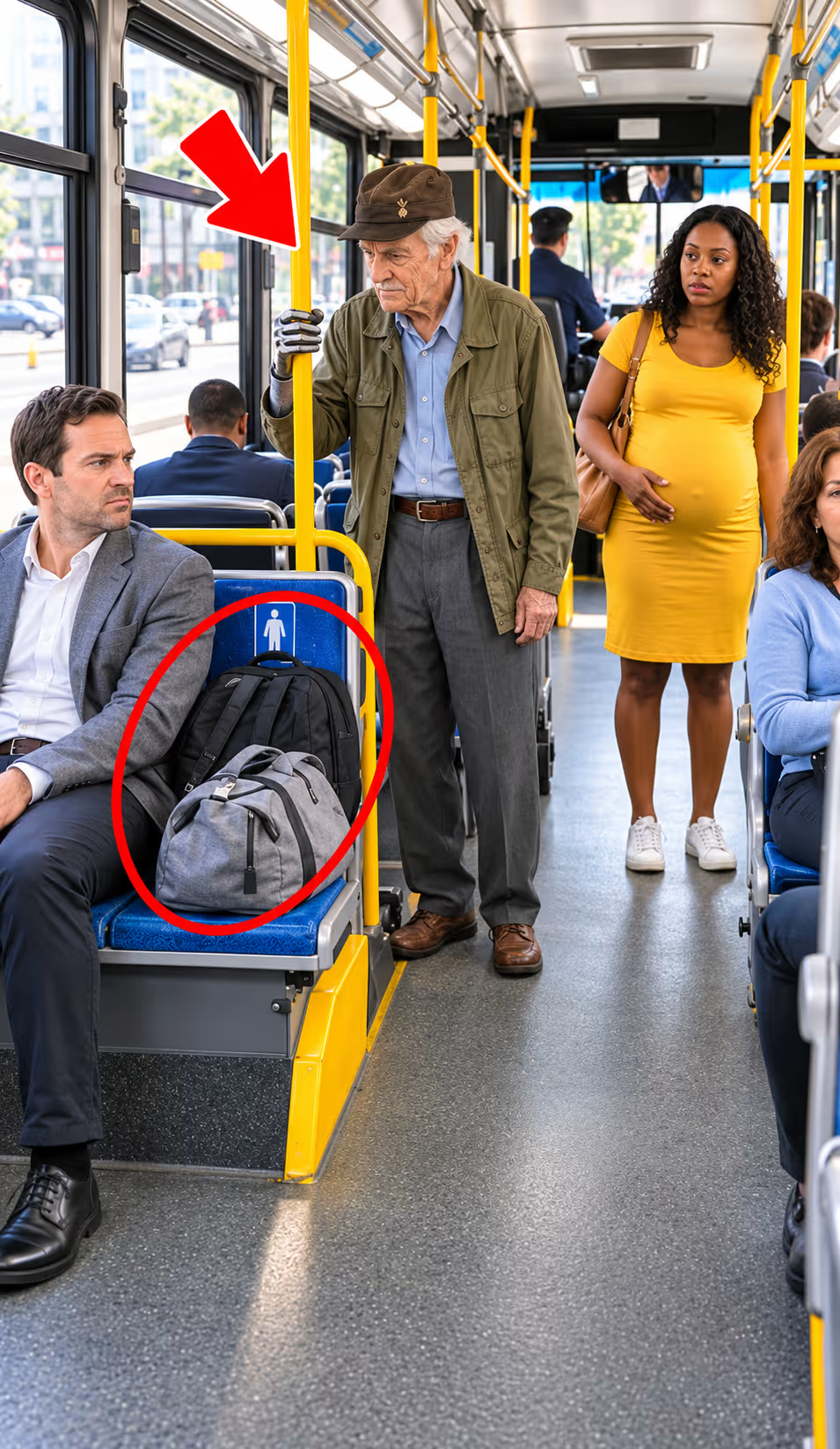
The elderly man gripped the handrail as the bus pulled away from the crowded downtown stop.
Beside him, a pregnant woman struggled to maintain her balance while holding a shopping bag.
Both looked toward the priority seats near the front.
One seat was occupied by a passenger, while a large black backpack covered the other.
“Excuse me, could we please sit down?” the elderly man asked.
The passenger glanced up but made no effort to move his belongings.
The pregnant woman quietly explained that standing had become uncomfortable.
The passenger looked away.
A sudden movement of the bus forced the elderly man to tighten his grip.
Then the driver noticed the situation in his mirror.
He brought the bus to a safe stop and turned toward the passengers.
“Is everything all right back there?”
A Difficult Journey Across the City
Seventy-eight-year-old Walter Bennett had boarded the bus after a medical appointment.
He lived alone in a small apartment near the city center.
Although he remained independent, arthritis made prolonged standing difficult.
Walter usually traveled outside rush hour to avoid crowded buses.
That afternoon, however, his appointment had finished later than expected.
At the same stop, Emily Carter boarded carrying a shopping bag.
Emily was seven months pregnant and returning from a prenatal appointment.
Her doctor had advised her to avoid unnecessary physical strain.
She had planned to take a taxi home.
Unfortunately, heavy traffic made the estimated waiting time unusually long.
Emily decided to use the bus instead.
When she boarded, nearly every seat was occupied.
She noticed the priority seating area immediately.
Walter approached the same section, hoping to sit before the bus accelerated.
Both passengers paused beside a young man wearing headphones.
His backpack occupied the adjacent priority seat.
Walter politely asked whether the bag could be moved.
The young man barely looked up.
A Simple Request Meets Resistance
The passenger’s name was Jason Miller.
He was returning home after a long shift at a nearby warehouse.
His backpack contained work clothes, a lunch container, and several personal belongings.
He had placed it beside him when the bus was less crowded.
As more passengers boarded, he became absorbed in his phone.
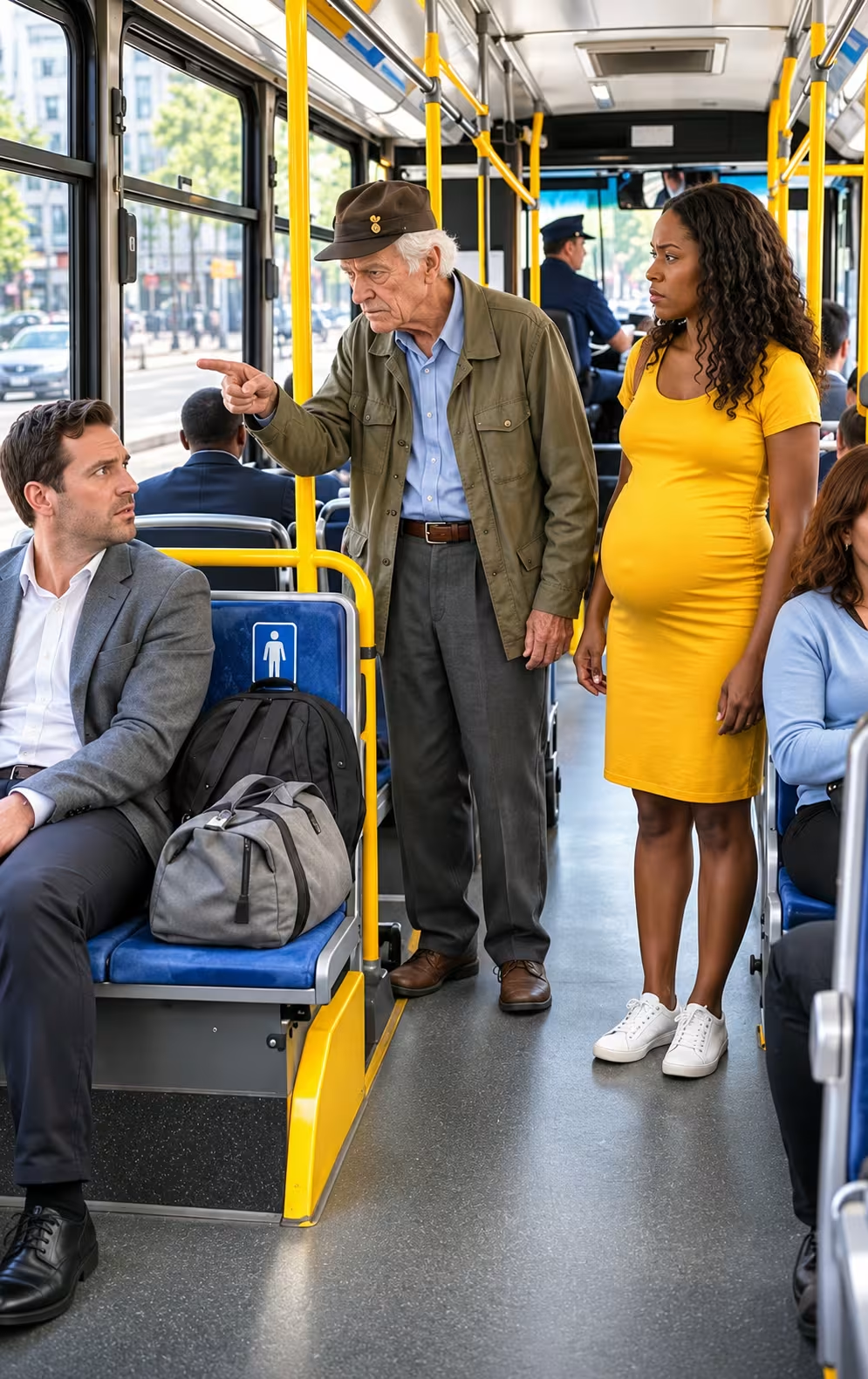
Walter repeated his request.
“Would you mind moving your bag so someone can sit?”
Jason removed one headphone.
He looked at the empty seat and then at Walter.
“There are other seats farther back,” he replied.
Walter explained that walking through the moving bus was difficult.
Emily added that she would also appreciate a seat.
Jason shrugged.
He suggested that they wait until another passenger got off.
Emily looked toward the rear aisle.
Every visible seat appeared occupied.
Walter remained beside the handrail, visibly uncomfortable.
He did not want to argue.
Emily offered to stand near him until space became available.
But when the bus turned a corner, she had to steady herself against a nearby pole.
Several passengers noticed the exchange.
One woman began looking for the stop-request button to alert the driver.
The Driver Notices Something Is Wrong
Daniel Brooks had driven city buses for more than fifteen years.
He regularly reminded passengers to keep aisles clear and priority seating accessible.
While checking his interior mirror, he noticed Walter struggling to remain steady.
Emily was standing beside him, holding the overhead rail.
Daniel also saw the backpack occupying a seat.
He continued driving until he reached a designated bus stop.
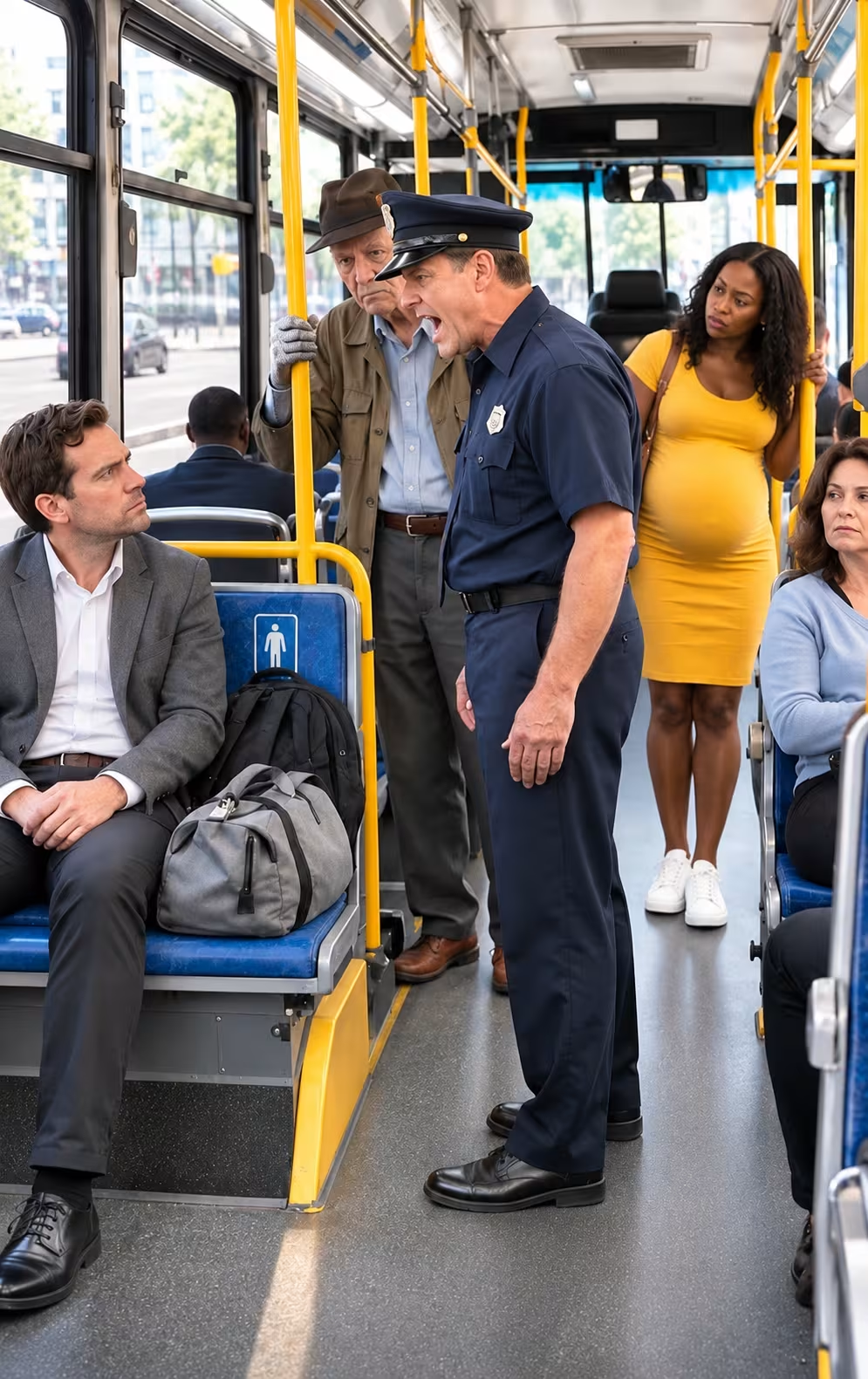
After securing the vehicle, he addressed the passengers.
“Does someone need assistance near the front?”
Walter explained that he and Emily had requested priority seating.
Daniel looked toward Jason.
He asked whether the backpack belonged to him.
Jason nodded.
Daniel explained that bags should not occupy seats when other passengers needed them.
He also pointed toward the priority seating sign.
The sign identified passengers with reduced mobility, including older adults and pregnant passengers.
Jason looked uncomfortable.
He said he had not realized both passengers needed to sit.
Walter reminded him that they had already explained their situation.
Daniel kept his voice calm.
He asked Jason to move his belongings and help make the area accessible.
A Passenger Finally Moves His Bag
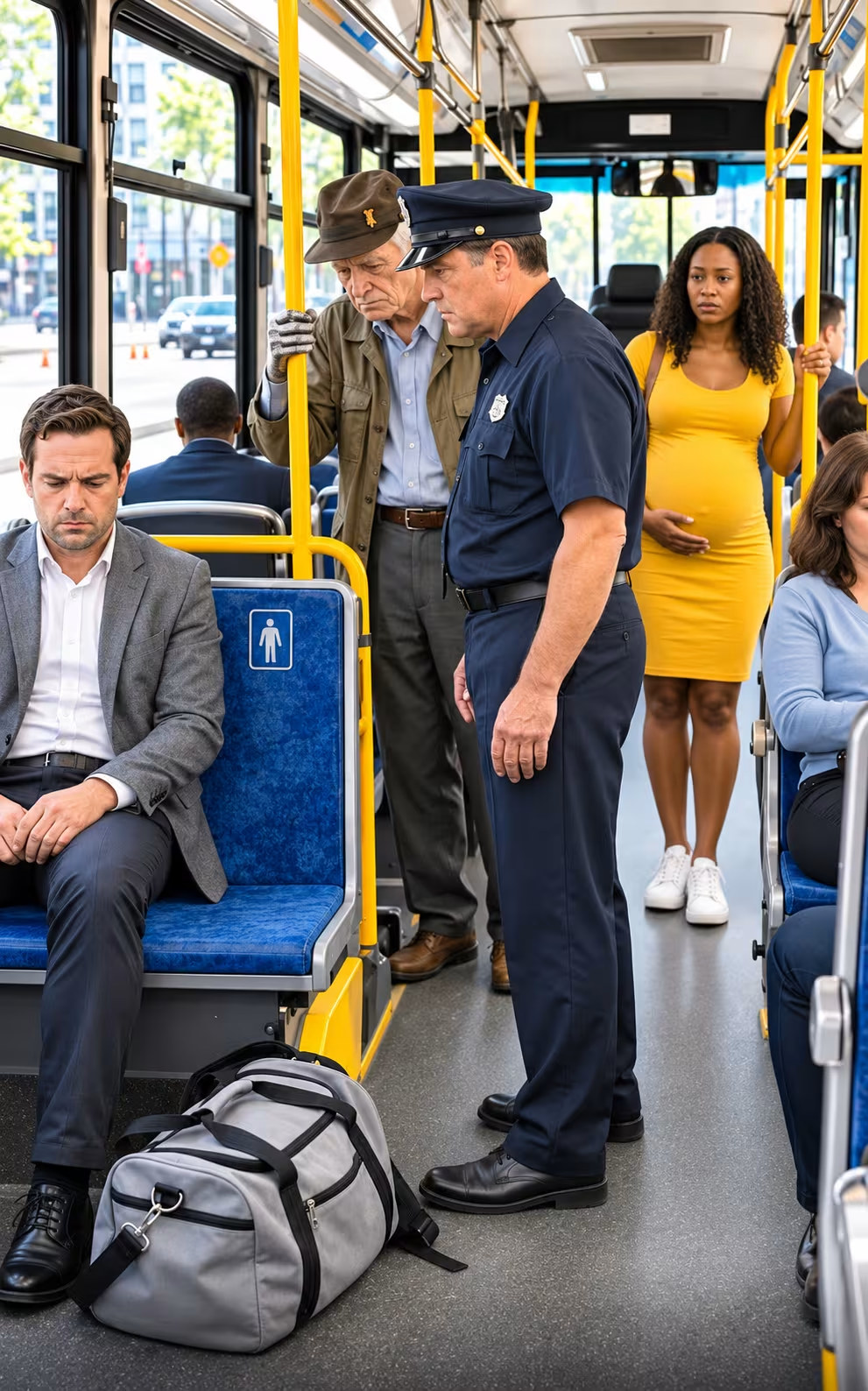
Jason picked up his backpack and placed it securely between his feet.
The empty seat was now available.
Emily thanked him and carefully sat down.
However, Walter remained standing.
Jason looked toward the elderly man.
He realized that moving the bag had solved only part of the problem.
Daniel asked whether another passenger could offer a suitable seat.
Before anyone responded, Jason stood.
“Sir, you can take mine.”
Walter hesitated.
He did not want to embarrass the young man.
Jason stepped into the aisle and gestured toward the seat.
“It’s all right. I’m getting off in a few stops.”
Walter thanked him and lowered himself carefully into the chair.
Emily adjusted her shopping bag beneath her knees.
Daniel checked that both passengers were seated comfortably.
He then reminded everyone to keep the walkway clear.
Jason moved toward a nearby standing area and held the rail.
The driver waited until the aisle was safe before continuing.
As the bus pulled away, the atmosphere near the front became noticeably calmer.
An Unexpected Conversation During the Ride
Walter looked toward Jason, who was standing several feet away.
“Thank you for giving me your seat.”
Jason nodded.
“I’m sorry I made things difficult.”
Walter accepted the apology.
He explained that standing had become harder since developing problems with his knees.
Jason admitted that he had been distracted and impatient.
He had finished a tiring shift and wanted to get home.
Emily joined the conversation.
She explained that pregnancy had made her balance less reliable, especially on crowded buses.
Jason listened more carefully this time.
He said he had never considered how difficult a short bus journey could become for someone who needed to sit.
Walter smiled.
“Sometimes people just need a little consideration.”
Jason agreed.
He also thanked Daniel when the driver announced the next stop.
Daniel acknowledged him through the mirror.
He was pleased that the disagreement had ended without further confrontation.
A few minutes later, Jason prepared to leave.
Before stepping off, he wished Walter and Emily a safe journey.
Both thanked him again.
The bus continued through the city as afternoon traffic gradually eased.
A Small Change That Made a Difference
Emily reached her stop first.
Before leaving, she thanked Walter for speaking up when they boarded.
Walter said he had simply hoped someone would listen.
Emily also thanked Daniel for intervening.
The driver reminded her to take her time stepping down.
She left the bus carefully and continued toward her apartment.
Walter remained seated for several more stops.
He watched familiar streets pass through the window.
The journey had begun with an uncomfortable disagreement.
However, he appreciated that the situation had been resolved respectfully.
When Walter reached his destination, Daniel waited until he was ready to exit.
Walter thanked him for recognizing the problem.
Daniel explained that passenger safety was an important part of his work.
Later that evening, Jason remembered the encounter while unpacking his backpack.
He thought about Walter’s difficulty standing and Emily’s struggle to maintain her balance.
He realized that leaving his belongings on a seat had created an unnecessary obstacle.
The following week, Jason boarded the same bus route after work.
He placed his backpack on his lap.
When an older passenger entered, he offered his seat without being asked.
The gesture was simple, but the passenger accepted gratefully.
Daniel happened to be driving that afternoon.
He noticed the exchange and gave Jason a brief appreciative nod.
A single backpack had occupied only one seat, but moving it helped three strangers understand how much respect and consideration can matter during an ordinary journey.