An Unusual Encounter Beside the Old Harbor
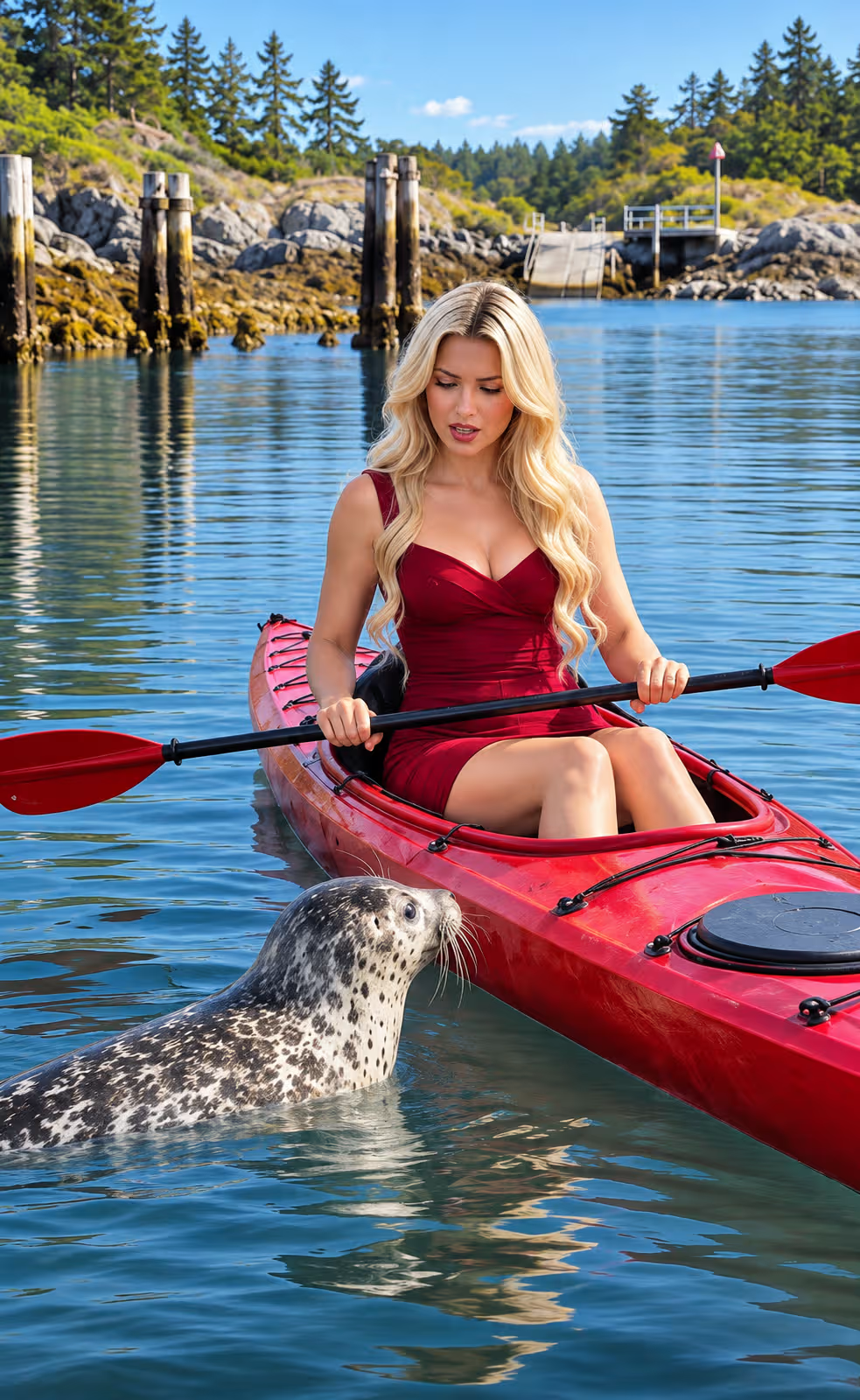
The seal surfaced beside Emily Carter’s kayak for the third time.
Instead of swimming away, it remained close, repeatedly turning toward the wooden pilings ahead.
Emily had spent years kayaking along the quiet harbor, but this behavior seemed unusual.
She stopped paddling and watched the animal disappear beneath the surface.
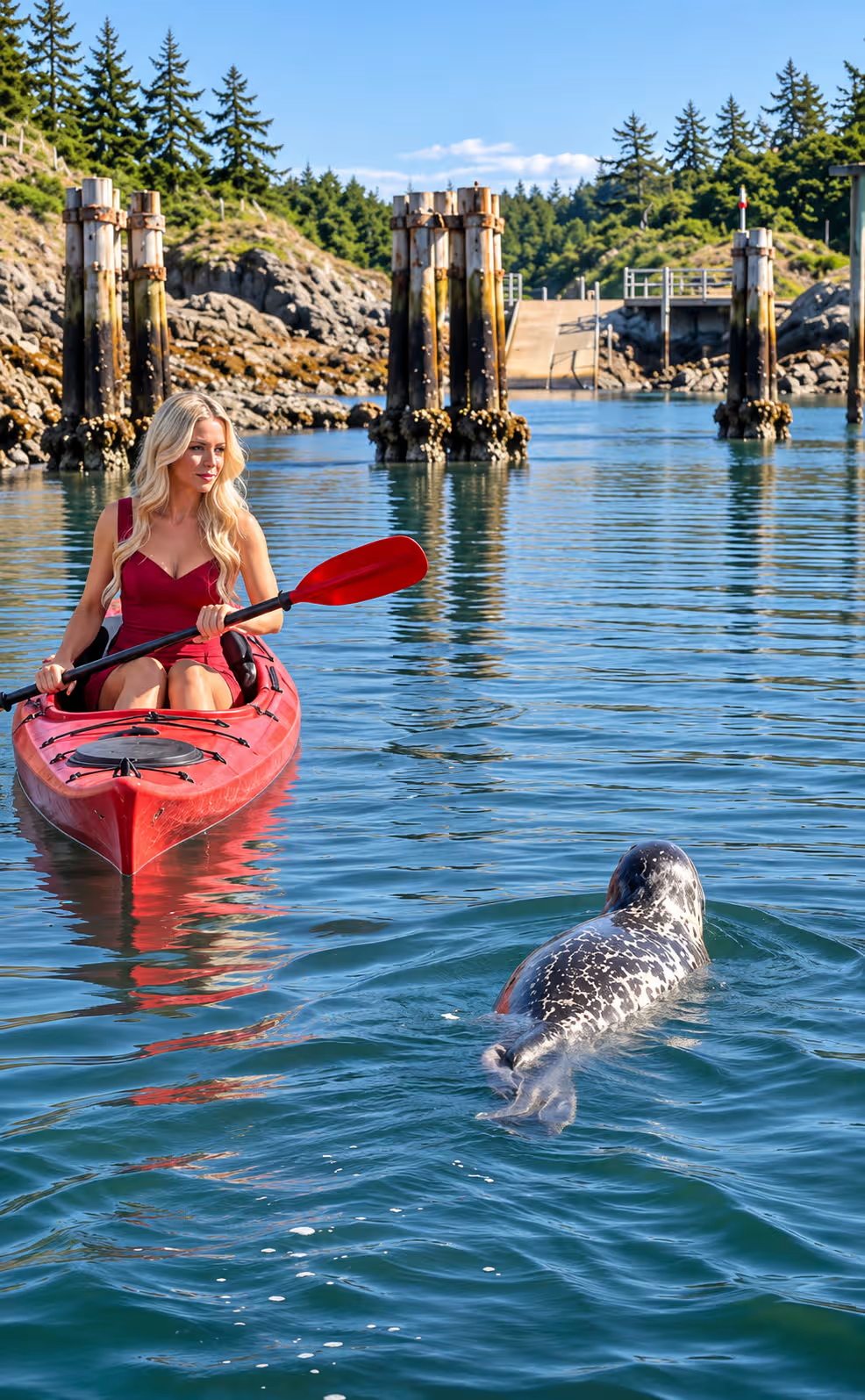
Seconds later, it emerged beside an abandoned section of the dock.
A faint splashing sound came from behind the weathered wooden supports.
Emily initially assumed another seal was resting nearby.
Then she noticed a dark shape struggling against something beneath the dock.
As her kayak drifted closer, she spotted a length of rope stretched tightly across the water.
Something alive was caught at the other end.
A Disturbing Discovery Beneath the Dock
Emily carefully positioned her kayak several yards from the wooden pilings.
The water was calm, but the narrow spaces between the supports created dangerous obstacles.
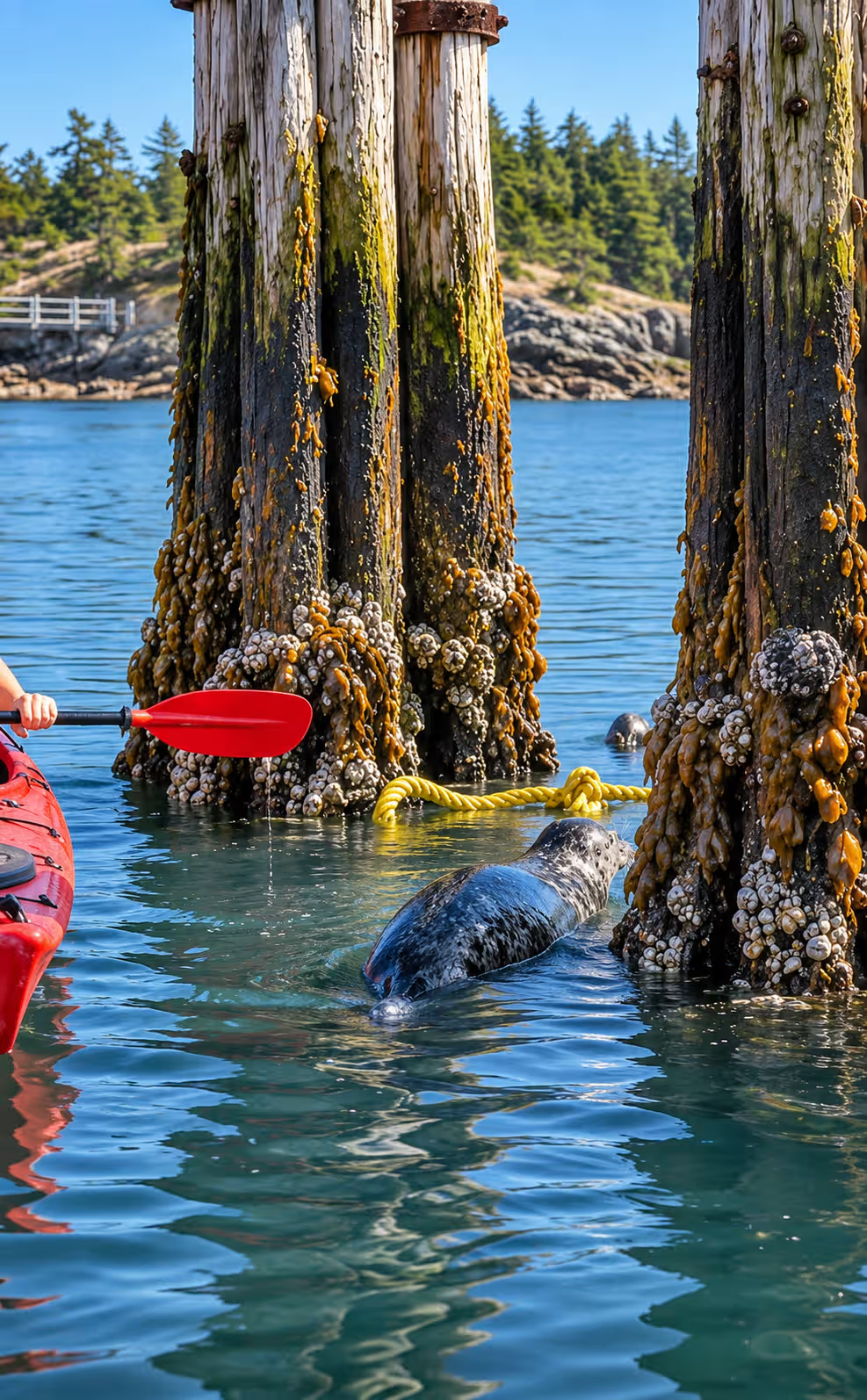
Another seal appeared near the surface, struggling to move its head freely.
A thick section of discarded rope was wrapped around its neck and upper body.
The loose end had become tangled around a submerged wooden support.
Each movement pulled the animal back toward the piling.
Emily immediately understood that the seal could not swim away normally.
She reached for her phone, which she kept inside a waterproof pouch.
Before making the call, she took several photographs from a safe distance.
The images showed the rope’s position and the location of the trapped animal.
The first seal surfaced again, swimming between Emily and the dock.
She wondered whether the animals were connected, although she could not know their relationship.
The trapped seal briefly lifted its head before slipping beneath the surface again.
Emily knew that attempting to cut the rope herself could injure the animal.
She needed someone with the proper equipment and wildlife-handling experience.
A Call That Brings Unexpected Assistance
Emily contacted the regional marine wildlife rescue hotline and described the situation.
The dispatcher asked whether the seal was breathing and how tightly the rope appeared wrapped.
Emily explained that the animal could surface but struggled to move away from the piling.
The dispatcher advised her to maintain her distance and avoid touching either seal.
A rescue team would be contacted, but reaching the isolated dock could take time.
Emily provided her location and sent the photographs she had taken.
She then noticed a small maintenance boat approaching from the harbor entrance.
The man steering it wore a faded blue jacket and carried a toolbox.
His name was Daniel Foster, a harbor maintenance worker responsible for inspecting the old dock.
Daniel noticed Emily waving and reduced his speed.
She explained what she had discovered beneath the pilings.
He immediately recognized the danger created by the abandoned rope.
Daniel had assisted marine wildlife responders during previous harbor incidents.
He offered to help maintain a safe position near the dock until trained rescuers arrived.
Together, they began assessing the situation without approaching the frightened animal.
The Rope Creates a Dangerous Complication
Daniel secured his boat alongside an accessible section of the dock.
Emily remained in her kayak, keeping clear of the narrow gaps between the pilings.
The trapped seal surfaced again, revealing how tightly the rope restricted its movements.
Daniel noticed that the loose end disappeared beneath a horizontal support.
He suspected the rope had originally been used to secure an old fishing line.
Over time, it had become wrapped around the submerged structure.
The seal appeared to have entered the loop while swimming through the pilings.
Emily asked whether Daniel could simply cut the rope from the dock.
He explained that cutting the wrong section might leave the animal dragging a dangerous loop.
The seal could also panic and become trapped farther beneath the structure.
Daniel contacted the wildlife rescue dispatcher and explained the rope’s position.
A trained responder named Rachel Morgan returned his call.
She instructed them not to enter the water or attempt to restrain the seal.
Rachel was approaching with another responder and specialized rescue equipment.
Daniel prepared his boat to provide access if the team needed it.
Emily continued watching the animal while remaining outside its immediate space.
The Rescue Beneath the Wooden Pilings
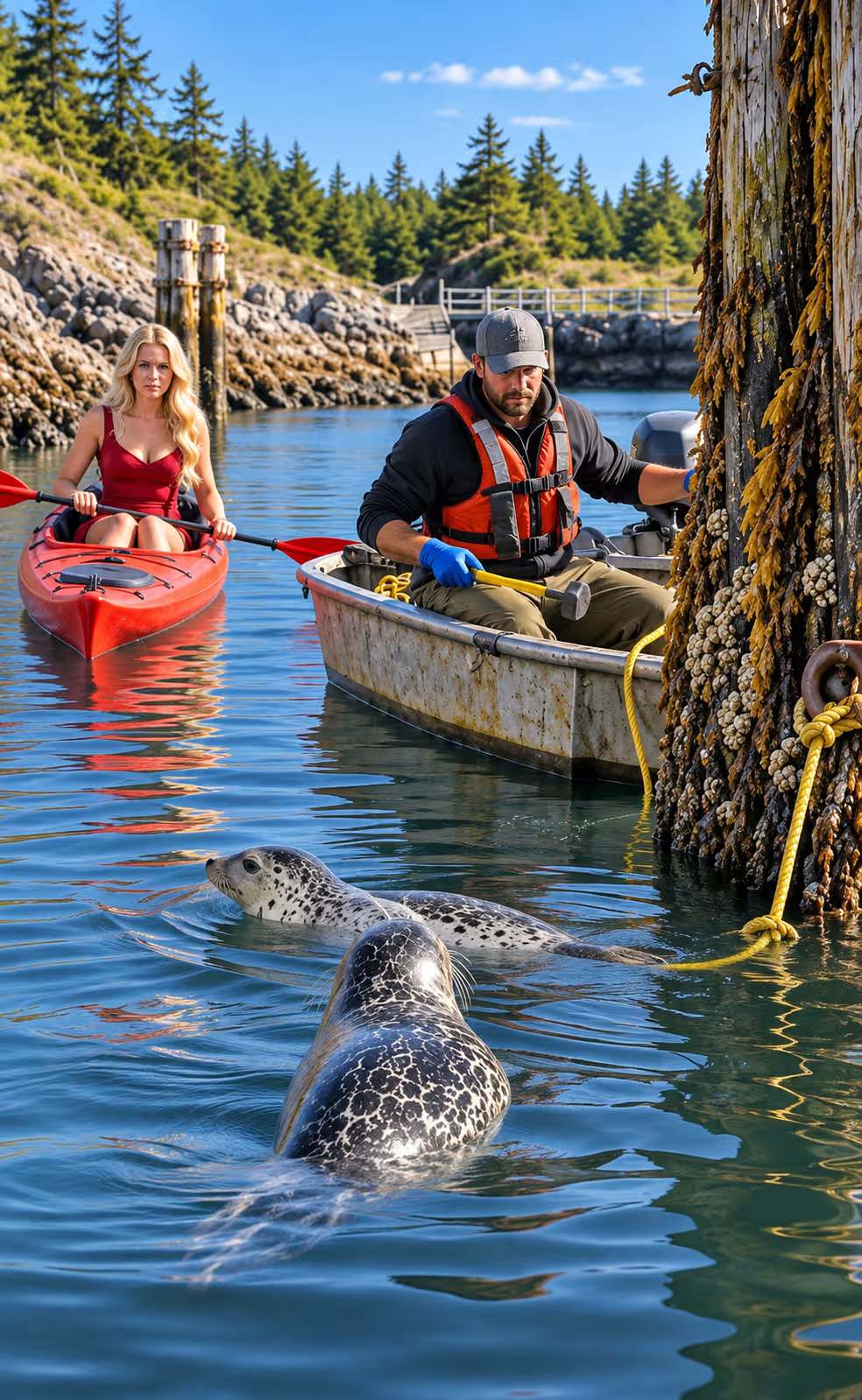
Rachel arrived at the harbor with her colleague, Thomas Reed, carrying protective equipment and specialized cutting tools.
After examining Emily’s photographs, they boarded Daniel’s maintenance boat.
Emily moved her kayak farther away to give the responders additional room.
Rachel observed the seal’s movements before deciding how to approach.
The animal was breathing, but the rope prevented it from swimming freely.
Thomas carefully positioned the boat beside the accessible side of the dock.
Rachel used a long-handled tool to lift the loose rope away from the wooden support.
The seal moved suddenly, forcing her to stop and allow it to settle.
When the animal resurfaced, Rachel could see the loop crossing its upper body.
She and Thomas used their trained handling procedures to stabilize the seal briefly.
Rachel then carefully cut the rope without pulling it tighter against the animal.
Thomas gathered the severed section as the tension disappeared.
The seal moved forward, but a remaining loop still hung around its body.
Rachel reached the accessible section and removed the final piece.
For several seconds, the animal remained near the surface.
Then it swam away from the piling under its own power.
Emily watched as the seal resurfaced in open water, no longer restrained by the rope.
A Quiet Moment After the Rescue
Rachel and Thomas continued observing the freed seal from a respectful distance.
The animal surfaced several times and appeared able to swim normally.
Rachel noticed superficial marks where the rope had pressed against its body.
However, she explained that a complete medical assessment had not been possible.
The team would document the incident and monitor for any further signs of distress.
Daniel collected the remaining rope from the submerged support.
He also inspected nearby pilings for additional discarded fishing materials.
Emily noticed the first seal swimming beyond the dock.
It surfaced briefly near the rescued animal before both disappeared beneath the water.
She smiled but resisted assuming the first seal had deliberately requested human assistance.
Its unusual behavior had nevertheless drawn her attention to the trapped animal.
Rachel thanked Emily for reporting the entanglement rather than attempting a dangerous rescue herself.
She also thanked Daniel for providing safe access to the difficult location.
Before leaving, the team recorded the dock’s coordinates for future inspections.
Emily remained on the water for several minutes, watching the quiet harbor.
The scene that had seemed frightening earlier now appeared peaceful again.
The Harbor Remembered Two Seals
The following afternoon, Emily received an update from the wildlife rescue organization.
The responders had reviewed their photographs and documented the recovered rope.
They confirmed that the material had been removed from the dock area.
No additional entangled animals had been reported during the follow-up inspection.
The freed seal had not been individually identified afterward, so its longer-term condition remained unknown.
Emily appreciated that the team did not promise more than their observations supported.
Daniel also contacted the harbor authority about discarded ropes near the old pilings.
Maintenance workers arranged a broader inspection of the unused docking structures.
Emily later shared her experience with a local kayaking group.
She emphasized the importance of contacting trained wildlife responders when encountering entangled marine animals.
She also explained how the first seal’s repeated appearances had led her toward the dock.
In this fictional story, the encounter began with an unexplained animal behavior and developed into a coordinated rescue.
Emily’s attention revealed the danger, Daniel provided access, and trained responders removed the rope.
The seal’s release was the result of careful decisions rather than unnecessary risks.
Emily never discovered why the first seal had remained near her kayak.
Yet she remembered the moment both animals disappeared into open water.
What began as an ordinary morning on the harbor became a lasting reminder that noticing an animal in trouble can be the first step toward saving it.