A Difficult Evening in a Busy Restaurant
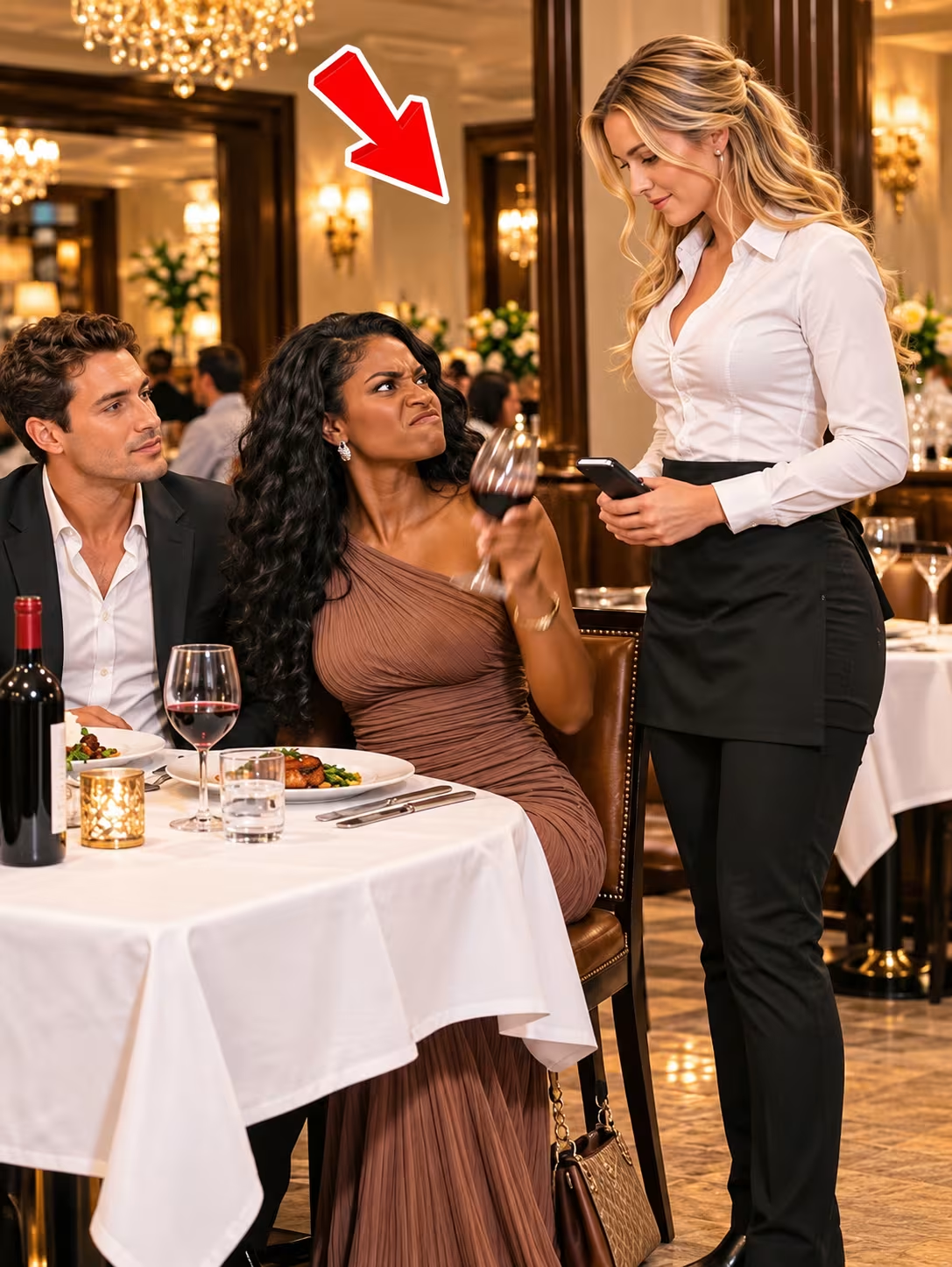
The waitress stood beside the dining table as a man angrily pointed toward the stain on her white shirt.
Twenty-seven-year-old Emily Carter had been working at the restaurant since early afternoon.
Her shift was almost over, but the dining room remained crowded.
The man insisted that she had ruined his expensive jacket while serving dinner.
His companion demanded to speak with the restaurant manager immediately.
Emily apologized and tried explaining what had happened.
But the guests interrupted her before she could finish.
Across the dining room, head chef Daniel Foster noticed the growing confrontation.
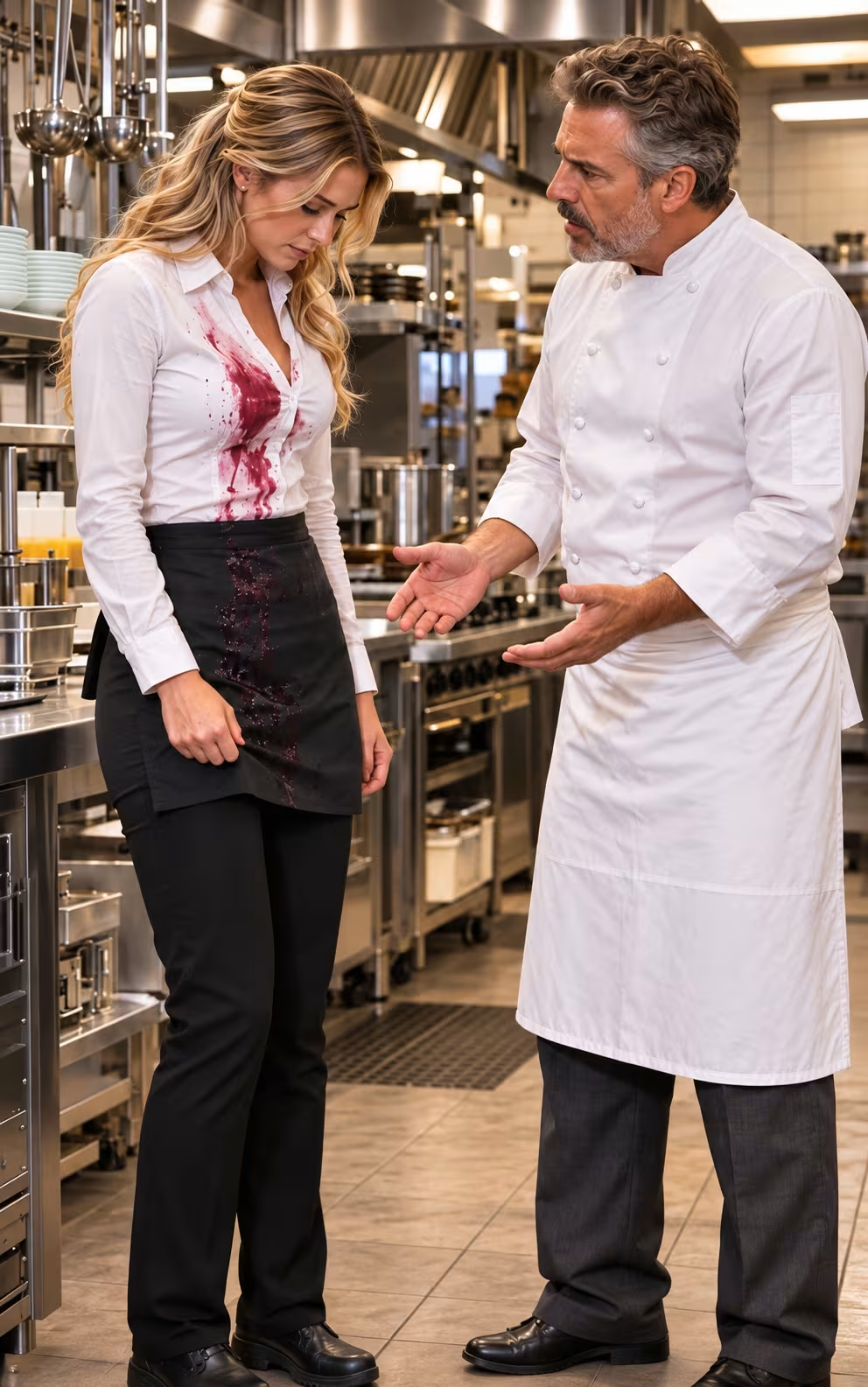
He also noticed something unusual about the dark red stain spreading across Emily’s shirt.
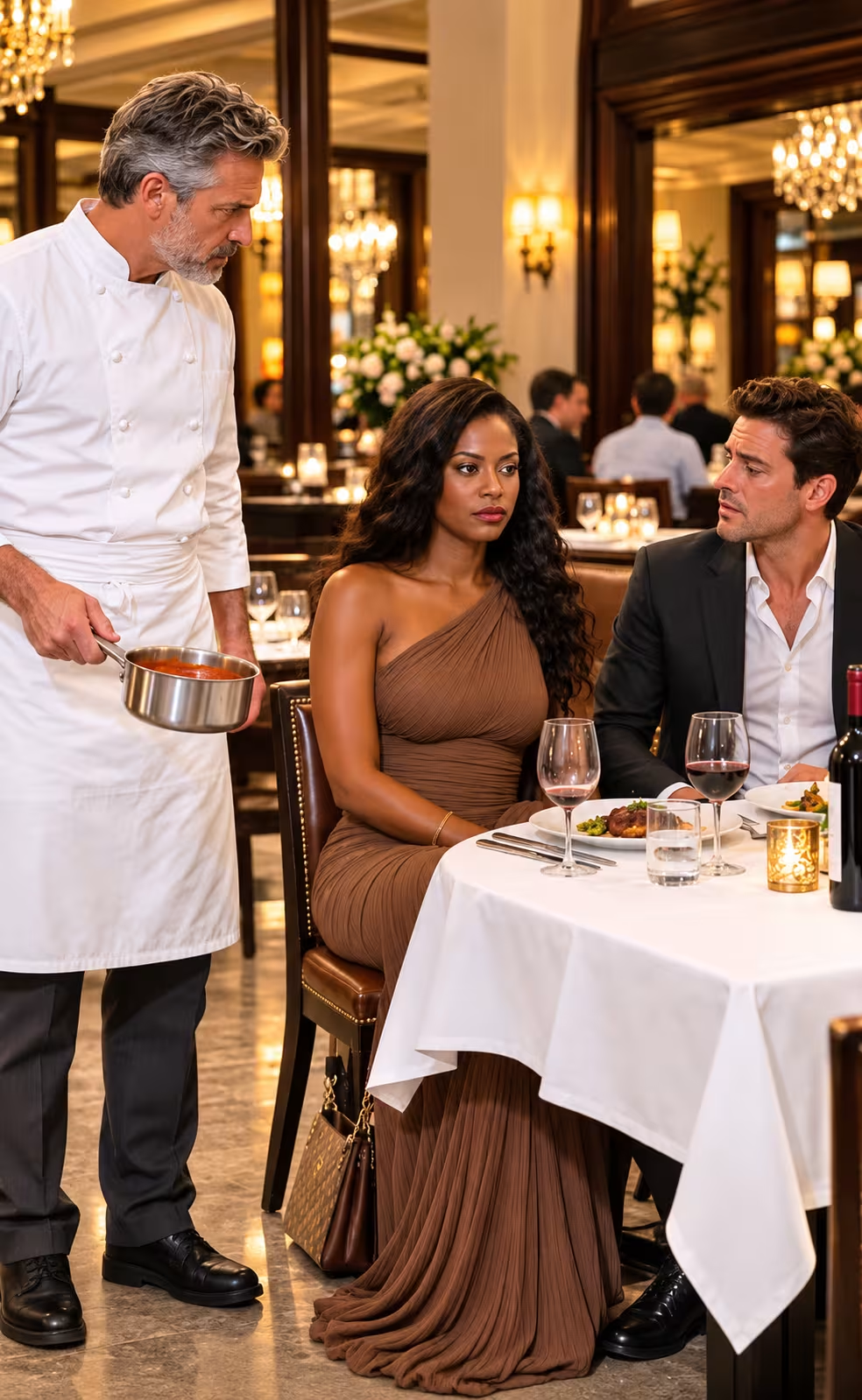
Daniel stepped away from the kitchen entrance, picked up a small saucepan, and approached their table.
He had seen enough to suspect that the waitress was being blamed unfairly.
A Busy Night at the Riverside Restaurant
Emily had worked at Riverside Kitchen for nearly three years.
The family-owned restaurant was popular for its homemade pasta and seasonal dishes.
She enjoyed her job, especially the regular customers who greeted her warmly.
That Friday evening, however, the restaurant was unusually busy.
A local conference had brought several large groups into the dining room.
Emily was responsible for five tables near the front windows.
Among her customers were Richard Collins and his companion, Vanessa Moore.
They had arrived without a reservation but were eventually seated near the kitchen.
Richard ordered steak with pepper sauce, while Vanessa requested seafood pasta.
Emily delivered their drinks and explained that meals might take longer than usual.
Richard appeared irritated by the delay.
He repeatedly checked his watch and questioned the restaurant’s service.
Emily remained polite and continued checking on their table.
When the meals finally arrived, she carefully placed both plates before them.
Everything appeared normal until Richard reached across the table for his glass.
His elbow struck a small sauce dish near the edge.
The dish tipped, sending sauce across the tablecloth and onto Emily’s shirt.
A Small Accident Becomes a Public Argument
Emily stepped backward as the warm sauce splashed against her uniform.
A few drops also landed on Richard’s jacket sleeve.
She immediately asked whether anyone had been burned.
Richard said he was unharmed but became angry about the stain.
He accused Emily of placing the sauce dish too close to him.
Emily explained that the dish had been beside his plate.
She offered clean napkins and asked whether he needed assistance.
Vanessa interrupted, saying the restaurant should pay for Richard’s jacket.
Richard insisted that Emily had caused the entire accident.
Several nearby diners turned toward their table.
Emily felt uncomfortable as the conversation became louder.
She apologized for the inconvenience without accepting responsibility for something she had not done.
Richard demanded that the restaurant deduct the cleaning cost from her wages.
Emily explained that only management could address compensation requests.
Vanessa pointed toward the stain on Emily’s shirt.
She suggested that the waitress looked careless and unprofessional.
Emily lowered her eyes, struggling to remain composed.
She had already endured a long shift and wanted to resolve the matter peacefully.
But Richard continued demanding an immediate answer.
The Chef Notices Something Unusual
Daniel had been preparing dinner orders when he heard raised voices.
He looked through the kitchen opening and recognized Emily standing beside Richard’s table.
Her posture appeared tense, and her white shirt was visibly stained.
Daniel asked another cook to supervise the stove while he investigated.
As he approached, he heard Richard accuse Emily of spilling sauce deliberately.
Daniel knew Emily was careful when serving customers.
Still, he wanted to understand what had happened before drawing conclusions.
He asked Emily to describe the accident.
Richard interrupted, insisting that the waitress had mishandled his meal.
Daniel noticed the sauce on Richard’s sleeve.
Then he examined the stain on Emily’s shirt.
The color and consistency looked familiar.
He remembered preparing the pepper sauce served with Richard’s steak.
The sauce contained dark peppercorns and a small amount of red wine.
Daniel also noticed that the stain spread diagonally across Emily’s shirt.
Its direction suggested that the sauce had splashed outward from the table.
He asked whether the dish had been knocked over.
Emily nodded and explained that Richard’s elbow had struck it.
Daniel decided to demonstrate what the accident could have looked like.
The Chef Brings a Saucepan to Their Table
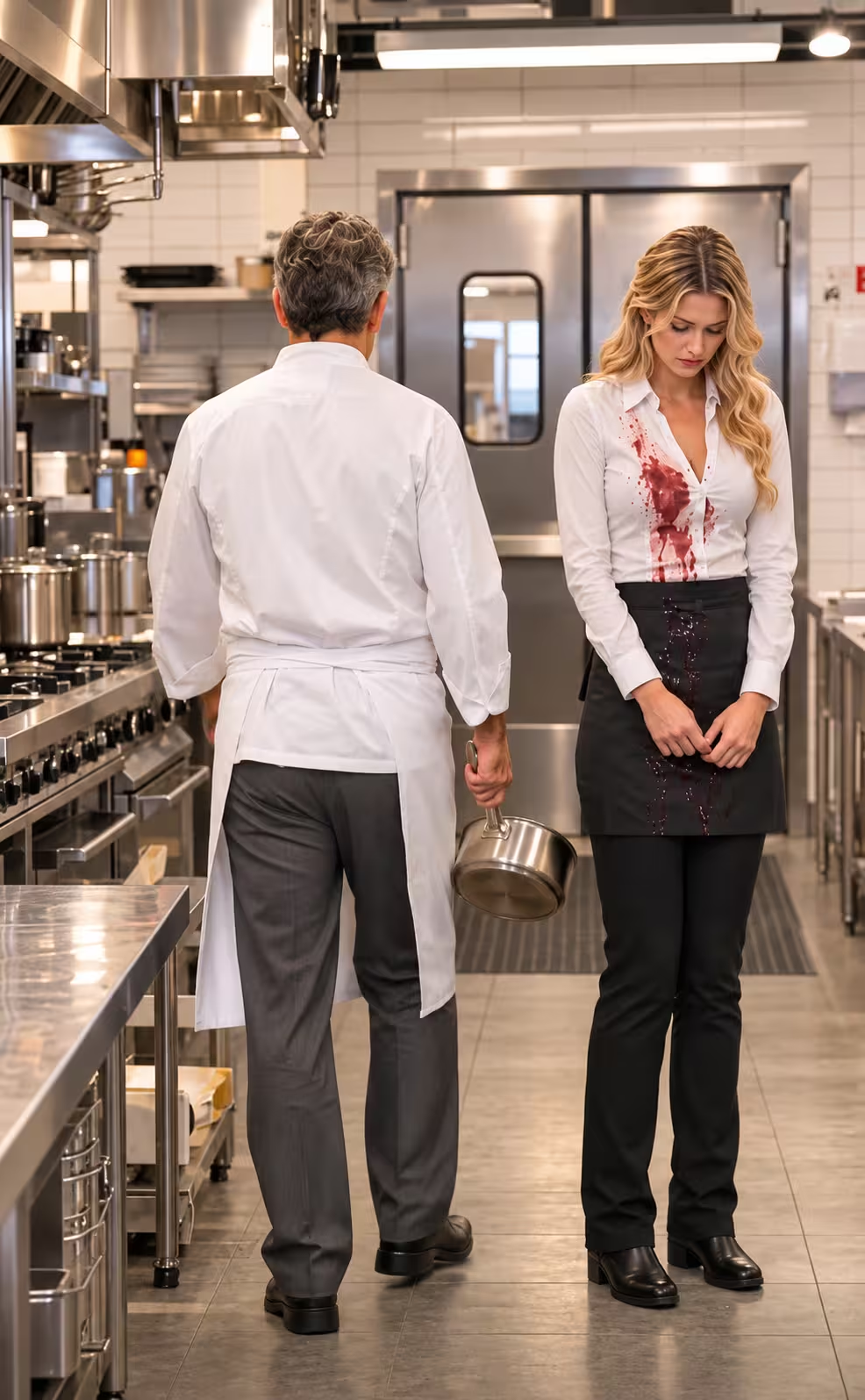
Daniel returned to the kitchen and collected a small stainless-steel saucepan.
He added a little cooled sauce of the same consistency.
Then he carried the saucepan to Richard and Vanessa’s table.
The guests watched him with confusion.
Daniel explained that he wanted to clarify how the spill had occurred.
He placed the saucepan on a nearby service cart, away from the diners.
Using a clean spoon and an empty dish, he demonstrated the direction of the splash.
He carefully tilted the dish over a tray without spilling anything onto the table.
The sauce moved toward the side where Emily had been standing.
Daniel pointed out that the stain pattern was consistent with the dish being tipped outward.
He emphasized that the demonstration could not establish every detail of the accident.
However, it showed that Emily’s account was physically plausible.
Richard insisted that she should still have prevented the spill.
Daniel calmly explained that servers could not anticipate every sudden movement.
He also noted that Emily had immediately checked whether anyone was injured.
An Unexpected Witness Speaks Up
A woman seated at the neighboring table raised her hand.
She introduced herself as Margaret Wilson.
Margaret explained that she had witnessed the accident while waiting for dessert.
She had seen Richard reach across the table and strike the sauce dish with his elbow.
The dish had tipped before Emily could react.
Margaret said the waitress had immediately tried to help.
Daniel thanked her for explaining what she had observed.
Richard looked uncomfortable but did not challenge the account.
Vanessa quietly asked whether they could finish their meal.
Daniel agreed and offered fresh napkins.
He also arranged for the stained tablecloth to be replaced.
Emily stepped away to change into a clean uniform.
Inside the staff room, she sat briefly and collected herself.
She had been frightened that the argument might cost her job.
Daniel checked on her a few minutes later.
He assured her that the restaurant would handle the complaint fairly.
Emily thanked him for listening before making a decision.
A Quiet Apology Before Closing Time
Later that evening, Richard and Vanessa finished their dinner.
Their conversation had become noticeably quieter.
When Emily returned with the bill, Richard hesitated before speaking.
He acknowledged that he had moved suddenly while reaching for his glass.
He also admitted that he should not have raised his voice.
Emily thanked him for recognizing what had happened.
Richard apologized for accusing her of carelessness.
Vanessa added that her comments about Emily’s appearance had been unnecessary.
Emily accepted their apologies without pretending the confrontation had been pleasant.
Daniel returned to confirm that the restaurant would provide information about the offered cleaning service.
Richard declined the offer, explaining that the stain appeared minor.
He paid the bill and left with Vanessa.
After closing, Daniel gathered the service team for a brief conversation.
He reviewed the importance of responding calmly to accidents.
He also reminded employees that difficult customers should be referred to management.
Emily appreciated the support from her coworkers.
Several had witnessed parts of the confrontation and expressed concern for her.
The following week, the restaurant introduced additional training on handling customer complaints.
Staff members practiced responding to spills, misunderstandings, and unreasonable demands.
For Emily, the most meaningful moment was not the apology itself, but knowing that someone had listened, examined the facts, and stood beside her when she needed support.