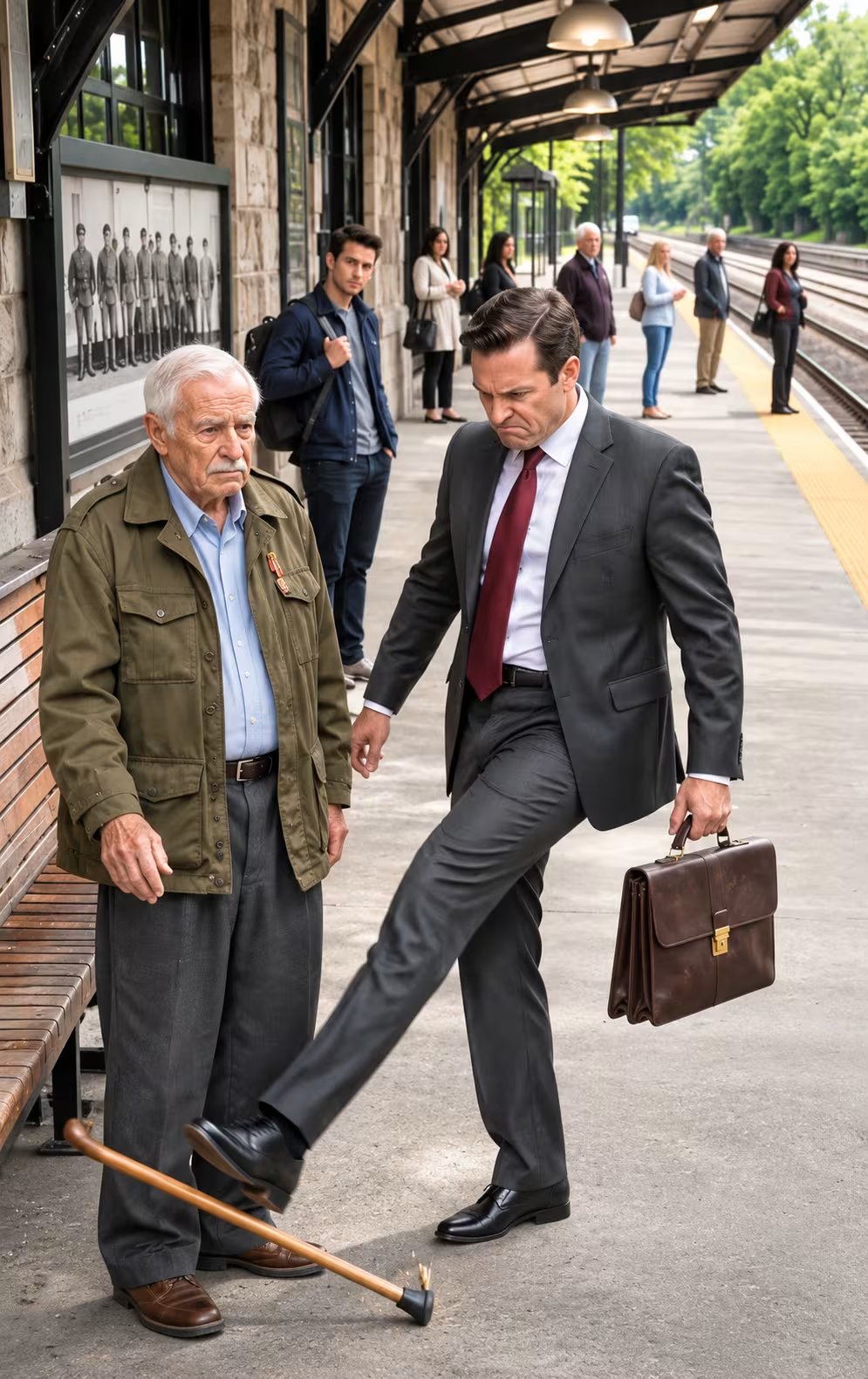
The elderly man reached for his walking cane, but the familiar wooden handle was missing.
Arthur Bennett, 79, stood beside a bench at the crowded train station.
He had placed his cane against the bench while checking his departure ticket.
Now, with passengers moving around him, he could not see where it had gone.
A man wearing a dark business suit noticed Arthur searching beneath the seat.
The man, Richard Collins, approached and asked whether he needed assistance.
Arthur explained that his cane had disappeared while he was reading the departure board.
Richard looked toward the approaching train and suggested that Arthur move away from the platform edge.
Before they could search farther, a young man hurried toward them carrying a wooden cane.
Several passengers turned as the young man called out to the elderly traveler.
A Journey Arthur Had Carefully Planned
Arthur had arrived at the station early that morning.
He was traveling to visit his granddaughter, Emily, who had recently graduated from university.
The journey required two trains and a short connection at a busy regional terminal.
Arthur had made the trip many times when he was younger.
However, walking long distances had become more difficult during recent years.
His wooden cane helped him maintain balance on crowded pavements and uneven surfaces.
He had owned it for nearly twenty years.
His late wife, Margaret, had given it to him after his first knee operation.
The polished handle carried a small brass plate engraved with his initials.
Arthur valued the cane for practical reasons and for the memories attached to it.
At the station, he stopped beside a bench to examine his ticket.
He leaned the cane against the seat while searching for his reading glasses.
A station announcement interrupted him, and several passengers began moving toward the platform.
When Arthur reached for the cane again, it was gone.
He felt increasingly anxious as the crowd continued moving around him.
A Business Traveler Notices His Concern
Richard was waiting for the same train after attending a morning meeting.
He had noticed Arthur standing beside the bench for several minutes.
At first, he assumed the elderly man was checking his luggage.
Then he saw Arthur bending cautiously to look beneath the seat.
Richard approached and asked whether something had fallen.
Arthur explained that he could not find his walking cane.
He described its curved wooden handle and the small brass nameplate.
Richard checked beneath the bench and around the nearby waste container.
The cane was nowhere in sight.
Arthur worried that someone might have taken it accidentally.
He also feared missing his train while searching.
Richard assured him that they could ask station staff for assistance.
He offered Arthur his arm while they moved toward a safer waiting area.
Arthur accepted, explaining that walking without his cane made him uncomfortable.
Richard contacted a station employee and described the missing item.
The employee radioed colleagues working along the platform.
Meanwhile, Richard remained beside Arthur rather than leaving him alone.
A Young Man Returns With Something Familiar
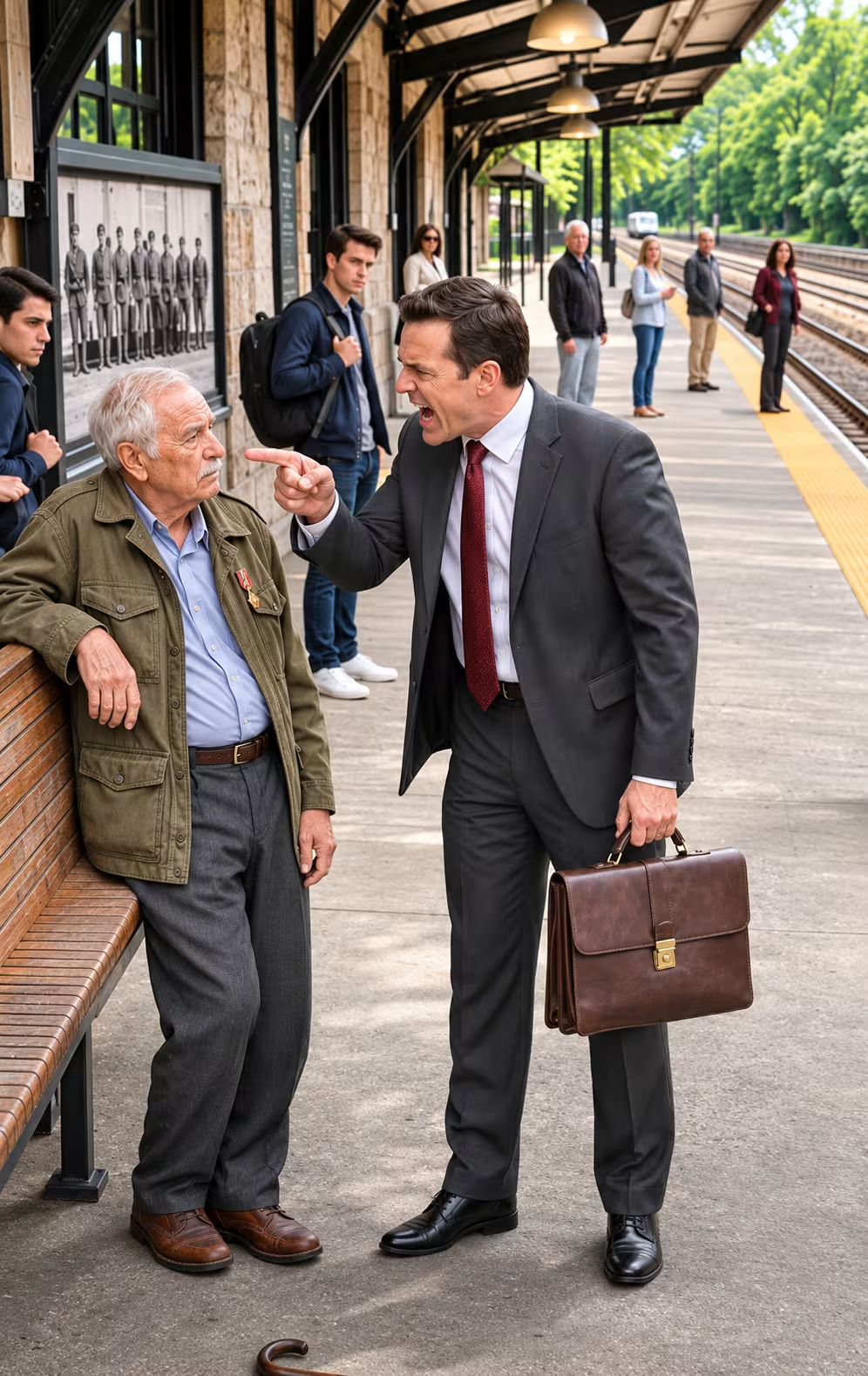
A few minutes later, a young man approached from the station entrance.
He was carrying a wooden walking cane with a curved handle.
His name was Daniel Foster, a university student traveling home for the weekend.
Daniel had noticed the cane lying beside a ticket machine.
He assumed someone had accidentally left it behind.
After checking the brass plate, he began asking nearby passengers whether anyone knew its owner.
A station cleaner suggested looking near the departure platform.
Daniel followed the directions and noticed Arthur speaking with Richard.
He approached and asked whether the elderly man was searching for a cane.
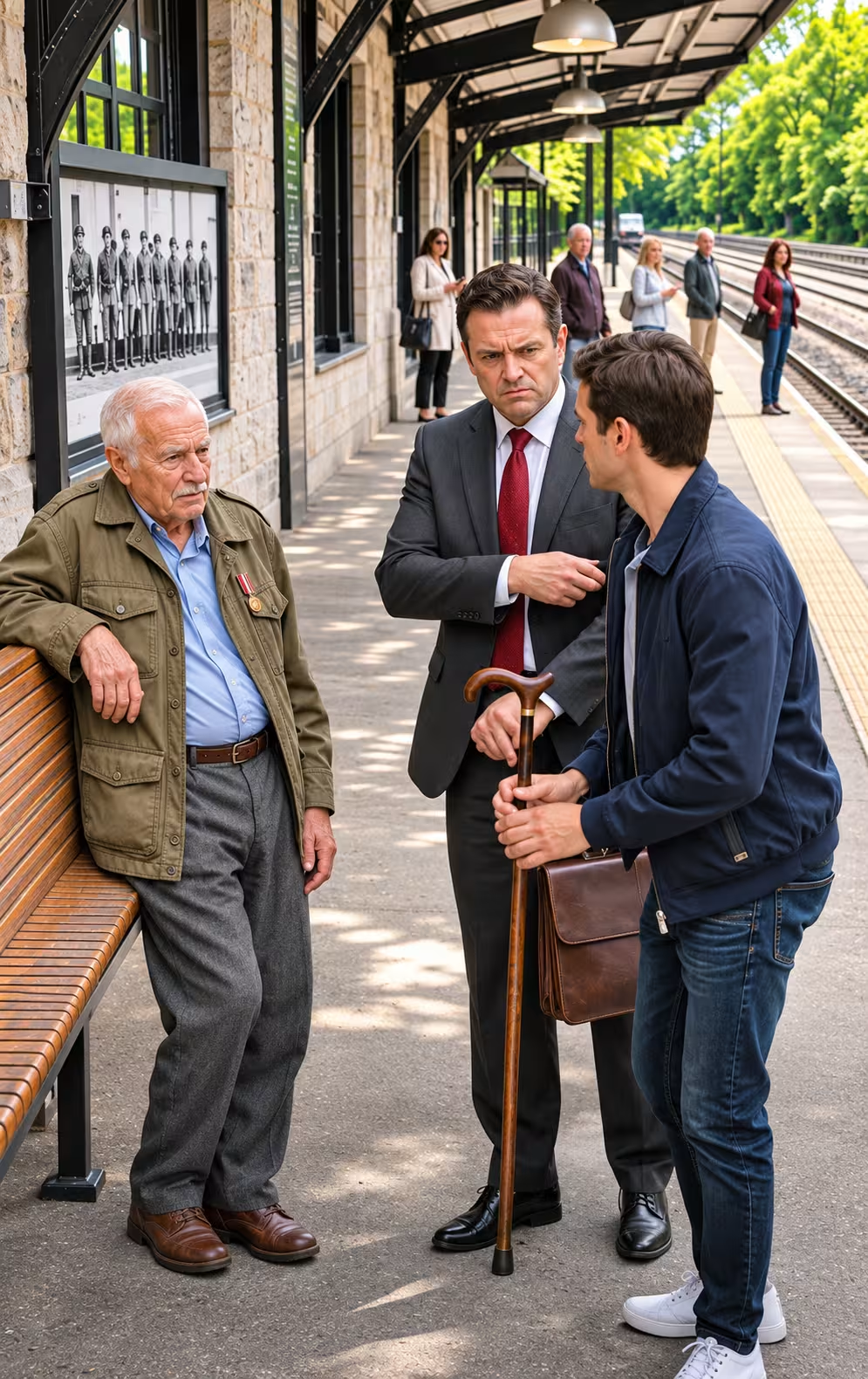
Arthur looked toward the familiar wooden handle.
He immediately recognized the polished surface and engraved initials.
Daniel handed it back, explaining exactly where he had found it.
Arthur thanked him and carefully examined the cane.
Nothing appeared damaged or missing.
Richard asked whether Daniel had seen anyone move it.
Daniel explained that he had only discovered it beside the ticket machine.
Nobody knew how the cane had traveled from the bench to that location.
Arthur was simply relieved to have it back.
A Gathering Forms Around the Elderly Traveler
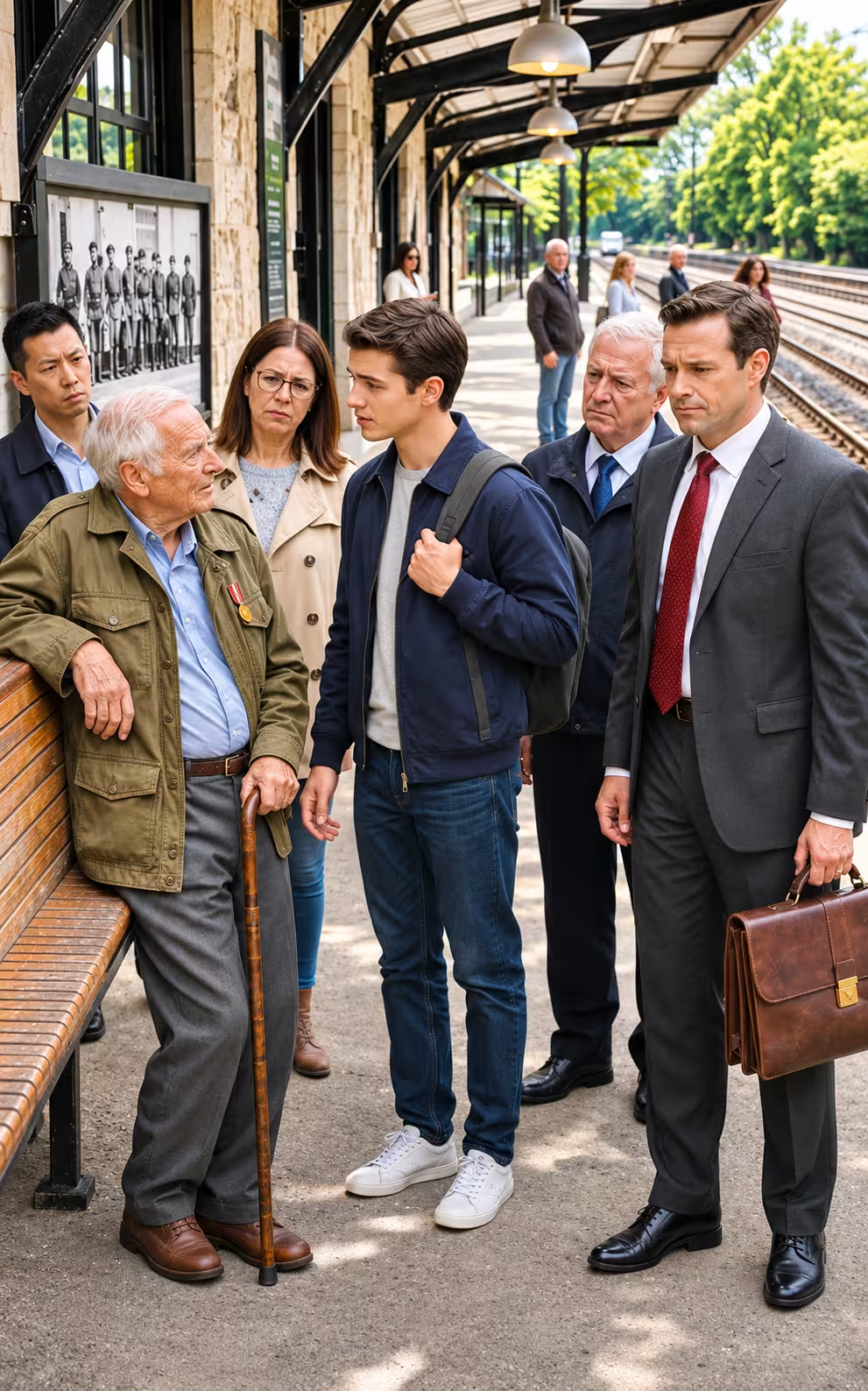
As Arthur thanked Daniel, several nearby passengers paused to watch.
A station employee approached after hearing the report about the missing cane.
She confirmed that Arthur had recovered his property.
Another traveler offered him a seat while the platform became increasingly crowded.
Arthur accepted and rested his cane carefully across his knees.
Richard asked whether he still had enough time to catch his train.
The station employee checked the departure information.
She explained that the service had been delayed by several minutes.
Arthur felt relieved, although he remained concerned about his connection.
Daniel offered to help him find the correct carriage.
A woman waiting nearby mentioned that she was traveling to the same destination.
She knew the station where Arthur needed to change trains.
The group briefly discussed the simplest route through the connecting terminal.
Richard suggested requesting passenger assistance rather than rushing between platforms.
The station employee agreed and contacted the relevant support team.
Arthur listened as the arrangements were confirmed.
What began as a search for a missing cane had become a practical conversation about his journey.
A Personal Story Behind the Wooden Cane
While they waited, Daniel asked Arthur how long he had owned the cane.
Arthur smiled and explained that it had belonged to him for almost two decades.
His wife had chosen it after he struggled with an ordinary metal walking stick.
She believed the wooden handle would be more comfortable.
Arthur remembered how carefully Margaret had selected the cane.
She even arranged for his initials to be engraved beneath the handle.
Richard noticed Arthur’s expression change as he spoke about his wife.
Arthur explained that Margaret had died four years earlier.
The cane remained one of the few everyday objects he still carried from their life together.
Daniel apologized for asking such a personal question.
Arthur reassured him that he enjoyed remembering her.
He was grateful that someone had taken the trouble to return it.
The young man explained that his own grandfather used a similar cane.
He understood how important a familiar walking aid could become.
Nearby passengers listened respectfully without interrupting.
The conversation gradually shifted toward Arthur’s upcoming visit with his granddaughter.
He proudly described her graduation and the family dinner planned for that evening.
The Train Arrives and the Passengers Help
A station announcement confirmed that Arthur’s train would arrive shortly.
The employee returned with information about his arranged passenger assistance.
A staff member would meet him at the connecting station.
Richard offered to carry Arthur’s small suitcase toward the boarding area.
Daniel walked beside them, ensuring the path remained clear.
The woman traveling to the same destination pointed out the correct carriage.
Arthur moved carefully, keeping his cane firmly in his hand.
When the train stopped, passengers allowed him space to board.
Richard placed the suitcase on the luggage rack near his seat.
Daniel checked that Arthur could reach his belongings comfortably.
The station employee confirmed his connection details one final time.
Arthur thanked everyone for helping him continue his journey.
Richard wished him a pleasant visit with his granddaughter.
A Journey That Became Easier Through Kindness
Arthur reached the connecting station later that afternoon.
As arranged, a railway assistance employee met him near his carriage.
The employee helped him locate the next platform without rushing.
Arthur completed the remaining journey and arrived safely at his destination.
Emily was waiting near the station entrance when he stepped outside.
She greeted him warmly and offered to carry his suitcase.
During the drive home, Arthur described the unexpected events of the morning.
He explained how his cane had disappeared beside the station bench.
Emily listened as he described Richard, Daniel, and the helpful passengers.
She was particularly touched that Daniel had searched for the cane’s owner.
Arthur showed her the engraved brass plate and remembered Margaret’s original gift.
That evening, he shared the story again during the family dinner.
His relatives were relieved that the journey had ended comfortably.
What began with a missing walking cane became a reminder that a few thoughtful strangers can turn an anxious journey into an experience of dignity, kindness, and unexpected connection.