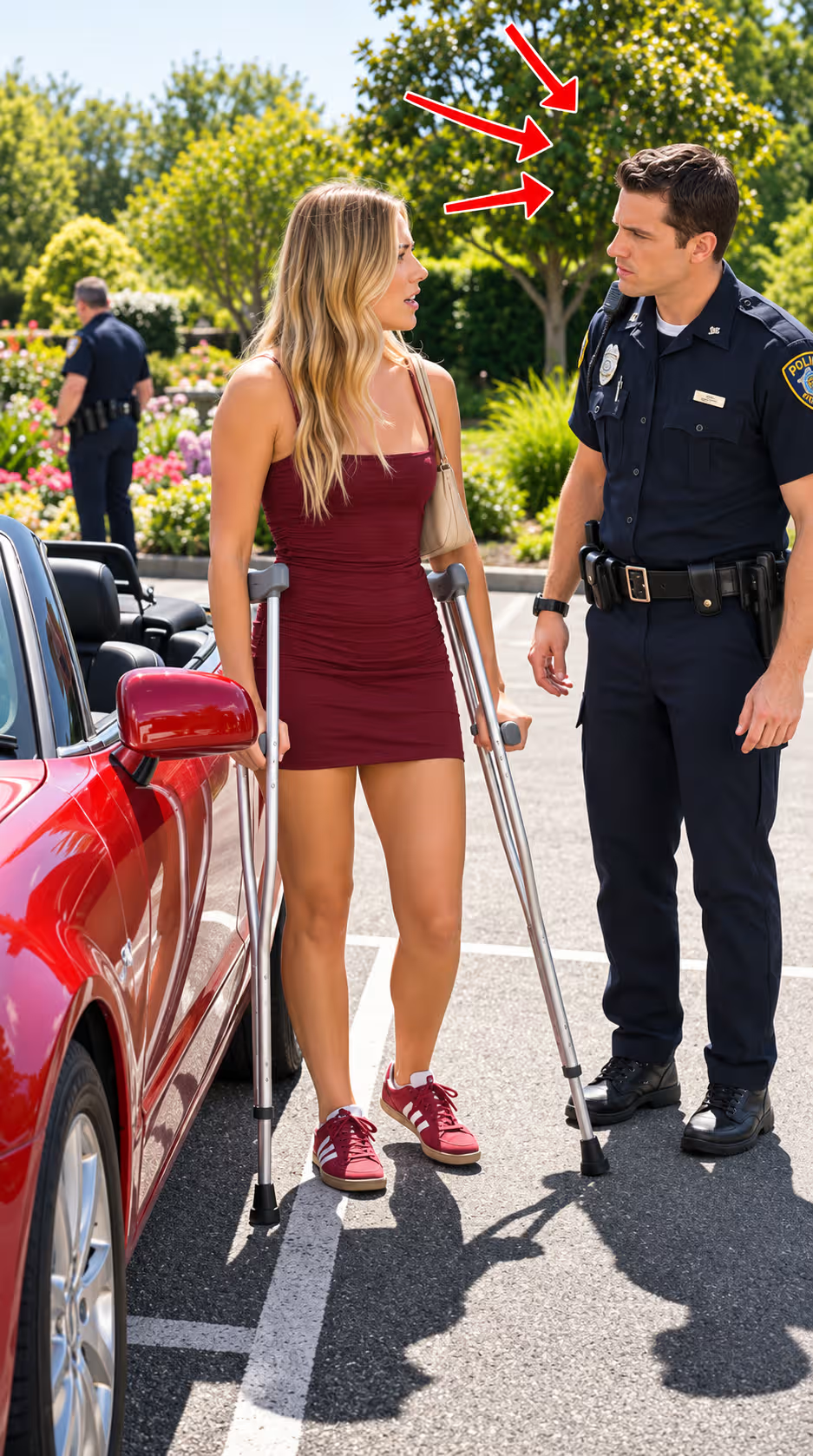
The police officer noticed the woman struggling to reach her red car before she noticed him.
One crutch slipped slightly as she tried opening the driver’s door.
Officer Daniel Brooks stopped several feet away and asked whether she needed assistance.
The woman, identified as Laura Mitchell, immediately shook her head.
She insisted that she could manage, although her expression suggested otherwise.
Daniel noticed a hospital discharge envelope resting beneath her arm.
Her right leg was supported by a medical walking boot.
The red sedan occupied a parking space outside a small neighborhood pharmacy.
Laura explained that she had stopped to collect medication after leaving a medical appointment.
Daniel offered to help retrieve her dropped keys.
Before she answered, he noticed something concerning about the driver’s seat.
Laura seemed uncertain whether she could safely operate the vehicle.
A Difficult Afternoon Outside the Pharmacy
Laura had fractured her ankle several weeks earlier after falling down her apartment stairs.
Since then, she had relied on crutches while attending medical appointments.
Her doctor had advised her to avoid driving until she could safely control the pedals.
Unfortunately, Laura’s usual transportation arrangement had fallen through that morning.
Her sister, Rebecca, normally drove her to appointments and helped collect prescriptions.
That afternoon, Rebecca had been delayed at work.
Laura had arranged for a neighbor to take her to the pharmacy.
However, the neighbor had received an urgent telephone call and left unexpectedly.
Laura was now standing beside her car, uncertain how she would get home.
Daniel listened as she explained the situation.
He asked whether she had driven the vehicle to the pharmacy herself.
Laura clarified that her neighbor had driven her car earlier.
The neighbor had left the keys with her before departing.
Daniel understood that Laura was not attempting to avoid assistance.
She simply wanted to return home without inconveniencing anyone.
Still, he was concerned about her ability to drive safely.
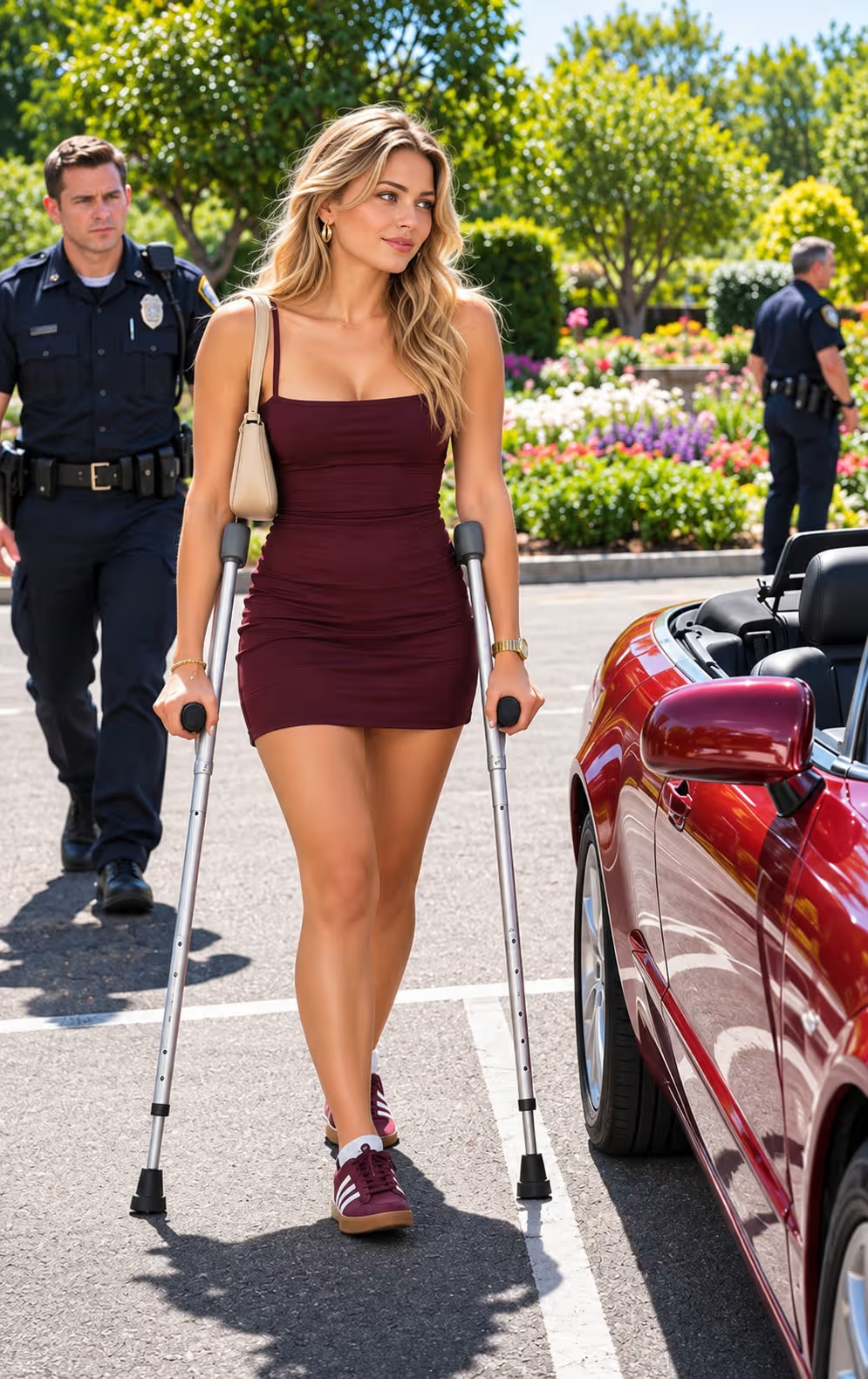
A Second Officer Notices the Situation
Daniel asked Laura whether she had someone who could collect her.
She explained that her sister was unavailable for another two hours.
A taxi was possible, but Laura worried about leaving her car overnight.
She also needed to carry a small bag of groceries from the passenger seat.
Daniel suggested contacting a family member before considering other arrangements.
While they spoke, another patrol vehicle entered the pharmacy parking lot.
Officer Sarah Collins stepped out and approached after recognizing Daniel.
She had been responding to a nearby traffic complaint when she noticed his patrol car.
Daniel briefly explained Laura’s transportation problem.
Sarah greeted Laura and asked whether she was experiencing any immediate medical difficulty.
Laura confirmed that she was uncomfortable but did not require emergency treatment.
Sarah noticed that the parking area had a designated passenger pickup zone.
She suggested moving Laura to a nearby bench while they explored transportation options.
Daniel offered to retrieve her belongings from the car.
Laura hesitated because she disliked relying on strangers.
Sarah reassured her that accepting assistance did not mean surrendering her independence.
Together, they began considering a practical way to get Laura home.
An Unexpected Problem Changes Their Plan
Sarah asked Laura whether she could contact her sister again.
Laura called Rebecca and explained that two officers were helping her.
Rebecca answered immediately but confirmed that she could not leave work yet.
She offered to arrange a rideshare vehicle.
Laura worried that the driver might not help her manage the crutches.
Daniel explained that they could assist her into an appropriate vehicle at the pharmacy.
However, Laura remained concerned about her red sedan.
She had parked in a time-limited space and feared receiving a parking citation.
Sarah examined the posted signs and confirmed that the parking restriction applied.
Leaving the car there for several hours could create another problem.
Daniel suggested contacting the pharmacy manager about temporary parking arrangements.
The manager agreed to let Laura use a longer-term customer space until the evening.
Unfortunately, the car still needed to be moved.
Laura handed Daniel her keys but then paused.
She explained that her insurance policy did not authorize unfamiliar drivers.
Daniel returned the keys immediately.
Rather than making assumptions, Sarah suggested asking Rebecca whether an authorized family member could collect the vehicle.
Laura remembered that her adult nephew, Michael, lived nearby.
She called him and explained the situation.
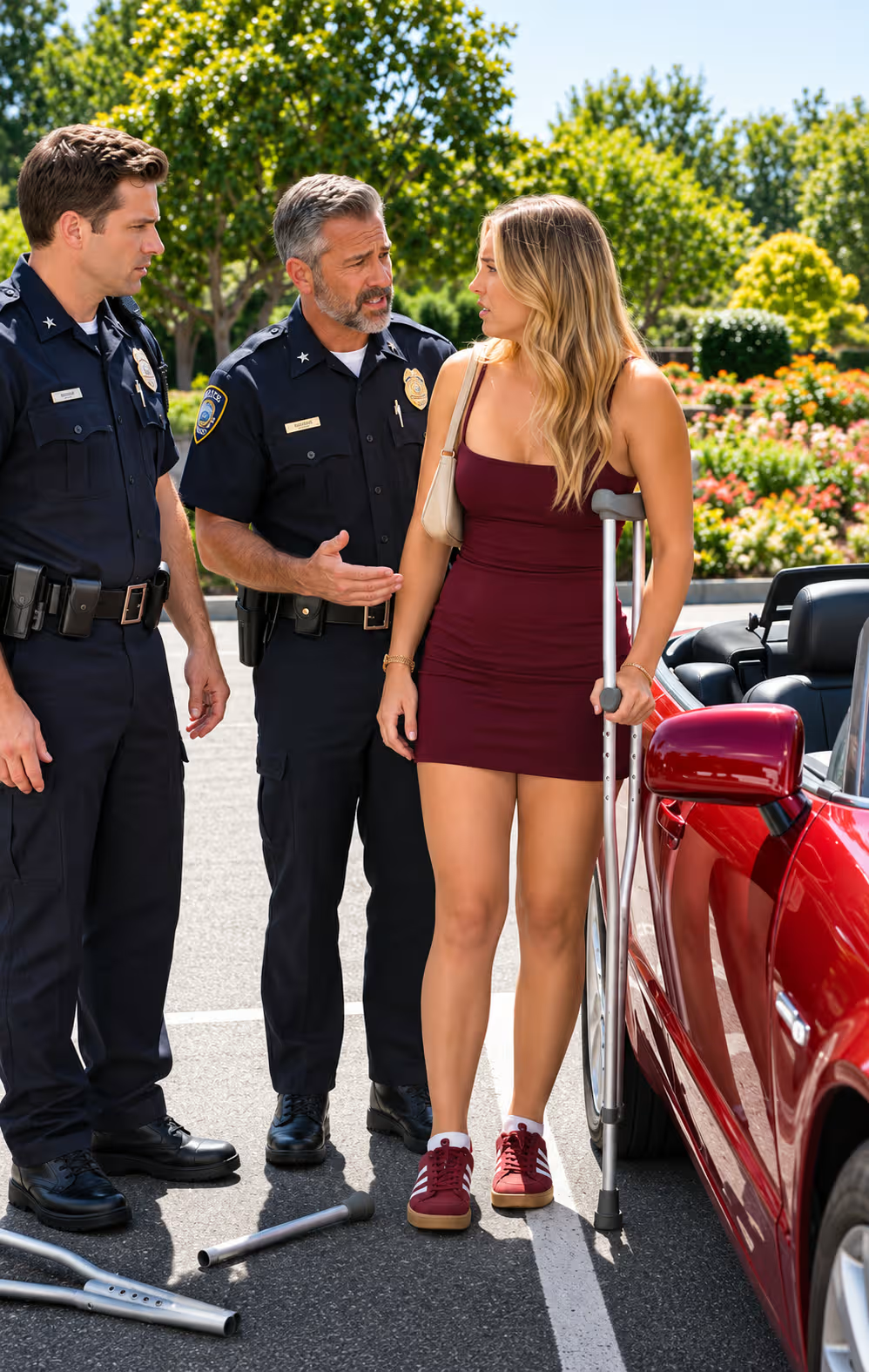
The Officers Find a Safer Solution
Michael answered after several rings and confirmed that he was available.
He had driven Laura’s car before and was listed as an authorized driver.
He agreed to come directly to the pharmacy.
Meanwhile, Sarah helped Laura settle onto the bench near the entrance.
Daniel retrieved her grocery bag and placed it beside her.
Laura thanked them but admitted that she felt embarrassed.
She had expected an ordinary pharmacy visit, not a conversation with two police officers.
Sarah explained that the situation did not involve any accusation or wrongdoing.
Their concern was ensuring that Laura could travel without unnecessary risk.
Several minutes later, Michael arrived carrying a bottle of water.
He greeted his aunt and thanked the officers for staying with her.
Laura explained that she had considered driving herself.
Michael looked concerned and reminded her about the medical advice she had received.
He offered to take her home immediately.
Daniel confirmed that Laura was comfortable with the arrangement.
Sarah helped position the crutches while Michael opened the passenger door.
Laura carefully transferred into the seat with assistance from her nephew.
Michael placed the crutches and groceries in the back.
Before leaving, Laura thanked both officers for helping her find a solution.
The red car pulled away from the pharmacy with Michael behind the wheel.
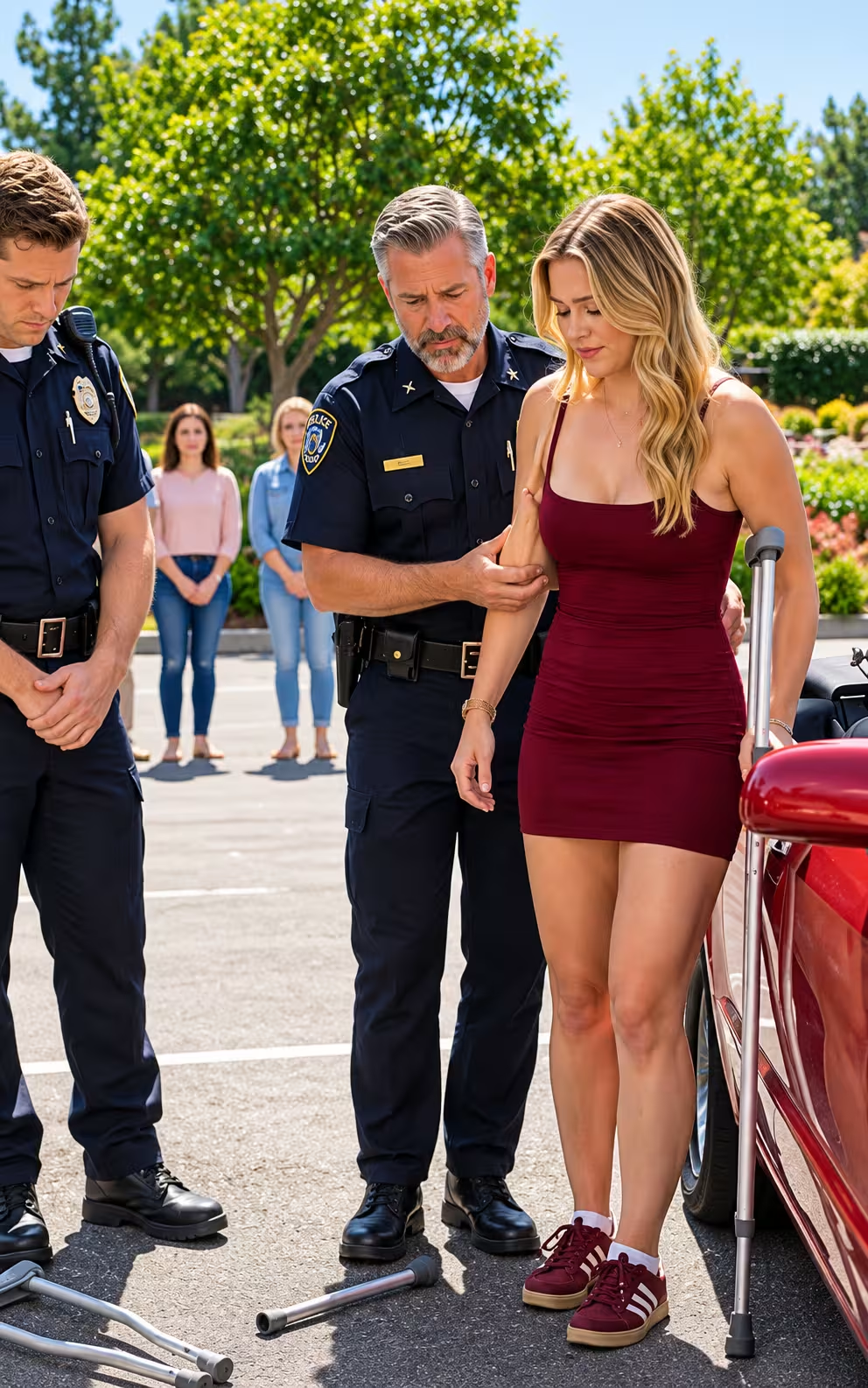
A Conversation That Meant More Than Expected
Later that afternoon, Rebecca called Laura to make sure she had arrived home safely.
Laura explained that Michael had driven her back without difficulty.
She also described her conversation with Daniel and Sarah.
Rebecca was relieved that her sister had not attempted to drive with her injured ankle.
Laura admitted that she had underestimated how difficult the afternoon would become.
She had wanted to manage everything independently.
However, standing beside the car had made her realize that she needed temporary assistance.
Rebecca offered to organize a more reliable transportation schedule.
Michael agreed to help with pharmacy visits whenever his work schedule allowed.
Laura also contacted her medical office to clarify her driving restrictions.
The staff confirmed that she should follow her clinician’s instructions until medically cleared.
Meanwhile, Daniel and Sarah completed their patrol duties.
Their conversation with Laura had required no enforcement action.
Instead, they had helped address a practical problem before it became a safety concern.
Both officers considered the outcome a useful example of everyday community assistance.
The Red Car Returns to the Pharmacy
Several weeks later, Laura returned to the same pharmacy with her sister.
Her ankle was improving, although she still followed her clinician’s mobility recommendations.
She noticed a familiar patrol vehicle parked near the entrance.
Daniel was speaking with the pharmacy manager about an unrelated neighborhood concern.
Laura approached carefully and greeted him.
He recognized her and asked how her recovery was progressing.
She explained that her family had arranged transportation for her remaining appointments.
The experience had encouraged her to accept help when necessary.
Daniel was pleased to hear that she was recovering.
Laura asked him to pass her thanks to Sarah.
She remembered how the second officer had helped turn an uncomfortable conversation into a practical plan.
In this fictional story, a routine encounter beside a red car revealed a transportation problem that could have created unnecessary risk.
Daniel’s initial concern led to a conversation about Laura’s circumstances.
Sarah’s arrival brought another perspective and helped the group identify available options.
Together, they found a solution that respected Laura’s independence while addressing her immediate needs.
Laura eventually returned home safely, and her family developed a better plan for future appointments.
What Laura remembered most was not the difficulty of that afternoon, but the kindness of two officers who took time to help her find a safe way home.