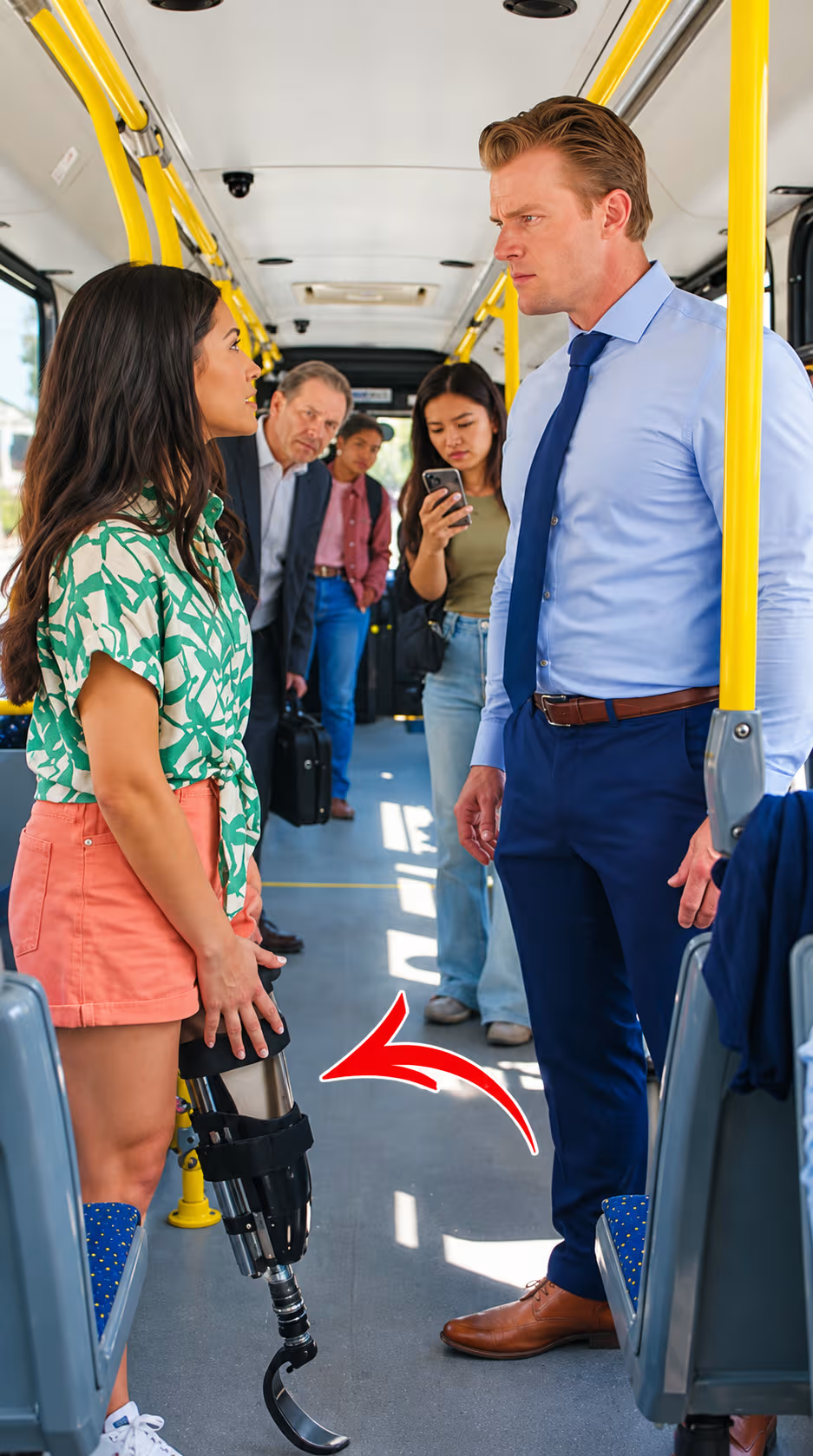
The young woman tightened her grip on the seat rail as the bus moved away from the station.
A man standing beside her noticed that she was having difficulty keeping her balance.
Her name was Rachel Morgan, and she wore a prosthetic leg beneath her dark trousers.
The man, Richard Coleman, looked toward the seat she had recently occupied.
He asked why she had been allowed to board before the other passengers.
Rachel explained that the driver had offered her additional time to reach a seat safely.
Richard continued questioning the arrangement.
Several passengers looked toward them as his voice became louder.
Rachel remained calm, although the attention made her uncomfortable.
At the next stop, a uniformed transit officer stepped aboard.
He noticed the conversation and approached the pair.
After asking whether everything was all right, he listened to both passengers.
What began as a disagreement about boarding procedures soon became a conversation about accessibility, assumptions, and respect.
A Journey Rachel Had Carefully Prepared
Rachel was thirty-two and worked as a graphic designer at a community education center.
She had used a prosthetic leg since an accident several years earlier.
Through rehabilitation and practice, she had regained considerable independence.
However, crowded public transportation could still present practical challenges.
Sudden braking, narrow aisles, and passengers moving unexpectedly sometimes made balancing difficult.
Rachel usually traveled during quieter hours whenever her schedule allowed.
That morning, she needed to attend an important meeting across the city.
She arrived at the bus stop early and waited near the designated boarding area.
When the bus approached, the driver noticed her mobility needs.
He allowed Rachel to board before the crowd entered.
This gave her time to reach an available seat without being pushed or hurried.
Rachel thanked him and settled near the front.
A few minutes later, the bus became crowded.
An elderly passenger boarded, and Rachel offered her seat after checking that she could stand securely.
The older passenger accepted gratefully.
Richard, standing nearby, noticed the exchange but misunderstood what had happened earlier.
He decided to question Rachel about the boarding arrangement.
The Man Questions Her Place on the Bus
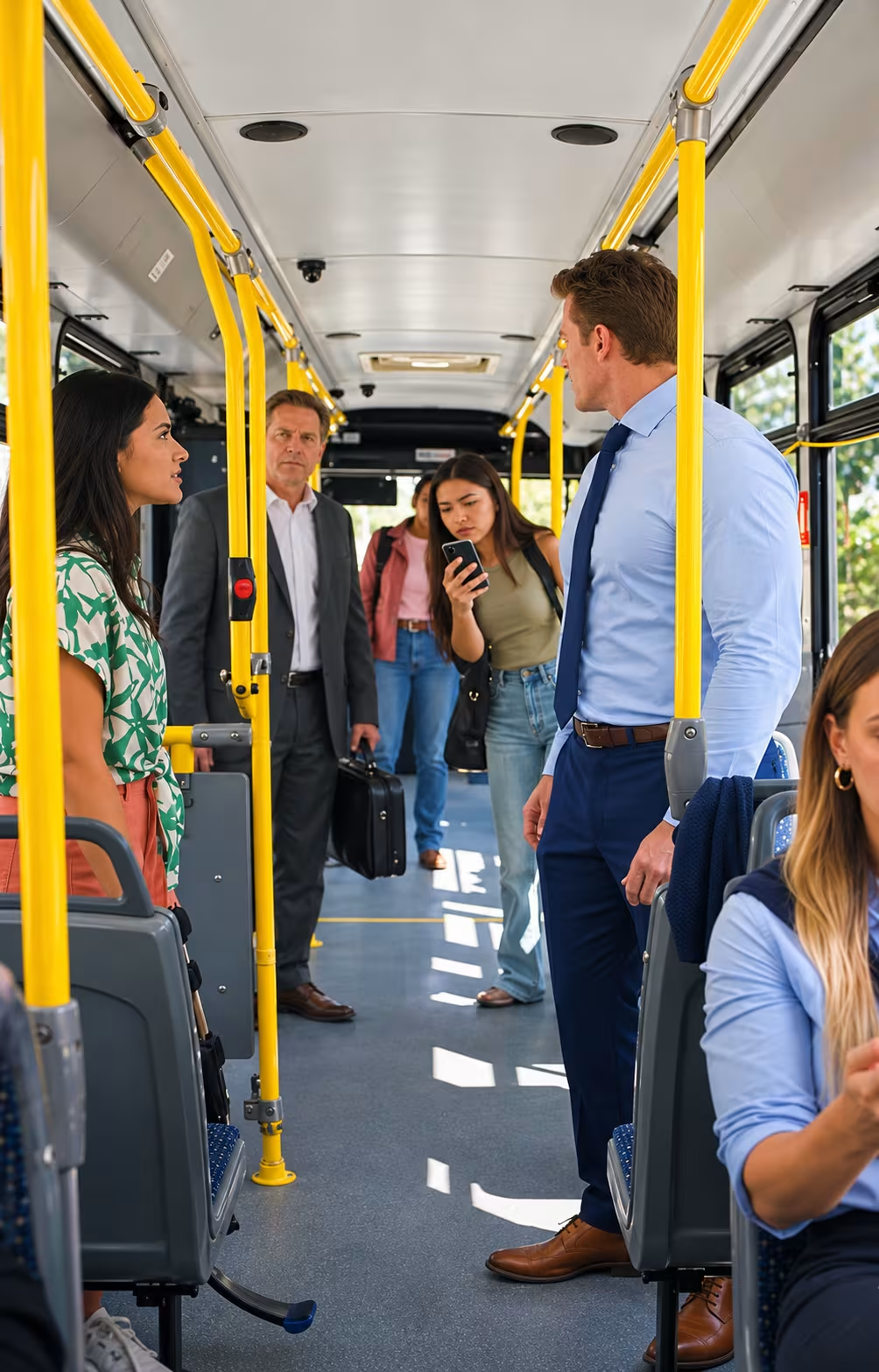
Richard had been waiting at the same stop as Rachel.
He was running late for an appointment and appeared frustrated by the crowded service.
When Rachel boarded ahead of the other passengers, he assumed she had received special treatment without explanation.
He had not noticed the driver’s assistance or Rachel’s careful movement through the aisle.
After the bus departed, Richard approached her.
He asked why she had been permitted to enter first.
Rachel explained that the driver had allowed extra boarding time for accessibility reasons.
Richard glanced toward her prosthetic leg.
He then asked whether she really needed assistance if she could stand.
Rachel explained that mobility needs were not always obvious.
She could walk independently but sometimes required additional time in crowded spaces.
Richard replied that everyone should follow the same boarding order.
Rachel acknowledged his frustration but explained that accessible boarding helped passengers travel safely.
She did not want an argument.
She simply wanted to reach her destination.
However, Richard continued speaking loudly.
Other passengers began listening, and Rachel felt increasingly uncomfortable.
She asked him to lower his voice.
Richard insisted that he was only asking a reasonable question.
A Passenger Offers Quiet Support
An older woman named Helen Parker stood near the front of the bus.
She had accepted Rachel’s seat several minutes earlier.
Helen noticed that Richard seemed unaware of what had happened.
She politely explained that Rachel had offered her the seat voluntarily.
Richard appeared surprised.
He had assumed Rachel was standing because the driver had asked her to move.
Helen clarified that nobody had forced her to give up the seat.
Rachel had simply noticed someone who might appreciate sitting down.
Richard looked toward Rachel again.
He asked why she had not explained that earlier.
Rachel replied that she did not believe she should have to discuss personal medical details with strangers.
Helen agreed that passengers deserved privacy and consideration.
The bus slowed as it approached a major transit interchange.
Several passengers prepared to leave.
Rachel moved closer to a vertical handrail to maintain her balance.
Richard continued questioning whether the boarding procedure was fair.
The driver heard the raised voices and contacted a transit officer stationed at the interchange.
He requested assistance with a passenger disagreement.
The officer approached the bus when it stopped.
Rachel noticed his uniform as he stepped through the front doors.
The Uniformed Officer Joins Their Conversation
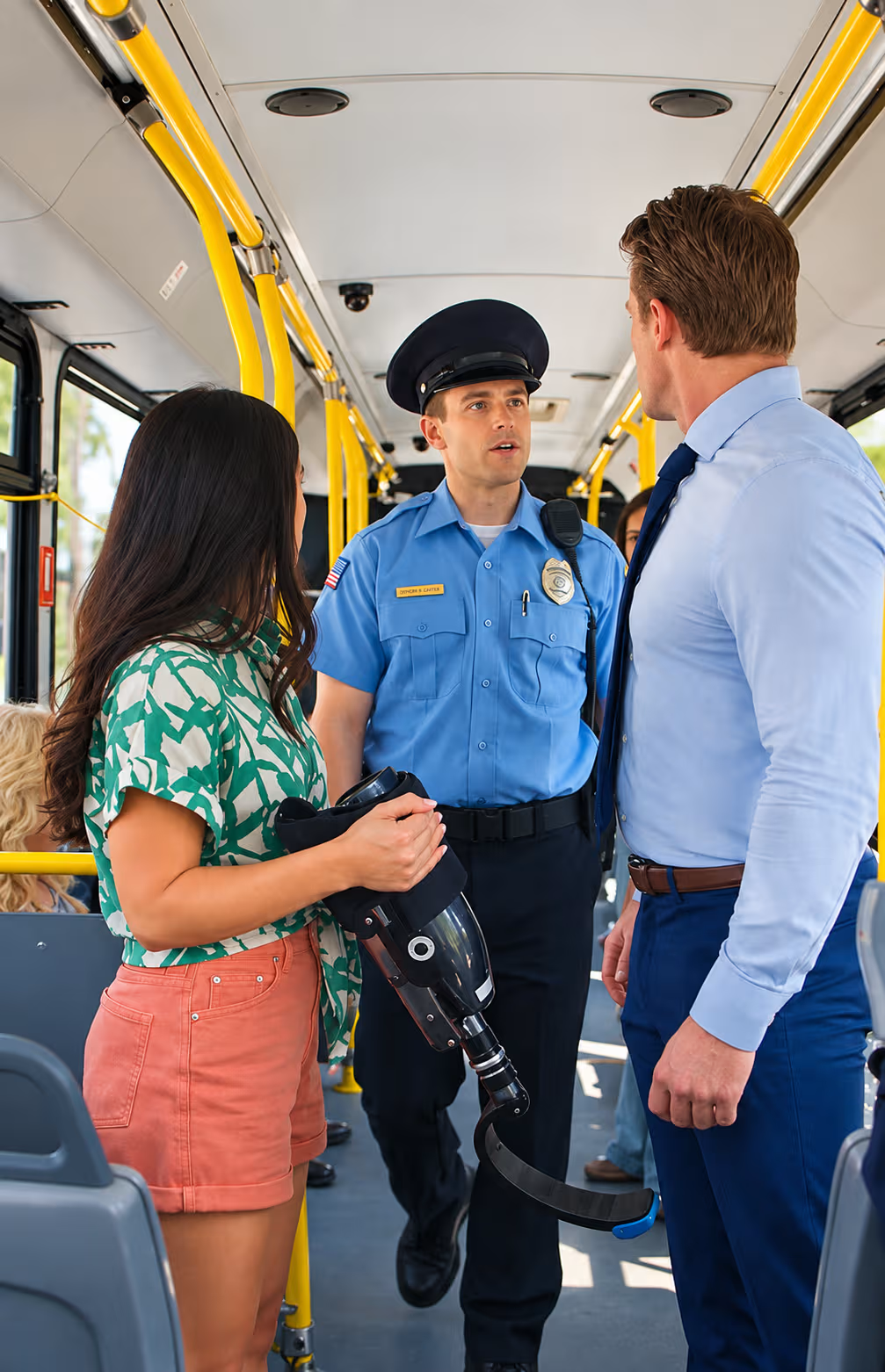
The officer introduced himself as Daniel Harper, a member of the transit safety team.
He asked the driver for a brief explanation before approaching the passengers.
The driver confirmed that he had allowed Rachel additional boarding time.
He explained that this was consistent with the transit system’s accessibility procedures.
Daniel then approached Richard and Rachel.
He asked whether either passenger felt unsafe or needed assistance.
Rachel explained that she was physically unharmed.
However, she felt uncomfortable being repeatedly questioned about her mobility.
Richard stated that he believed boarding should be fair to everyone.
Daniel listened before responding.
He explained that accessibility arrangements were designed to help passengers use public transportation safely.
Allowing someone additional boarding time did not mean other passengers were being treated unfairly.
He also explained that people using prosthetic limbs could have different mobility needs.
Rachel appreciated that he spoke about the general policy rather than asking her to reveal private information.
Daniel asked Richard to stop directing personal questions toward her.
Richard initially defended his comments.
Then Daniel reminded him that disagreements should be addressed respectfully through transit staff.
The bus remained stopped while the conversation concluded.
An Explanation Changes the Atmosphere
Richard looked toward the driver and asked whether the boarding procedure was standard.
The driver confirmed that passengers with mobility needs could receive additional time when appropriate.
He explained that crowded boarding conditions sometimes increased the risk of falls.
Richard appeared to consider the explanation.
He admitted that he had not understood why Rachel boarded first.
Daniel acknowledged that passengers might have questions about transit procedures.
However, he emphasized that those questions should not become public interrogations of individual travelers.
Richard turned toward Rachel.
He apologized for making assumptions about her abilities.
Rachel accepted the apology but explained that the exchange had been upsetting.
She said that using a prosthetic leg did not prevent her from living independently.
At the same time, independence did not mean she never needed practical accommodations.
Richard nodded.
He acknowledged that he had judged the situation without knowing the circumstances.
Helen thanked Daniel for explaining the policy calmly.
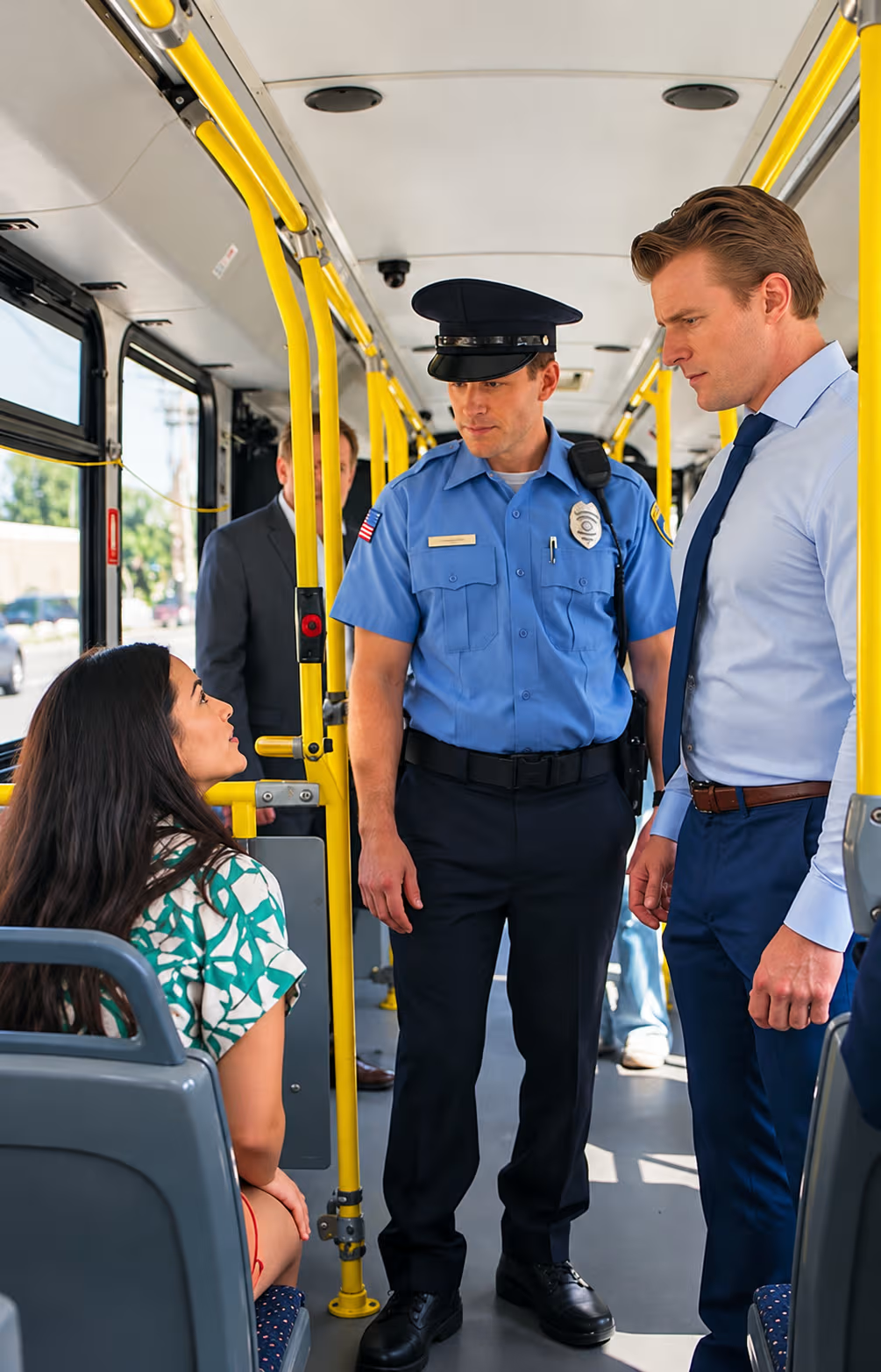
The officer asked whether Rachel needed help finding another seat.
She said she would appreciate sitting until the bus reached her destination.
A Different Understanding of Independence
The bus resumed its route through the city.
Rachel checked the time and realized she would still reach her meeting.
She felt relieved that the uncomfortable conversation had ended.
Richard remained standing near the rear doors.
For several minutes, he said nothing.
Then he approached Rachel again, keeping a respectful distance.
He asked whether she would mind one final comment.
Rachel agreed.
Richard explained that he had never considered how small transportation arrangements could affect someone’s safety.
He apologized again for making her feel singled out.
Rachel thanked him for acknowledging the mistake.
She explained that accessibility often involved ordinary practical adjustments.
Sometimes those adjustments were barely noticeable to other passengers.
Richard wished her a good day before returning to his place.
At the next stop, Helen prepared to leave.
She thanked Rachel once more for offering her the seat.
Rachel smiled and wished her a pleasant afternoon.
When Rachel reached her destination, she waited until the aisle cleared.
The driver allowed her enough time to exit comfortably.
She thanked him before stepping onto the pavement.
In this fictional bus story, a misunderstanding about accessible boarding led to an uncomfortable conversation.
Richard questioned Rachel without understanding her mobility needs.
Helen helped clarify what had happened, while Daniel explained the transit procedures.
The officer’s intervention allowed everyone to discuss the issue without further confrontation.
For Rachel, the most meaningful outcome was being treated as an ordinary passenger whose independence deserved respect and whose safety deserved consideration.