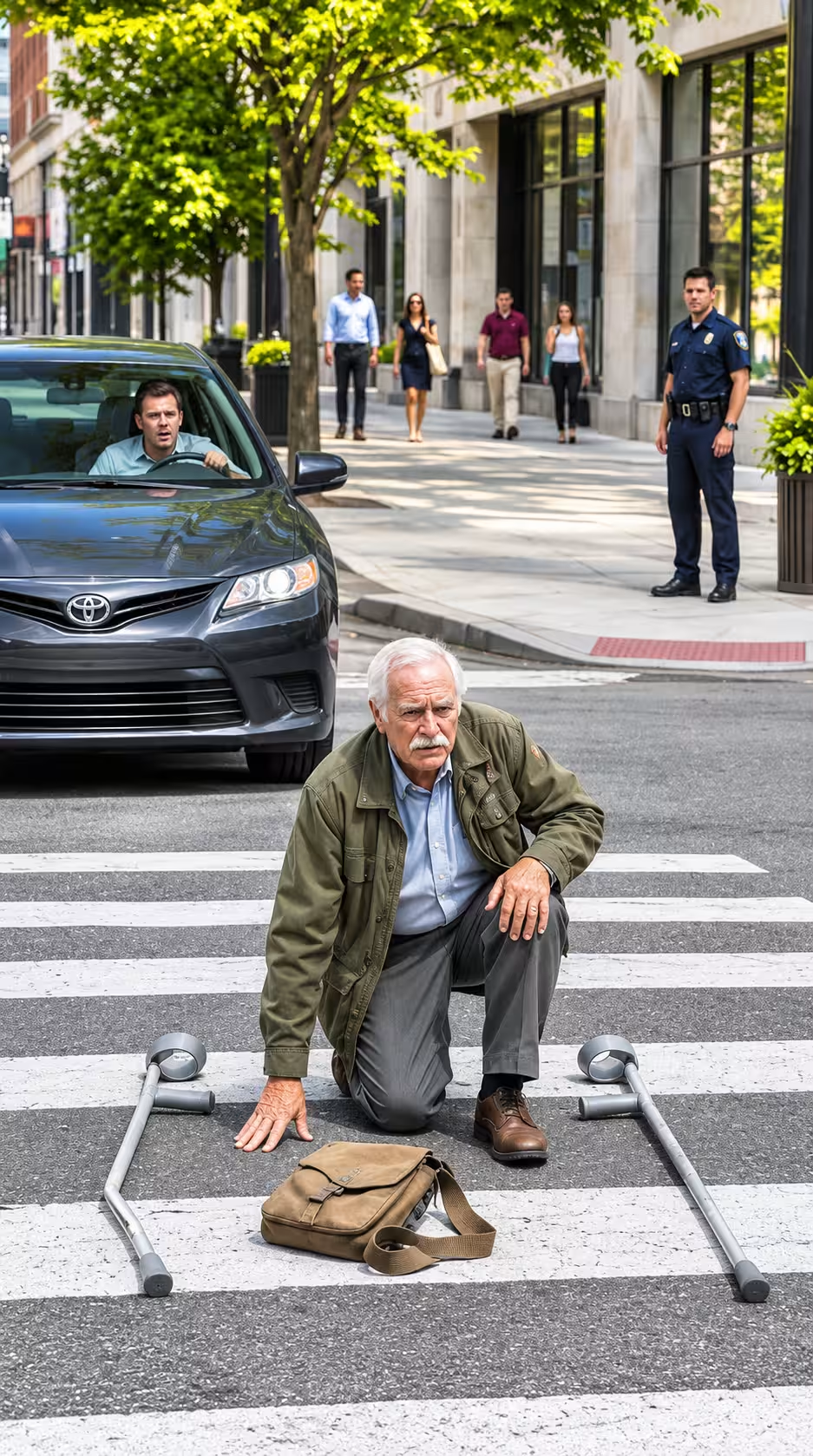
The elderly man was halfway across the crosswalk when one of his crutches slipped against the pavement.
Seventy-nine-year-old Harold Bennett lost his balance and fell near the painted crossing lines.
A shopping bag landed beside him, scattering several small items across the road.
Traffic had stopped for the pedestrian signal, but the crossing time was nearly finished.
Harold tried to sit upright, feeling pain in his knee and embarrassment as people turned toward him.
A man waiting outside a nearby café noticed the fall and hurried toward the intersection.
At the same moment, a police officer patrolling the street approached from the opposite sidewalk.
Both men reached Harold and asked whether he was injured.
Their immediate concern was helping him safely, without rushing him to stand before checking his condition.
A Familiar Errand Becomes More Difficult
Harold had lived in the neighborhood for more than thirty years.
After retiring from his work as a postal supervisor, he maintained a quiet daily routine.
He enjoyed visiting the local bakery, reading newspapers, and meeting friends at a nearby park.
Several months earlier, Harold had injured his left leg during a fall at home.
His recovery was progressing, but he still needed crutches for additional support.
A physical therapist had encouraged him to take short, manageable walks while following his rehabilitation plan.
That morning, Harold decided to visit the pharmacy and collect a few household supplies.
He checked the rubber tips on his crutches before leaving his apartment.
The weather was mild, although an earlier rain shower had left some pavement damp.
Harold walked carefully along the familiar sidewalk, avoiding uneven sections.
After visiting the pharmacy, he stopped at a small grocery store.
He purchased bread, fruit, and a carton of milk.
With his shopping bag secured, he approached the intersection near the community center.
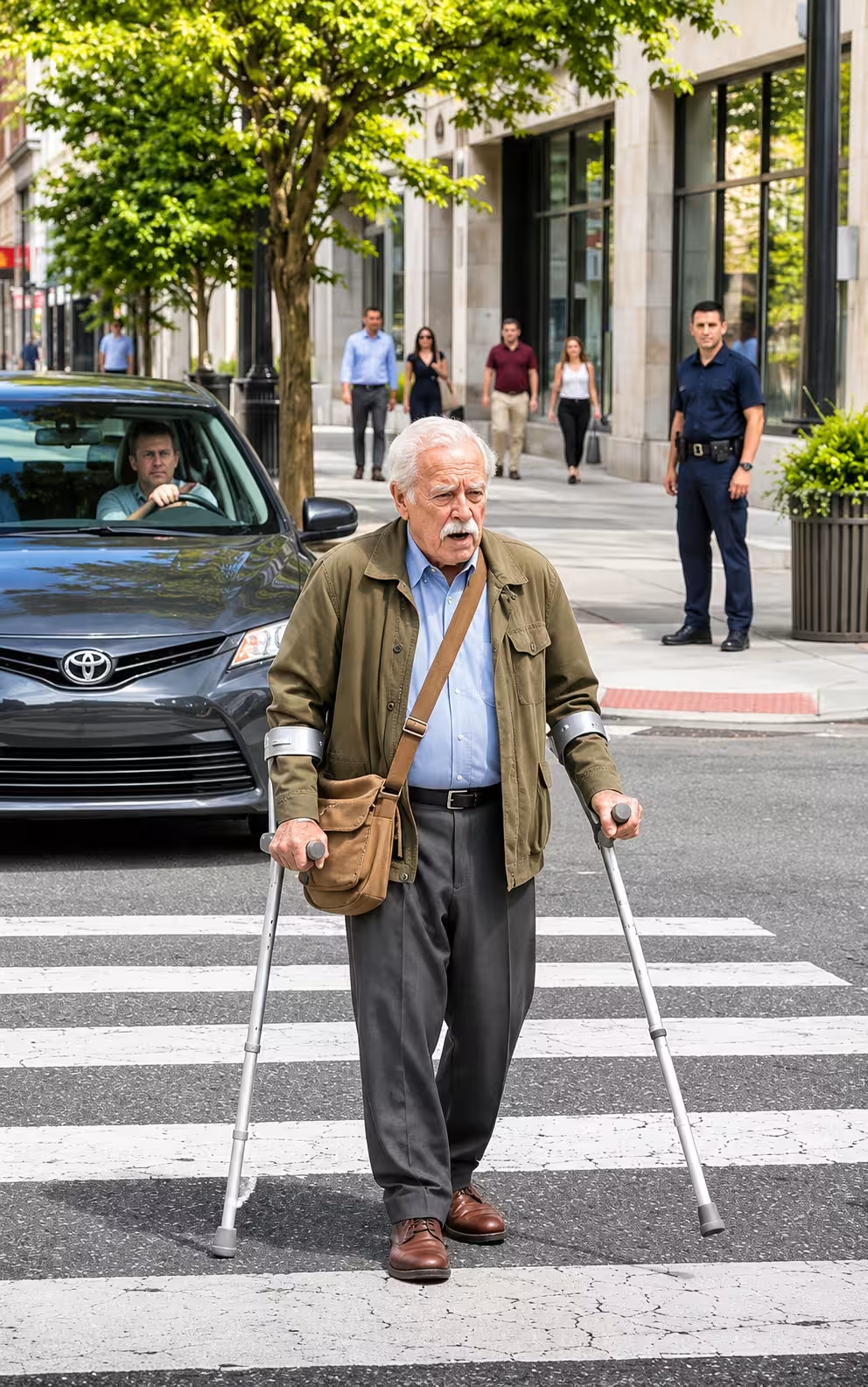
The pedestrian signal changed, and Harold began crossing at his usual careful pace.
A Sudden Loss of Balance
The intersection connected two busy streets near several neighborhood businesses.
Harold waited until the pedestrian signal permitted him to cross.
He stepped onto the marked crossing, placing his crutches carefully before each movement.
Several vehicles remained stopped behind the traffic lights.
As Harold approached the middle of the road, one crutch tip slipped unexpectedly.
His weight shifted sideways before he could regain his balance.
He stumbled and fell onto his right knee and hip.
The shopping bag slipped from his hand, landing near the crossing lines.
Harold remained seated on the pavement, startled by the sudden accident.
He attempted to move his injured leg but stopped when he felt discomfort.
A driver near the intersection noticed him and remained stationary.
Another pedestrian called out, asking whether he needed assistance.
Harold looked toward the sidewalk, unsure how to respond.
He worried about delaying traffic but knew he could not safely stand alone.
A man near the café immediately began moving toward him.
Across the street, a uniformed police officer also noticed the situation.
A Man and Police Officer Reach the Crosswalk
Thirty-six-year-old Daniel Harris had been waiting outside the café when Harold fell.
He approached carefully, checking the surrounding traffic before entering the crossing.
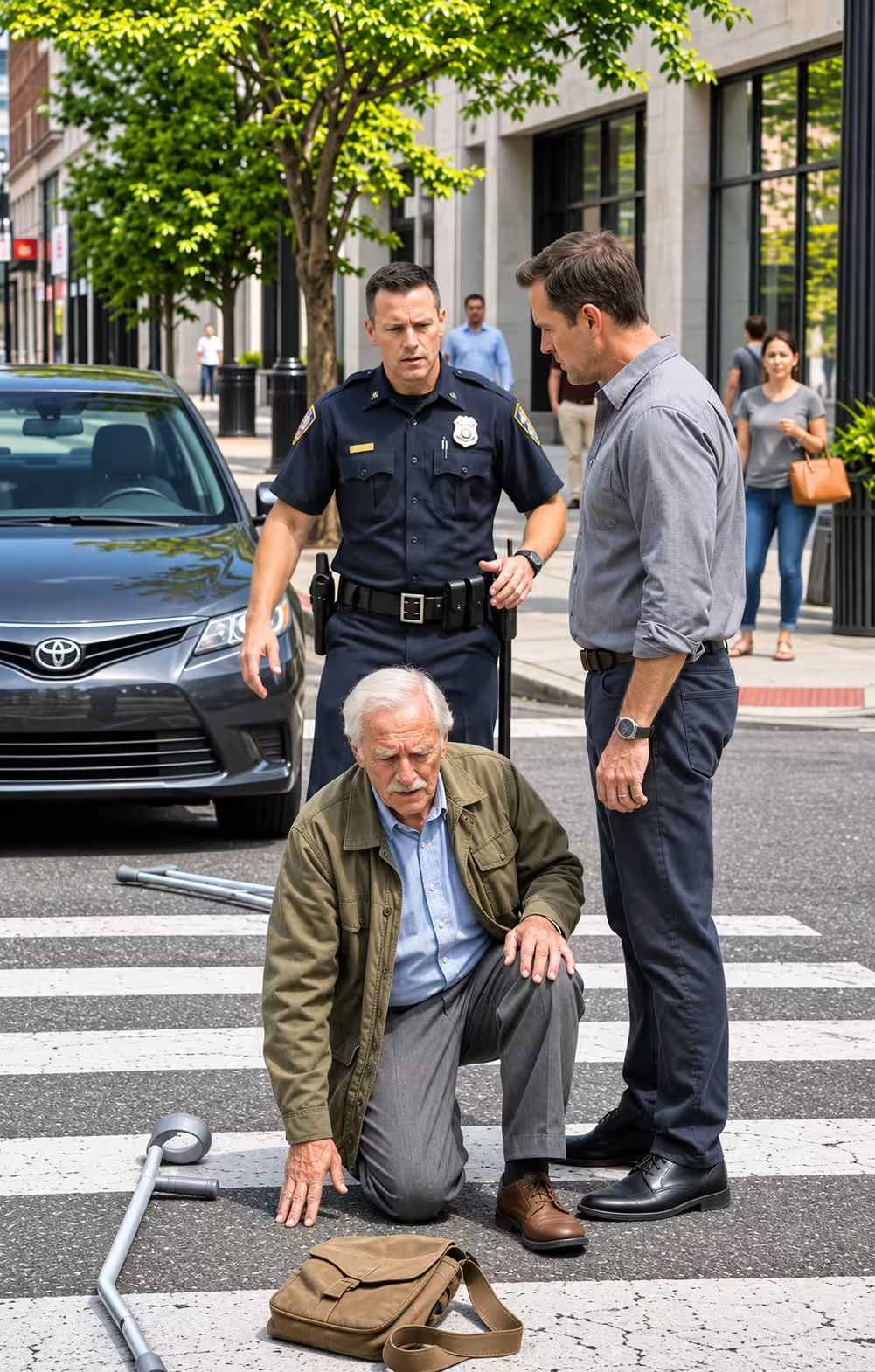
Officer Michael Turner arrived from the opposite sidewalk moments later.
Michael immediately assessed the intersection and alerted nearby drivers to remain stopped.
Daniel knelt at a safe distance and introduced himself to Harold.
He asked whether Harold could hear him clearly and whether he had struck his head.
Harold explained that he had landed on his knee and hip.
He said he had not lost consciousness but felt shaken.
Michael asked him to remain seated while they checked for possible injuries.
The officer contacted dispatch and requested medical assistance because of Harold’s age and fall.
Daniel collected the scattered shopping items without moving Harold’s crutches unnecessarily.
He placed the bag safely beside the curb.
Michael continued managing the crossing while another officer arrived to assist with traffic.
Harold apologized repeatedly for causing a delay.
Daniel reassured him that his safety mattered more than the interrupted traffic.
The men remained nearby, speaking calmly until medical responders arrived.
A Careful Assessment Before Standing
Two emergency medical responders reached the intersection several minutes later.
They examined Harold while Michael maintained a safe area around the crossing.
Harold described how his crutch had slipped and where he felt discomfort.
The responders checked his awareness, movement, and possible injuries.
They found no obvious signs of a serious injury during their initial assessment.
However, they explained that further medical evaluation was advisable.
Harold agreed to be examined at a nearby clinic.
Before moving him, the responders checked whether he could comfortably bear weight.
With their guidance, Harold slowly prepared to stand.
Daniel remained nearby while Michael positioned the crutches within reach.
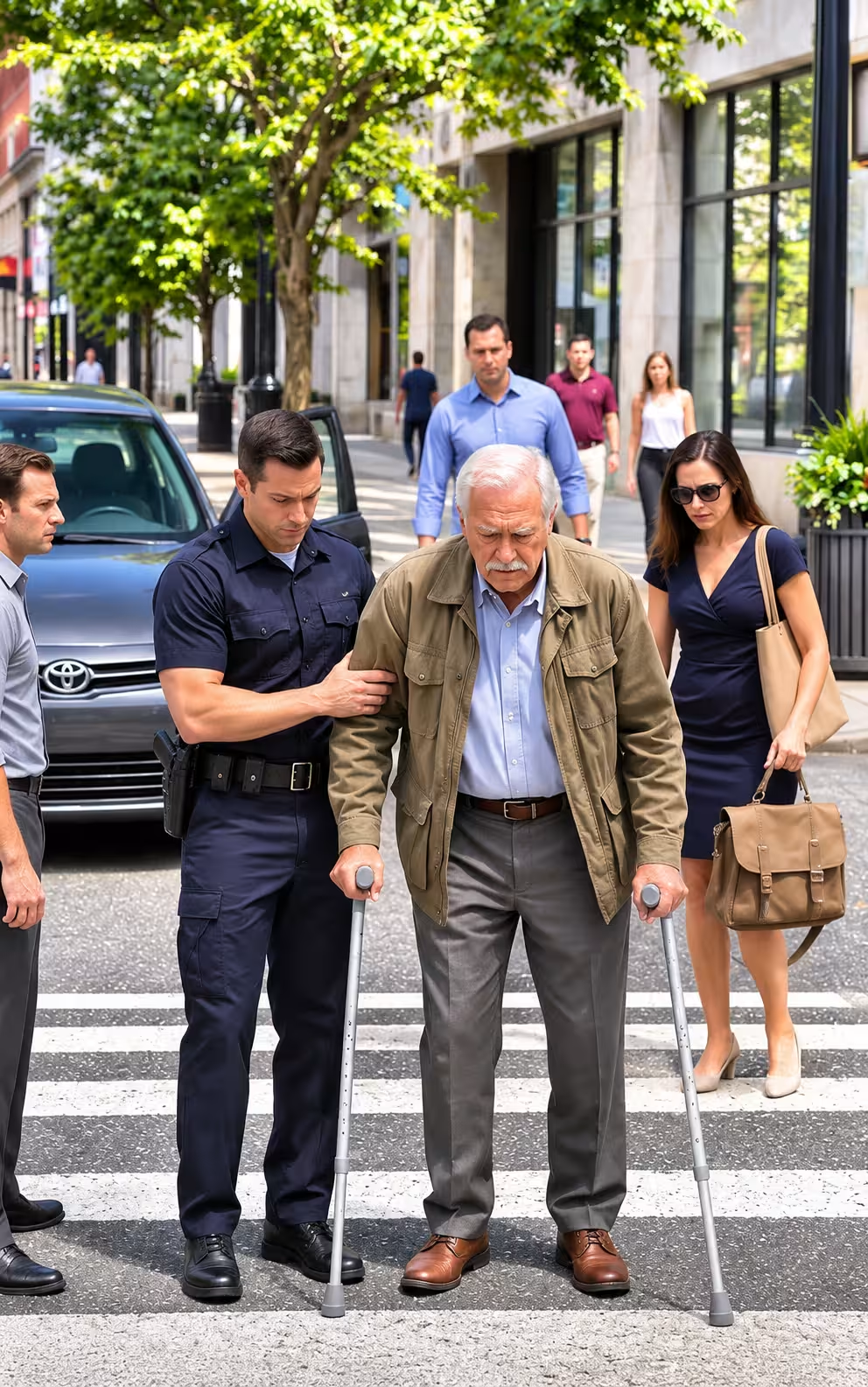
The responders supported Harold as he carefully rose from the pavement.
He paused for several moments, checking his balance.
When he felt steady, they helped him take a few cautious steps.
Michael walked beside him while Daniel carried the shopping bag.
Together, they guided Harold toward the sidewalk at a controlled pace.
Once they reached a safe seating area, Harold sat down and rested.
The responders continued monitoring him before arranging transportation for further examination.
A Medical Check Brings Reassurance
At the clinic, Harold received a more detailed examination.
The medical team checked his knee, hip, and previously injured leg.
Imaging showed no new fracture, although he had sustained bruising and soreness.
The clinician advised him to rest and follow appropriate recovery instructions.
Harold contacted his daughter, Catherine, and explained what had happened.
She arrived at the clinic shortly afterward.
Catherine was relieved that her father had avoided a more serious injury.
She thanked the medical staff for their assistance.
Harold also asked whether someone could contact the officer who had helped him.
A clinic employee explained how he could send a message through the local police department.
Later that afternoon, Catherine accompanied Harold home.
She carried his shopping bag and helped him settle into a comfortable chair.
Together, they inspected his crutches for worn or damaged rubber tips.
One tip appeared less secure than the other.
Catherine arranged for the equipment to be checked before Harold resumed longer walks.
They also discussed safer routes and additional support for future errands.
A Quiet Reminder of Community Kindness
Several days later, Harold felt well enough to take a short supervised walk.
His physical therapist reviewed the incident and adjusted his rehabilitation activities.
Harold followed the recommendations carefully, allowing his bruised knee time to recover.
He also replaced the worn crutch tip after having the equipment inspected.
The following week, Catherine accompanied him to the neighborhood café.
Harold recognized Daniel standing near the entrance.
He approached slowly and thanked him for helping at the crosswalk.
Daniel smiled and said he was pleased to see Harold recovering.
Harold explained that the medical examination had found no new fracture.
He also mentioned that the police officer had helped him reach the sidewalk safely.
Daniel said he was glad the responders had arrived quickly.
Later, Harold sent a thank-you letter to the police department.
Michael received the message and appreciated hearing that Harold was recovering.
In this fictional story, an elderly man fell while crossing a busy street using crutches.
A nearby man and a police officer responded, secured the area, and arranged medical assistance.
After an assessment, they helped him stand and walk safely to the sidewalk.
Harold’s experience also highlighted the importance of checking mobility equipment and seeking assistance after a fall.
As Harold continued his recovery, he remembered not the embarrassment of falling in the street, but the reassuring voices of two strangers who stayed beside him until he was safely back on his feet.