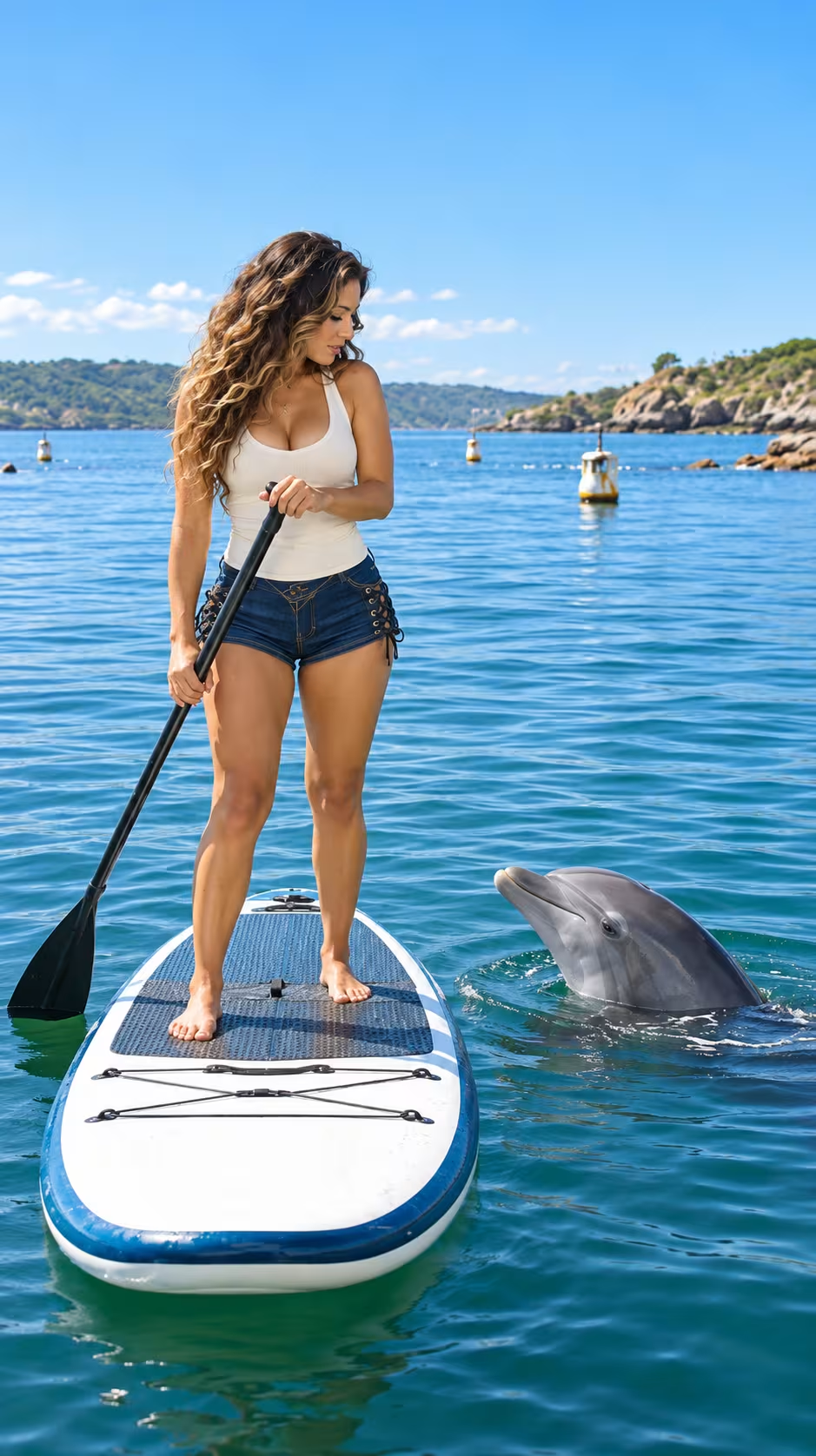
The dolphin surfaced beside the yellow buoy, but something about its movements immediately concerned the woman on the paddleboard.
Thirty-three-year-old Olivia Bennett had been paddling along a sheltered coastal bay when she noticed the animal circling unusually close to the floating marker.
At first, she thought the dolphin was simply swimming through the area.
Then she spotted a length of dark netting trailing beneath its body.
The dolphin surfaced again, revealing tangled material near its tail.
Olivia stopped paddling and remained several yards away.
She knew approaching a distressed wild animal could create additional danger.
Instead, she reached for the waterproof phone secured inside her equipment pouch.
As the dolphin struggled near the buoy, Olivia contacted the local marine rescue service.
A Quiet Morning Along the Coastal Bay
Olivia had enjoyed paddleboarding for nearly six years.
She preferred calm coastal waters where she could observe seabirds and enjoy the surrounding landscape.
That morning, she launched her board from a small public beach shortly after sunrise.
The weather was clear, and a gentle breeze moved across the bay.
Before entering the water, Olivia checked the marine forecast and informed a friend of her planned route.
She wore a personal flotation device and carried a whistle and waterproof communication equipment.
Her intended journey followed a familiar shoreline route marked by several navigation buoys.
Fishing boats occasionally passed through the deeper channel beyond the protected swimming area.
Olivia paddled steadily, keeping a safe distance from other water users.
After approximately forty minutes, she reached a quieter section of the bay.
A yellow buoy floated near the edge of a designated boating channel.
As she approached, she noticed a dark shape moving beneath the surface.
Moments later, a dolphin emerged and disappeared again.
Olivia slowed her paddleboard, hoping to observe the animal without disturbing it.
The Dolphin’s Movements Raise Concern
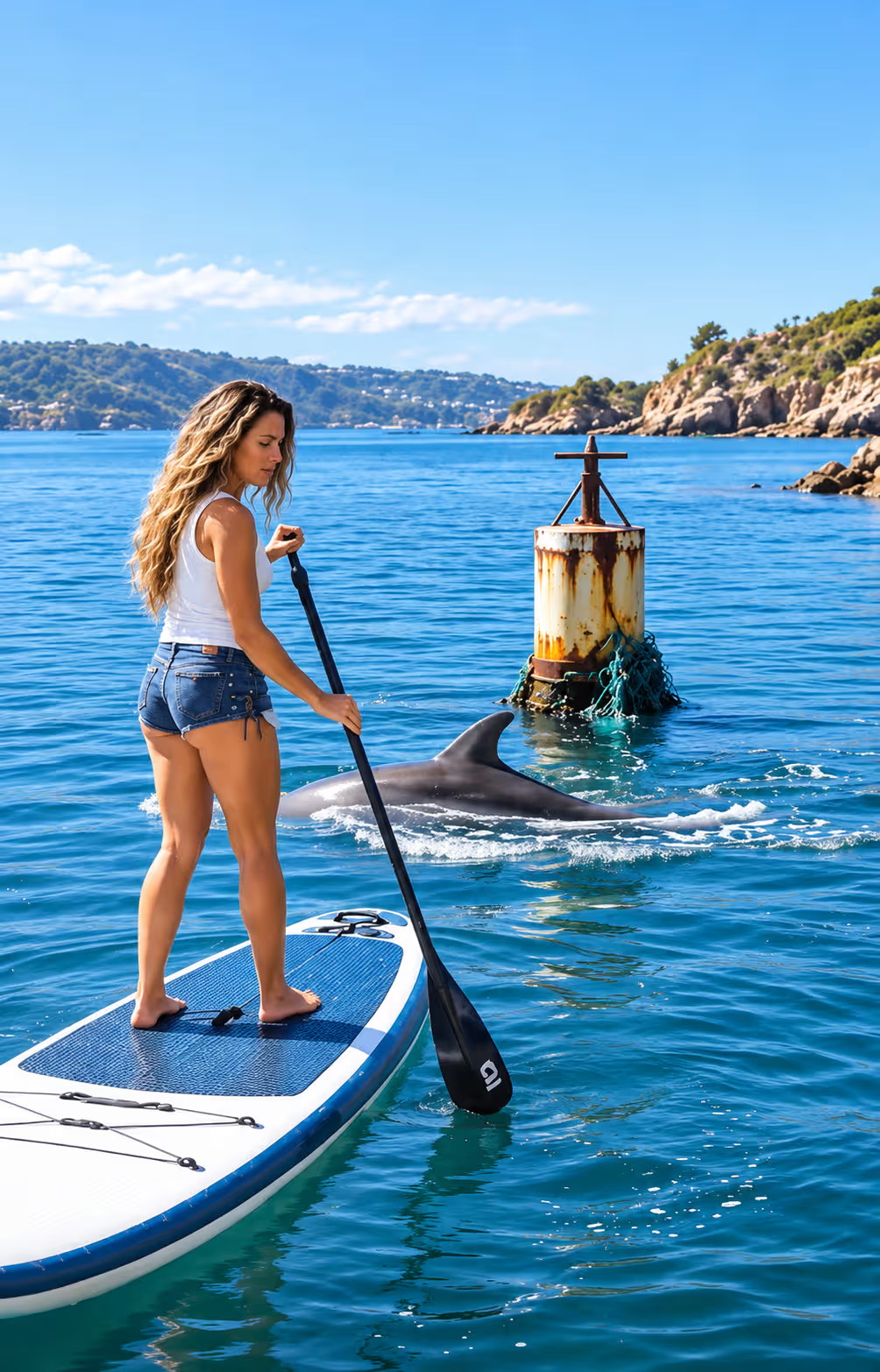
The dolphin surfaced several times near the same buoy.
Olivia initially watched with interest, maintaining her distance.
However, the animal did not appear to be swimming normally.
It made short movements before returning toward the floating marker.
Olivia noticed a thin line stretching through the water.
The line appeared connected to a larger section of discarded fishing net.
When the dolphin surfaced again, she saw netting wrapped around part of its tail.
The material seemed to restrict its movement.
Olivia immediately understood that the situation required professional assistance.
She resisted the temptation to paddle closer and pull at the net herself.
A frightened dolphin could move suddenly and injure anyone attempting an unsafe rescue.
The tangled line could also create a serious hazard for her paddleboard.
Olivia moved toward a safer position outside the animal’s immediate path.
She checked her location using her phone and identified the nearest buoy marker.
Then she contacted the regional marine wildlife rescue hotline.
The dispatcher listened carefully as Olivia described the dolphin and the visible netting.
A Rescue Team Responds to the Call
The dispatcher asked Olivia to remain at a safe distance and continue observing.
She was instructed not to touch the dolphin or attempt to remove the material.
Olivia provided the buoy identification number and her approximate location.
The dispatcher confirmed that a trained marine rescue crew would be sent.
While waiting, Olivia watched the dolphin surface near the marker.
The animal occasionally moved away before returning to the same area.
She could not determine whether the netting was attached to the buoy or merely caught nearby.
Several minutes later, a small fishing boat entered the channel.
Olivia signaled to its operator and explained that a wildlife rescue was underway.
The fisherman agreed to remain clear of the area.
He also contacted the harbor office to report the obstruction.
Soon afterward, Olivia heard an approaching engine.
A rescue vessel appeared beyond the channel markers.
Three crew members wearing protective equipment stood aboard.
The vessel slowed as it approached the buoy.
Olivia raised her paddle to indicate the dolphin’s location.
The crew acknowledged her signal and began assessing the situation.
The Crew Carefully Cuts Away the Netting
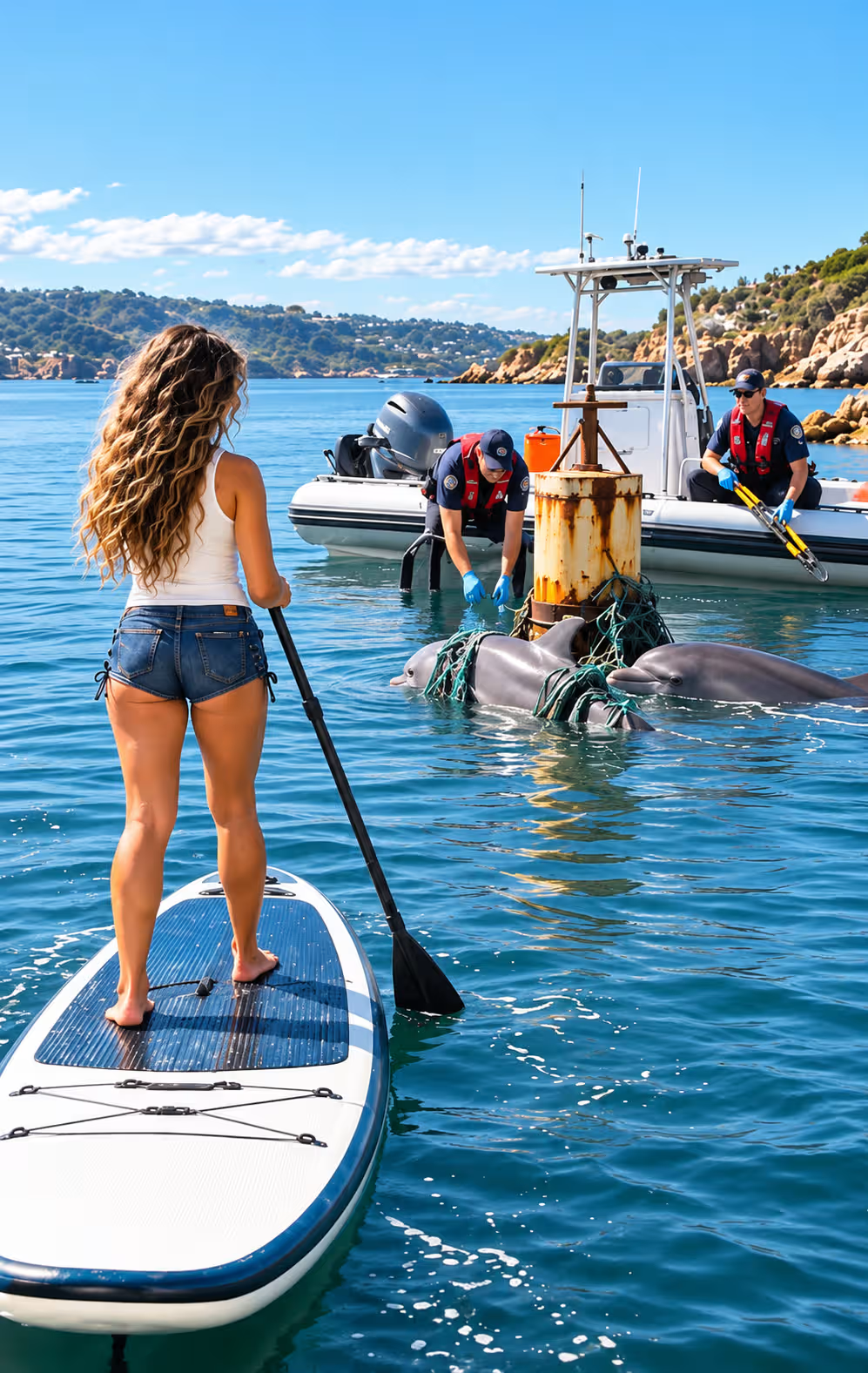
Marine rescue coordinator Daniel Harris directed the vessel toward the outer edge of the area.
His colleagues, Rebecca Lewis and Michael Turner, prepared specialized rescue equipment.
They observed the dolphin’s movements before deciding how to proceed.
Daniel explained that the animal appeared entangled in discarded fishing netting.
Part of the material had become caught around the buoy’s underwater attachment line.
The crew carefully secured the loose net to prevent additional entanglement.
Olivia remained farther away, following their instructions.
Rebecca monitored the dolphin while Michael prepared a protected cutting tool.
The crew waited for a safe opportunity to approach without forcing the animal underwater.
When the dolphin moved into a suitable position, they carefully controlled the accessible netting.
Michael cut through several sections of material attached to the buoy line.
Rebecca helped lift the loosened net away from the dolphin’s tail.
The animal moved suddenly, and the crew immediately gave it space.
After another careful assessment, they removed the remaining accessible strands.
The dolphin surfaced nearby and began swimming away from the buoy.
Daniel watched closely as the animal moved into clearer water.
A Careful Observation After the Rescue
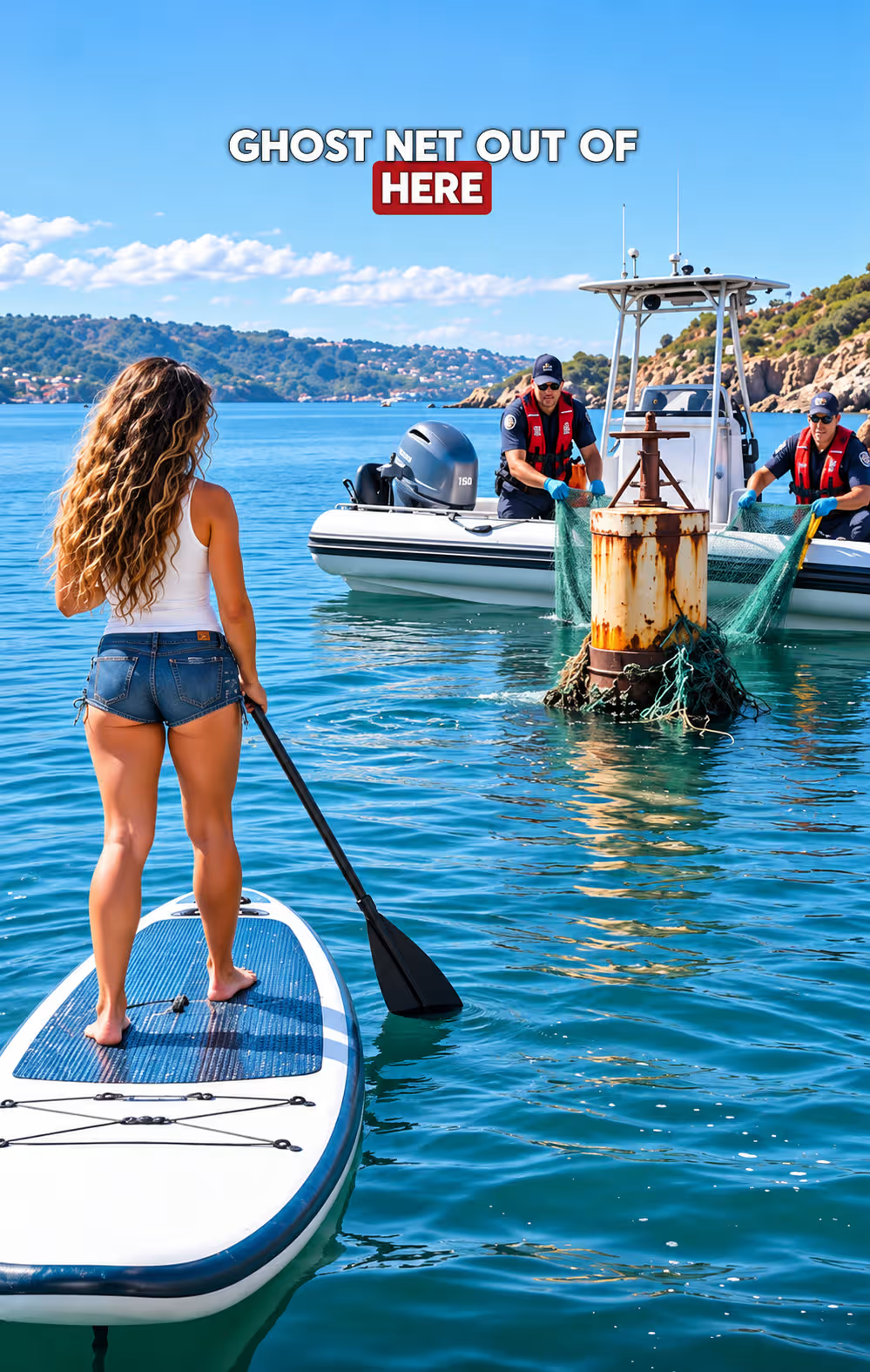
The dolphin surfaced several yards from the rescue vessel.
Its movements appeared more regular than before the netting was removed.
Rebecca continued observing while Daniel recorded the animal’s direction of travel.
The crew looked for signs of remaining entanglement or visible injury.
They noticed a small area of irritated skin near the tail.
However, the dolphin was swimming independently and maintaining normal surface intervals.
Daniel contacted the team’s veterinary adviser to report the observations.
The adviser recommended continued monitoring without attempting unnecessary handling.
The crew followed the dolphin at a respectful distance for a short period.
It eventually moved toward deeper water beyond the channel.
Olivia watched from her paddleboard, relieved to see it swimming freely.
Michael collected the discarded netting that remained near the buoy.
The crew secured the material aboard their vessel for proper disposal.
Daniel thanked Olivia for providing accurate information and avoiding direct contact.
He explained that her location details had helped the team reach the animal quickly.
Olivia asked whether the dolphin would recover completely.
Daniel said its movement was encouraging, although longer-term recovery could not be guaranteed.
A Meaningful Lesson From the Water
After the rescue, Olivia began paddling slowly toward the beach.
The rescue vessel remained nearby until she had safely left the channel.
She thanked the crew before continuing along the shoreline.
Back on land, Olivia contacted her friend and explained what had happened.
She described the dolphin, the buoy, and the careful work of the rescuers.
Her friend was relieved that Olivia had avoided approaching the entangled animal herself.
Later that afternoon, Olivia submitted photographs of the discarded netting to the marine rescue organization.
The images helped document the incident without revealing unnecessary details about the animal’s location.
Several days later, the organization confirmed that the area had been checked for additional debris.
No further entangled animals had been reported during those inspections.
In this fictional story, a paddleboarder noticed a dolphin struggling near a buoy.
Rather than attempting a dangerous rescue, she contacted trained marine wildlife responders.
The crew arrived, assessed the entanglement, and carefully cut away the discarded netting.
The dolphin was able to swim away, although its long-term condition remained unknown.
Olivia continued paddleboarding but became more attentive to abandoned fishing equipment.
She also encouraged fellow paddlers to report dangerous marine debris through appropriate channels.
The experience reminded her that protecting wildlife sometimes meant knowing when to remain at a distance.
As Olivia looked across the quiet bay that evening, she remembered the dolphin swimming away from the buoy, and the relief of knowing that one careful phone call had brought the right people to its aid.