
The elderly woman stood beside a roadside bench, holding onto its armrest for support.
Her crutches were no longer within reach after a man had taken them during an uncomfortable exchange.
Seventy-eight-year-old Dorothy Wilson looked around, uncertain how she would continue her journey home.
A passing pedestrian noticed her difficulty and stopped to offer assistance.
Meanwhile, the man remained nearby, holding the mobility equipment.
Two police officers arrived after receiving a report about the situation.
They approached Dorothy, listened to her explanation, and began arranging appropriate assistance.
What had started as an ordinary afternoon would eventually become a meaningful experience that helped Dorothy regain confidence in her daily independence.
A Familiar Walk Through the Neighborhood
Dorothy had lived in the quiet residential neighborhood for more than three decades.
She enjoyed visiting local shops and spending time in the nearby community garden.
Although her mobility had gradually declined, she remained determined to maintain an independent lifestyle.
Her doctor had recommended using crutches to provide additional support while walking.
Dorothy carefully planned her outings, allowing enough time to rest whenever necessary.
That afternoon, she had visited a neighborhood pharmacy to collect several personal items.
The weather was mild, and the sidewalks were relatively quiet.
While returning home, Dorothy stopped beside a roadside bench to rest.
She placed her shopping bag on the seat and kept her crutches within reach.
A man walking along the sidewalk approached the same area.
He appeared impatient when he noticed Dorothy standing near the bench.
Dorothy politely moved her shopping bag to provide additional seating space.
However, the man seemed more concerned about the crutches positioned beside her.
Their brief conversation soon became uncomfortable.
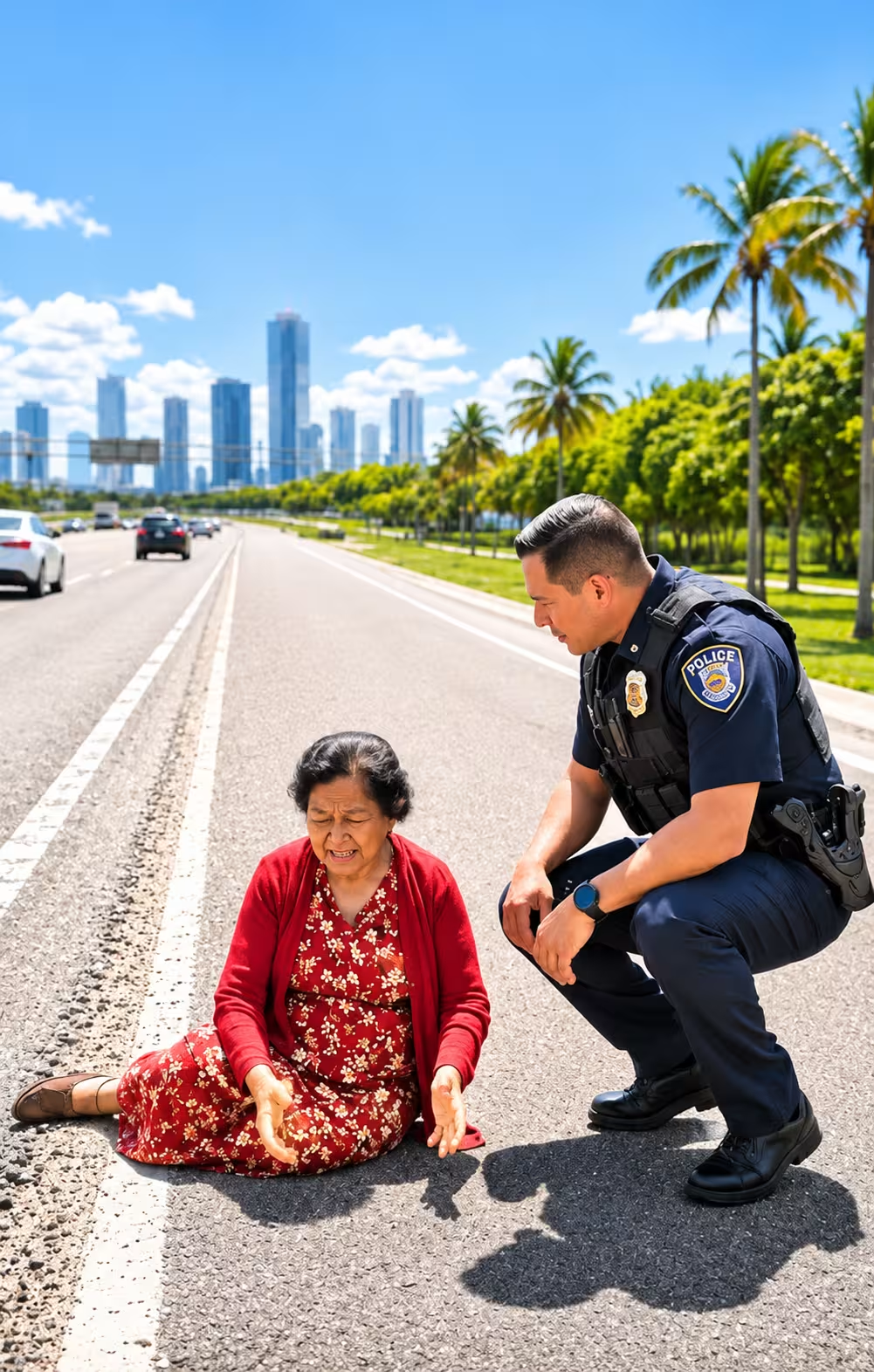
The Man Takes Dorothy’s Crutches
The man asked Dorothy to move her crutches away from the bench.
She explained that she needed them nearby to stand and walk safely.
Dorothy offered to adjust their position without placing them beyond her reach.
However, the man continued expressing dissatisfaction with the available space.
Before Dorothy could respond again, he reached toward the crutches and picked them up.
She immediately asked him to return her mobility equipment.
The man stepped away while continuing to complain about the arrangement.
Dorothy held onto the bench’s armrest to maintain her balance.
She explained that walking without her crutches would be difficult.
A woman named Julia, who was passing along the sidewalk, noticed the situation.
She approached Dorothy and asked whether she needed assistance.
Dorothy explained that the man had taken the equipment she depended upon.
Julia encouraged her to remain seated while they addressed the situation.
She then politely asked the man to return the crutches.
When the disagreement continued, Julia contacted the local police for assistance.
Two Police Officers Arrive Beside the Road
Officers Thomas Reed and Caroline Foster were patrolling the surrounding neighborhood.
After receiving the report, they drove toward the roadside bench.
They found Dorothy sitting beside her shopping bag while Julia remained nearby.
Thomas approached the elderly woman and asked whether she was comfortable.
Dorothy explained that she had been resting when the disagreement began.
She described how the man had taken her crutches despite her request.
Meanwhile, Caroline spoke with the man and listened to his explanation.
She reminded him that mobility equipment was essential to Dorothy’s safety and independence.
The man eventually returned the crutches to the officers.
Thomas examined them briefly before placing them beside Dorothy.
Caroline continued discussing the circumstances with the man.
Julia provided an account of what she had observed upon arriving.
Dorothy explained that the experience had left her feeling tired and unsettled.
She was concerned about completing the remaining distance to her home.
The officers began considering a practical way to help her continue safely.
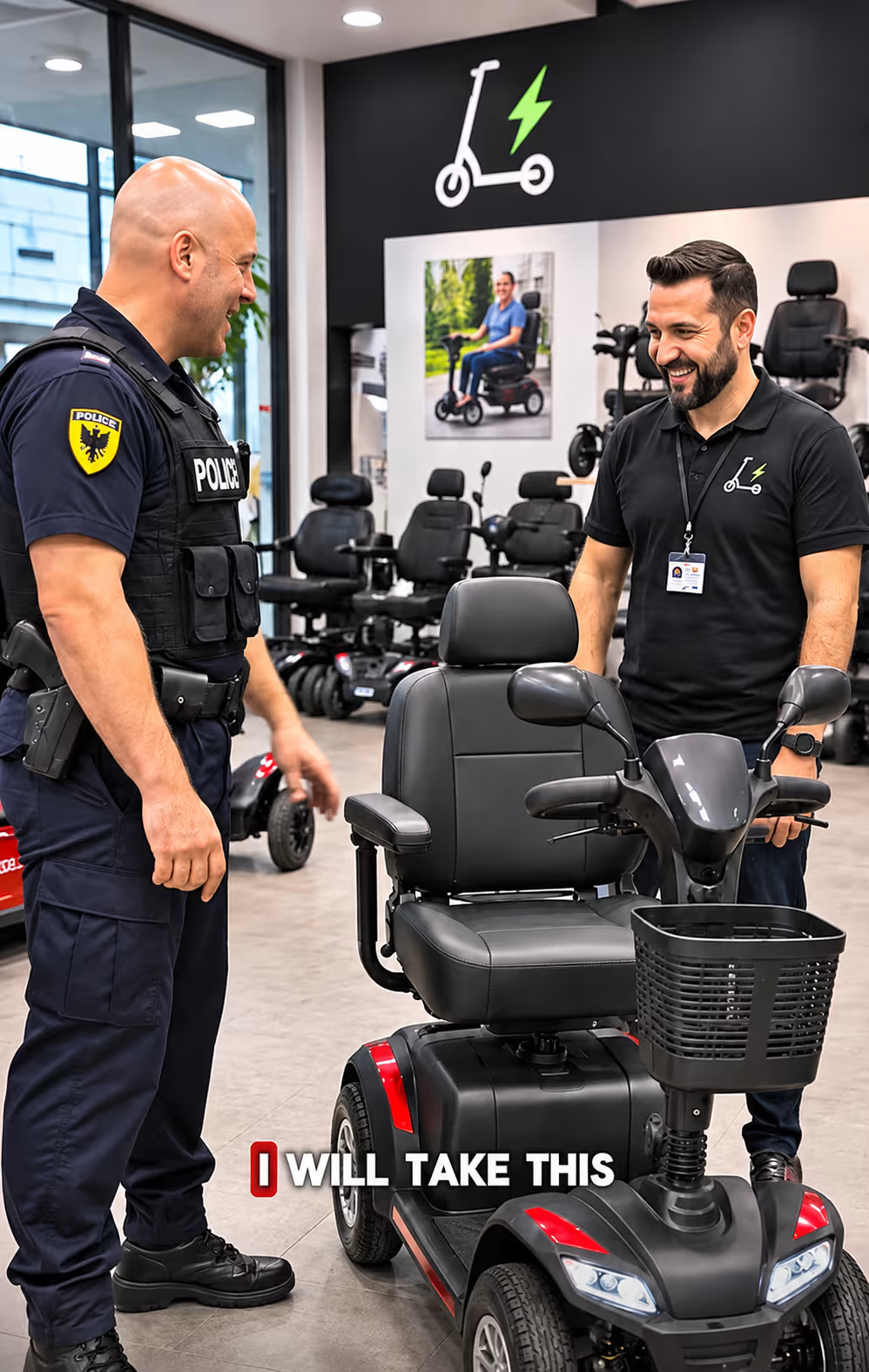
Helping Dorothy Onto a Mobility Scooter
During their conversation, Dorothy mentioned that she had recently considered using a mobility scooter.
Walking longer distances had become increasingly difficult, even with her crutches.
Caroline contacted a nearby community mobility assistance center to discuss available support.
The center had a suitable demonstration scooter available for supervised use.
A mobility specialist arrived shortly afterward with the equipment.
Thomas introduced the specialist to Dorothy and explained the circumstances.
After discussing her needs, the specialist assessed whether the scooter was appropriate for her.
Dorothy expressed interest in trying it and welcomed the opportunity.
The specialist positioned the scooter securely beside the bench.
With Dorothy’s permission, both police officers assisted during her supervised transfer.
Thomas remained beside her while Caroline helped organize her belongings.
Dorothy settled comfortably onto the scooter’s padded seat.
The specialist explained its basic controls and demonstrated how to operate them safely.
Dorothy practiced moving a short distance within a clear pedestrian area.
A gentle smile appeared as she became more comfortable with the equipment.
For the first time that afternoon, she felt confident about continuing her journey.
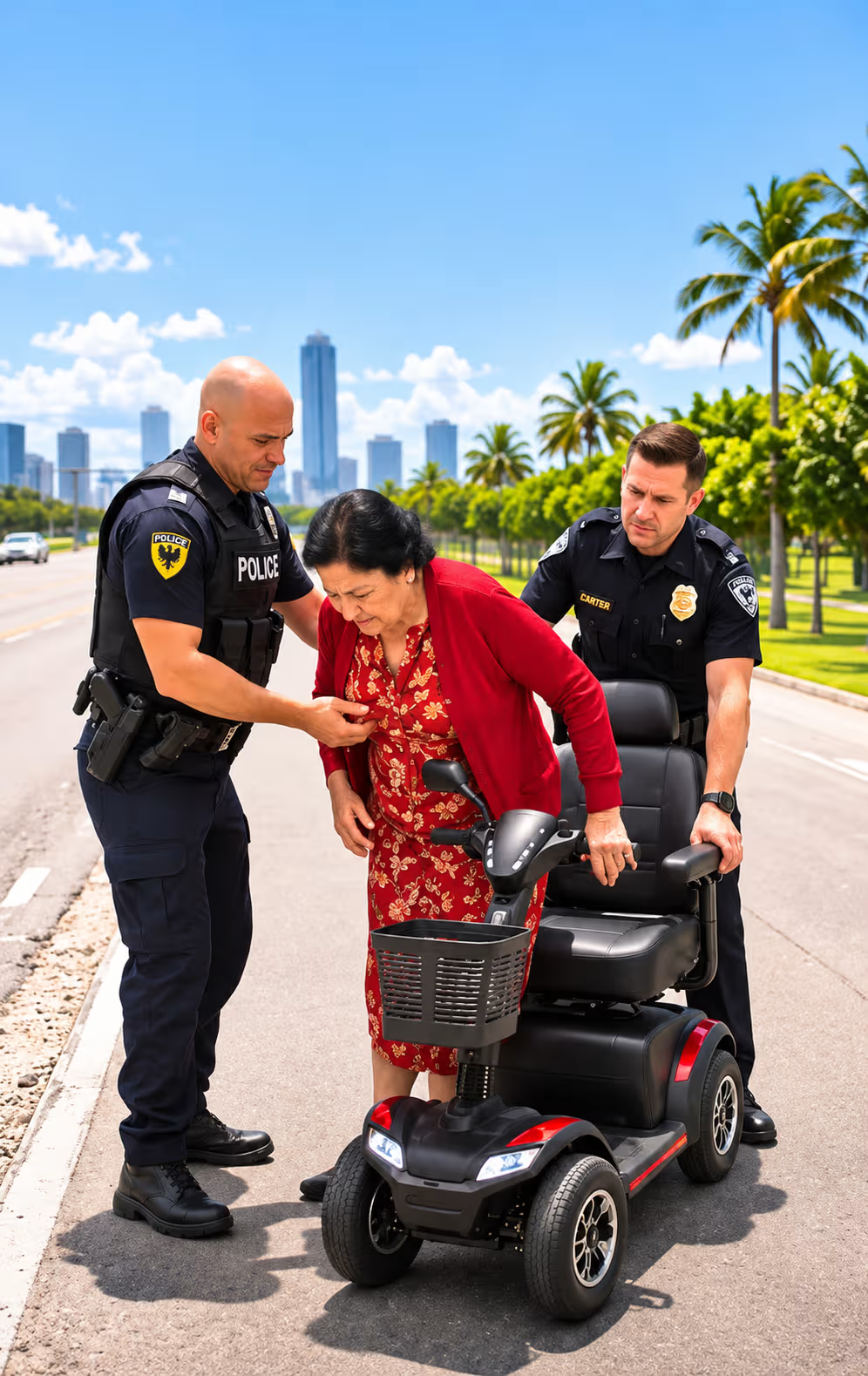
Returning Home With Renewed Confidence
The mobility specialist arranged for Dorothy to use the scooter temporarily.
A follow-up appointment would determine whether longer-term mobility assistance was suitable.
Caroline helped place Dorothy’s shopping bag inside the scooter’s storage basket.
Thomas ensured that her crutches would also be transported safely.
Julia remained nearby and expressed relief that Dorothy had received appropriate assistance.
Dorothy thanked her for stopping when she noticed the uncomfortable situation.
She explained that being unable to reach her crutches had made her feel particularly vulnerable.
The officers reassured her that her concerns had been taken seriously.
Caroline provided information about local community support services.
The mobility specialist accompanied Dorothy along the accessible route toward her home.
During the journey, Dorothy gradually became more familiar with the scooter.
She appreciated being able to travel without placing additional strain on her legs.
Upon reaching her residence, she thanked everyone involved in arranging the assistance.
Her ordinary afternoon had ended with an unexpected opportunity to explore greater mobility.
A New Chapter in Dorothy’s Daily Routine
Several days later, Dorothy attended her scheduled mobility assessment.
A qualified specialist discussed her daily activities and evaluated her individual requirements.
Following the assessment, she arranged access to a suitable mobility scooter for regular use.
Dorothy gradually resumed visiting the pharmacy, neighborhood shops, and community garden.
She continued using her crutches whenever appropriate, following professional recommendations.
One afternoon, she encountered Julia near the same roadside bench.
The two women greeted each other warmly and shared a pleasant conversation.
Dorothy explained how the additional mobility support had improved her daily routine.
She also expressed appreciation for the officers who had listened to her concerns.
In this fictional story, a man took an elderly woman’s crutches beside a neighborhood road.
Two police officers arrived, addressed the situation, and helped her onto a mobility scooter with professional assistance.
Their thoughtful response helped Dorothy explore a practical solution to her mobility challenges.
The experience highlighted the importance of respecting personal mobility equipment and supporting the independence of others.
For Dorothy, the kindness she received that afternoon became a lasting reminder that growing older should never mean losing the freedom, dignity, and confidence to enjoy everyday life.