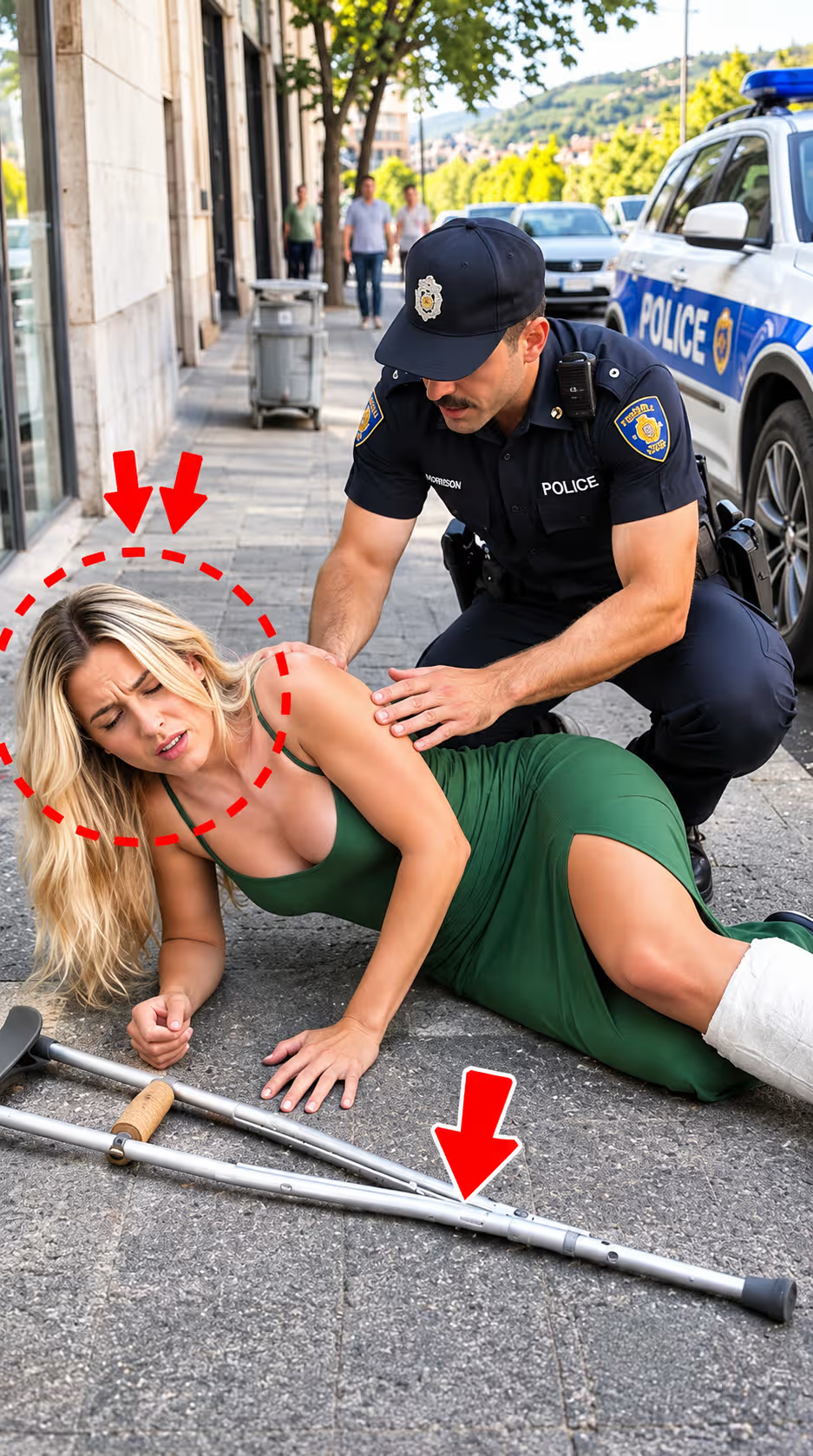
The elderly woman moved carefully along the sidewalk, relying on her crutches to maintain her balance.
She had nearly reached a nearby bench when one of her crutches slipped.
Unable to regain her balance, she fell onto the pavement beside the pedestrian walkway.
A police officer patrolling the neighborhood noticed the woman and immediately approached her.
He spoke calmly, assessed her situation, and arranged appropriate assistance before helping her sit comfortably.
During their conversation, the officer learned about the difficulties she experienced while completing everyday activities.
What began as a routine patrol soon became an opportunity to provide assistance that extended beyond that afternoon.
A Daily Journey Through the Neighborhood
Sixty-eight-year-old Rosemary Collins lived alone in a modest apartment near the town center.
She had always valued her independence and enjoyed completing her daily errands.
However, ongoing mobility difficulties had gradually made walking longer distances more challenging.
Rosemary relied on crutches to travel between her apartment and nearby businesses.
Although her family regularly offered assistance, she preferred managing smaller tasks independently whenever possible.
That morning, Rosemary prepared a shopping bag and left her apartment.
She planned to visit a neighborhood grocery store and collect several household essentials.
The weather was pleasant, and several residents were enjoying walks along the tree-lined streets.
Rosemary moved slowly, occasionally stopping to rest beside buildings.
She knew the neighborhood well and usually followed the same familiar route.
After completing her shopping, she began walking toward a nearby bus stop.
A wooden bench stood farther along the sidewalk, offering a convenient place to rest.
Rosemary hoped to reach it before continuing her journey home.
Losing Her Balance Near the Sidewalk
As Rosemary continued walking, she encountered a slightly uneven section of pavement.
She carefully positioned her crutches while attempting to move across the surface.
However, one crutch slipped unexpectedly, causing her to lose her balance.
Her shopping bag fell beside her as she landed on the sidewalk.
Rosemary remained still for several moments, trying to assess her condition.
Although she was conscious, she felt uncomfortable attempting to stand without assistance.
Several items from her shopping bag had scattered across the pavement.
A pedestrian noticed her situation and stopped to ask whether she needed help.
Rosemary explained that she had difficulty standing independently after losing her balance.
At that moment, a police vehicle was traveling along the neighborhood street.
Officer Benjamin Foster noticed the small gathering beside the sidewalk.
He parked his vehicle safely and walked toward the elderly woman.
After introducing himself, he asked Rosemary what had happened.
She explained how her crutch had slipped while she was walking toward the bench.
The Police Officer Helps Rosemary Sit Comfortably
Benjamin listened carefully and contacted medical assistance to ensure Rosemary received an appropriate assessment.
He remained beside her while another pedestrian collected the scattered groceries.
Rosemary explained that she had experienced mobility difficulties for several years.
She occasionally struggled with uneven surfaces and longer walking distances.
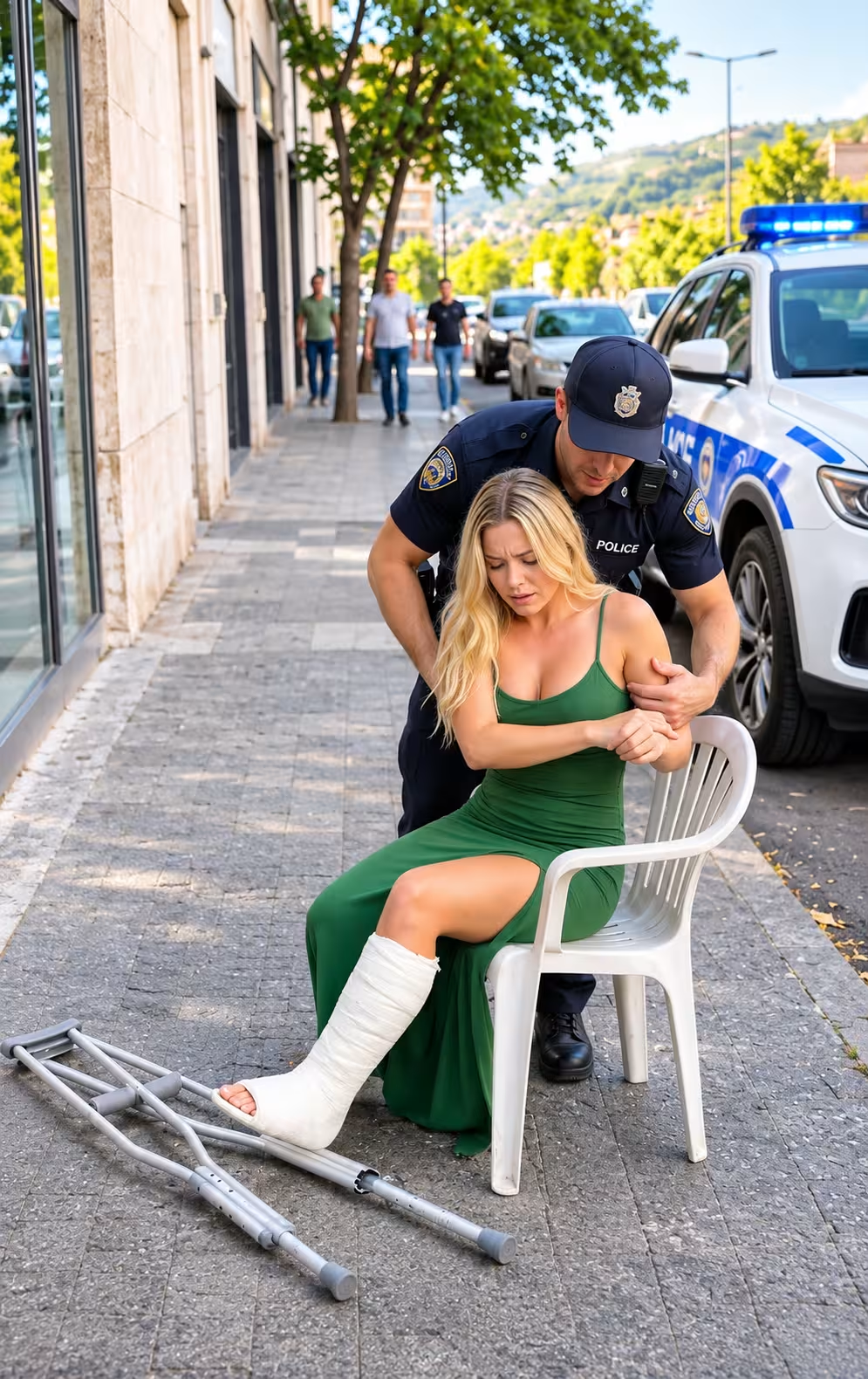
After medical personnel arrived and assessed her condition, they determined that she could safely change positions.
With their guidance, Benjamin helped Rosemary move into a comfortable seated position on the nearby bench.
He placed her shopping bag beside her and returned her crutches.
Rosemary thanked everyone who had stopped to assist her.
Benjamin asked whether she had someone who could accompany her home.
She explained that her daughter lived outside the neighborhood and was currently working.
During their conversation, Rosemary mentioned that everyday shopping trips were becoming increasingly difficult.
She had previously considered obtaining a mobility scooter but faced financial limitations.
Benjamin listened thoughtfully, recognizing that her difficulties extended beyond the incident he had witnessed.
Arranging a Mobility Scooter for Rosemary
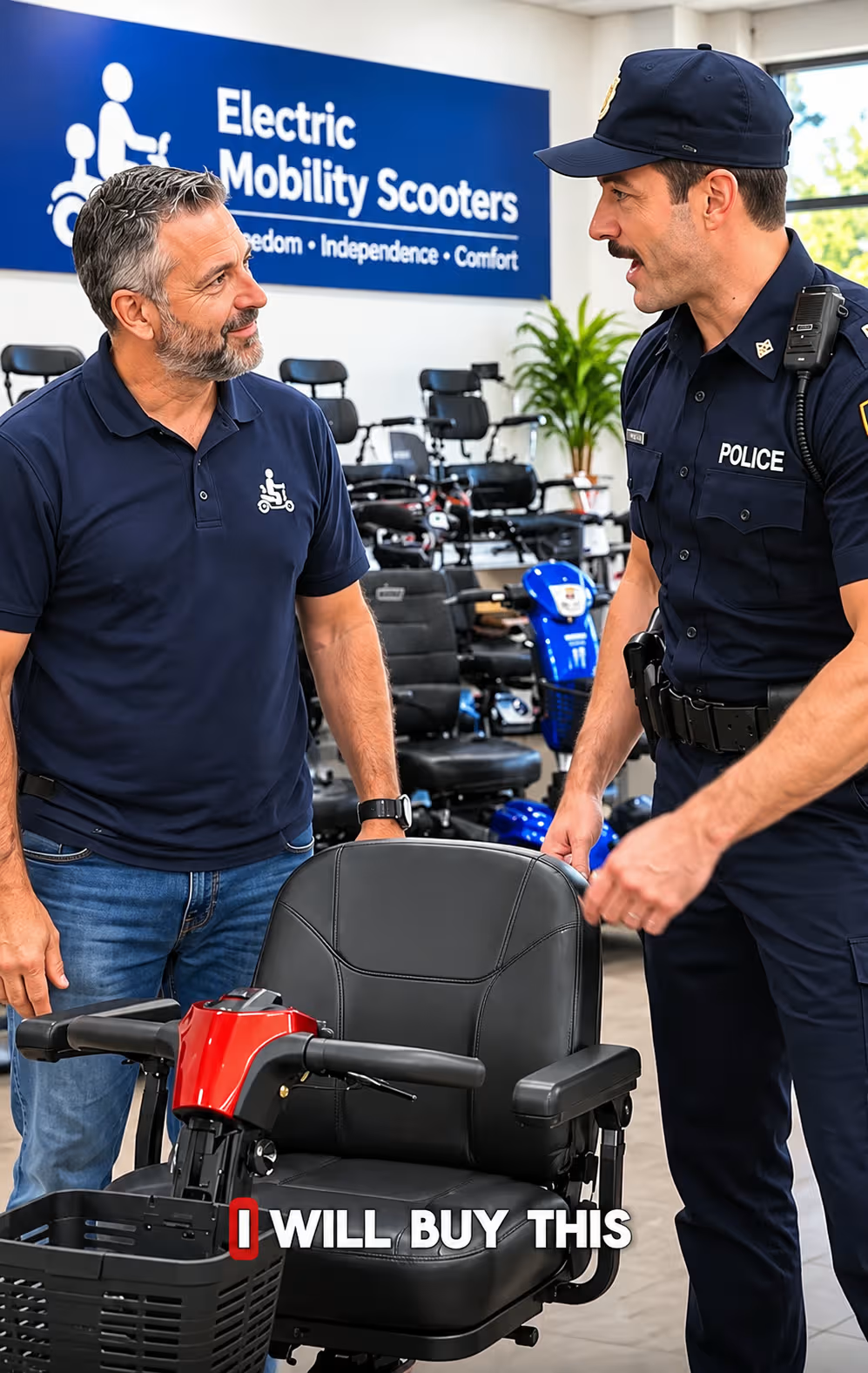
After ensuring Rosemary could return home safely, Benjamin contacted a local community assistance organization.
The organization operated a program providing refurbished mobility equipment to eligible residents.
Benjamin explained Rosemary’s circumstances without sharing unnecessary personal information.
With her permission, he arranged for the organization to contact her directly.
A representative subsequently discussed her mobility requirements and available assistance options.
Following an appropriate assessment, Rosemary was approved to receive a suitable mobility scooter.
The organization inspected the equipment and ensured that it was functioning correctly.
Several days later, Benjamin returned to Rosemary’s neighborhood with a community support worker.
Rosemary was sitting outside her apartment when she noticed the familiar police officer.
Benjamin greeted her before bringing the mobility scooter toward the entrance.
Rosemary looked at the equipment with considerable surprise.
The support worker explained that the scooter had been arranged through the community assistance program.
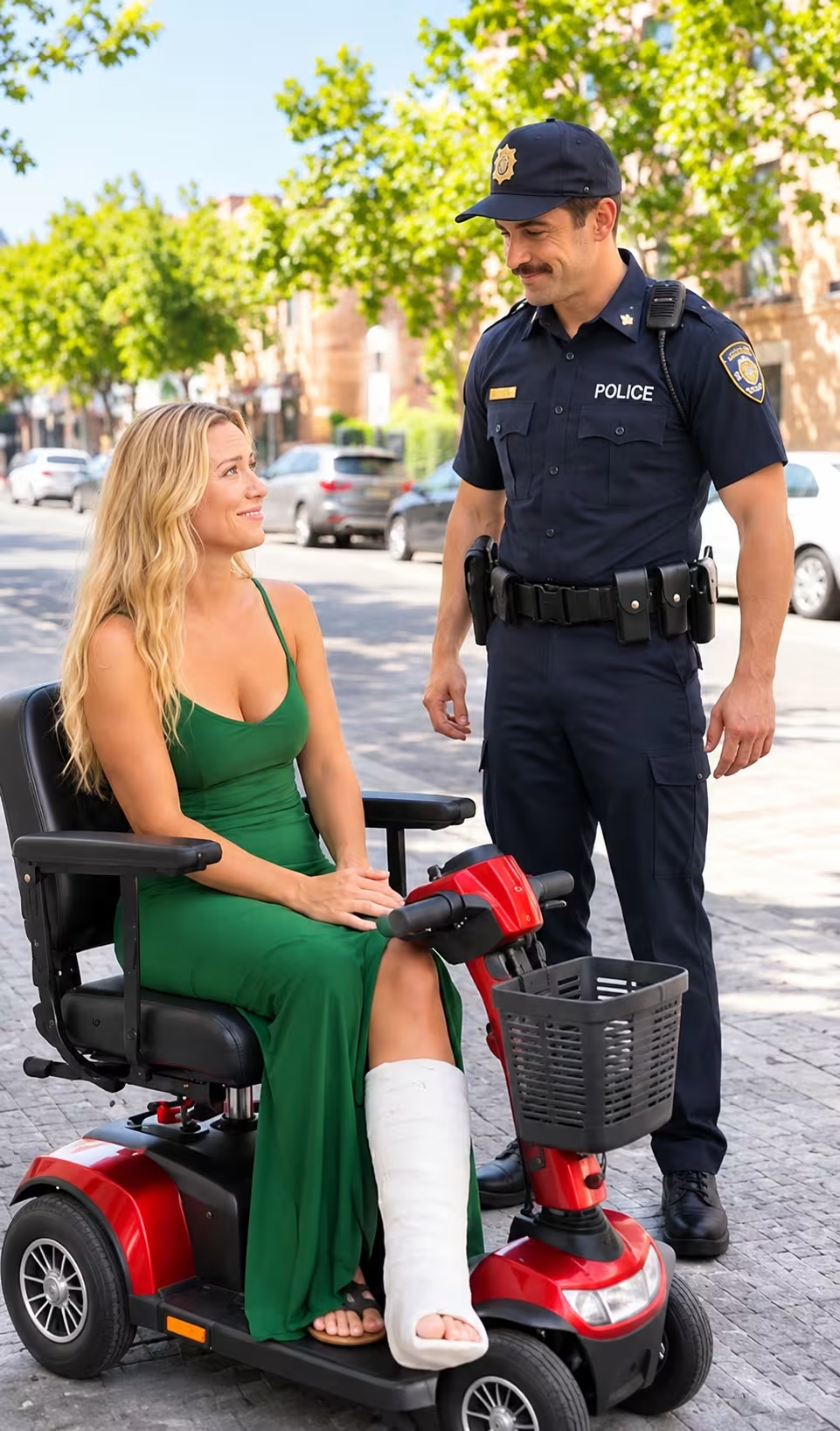
Benjamin helped position it beside Rosemary while the representative explained its controls and safety features.
After receiving appropriate guidance, Rosemary comfortably seated herself on the scooter and thanked both individuals for their assistance.
Discovering a More Comfortable Way to Travel
During the following days, Rosemary became familiar with her new mobility scooter.
The community support worker helped her understand its charging requirements and operating instructions.
She practiced using it in a quiet, accessible area near her apartment.
Rosemary gradually became more confident traveling short distances around the neighborhood.
Her daughter visited that weekend and was pleased to see the new equipment.
Together, they traveled to the grocery store using an accessible pedestrian route.
Rosemary appreciated being able to complete her shopping without relying entirely on her crutches.
She could now carry smaller purchases more comfortably using the scooter’s storage basket.
Several neighbors noticed her traveling through the community and greeted her warmly.
Rosemary continued using her crutches whenever appropriate, following her healthcare professional’s recommendations.
However, the scooter provided another practical option for completing everyday activities.
She particularly enjoyed visiting a nearby park where she could spend time outdoors.
These familiar activities gradually became easier and more enjoyable.
A Small Act of Kindness With Lasting Meaning
Several weeks later, Benjamin was patrolling the neighborhood when he noticed Rosemary near the grocery store.
She was sitting comfortably on her mobility scooter while arranging several purchases.
Benjamin stopped to greet her and ask how she was managing.
Rosemary smiled and explained that the equipment had made her daily routine considerably easier.
She expressed gratitude for his willingness to connect her with the community assistance organization.
Benjamin explained that the program’s volunteers and support workers deserved recognition for their contributions.
Rosemary agreed and later contacted the organization to thank its representatives personally.
She also encouraged several neighbors experiencing similar difficulties to inquire about available mobility assistance.
In this fictional story, a woman using crutches fell while walking along a neighborhood sidewalk.
A police officer helped her sit comfortably and later brought her a mobility scooter arranged through a community program.
His thoughtful response demonstrated how cooperation between public services and local organizations could improve everyday accessibility.
For Rosemary, the experience represented a meaningful opportunity to maintain her independence and remain connected to her community.
Sometimes, helping someone through a difficult moment can become the beginning of a more comfortable, independent, and hopeful chapter in their life.