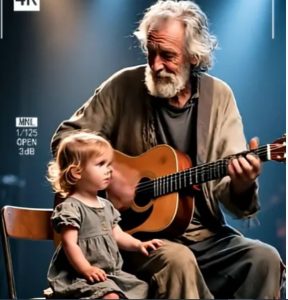
Music has the extraordinary power to carry history, emotion, and dreams from one generation to the next. For one grandfather, the classic melody “El Condor Pasa” has become much more than a song—it is a heartfelt message, a blessing, and a wish for his granddaughter’s future. As he strums the familiar notes on his guitar, he hopes that she, too, will one day learn to rise above life’s challenges, soaring freely like the majestic Andean condor the song immortalizes.
The Meaning Behind a Timeless Melody
“El Condor Pasa,” originally composed by Peruvian musician Daniel Alomía Robles in 1913, is one of the most iconic pieces of Andean music ever created. Its haunting pan flute melodies and gentle guitar accompaniment evoke images of vast mountains, wide horizons, and the quiet, powerful freedom of nature. Over time, the song has become a symbol of resilience, hope, and the longing for a better life.
When Simon & Garfunkel adapted the melody and added English lyrics in 1970, the song reached every corner of the globe. However, for many people—especially in South America—the original melody remains deeply spiritual and culturally rooted. It is this version that the grandfather shares with his granddaughter, preserving not only the beauty of the song but the heritage it represents.
Music as a Bridge Between Past and Present
The granddaughter listens, perhaps too young to fully understand, but old enough to feel the love in the melody. She sways gently, humming along, drawn in by the simplicity and emotional depth of the tune. The grandfather smiles, knowing that even if she cannot grasp the message yet, the seed has been planted.
For him, this moment is a bridge—a way of connecting the wisdom of the past with the promise of the future. He remembers learning the song from his own father, who learned it from relatives before him. Each generation added something new while preserving the heart of the melody. Now, he carries the tradition forward, passing it into the hands of a young girl who may one day share it with children of her own.
A Moment Filled With Emotion and Hope
As the final notes fade into the air, the granddaughter claps joyfully. She doesn’t yet understand the cultural significance or emotional weight of the piece, but she feels the love. She feels the warmth. And in that moment, music does what it always does: it connects hearts.
The grandfather leans down and tells her, “One day, you will fly, too.”
She smiles, not yet realizing how profound those words are.
A Legacy Carried Forward
For years to come, the melody of “El Condor Pasa” will echo in her memory. It may play softly on the radio one day, and she will think of him. It may return to her in a moment of difficulty, reminding her to stay strong. Or she may find herself humming it without knowing why—feeling its comfort, its wisdom, and its hope.
And one day, when she is older, she may pick up a guitar, pan flute, or even hum the melody to a child of her own, creating a new moment of connection across time.
Conclusion: A Song, a Blessing, and a Beautiful Memory
“El Condor Pasa” is more than a cultural treasure—it is a vessel of emotion, history, and dreams. For a grandfather hoping to guide his granddaughter toward a bright future, the song becomes a blessing wrapped in music. Through its graceful notes, he sends her a message of courage, freedom, and the belief that she, too, can soar above life’s mountains.