A kangaroo trapped by floods gets a second chance. The rains had come without warning, turning the usually dry Australian bush into a maze of rushing water and submerged land. Creeks overflowed, dirt roads vanished, and entire stretches of countryside were swallowed overnight. For wildlife, there was no evacuation order, no warning siren—only rising water and shrinking ground.
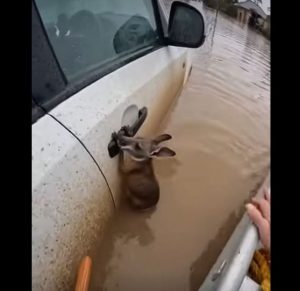
Early that morning, a farmer driving along what used to be a service road noticed something moving near a clump of trees half-surrounded by floodwater. At first, he thought it was debris caught in the current. Then the shape lifted its head.
The animal stood stranded on a small patch of higher ground, barely the size of a pickup truck bed. Mud clung to its legs, and its chest rose and fell rapidly with exhaustion. Every direction around it was water—fast, cold, and unforgiving. The kangaroo tried to hop once, slipping immediately, then froze, clearly realizing there was nowhere left to go.
The farmer stopped his vehicle and began recording, unsure of what else he could do. The floodwaters were too deep and strong to wade through safely, even for a strong swimmer. The kangaroo watched him with wide, dark eyes, ears twitching, body tense. Fear was unmistakable. This wasn’t an animal ready to flee—it was one that had run out of options.
Within minutes, local wildlife rescuers were called. They arrived cautiously, assessing the current and the unstable ground. The water level was still rising. Time was not on their side.
As they approached in a small rescue boat, the kangaroo panicked. It backed away, slipping dangerously close to the edge of the muddy island. One wrong move and it would be swept into the current. The rescuers slowed, speaking softly, keeping their movements deliberate. Kangaroos are powerful animals, but stress can make them unpredictable, and fear can be fatal.
The kangaroo trembled, chest heaving, clearly exhausted from standing for hours without rest. Floodwater lapped closer with every passing minute. One rescuer gently extended a blanket—not to grab, but to give the animal something familiar, something solid to focus on.
Instead of bolting, the kangaroo paused. It leaned forward slightly, sniffing the air. For the first time since being spotted, it stopped pacing. Slowly, cautiously, it allowed the rescuers to come closer. Not because it trusted them—but because it understood they were the only way out.
With careful coordination, the team managed to guide the kangaroo into the shallow edge of the boat, supporting its weight and shielding it from slipping. The animal thrashed once, splashing water everywhere, then stilled, realizing it was no longer sinking. The boat rocked, but held.
As they pulled away, the small island disappeared beneath the rising floodwaters.
Back on dry land, the kangaroo collapsed onto the grass, sides heaving. Mud streaked its fur, and its legs shook uncontrollably. The rescuers kept their distance, giving it space while monitoring for injuries. After several minutes, the animal slowly lifted its head, ears flicking again, eyes alert.
A wildlife veterinarian later confirmed the kangaroo was dehydrated and exhausted, but otherwise unharmed. Had it remained trapped even a little longer, the outcome would have been very different. Floods don’t just drown animals—they weaken them, disorient them, and leave them unable to escape once the water claims the last bit of ground.
After a brief recovery period, the kangaroo was released into higher bushland far from flood zones. It paused for a moment after being set down, as if orienting itself, then hopped forward—once, twice—and stopped. It turned back briefly, looking toward the humans who had helped it.
Then it disappeared into the trees.
The footage of the rescue spread quickly, striking a chord with people across the world. In the midst of destruction, loss, and rising waters, it showed something else: compassion in action. A reminder that while floods may take control of the land, they don’t have to take every life.