A millionaire widower pretended to be away… what he saw changed everything, and it unfolded inside the quiet walls of the mansion he had once shared with his wife.
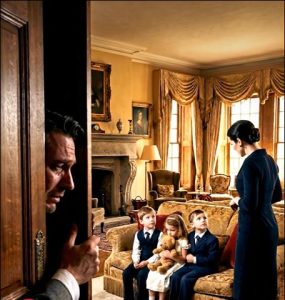
Since her passing, the house had felt too large, too silent, filled with echoes of a life that no longer existed. Though his wealth insulated him from most worries, it could not shield him from grief. Surrounded by staff, he often wondered whether the kindness shown to him was genuine or simply part of the job. One lingering question haunted him: if he were no longer present, who among them truly cared about his home, his memory, and his heart?
So he made an unusual decision. He told everyone he would be traveling abroad for several weeks, seeking solitude and distance. Instead, he remained nearby, staying in a small guesthouse on the edge of his own estate. From there, he could quietly observe what happened when his presence—and authority—were removed. He told himself it was just curiosity, but deep down, he needed clarity. He needed to know whether the world around him was built on respect or convenience.
In the first days, nothing seemed out of place. The gardeners arrived on schedule. The housekeepers cleaned diligently. Meals were prepared, lights turned on and off as usual. But as the days passed, subtle changes emerged. Some staff began cutting corners. Expensive wine disappeared from the cellar. Rooms that once sparkled lost their careful touch. Laughter he had never heard before echoed through the halls at night. None of it was dramatic, but it chipped away at his trust.
Then one evening, something unexpected happened. As he watched through a discreet camera feed, he saw the youngest housekeeper—a woman who had been with the family since before his wife’s illness—pause in the master bedroom. She carefully straightened a framed photograph of him and his wife, wiping dust from the glass with reverence. She opened the curtains to let in moonlight, then quietly lit a candle on the bedside table, as his wife used to do. She sat for a moment in silence, her head bowed, before whispering a few words of prayer.
That moment stopped him cold. While others treated the house as a place of work or opportunity, she treated it as a home—still sacred, still alive with memory. Over the next few days, he watched her gently correct others when they became careless, reminding them of standards his wife once insisted upon. She repaired small things without being asked, tended the garden his wife loved, and spoke softly to the empty rooms as if they were listening.
When the widower finally returned, he didn’t announce himself right away. He observed how quickly some staff members changed their behavior, masking laziness with exaggerated politeness. But when the young housekeeper saw him, her eyes filled with tears—not fear, not surprise, but relief. She welcomed him back sincerely, asking if he had eaten, if he was well, if the journey had been peaceful.
That evening, he gathered everyone together. He didn’t scold or accuse. Instead, he thanked those who had maintained the home with integrity and quietly dismissed those who had not. Then he turned to the young woman and told her what he had seen. He explained that loyalty, compassion, and respect cannot be demanded—they reveal themselves when no one is watching.
What changed everything wasn’t betrayal or disappointment, but clarity. He realized that family is not defined by blood or wealth, but by care. The house no longer felt empty to him after that. In honoring those who honored his past, the widower found something he thought he had lost forever: trust, purpose, and the quiet comfort of knowing that love can survive even after loss, carried forward by unexpected hands.