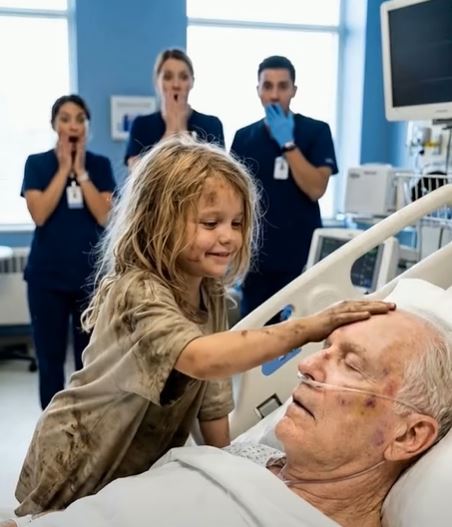
The private wing of the most advanced hospital in Pristina was hushed and sterile, a world of soft beeps, polished marble floors, and the faint scent of expensive disinfectants.
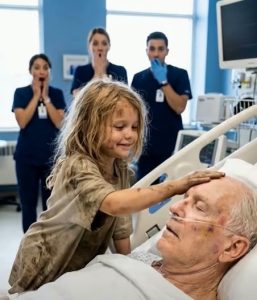
For exactly ten years, three months, and seventeen days, Viktor Hajdari had lain in the same oversized bed, his once-powerful body now thin and pale under crisp white sheets.
The billionaire founder of Kosovo’s largest construction empire had suffered a devastating car accident on the icy mountain road between Pristina and Pec. His luxury SUV had skidded into a ravine, leaving him with severe head trauma.
The best neurologists from Switzerland, Germany, and Turkey had been flown in. Experimental drugs, stem cell treatments, and cutting-edge brain stimulation machines were used without success. Every specialist eventually delivered the same verdict: “Persistent vegetative state. The likelihood of recovery is near zero.”
His family had stopped hoping long ago. His wife had quietly divorced him after four years and moved to Dubai with their two sons. The board of directors ran the company efficiently, treating Viktor more like a legal formality than a living person.
Only a small team of private nurses rotated shifts, keeping his body clean, turning him to prevent bedsores, and playing soft classical music in case some hidden part of his mind could still hear. Outside the hospital, the tabloids had long moved on. “Billionaire trapped in endless sleep” had become yesterday’s news.
I was not supposed to be there.
My name is Arta, and at nineteen I was just another face in the crowd of Pristina’s working poor. My mother cleaned offices at night, my father had died of lung disease when I was twelve, and I worked two jobs—mornings at a small bakery near the Grand Hotel and afternoons helping my elderly neighbor sell handmade lace at the market.
Hospital bills for my father’s final months had left us drowning in debt. That was why, when the private hospital posted a discreet notice for a temporary cleaner in the VIP wing, I applied immediately. The pay was triple what I earned at the bakery, and the hours fit around my other shifts.
On my third day, the head nurse, a strict woman named Valbona, handed me a list of rooms. “Room 712 needs extra attention today. The patient has been here ten years. Be respectful. Do not touch anything except the floor and surfaces. Understood?”
I nodded silently and pushed my cleaning cart down the long corridor. When I reached Room 712, I paused at the door. Through the small window I could see him—Viktor Hajdari. His face was peaceful, almost handsome despite the gaunt cheeks and silver-streaked hair. Monitors glowed softly beside the bed. I slipped inside, moving quietly so as not to disturb the sleeping giant of Kosovo’s economy.
I mopped the floor in wide, careful arcs, the way my mother had taught me. Then I wiped the windowsill, dusted the framed photographs that no one ever looked at anymore—one of a much younger Viktor smiling beside his wife and two small boys, another of him cutting the ribbon at the opening of a new bridge he had built. As I worked, I noticed a small, worn notebook on the bedside table. It looked out of place among the medical equipment. Curious, I glanced at the cover. In faded ink it read: “For my sons—when I wake up.”
Something inside me shifted. Ten years. A man who had built half the buildings I walked past every day, now forgotten in this quiet room. Without thinking, I pulled the single wooden chair closer to the bed and sat down.
My legs ached from standing since five that morning, and for a moment I simply rested. Then, in a voice barely above a whisper, I began to speak.
“Mr. Hajdari… my name is Arta. I know you probably can’t hear me, but the doctors say talking might help sometimes. I don’t have fancy stories. My life is small. But maybe small stories are what you need after ten years of silence.”
I told him about the bakery—how the smell of fresh bread reminded me of my grandmother’s kitchen in the village near Istok. I described the old women who came every morning for their simit and shared gossip about neighbors
I spoke about my father’s last days, how he used to sing old patriotic songs even when he could barely breathe. I told him about the mountain road where his accident happened, how I once walked part of it with my cousin to pick wild strawberries in summer.
Minutes turned into nearly an hour. I forgot I was supposed to be cleaning other rooms. My voice grew softer, more confident. At one point I reached out and gently touched the back of his hand—the same hand that had signed million-euro contracts. It felt warm, alive.