In a quiet, sun-drenched valley, a flock of sheep grazed peacefully under the watchful eye of the shepherd. The hills rolled gently, dotted with wildflowers, and the air was filled with the soft bleating of the flock and the occasional chirp of birds.
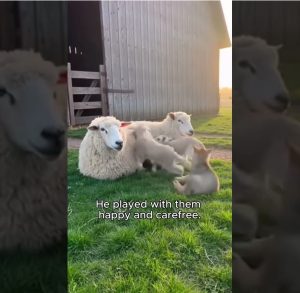
Life was simple and predictable, the rhythms of the day dictated by grazing, rest, and the occasional playful chase across the fields. It was a life of calm routine, one that had been undisturbed for generations—until a strange twist of fate arrived in the form of a wolf pup.
The pup had been abandoned near the edge of the forest, tiny, shivering, and clearly too weak to survive on its own. A mother sheep, known among the flock for her gentle nature and surprising courage, found the pup alone. Despite instincts that might have warned against it, she nuzzled him gently, offering warmth and protection. She shared her food, sheltered him from the elements, and, most remarkably, treated him as one of her own. The other sheep watched warily at first, uncertain how to respond to the presence of a natural predator among them.
Days turned into weeks, and the pup grew stronger under the care of the sheep. He learned the rhythms of the valley, the gentle nudges and bleats of his adoptive flock, and the trust that comes from being protected and accepted. The flock, initially cautious, began to accept him, recognizing that he posed no immediate threat. Over time, the wolf pup developed a remarkable awareness of the needs and vulnerabilities of the flock, learning to move with them, protect them, and even anticipate danger in ways that surprised the shepherd.
It wasn’t long before the valley faced its first true test. One night, a pack of wild wolves descended from the forest, their eyes glinting in the moonlight, teeth bared, ready to strike. The flock was frozen with fear, scattered across the hillside with no plan for defense. But the wolf pup—now grown, agile, and fiercely loyal to the sheep who had raised him—sprang into action. His instincts as a predator combined with the compassion and understanding nurtured by his adoptive mother allowed him to act decisively.
He confronted the wild wolves, not with recklessness, but with calculated courage. He barked, growled, and circled them strategically, diverting their attention from the flock and drawing them away from the vulnerable sheep. His actions were both bold and precise, a mixture of instinct and learned loyalty that no one could have predicted. Meanwhile, the flock remained close together, guided by their natural trust in the pup and the shepherd’s instructions.
By dawn, the wild wolves had retreated, intimidated and confused by the unusual courage of the pup who had grown up among his supposed prey. The flock remained unharmed, and the shepherd, watching from the hillside, could hardly believe what had occurred. He had expected vulnerability, perhaps even tragedy—but instead, he witnessed heroism in its most unexpected form.
From that day on, the wolf pup was no longer just an oddity among the sheep; he was their guardian, their protector, their unexpected hero. The story spread through the valley, whispered among neighbors and travelers alike, a tale of loyalty and courage that defied nature’s rules. The sheep had given life and trust to a creature who, by all expectations, should have been their threat. In return, he had defended them, demonstrating that love, guidance, and care can transcend instincts, species, and assumptions.
In the end, the sheep and the wolf pup coexisted as a family, bound not by blood, but by loyalty and bravery. And in that quiet valley, where sunlight dappled the fields and the wind whispered through the hills, the flock had discovered an extraordinary truth: heroes often come in the most surprising forms, and courage can be found in even the most unlikely hearts.