It was an ordinary afternoon in the quiet neighborhood where I lived, the kind of day when everything seems predictable: children playing on the sidewalks, the hum of distant traffic, and neighbors tending their gardens.

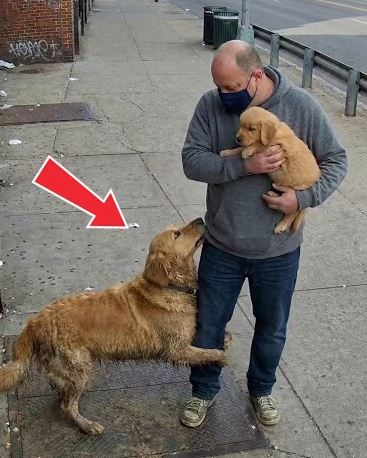
My dog, Max, a golden retriever with an unusually keen sense of observation, was with me as usual, trotting along our familiar walking route. He had always been curious, almost unnaturally attentive, noticing things other dogs—or even people—might miss. That day, I had no idea his sharp instincts would change not just one life, but two.
We were rounding a corner near the intersection when Max suddenly stopped in his tracks. His ears perked, and he froze, staring intently at the asphalt ahead. I looked, expecting perhaps a squirrel or a stray piece of paper caught in the breeze. But then I saw it—a small shape crumpled in the middle of the street. My heart leapt as I realized it was a tiny cat, limp and unmoving, her fur matted and dirty. She was clearly in trouble.
Before I could even react, Max darted forward. Not barking aggressively, not in play, but with purpose. He nudged the cat gently with his nose, careful not to harm her, and lay down beside her, placing his body protectively around her small frame. It was as though he understood that she was fragile, that she needed calm, warmth, and attention—things he instinctively provided.
I knelt down, cautiously assessing the situation. The cat’s breathing was shallow, her eyes barely flickering open. She had clearly fainted, probably from hunger, exhaustion, or fear. I had no first aid for cats, and the nearest veterinary clinic was several blocks away. I looked at Max, who seemed to be urging me silently, his gaze locked on mine as if to say, We can’t wait.
Carefully, I scooped the little cat into my arms, keeping her close to Max, who followed every step, keeping pace, sniffing and occasionally nuzzling her as if offering reassurance. The walk home was tense. I whispered to her, hoping my voice would calm her, while Max stayed vigilant, turning his head every few seconds to make sure she remained safe.
Once home, I laid the cat gently on a soft blanket and offered her a little water. Max stayed by her side, occasionally nudging her gently, licking her head when she stirred. It took hours, but slowly, her breathing stabilized, and color returned to her tiny face. I realized then that Max had been right—she was not just faint; she needed comfort, security, and patience.
Over the next few days, we nursed her back to health. I fed her small meals, cleaned her fur, and let her rest as much as she wanted. Max never left her side, often curling around her protectively, lying between her and the world. It was a remarkable bond, one that grew stronger with each passing day. The cat, whom I eventually named Lily, started to mirror Max’s behavior—following him, playing gently, trusting him completely.
It wasn’t long before I realized something beautiful had happened. Max had saved her life not just through instinct, but through empathy and awareness. And in doing so, he had created a connection so profound that it couldn’t be separated. Both needed a home that understood the depth of their bond.
When I finally introduced them officially to our family, it was as if they had always belonged together. Max became not just a protector, but a companion and teacher, showing Lily how to navigate a world that had once frightened her. In return, Lily brought a sense of wonder and playfulness into our home, her cautious curiosity slowly melting into affection and confidence.