The Texas heat pressed down on the prison yard like a heavy weight, relentless and unforgiving. Even inside the concrete walls, the sun found its way in, seeping through metal bars and narrow windows. For Officer Daniel Reyes, this was just another day in a place that had slowly worn him down. He had worked at the prison for nearly twelve years, long enough to know every corridor, every locked door, and every unspoken rule that governed life behind the walls.
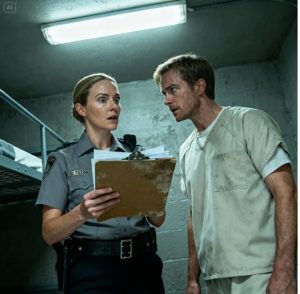
He had not always been like this. Once, he believed in the job. He believed in order, in fairness, in the idea that his presence could make a difference. But years of tension, violence, and long shifts had taken their toll. The shouting, the threats, the constant vigilance required to survive each day had chipped away at something inside him. He slept poorly, spoke little, and carried a quiet exhaustion that never fully lifted.
That afternoon, Reyes was assigned to oversee one of the older cell blocks. It housed inmates who had been inside for decades, men whose lives had been shaped almost entirely by steel doors and concrete floors. As he walked the corridor, keys clinking at his side, his thoughts drifted to home. His marriage had collapsed under the weight of his stress. His teenage son barely spoke to him anymore. Somewhere along the way, he had lost himself.
Near the end of the block, an inmate named Leonard Moore sat on his bunk, staring at the wall. Moore had been incarcerated for over thirty years. He was quiet, rarely caused trouble, and kept mostly to himself. Reyes had seen him countless times but never really looked at him. That day, something felt different.
Moore spoke first.
His voice was calm, almost hesitant. He asked Reyes how his day was going.
The question caught the officer off guard. Inmates usually avoided conversation unless they wanted something. Reyes hesitated before answering, then muttered that it was fine. Moore nodded slowly, as if he understood that the answer was not entirely true.
A few moments later, Moore spoke again. He said he could tell when someone was carrying too much. He said he had learned to recognize that look after many years of watching men break inside those walls.
Reyes felt a flicker of irritation, followed by something else. Recognition.
He told Moore to mind his own business, but his voice lacked conviction. Moore did not argue. He simply said that he had once been a father too. That he had made mistakes he could never take back. That regret had a way of eating a person alive if left unchecked.
The words lingered long after Reyes finished his rounds.
Over the next few weeks, brief conversations began to take place. Nothing personal at first. Just short exchanges during checks. Moore never asked for favors. Never crossed boundaries. He simply talked. About books he read from the prison library. About the importance of accountability. About the idea that a man could still choose who he wanted to be, even when the world had taken almost everything else away.
One night, after a particularly brutal shift that ended with a violent altercation between inmates, Reyes found himself sitting in his car long after his shift ended. His hands shook. His chest felt tight. He did not want to go home. He did not want to be anywhere.
The next day, Moore noticed.
Reyes did not know why he stopped. He did not know why he spoke. But standing outside the cell, he admitted quietly that he felt like he was failing at everything. As an officer. As a father. As a man.
Moore listened without interruption.
When Reyes finished, Moore said something that would stay with him forever. He said that pain did not belong to one side of the bars. That everyone inside that prison was carrying something heavy. The difference was whether they allowed it to define them.