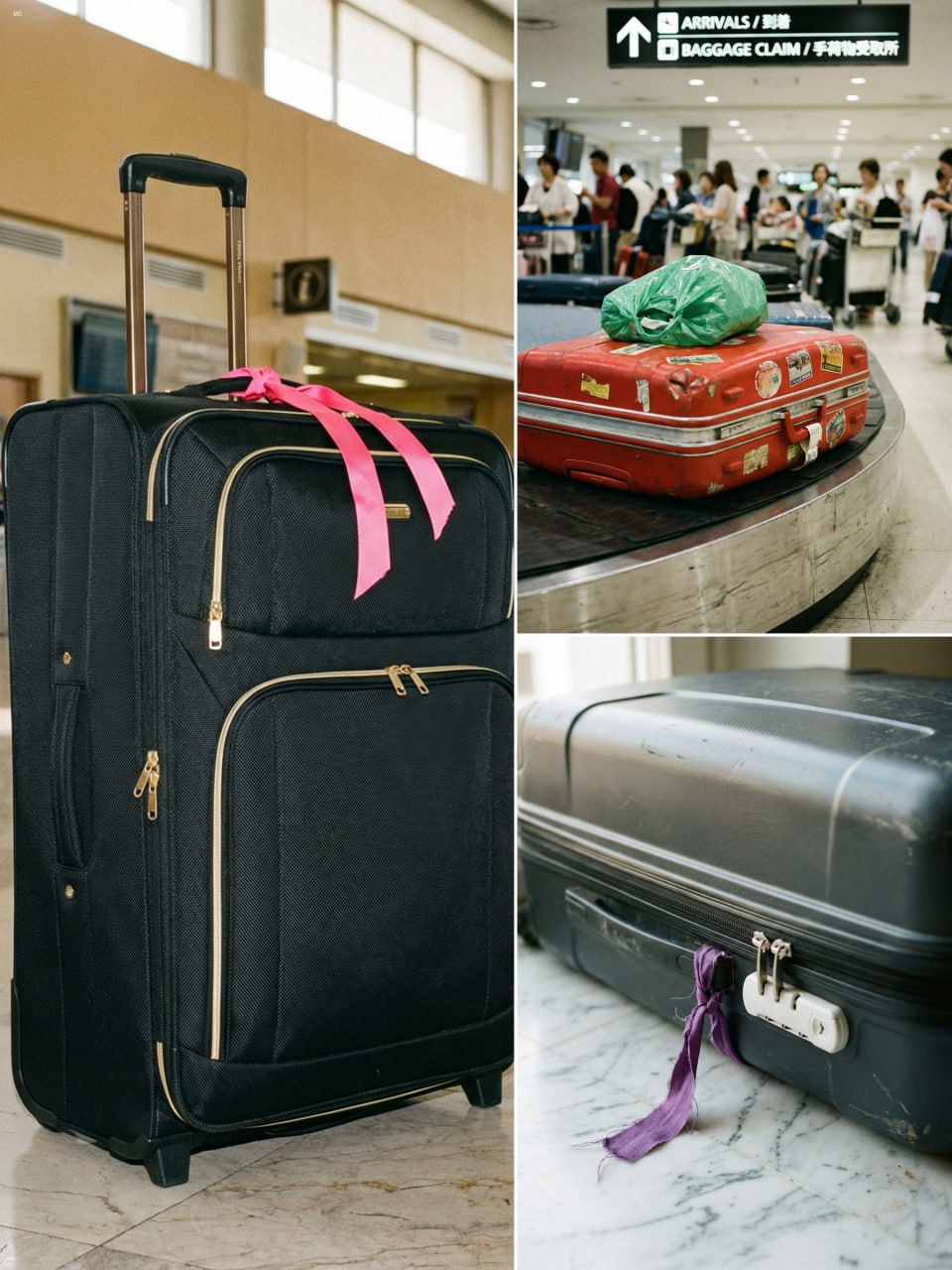
Bright ribbons, colorful straps, and decorative bows have become extremely common at airports around the world. People use them to quickly recognize luggage on crowded baggage carousels, especially when many suitcases look nearly identical.

At first glance, the idea makes perfect sense.
A bright red ribbon or neon strip can help travelers spot their bags faster after landing. Families often add ribbons so children can identify luggage easily, while others simply want extra peace of mind during busy travel seasons.
But according to several baggage handlers and airport workers, that small ribbon could actually create unexpected problems behind the scenes.
And many travelers say they had no idea.
The warning began spreading online after an experienced baggage handler explained how ribbons attached to luggage may interfere with automated scanning systems used at airports. In many major airports, baggage handling is heavily automated. Suitcases move rapidly through conveyor belts, scanners, sorting systems, and security checkpoints before reaching the aircraft.
During that process, barcodes and tracking tags are essential.
Airport systems rely on those tags to correctly route luggage to the proper plane, destination, and baggage claim area. If something disrupts the scanning process, a suitcase may need to be manually inspected or rerouted.
That is where ribbons sometimes become a problem.
According to baggage workers, oversized ribbons, loose straps, or decorative accessories can occasionally block scanners or create difficulties for automated systems trying to process the bag quickly. When a suitcase cannot be scanned properly, it may be pulled aside for manual handling instead of continuing smoothly through the system.
And manual handling often means delays.
In some situations, luggage can miss the flight entirely if the issue takes too long to resolve during busy travel periods.
Airport workers also explain that ribbons may occasionally get caught in conveyor systems or sorting machinery. Even small loose accessories can create problems when thousands of bags are moving through automated equipment every hour.
For frequent travelers, this information came as a surprise.
Social media users reacted strongly after hearing the advice, with many admitting they had tied ribbons onto suitcases for years without realizing it might increase the chance of delays.
“I’ve done this my entire life,” one traveler commented online.
“I thought I was making my suitcase easier to find.”
Another person wrote:
“I literally bought special ribbons before every family vacation.”
While ribbons are not guaranteed to cause problems every time, baggage handlers say minimizing unnecessary accessories can help luggage move more efficiently through airport systems.
Instead of ribbons, some travel experts recommend using alternative ways to identify bags, including:
- Unique luggage colors
- Personalized luggage tags
- Small stickers placed flat against the suitcase
- Distinctive hard-shell designs
- Colored luggage belts secured tightly around the bag
These options may reduce the risk of loose materials interfering with scanning equipment.
Airport workers also shared another interesting tip many travelers overlook: removing old baggage stickers from previous flights.
Many suitcases collect old barcode labels over time, especially frequent flyer luggage. If outdated stickers remain attached, scanners can occasionally detect the wrong barcode, potentially confusing the system.
That is why some baggage handlers encourage travelers to remove old labels before checking bags for a new trip.
The discussion also highlighted how complex modern baggage systems really are.
Most travelers only see the check-in counter and baggage carousel, but behind the scenes, airports process thousands of suitcases every hour using high-speed conveyor networks, automated sorting technology, and multiple security screening stages.
Even small delays can create larger problems during peak travel times.
That does not mean travelers need to panic about ribbons or decorative accessories. Millions of people continue using them without major issues. However, airport workers say understanding how baggage systems operate can help reduce unnecessary complications.
Some travelers who heard the warning decided to switch to brightly colored luggage instead. Others now use luggage covers or secure identification tags rather than loose decorations.
Travel experts also recommend taking clear photos of luggage before flights. If bags are delayed or misplaced, photos can help airline staff identify them more quickly.
In addition, travelers are encouraged to place contact information both outside and inside the suitcase in case baggage tags become detached during transit.
For many people online, the ribbon warning became one of those small travel tips that feels surprisingly important once you hear it.
Something simple.
Something easy to overlook.
But potentially useful for smoother travel.
And perhaps that explains why the story spread so quickly across social media.
Because sometimes the smallest travel habits — the things people do automatically for years — turn out to have consequences they never expected.