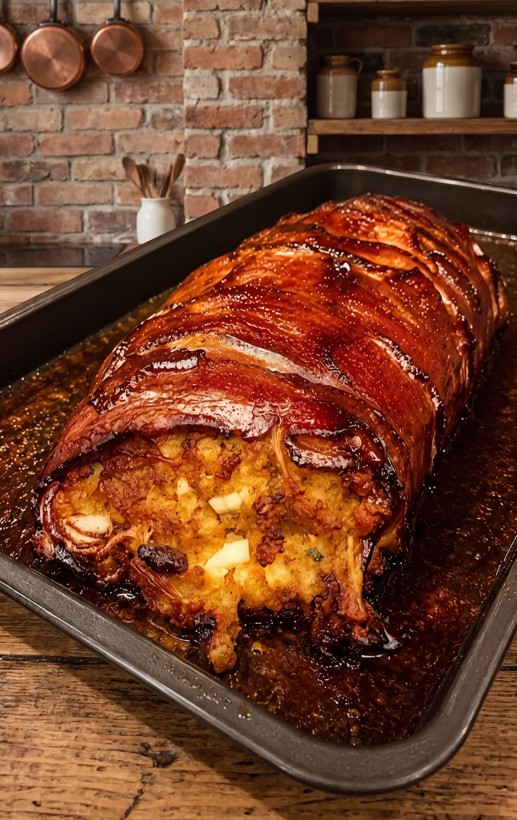
This bacon wrapped stuffing roll combines crisp, salty bacon with soft herb-seasoned stuffing. Together, these familiar ingredients create a comforting centerpiece that slices neatly and looks impressive on the table.
As the roll bakes, the bacon becomes deeply golden and releases its flavor into the stuffing. Meanwhile, the bread absorbs the butter, broth, vegetables, eggs, and aromatic herbs.
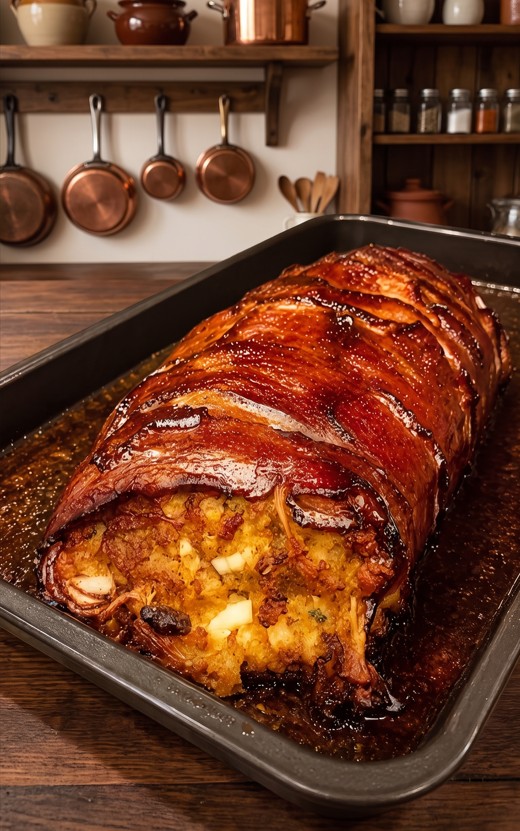
The finished roll remains moist and tender inside while developing a crisp exterior. As a result, each slice offers a satisfying balance of texture and savory flavor.
Although the presentation looks special, the ingredients and preparation remain familiar. Therefore, this dish works beautifully for holiday gatherings, potlucks, weekend dinners, or family celebrations.
Why This Bacon Wrapped Stuffing Roll Works
For another comforting holiday side, try our cheesy garlic potato bake recipe.
First, the eggs and chicken broth bind the bread mixture together. This prevents the stuffing from becoming dry, loose, or crumbly when sliced.
Next, the bacon lattice acts as a natural outer layer. While the roll bakes, the rendered bacon fat helps keep the stuffing moist and flavorful.
In addition, day-old bread absorbs the liquid without immediately turning into a soft paste. Consequently, the interior remains tender but still holds its shape.
Because the filling is formed into one even log, the herbs and vegetables are distributed throughout every portion. Therefore, each slice contains a balanced amount of bread, seasoning, onion, celery, and bacon.
Ingredients for Bacon Wrapped Stuffing Roll
Bacon and Bread Base
- Thick-cut bacon: 12 slices
- Day-old bread: 12 cups, cut into 1-inch cubes
- Unsalted butter: 1 cup, melted
Aromatic Vegetables
- Large yellow onion: 1, finely diced
- Celery: 1 cup, finely diced
Binding Liquid and Herbs
- Large eggs: 4, beaten
- Low-sodium chicken broth: 2 cups
- Dried sage: 1 teaspoon
- Dried thyme: 1 teaspoon
- Dried rosemary: 1 teaspoon, crumbled
- Salt: 1 teaspoon, plus more to taste
- Black pepper: ½ teaspoon
- Ground nutmeg: ¼ teaspoon
How to Make Bacon Wrapped Stuffing Roll
1. Prepare the Oven and Baking Sheet
Begin by preheating the oven to 350°F or 175°C.
Next, line a large baking sheet with parchment paper. Set the prepared tray aside while arranging the bacon.
2. Create the Bacon Lattice
Lay six bacon slices vertically on the parchment paper. Afterward, arrange the remaining six slices horizontally across them.
Weave the slices together to form a square lattice measuring approximately 12 inches. Make sure the bacon overlaps slightly wherever the slices cross.
If the bacon is not long enough to form a complete square, position the slices so they cover the area beneath the stuffing. However, leave approximately 2 inches around the edges for sealing.
3. Cook the Onion and Celery
Place a large skillet over medium heat. Then add the melted butter, diced onion, and finely diced celery.
Cook the vegetables for approximately 5–7 minutes. Meanwhile, stir them frequently so they soften evenly without browning.
Once the onion looks translucent and the celery feels tender, remove the skillet from the heat. Allow the mixture to cool slightly before combining it with the bread.
4. Prepare the Stuffing Mixture
Place the day-old bread cubes in a very large mixing bowl.
Next, pour the butter, onion, and celery mixture evenly over the bread. Gently toss the ingredients so the vegetables are distributed throughout.
In a separate bowl, combine the beaten eggs, chicken broth, dried sage, thyme, rosemary, salt, black pepper, and nutmeg.
Afterward, pour the seasoned liquid mixture over the bread and vegetables. Use clean hands or a large spoon to toss everything gently.
The bread should become evenly moistened without turning soggy. Therefore, avoid pressing or crushing the cubes while mixing.
5. Let the Stuffing Absorb the Liquid
Allow the stuffing mixture to rest for approximately 5 minutes.
During this time, the day-old bread absorbs the broth, eggs, butter, and seasonings. As a result, the mixture becomes easier to shape.
If the stuffing still feels loose, let it rest for a few additional minutes before forming the roll.
6. Shape the Bacon Wrapped Stuffing Roll
Transfer the stuffing mixture onto the center of the prepared bacon lattice.
Using your hands, shape the mixture into a firm log. The finished shape should measure approximately 10–12 inches long and 4 inches wide.
Press the mixture gently so it holds together. However, avoid compressing it so firmly that the bread loses its tender texture.
7. Wrap and Seal the Stuffing
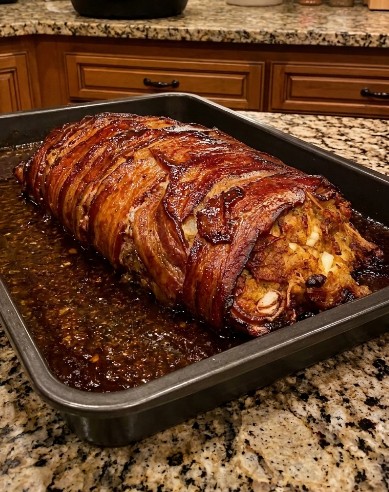
Carefully lift the edges of the bacon lattice over the stuffing log.
Bring the bacon around the filling until the stuffing is fully covered. Next, tuck the ends inward to seal the roll.
Check the exterior for exposed areas. Since uncovered stuffing may dry out during baking, close any visible gaps with the surrounding bacon.
8. Bake the Bacon Wrapped Stuffing Roll
Turn the wrapped roll seam-side down on the prepared baking sheet.
Bake it for approximately 45–55 minutes. During that time, the bacon should become deeply browned and crisp.
The stuffing must reach an internal temperature of at least 165°F or 74°C. Therefore, check the center with an instant-read thermometer before removing the roll from the oven.
If the bacon becomes dark before the center reaches the correct temperature, loosely cover the roll with aluminum foil. Then continue baking until the stuffing is fully cooked.
9. Rest and Slice the Stuffing Roll
Remove the cooked roll from the oven and allow it to rest briefly.
After resting, cut the roll into slices approximately 1 inch thick. Use a sharp knife so the bacon exterior and tender stuffing remain neatly layered.
Finally, arrange the slices on a serving platter and serve them warm.
Doneness Tips for Bacon Wrapped Stuffing Roll
Check the bacon color. Properly cooked bacon should appear deep golden brown with darker caramelized areas.
Measure the center temperature. Insert the thermometer into the middle of the stuffing while avoiding the bacon layer.
Look for a firm shape. The roll should hold together when lifted, rested, and sliced.
Use foil when necessary. If the exterior browns too quickly, a loose foil cover protects the bacon while the center finishes cooking.
Allow the roll to rest. Resting briefly helps the filling settle and makes cleaner slices possible.
Troubleshooting Bacon Wrapped Stuffing Roll
What if the Stuffing Feels Too Loose?
If the mixture falls apart while shaping, the bread may need more time to absorb the liquid. Therefore, let it rest for another 10 minutes before trying again.
After the additional resting period, press the mixture gently into a firm log.
What if the Stuffing Mixture Is Too Wet?
Add a small amount of extra bread cubes when the mixture cannot hold its shape.
Alternatively, toast additional bread cubes in the oven for approximately 5 minutes. Then mix them into the wet stuffing until the texture becomes moldable.
What if the Bacon Browns Too Quickly?
Loosely cover the roll with aluminum foil. This slows the browning while allowing the center to continue cooking.
Nevertheless, continue checking the internal temperature until it reaches at least 165°F or 74°C.
Bacon Wrapped Stuffing Roll Variations
For a gluten-free version, use certified gluten-free bread cubes. In addition, check that the chicken broth and seasonings are labeled gluten-free.
For a lighter exterior, replace the pork bacon with turkey bacon. However, turkey bacon releases less fat and may need a light coating of oil or butter while baking.
For additional savory flavor, add ½ cup of chopped cooked sausage or diced ham to the stuffing mixture.
For a different herb profile, replace the sage with an equal amount of poultry seasoning. Alternatively, omit it and rely on the thyme and rosemary.
For a sweeter contrast, mix ¼ cup of dried cranberries or chopped apples into the bread mixture before shaping the roll.
How to Serve Bacon Wrapped Stuffing Roll
For an attractive presentation, cut the rested roll into thick, even rounds. Then arrange the slices slightly overlapping on a large platter.
Roasted carrots, parsnips, Brussels sprouts, or other root vegetables pair well with the rich bacon and herbs.
In addition, cranberry sauce or tangy apple chutney adds a sweet and bright contrast to the savory stuffing.
For a complete holiday meal, serve the roll with roast turkey or glazed ham. Alternatively, pair it with roast chicken for a comforting weekend dinner.
Since the slices also hold their shape at room temperature, the recipe works well for buffet-style gatherings and potlucks.
How to Store Bacon Wrapped Stuffing Roll
Allow the leftover roll to cool completely before placing it in a sealed container.
Once cool, store the slices in an airtight container in the refrigerator for up to three days.
Avoid sealing the roll while it is still warm. Otherwise, trapped steam may soften the bacon exterior.
How to Reheat the Stuffing Roll
Preheat the oven to 350°F or 175°C.
Next, arrange the leftover slices on a baking sheet. Reheat them for approximately 10–15 minutes.
This oven method helps restore the crispness of the bacon. In contrast, microwave reheating may make the bread and bacon softer.
How to Freeze Bacon Wrapped Stuffing Roll
The uncooked wrapped roll can be frozen for longer storage.
First, wrap it tightly in plastic wrap. Afterward, cover it with aluminum foil and freeze it for up to three months.
Thaw the frozen roll overnight in the refrigerator before baking. Then add approximately 10–15 minutes to the original cooking time.
Once the roll has thawed, do not freeze it again.
Bacon Wrapped Stuffing Roll Recipe Details
Servings: Approximately 8–10 servings
Baking Temperature: 350°F or 175°C
Baking Time: Approximately 45–55 minutes
Safe Internal Temperature: 165°F or 74°C
Reheating Time: Approximately 10–15 minutes
Refrigerator Storage: Up to 3 days
Freezer Storage: Up to 3 months before baking
Final Thoughts on Bacon Wrapped Stuffing Roll
Bacon-Wrapped Stuffing Roll
Ingredients
Method
- Preheat the oven to 350°F (175°C). Line a large baking sheet with parchment paper.
- Arrange six bacon slices vertically and six slices horizontally to create a woven lattice measuring approximately 12 inches square. Allow the slices to overlap slightly where they cross.
- Place the melted butter in a large skillet over medium heat. Add the diced onion and celery. Cook for 5–7 minutes, stirring frequently, until softened and translucent but not browned. Remove from the heat and cool slightly.
- Place the bread cubes in a very large bowl. Pour the butter, onion, and celery mixture over the bread. In a separate bowl, whisk together the eggs, chicken broth, sage, thyme, rosemary, salt, black pepper, and nutmeg. Pour the liquid evenly over the bread and toss gently until moistened but not soggy.
- Allow the stuffing mixture to rest for 5 minutes so the bread can absorb the liquid.
- Transfer the stuffing mixture to the center of the bacon lattice. Shape it into a firm log measuring approximately 10–12 inches long and 4 inches wide.
- Lift the edges of the bacon lattice over the stuffing. Tuck in the ends and close any gaps so the filling is completely covered.
- Place the wrapped roll seam-side down on the prepared baking sheet. Bake for 45–55 minutes, until the bacon is deeply browned and the center of the stuffing reaches 165°F (74°C). If the bacon browns too quickly, loosely cover the roll with aluminum foil.
- Remove the roll from the oven and allow it to rest briefly. Slice it into rounds approximately 1 inch thick and serve warm.
Notes
This bacon wrapped stuffing roll transforms traditional stuffing into an attractive and sliceable dish. Crisp bacon, tender bread, vegetables, butter, broth, and herbs create a comforting combination in every serving.
Moreover, the recipe works for holiday meals, potlucks, buffet tables, and special family dinners. Although shaping the roll requires a little patience, the preparation uses familiar methods and ingredients.
Serve the slices while they are warm and crisp. In the end, the contrast between the golden bacon and moist herb stuffing makes this recipe a memorable addition to the table.