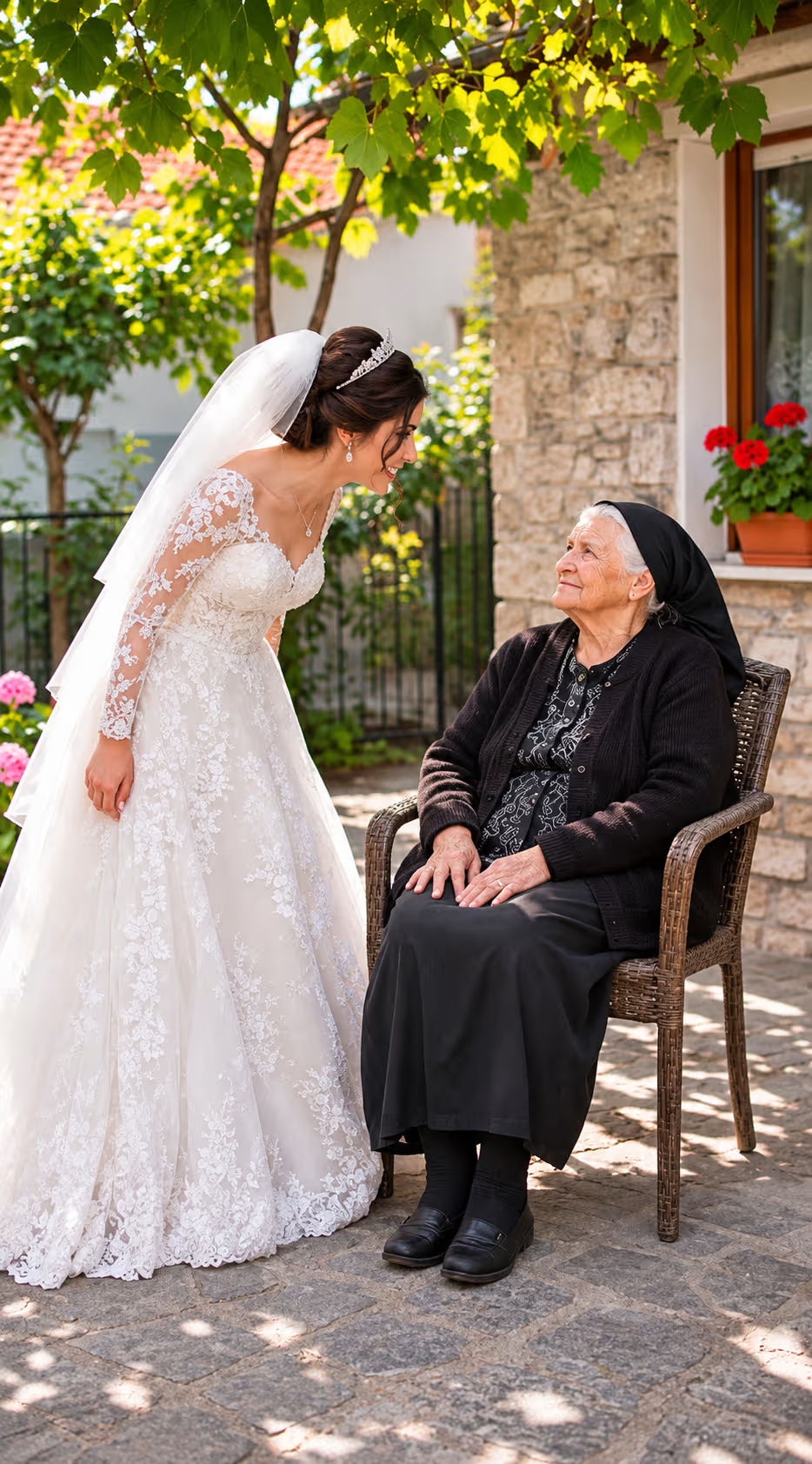
A Wedding Photograph That Left Someone Out
“Move the wheelchair out of the picture,” the bride whispered to the photographer.
Eighty-three-year-old Margaret Ellis heard every word.
She sat beside the flower-covered wedding arch, wearing a lavender dress she had carefully chosen for her granddaughter’s special day.
The photographer hesitated.
“Would you like me to adjust the arrangement?”
“No,” the bride replied. “I want the pictures without the wheelchair showing.”
Margaret lowered her eyes.
Her granddaughter, Natalie, had spent months planning a beautiful wedding, and Margaret had been looking forward to being part of it.
Now she felt as though her presence was an inconvenience.
The groom, Andrew, had been greeting relatives nearby.
When he heard the conversation, he approached.
“Natalie, what did you just say?”
The bride turned toward him.
“I’m trying to make the photographs look right.”
Andrew looked at Margaret, who was quietly folding her hands in her lap.
“Then we need to talk,” he said firmly. “Because you owe your grandmother an apology.”
The Grandmother Who Helped Raise the Bride
Margaret had been an important part of Natalie’s life since childhood.
When Natalie’s parents worked long hours, Margaret cared for her after school.
She prepared meals, helped with homework, and attended nearly every school performance.
Natalie spent countless afternoons at her grandmother’s house.
They baked cookies, planted flowers, and looked through old family albums.
Margaret loved photography.
She kept carefully labeled pictures from birthdays, graduations, and family celebrations.
As Natalie grew older, Margaret encouraged her to pursue her ambitions.
When Natalie became engaged, Margaret was among the first people she called.
Her grandmother cried with happiness.
She immediately offered to help with the wedding preparations.
Although Margaret had begun using a wheelchair because of reduced mobility, she remained active in family decisions.
She helped Natalie choose flowers and shared photographs from her own wedding.
One picture showed Margaret standing beside her late husband beneath a simple garden arch.
Natalie loved the image.
She decided to use a similar arch at her ceremony.
Margaret felt honored.
She never imagined that the wedding photographs would become a source of embarrassment.
A Perfect Wedding Becomes an Unreasonable Expectation
Natalie had spent nearly a year planning the ceremony.
She wanted every detail to look beautiful.
The venue featured white roses, soft lighting, and carefully arranged decorations.
She had hired a professional photographer and prepared a detailed list of family portraits.
As the wedding day approached, Natalie became increasingly anxious about small imperfections.
She worried about the weather, the seating arrangements, and the timing of the ceremony.
Andrew noticed her stress.
He encouraged her to focus on celebrating with the people they loved.
Natalie agreed, but she continued checking every detail.
After the ceremony, the photographer gathered the family near the garden arch.
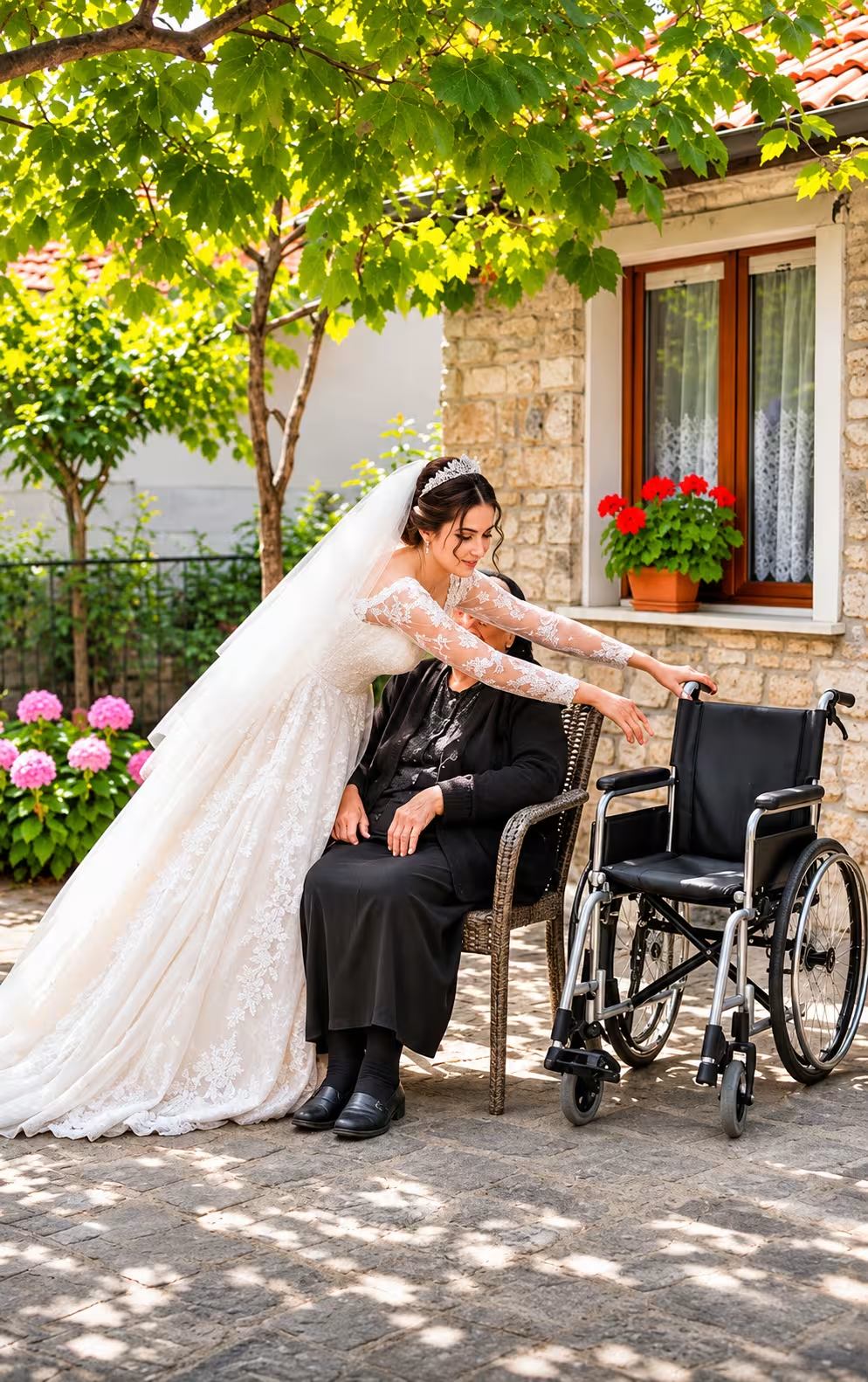
Margaret was brought forward in her wheelchair.
She smiled as relatives arranged themselves around her.
The photographer suggested placing Margaret near the center so everyone could gather comfortably.
Natalie hesitated.
She looked at the wheelchair, then at the decorative flowers behind it.
She worried that the chair would interrupt the symmetrical arrangement she had imagined.
Instead of discussing the composition respectfully, she asked the photographer to move the wheelchair out of the photographs.
Margaret immediately understood what she meant.
The Groom Refuses to Ignore the Situation
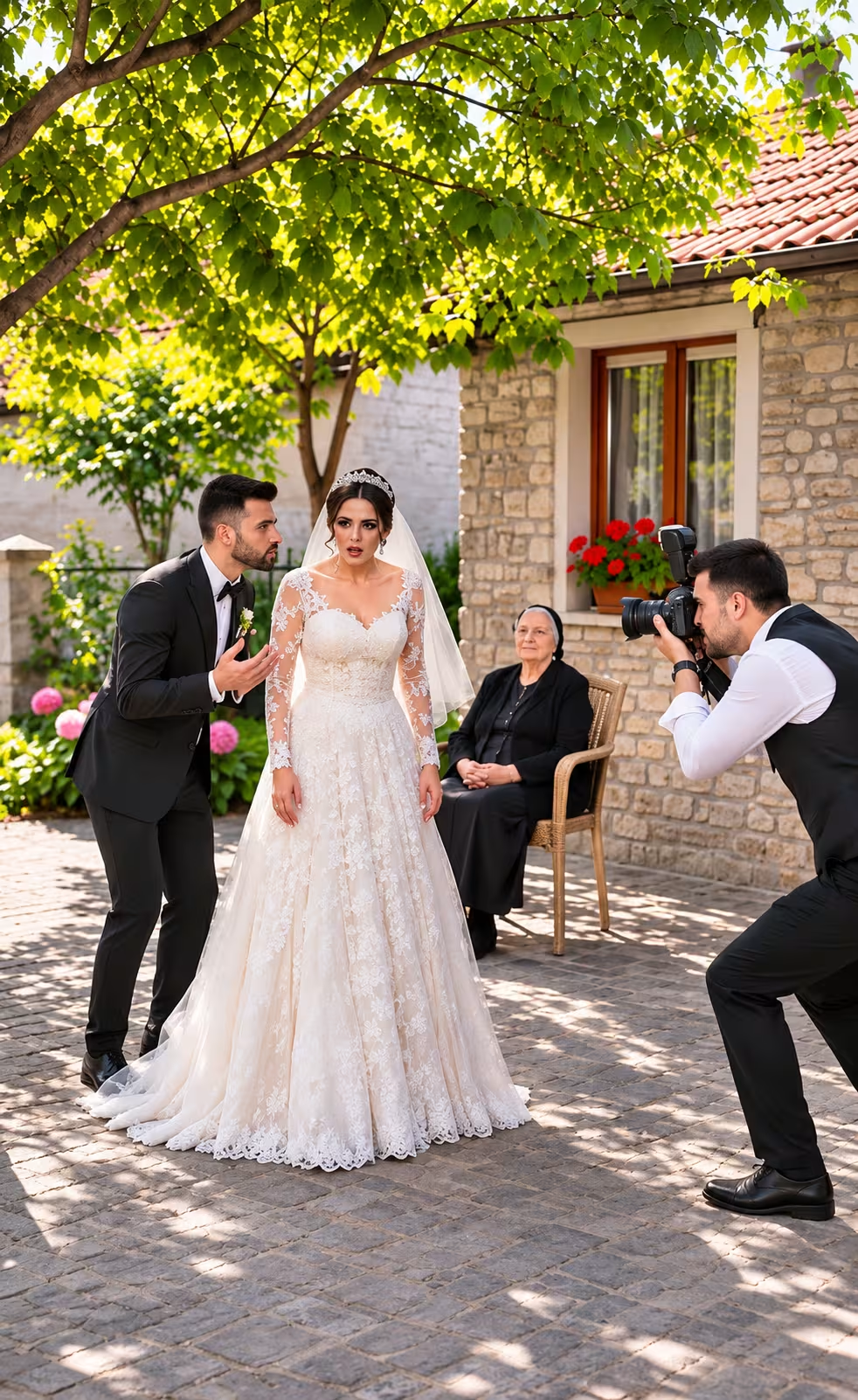
Andrew approached when he noticed the uncomfortable silence.
He had heard Natalie’s request.
At first, he hoped she had simply expressed herself poorly.
But when she repeated that she wanted photographs without the wheelchair, he realized the problem was more serious.
“Natalie, your grandmother is part of this family,” he said.
Natalie lowered her voice.
“I know that. I just want a few clean pictures.”
Andrew looked toward Margaret.
“There’s nothing wrong with the way she looks.”
Several relatives stood quietly nearby.
Margaret attempted to ease the tension.
“It’s all right, dear. I can sit this one out.”
Andrew turned toward her.
“No, Margaret. You shouldn’t have to.”
He then asked Natalie to step aside with him.
They moved a short distance from the group.
Andrew spoke firmly but without shouting.
“Your grandmother helped make this day possible. She deserves to be included.”
Natalie looked frustrated.
“You’re making this into something bigger than it is.”
Andrew shook his head.
“She heard you. You hurt her feelings.”
He paused.
“I need you to apologize to her.”
An Apology That Cannot Be Rushed
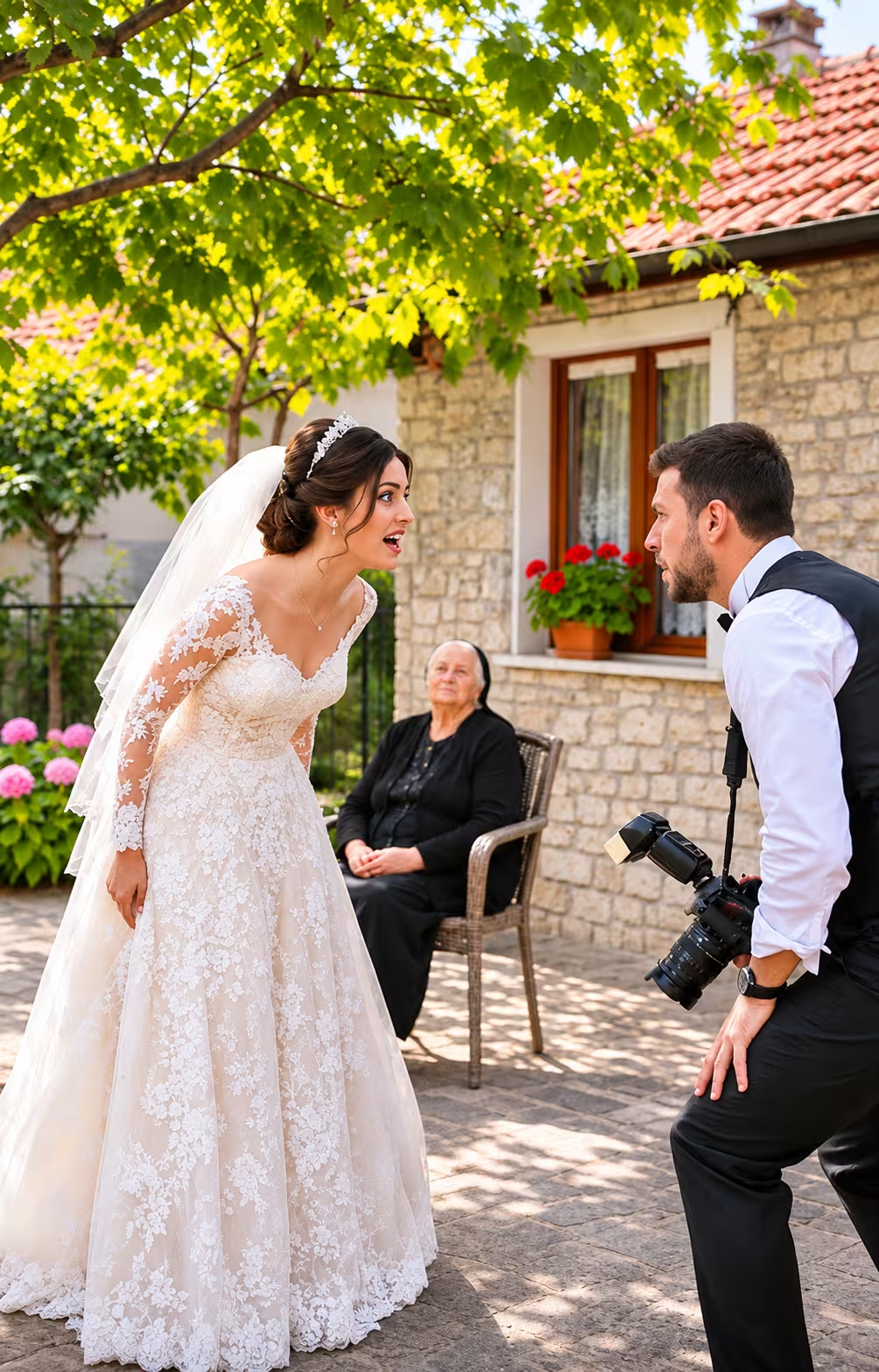
Natalie looked back toward the garden arch.
Margaret sat quietly while the photographer waited.
For the first time, Natalie noticed how uncomfortable her grandmother appeared.
She remembered the afternoons they had spent together when she was younger.
Margaret had always made room for her.
Whether Natalie arrived upset after school or needed help preparing for an exam, her grandmother listened.
Natalie suddenly understood how dismissive her request had sounded.
She returned to Margaret.
“Grandma, can I talk to you?”
Margaret looked up.
“Of course, sweetheart.”
Natalie knelt beside her wheelchair.
“I’m sorry for what I said.”
Margaret remained quiet.
Natalie continued.
“I was thinking about how the pictures would look instead of how you would feel.”
Her voice trembled.
“You came here to celebrate with us, and I made you feel like you didn’t belong.”
Margaret gently took her hand.
“That did hurt,” she admitted.
Natalie nodded.
“I know. I shouldn’t have done it.”
Margaret looked toward the wedding arch.
“I wanted a photograph with you because this is a day I hoped I’d live to see.”
Natalie began crying.
She hugged her grandmother carefully.
A Different Kind of Perfect Photograph
After their conversation, Natalie asked the photographer to gather the family again.
This time, she requested that Margaret be placed near the center.
The photographer arranged the group so everyone could be seen comfortably.
Andrew stood beside Natalie.
Margaret sat between them, smiling.
The photographer adjusted the camera.
“Everyone ready?”
Natalie looked down at her grandmother.
“Ready, Grandma?”
Margaret smiled.
“More than ready.”
The camera clicked.
Then Andrew suggested another photograph.
He asked Natalie to stand beside Margaret while he knelt on the other side.
The photographer captured the three of them laughing together.
The wheelchair remained visible.
Nobody tried to hide it.
Later, the photographer showed Natalie a preview of the images.
One photograph immediately caught her attention.
Margaret was smiling brightly, holding Natalie’s hand.
Andrew stood beside them with an expression of genuine happiness.
Natalie stared at the picture.
It was not the carefully arranged image she had originally imagined.
But it captured something she had nearly overlooked.
Everyone in the photograph looked comfortable, loved, and included.
A Family Memory That Outlasts the Wedding Day
The reception continued with music, dinner, and speeches.
Margaret enjoyed talking with relatives she had not seen for years.
During the evening, Natalie approached her grandmother again.
She asked whether Margaret would like to join her near the dance floor.
Margaret smiled.
“I’d love to watch you dance.”
Natalie asked the band to play one of her grandmother’s favorite songs.
Andrew helped clear a comfortable space beside the dance floor.
Natalie and Andrew danced nearby while Margaret clapped along.
Several family members joined them.
The moment became one of the happiest memories of the evening.
Weeks later, the wedding photographs arrived.
Natalie opened the gallery with Andrew.
There were beautiful pictures of the ceremony, flowers, and reception.
But one image stood out.
It showed Margaret smiling between the bride and groom.
Natalie selected it for a large frame in their living room.
She also ordered a copy for her grandmother.
When Margaret received the photograph, she placed it beside the picture from her own wedding decades earlier.
Years later, Natalie would remember that the most beautiful wedding photograph was not the one with the perfect flowers or flawless arrangement, but the one that included her grandmother exactly as she was, smiling beside the people who loved her.