The elderly man waited beside the bus entrance while the driver prepared the wheelchair ramp.
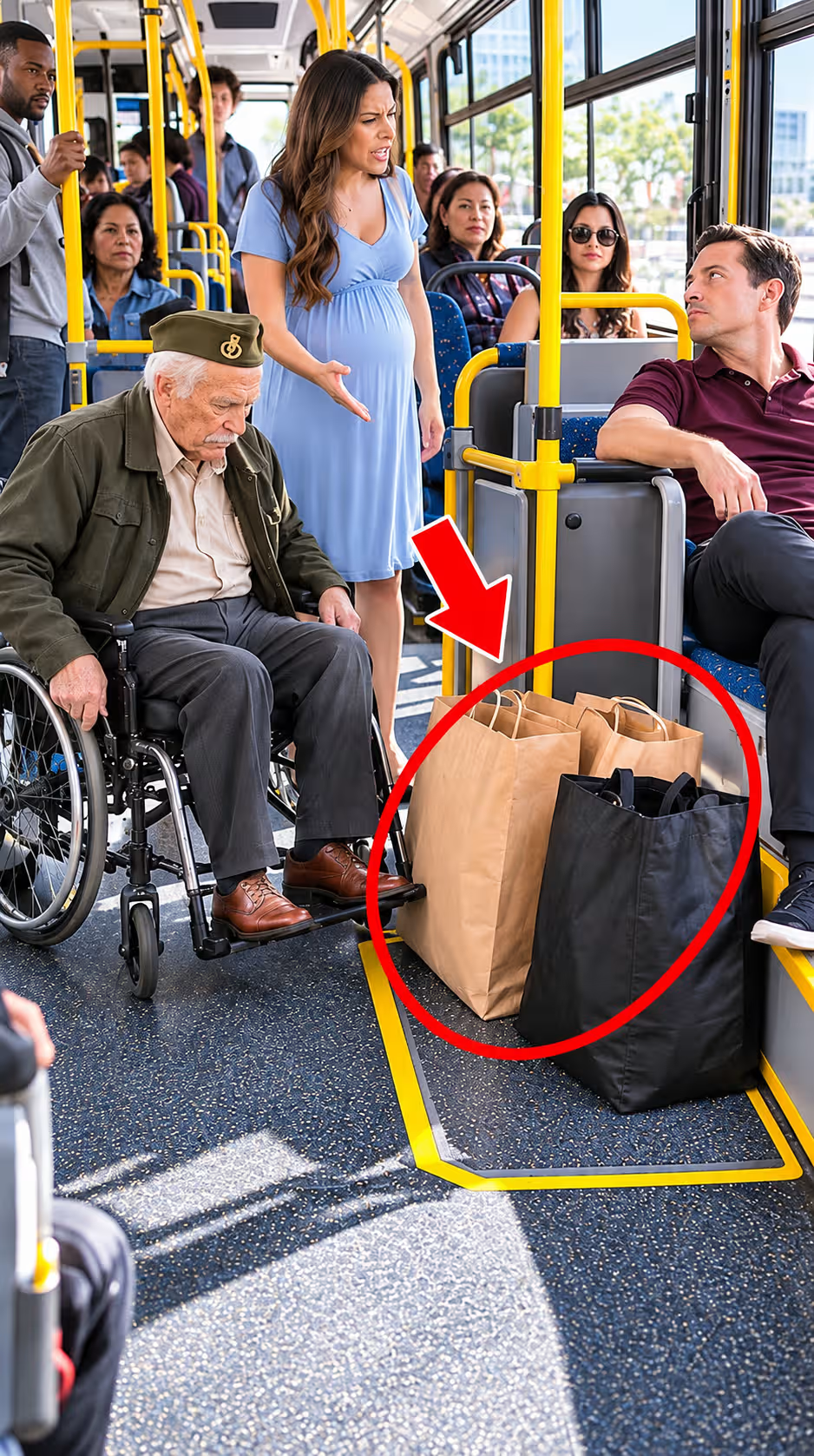
Inside the vehicle, several shopping bags occupied the designated wheelchair area.
Thirty-six-year-old Natalie Morgan noticed the situation and approached the passenger sitting beside the bags.
She politely asked whether he could move his belongings to make room.
However, the passenger appeared unwilling to rearrange his luggage.
The elderly man remained outside while the conversation continued.
Other passengers began noticing the delay and looking toward the wheelchair area.
A police officer standing near the bus stop eventually became aware of the situation.
He boarded the vehicle to understand what was happening and determine how he could assist.
An Ordinary Morning on Public Transportation
Natalie regularly traveled by bus to her workplace in the town center.
She enjoyed the convenience of public transportation and often recognized familiar passengers.
That morning, the bus was moderately crowded with commuters and shoppers.
Natalie had taken a seat near the middle of the vehicle.
Across from her sat a man carrying several large shopping bags.
He had placed most of his belongings inside the designated wheelchair area.
Although the space was temporarily unoccupied, signs clearly indicated its intended purpose.
Natalie initially paid little attention to the arrangement.
Several stops later, the bus arrived near a community medical center.
An elderly man using a wheelchair waited beside the shelter.
His name was Arthur Collins, a retired carpenter who lived nearby.
Arthur frequently used public transportation to attend appointments and visit friends.
The driver noticed him waiting and prepared the accessible entrance.
Natalie looked toward the wheelchair area and immediately recognized that the shopping bags would need to be moved.
A Polite Request to Make Room
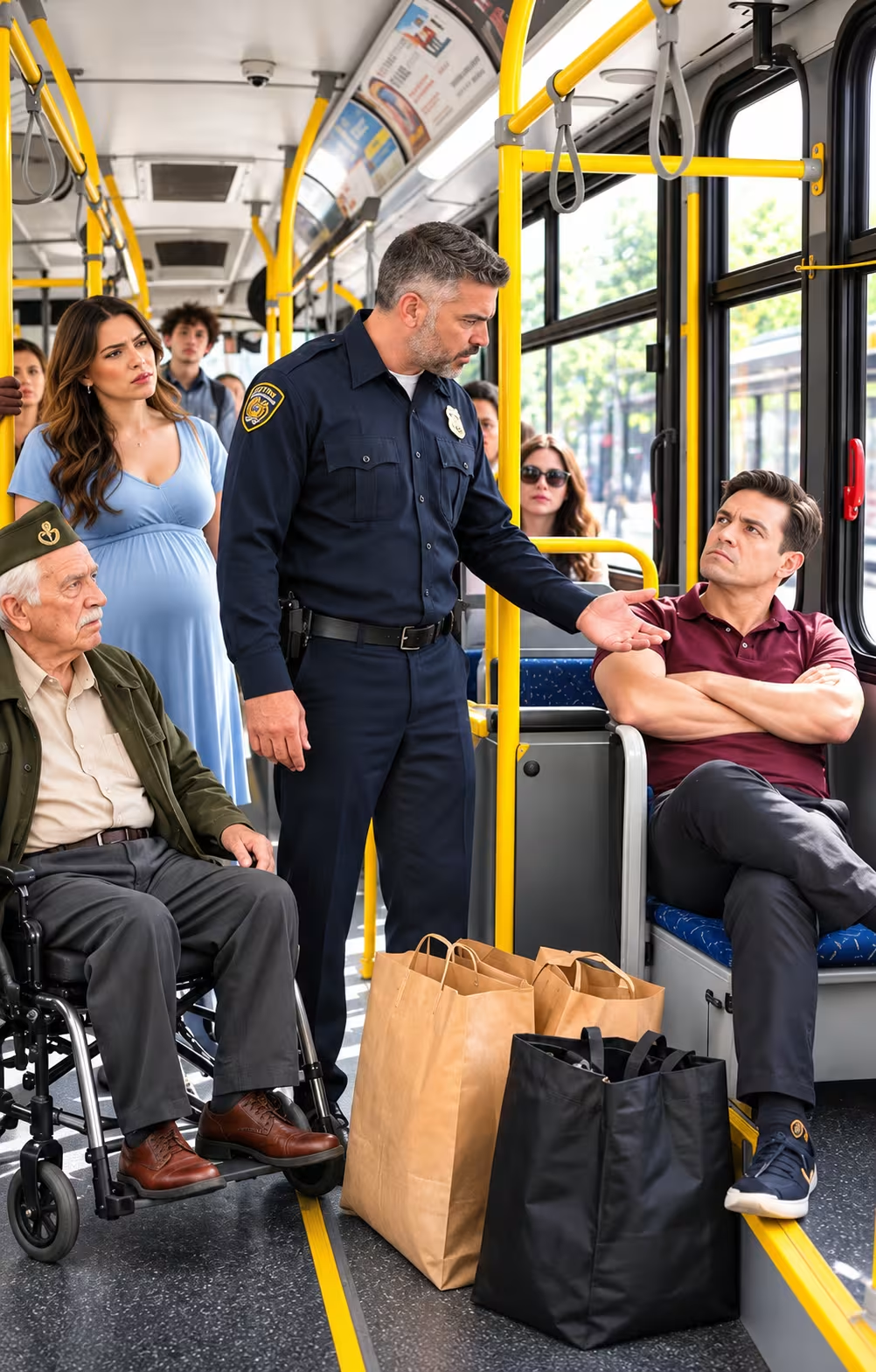
Natalie stood and approached the passenger sitting beside the shopping bags.
She explained that an elderly wheelchair user was waiting to board.
The passenger, a man named Darren, glanced toward the entrance.
He explained that his bags contained several items he had purchased that morning.
Natalie suggested placing them beneath his seat or holding them on his lap.
Darren appeared concerned that some of his belongings might become damaged.
He asked whether the elderly passenger could use another section of the bus.
Natalie calmly pointed toward the sign identifying the designated wheelchair space.
She explained that the area provided the necessary room for safe wheelchair positioning.
The bus driver also reminded Darren that the space needed to remain available for passengers using mobility equipment.
However, Darren continued expressing concerns about moving his purchases.
Arthur watched the conversation from outside the vehicle.
He had experienced similar difficulties before and did not want to inconvenience anyone.
Nevertheless, he needed to reach his scheduled medical appointment that morning.
Passengers Notice the Growing Delay
The driver temporarily paused the boarding process while the discussion continued.
Natalie offered to help Darren rearrange his shopping bags.
She noticed that several smaller bags could fit comfortably beneath nearby seats.
Another passenger offered some additional space beside his belongings.
Despite these suggestions, Darren remained hesitant.
He explained that he had purchased several fragile household items.
Natalie acknowledged his concern but emphasized that Arthur needed the accessible space.
Meanwhile, Arthur quietly asked the driver whether another bus would arrive soon.
The driver explained that waiting for the next service could significantly delay his journey.
Arthur looked down at the appointment reminder resting on his lap.
He had arranged the visit several weeks earlier.
Near the bus shelter, Police Officer Benjamin Hayes noticed the stationary vehicle.
The driver briefly explained the situation through the open entrance.
Benjamin approached Arthur and asked whether he required assistance.
After hearing his explanation, the officer stepped inside the bus to speak with the passengers.
A Police Officer Intervenes and Assists the Elderly Man
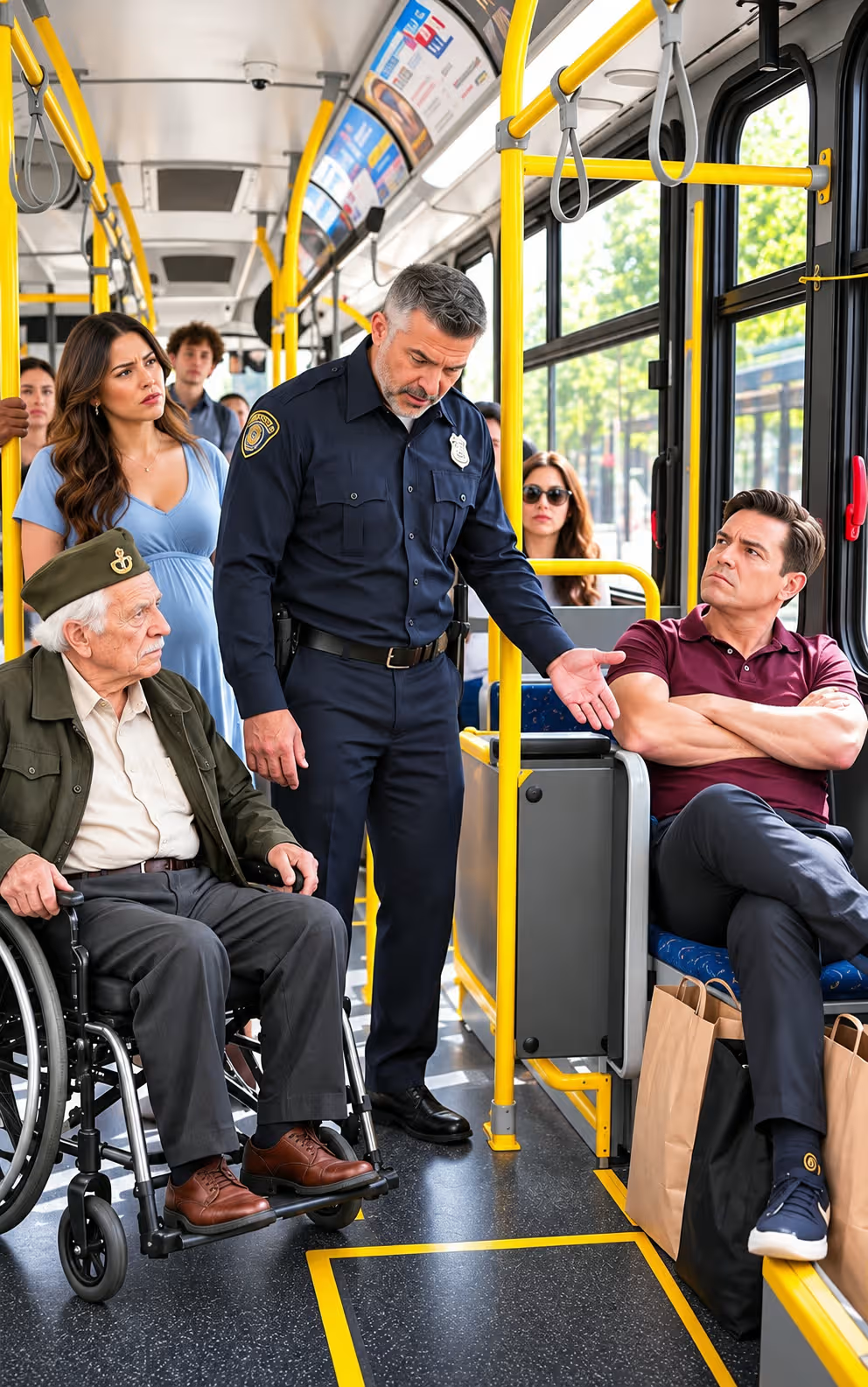
Benjamin greeted the passengers and calmly asked what had caused the delay.
Natalie explained that the shopping bags occupied the designated wheelchair area.
Darren described his concerns about safely transporting his purchases.
The officer listened to both explanations before examining the available space.
He pointed toward the accessibility sign and explained its importance.
Benjamin reminded Darren that passengers using wheelchairs needed appropriate room to travel safely.
He then suggested several practical arrangements for the shopping bags.
With assistance from Natalie and another passenger, Darren began relocating his belongings.
The fragile items were placed securely beside his seat.
The remaining bags were positioned without obstructing the aisle.
Once the wheelchair area was clear, Benjamin returned to the entrance.
He asked Arthur whether he would appreciate assistance boarding the vehicle.
Arthur welcomed the offer and thanked him.
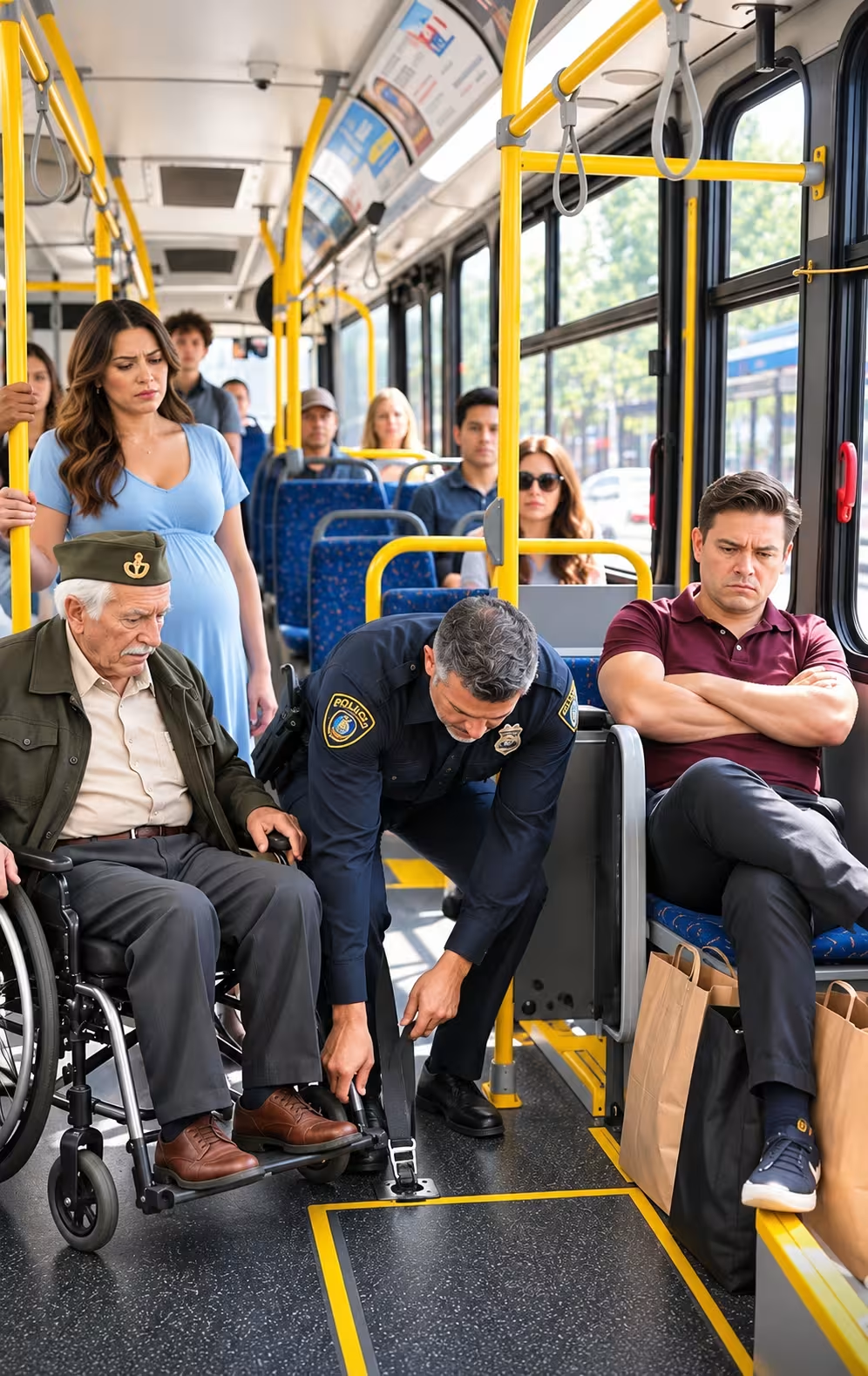
The driver operated the wheelchair ramp while Benjamin provided assistance with Arthur’s permission.
Together, they helped him reach the designated area comfortably.
The driver then ensured that Arthur’s wheelchair was positioned and secured according to the vehicle’s accessibility procedures.
A Comfortable Journey After the Misunderstanding
Arthur thanked Natalie for noticing the occupied wheelchair area.
He explained that public transportation played an important role in maintaining his independence.
Without accessible buses, attending appointments and completing everyday errands would become considerably more difficult.
Darren listened quietly as Arthur described his routine.
He appeared to understand why the designated space was necessary.
After a brief conversation, Darren apologized for the inconvenience.
Arthur accepted his apology and expressed appreciation for everyone’s assistance.
Benjamin checked that the aisle remained clear before preparing to leave.
He thanked the passengers for cooperating and helping resolve the situation.
The driver confirmed that everyone was ready to continue.
As the bus departed, Natalie returned to her seat.
Arthur looked through the window at the familiar neighborhood streets.
Several passengers resumed their conversations, and the atmosphere gradually became relaxed again.
Darren carefully adjusted one of his shopping bags to ensure it remained out of the way.
The remainder of the journey continued without further difficulties.
A Small Gesture With Lasting Meaning
Arthur arrived at the medical center with enough time to attend his appointment.
Before leaving the bus, he thanked Natalie and the driver once again.
Natalie wished him a pleasant afternoon before continuing toward her workplace.
Throughout the day, she occasionally thought about their brief encounter.
She realized how easily an occupied wheelchair area could affect another person’s plans.
Several days later, Natalie noticed another passenger voluntarily clearing the accessible space before someone boarded.
The simple gesture reminded her of Arthur and their shared bus journey.
In this fictional story, a woman asked a passenger to remove his shopping bags from a designated wheelchair area.
A police officer intervened, encouraged cooperation, and assisted an elderly man with boarding.
The situation was resolved through respectful communication and practical assistance.
It also highlighted the importance of keeping accessible spaces available for those who need them.
For Arthur, the experience meant being able to continue his ordinary routine without sacrificing his independence.
Sometimes, making a little room for someone else can mean giving them the freedom to continue living their life with comfort, confidence, and dignity.