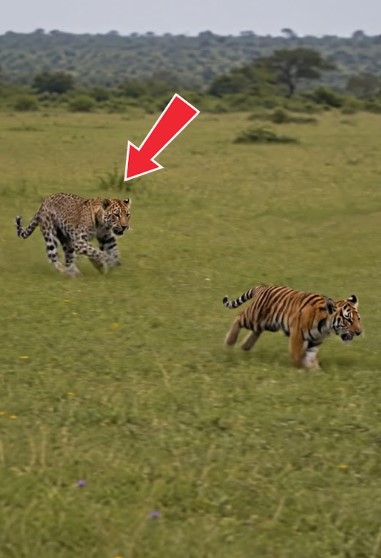
The quiet of the forest changed in an instant when a leopard appeared near a young tiger cub.
The cub had been exploring the area close to its family when the unfamiliar predator moved into view. For a few moments, the animals watched one another, creating an unusual scene that demanded careful attention.
Then the adult tiger noticed.
The mother tiger immediately moved toward her cub, closing the distance while keeping her eyes on the leopard.
The young tiger stayed close as the adult stepped forward, turning an uncertain wildlife encounter into a powerful display of parental instinct and protection.
The scene unfolded in a remote natural environment where large predators share overlapping territories.
Tigers and leopards can sometimes move through the same broad landscapes, although direct encounters between them are relatively uncommon.
When they do cross paths, both animals rely heavily on awareness and instinct.
The young tiger had been exploring near its mother when the leopard appeared.
At first, the leopard remained at a distance. The cub watched carefully, seemingly curious about the unfamiliar animal.
It moved only a short distance before pausing again.
The adult tiger was nearby.
She noticed the leopard and immediately shifted her attention toward the cub. Rather than leaving the young animal to approach the unfamiliar predator, she moved closer and positioned herself between the two.
The cub responded by staying near her.
The leopard continued watching.
For several moments, all three animals remained aware of one another. The tiger’s body language became more focused as she kept her attention on the leopard while also checking on her cub.
The young tiger moved behind the adult.
This simple movement changed the situation. The cub was no longer standing alone in the open area. It was now close to its mother, who remained alert and ready to guide it away if necessary.
The leopard eventually began shifting its position.
The adult tiger followed the movement with her eyes, making sure the cub remained close. She did not need to chase the leopard across the landscape. Her presence and position were enough to communicate that the cub was under the protection of an adult.
The leopard paused again.
The tiger remained still.
The cub stayed behind her.
This quiet standoff continued for a short time, with each animal assessing the others.
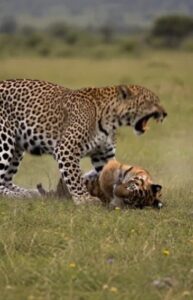
Wildlife encounters are often less dramatic than they may appear in a single frame.
Animals use posture, distance and movement to communicate, and sometimes simply maintaining space is enough to prevent an encounter from becoming more serious.
Eventually, the leopard began moving away from the area.
The adult tiger watched until the distance increased. Only then did she turn her attention fully back toward her cub.
The young tiger remained close.
It appeared to follow its mother as she moved toward a more sheltered part of the territory.
The cub had been given the opportunity to continue exploring, but now it stayed within a much safer distance of the adult.
The encounter had ended without the need for prolonged confrontation.
For anyone witnessing the scene, it was a remarkable glimpse into the relationship between a tiger and its young. Tiger cubs spend their early lives learning from their mothers, gradually developing the skills they will need to navigate their environment.
During this period, staying close to an experienced adult is extremely important.
The adult tiger’s behavior demonstrated how closely she monitored her surroundings. She recognized the leopard’s presence and immediately made sure the cub was not left alone near another large predator.
Her response was driven by natural parental instincts.
The leopard, meanwhile, eventually continued through the surrounding habitat. It was not necessary for the animals to remain in the same area, and increasing the distance allowed the encounter to end naturally.
This kind of moment also highlights the importance of respecting wildlife boundaries. Tigers and leopards are wild predators, and people should never attempt to approach them or interfere in encounters between them.
Wildlife observers and photographers generally rely on distance, patience and specialized equipment to watch animals safely. Keeping enough space allows animals to behave naturally and reduces the possibility of causing unnecessary stress.
For the tiger cub, the encounter became an opportunity to remain close to its mother and learn from her behavior.
Coming Close to the Wrong Cub! Protective Tiger Confronts Leopard pic.twitter.com/fGMhRmpyjq
— Animal Rescue Stories (@AnimalStory5) August 11, 2026
What should you do if you find an animal/person in this situation?
Keep a very safe distance and never interfere with wild predators. If observing wildlife, remain inside a designated viewing area or vehicle and follow guidance from trained wildlife professionals.
Should you try to help the animal/person yourself?
No. Encounters involving large predators such as tigers and leopards should never be approached directly. Give the animals space and allow qualified wildlife professionals to manage any genuine concern.