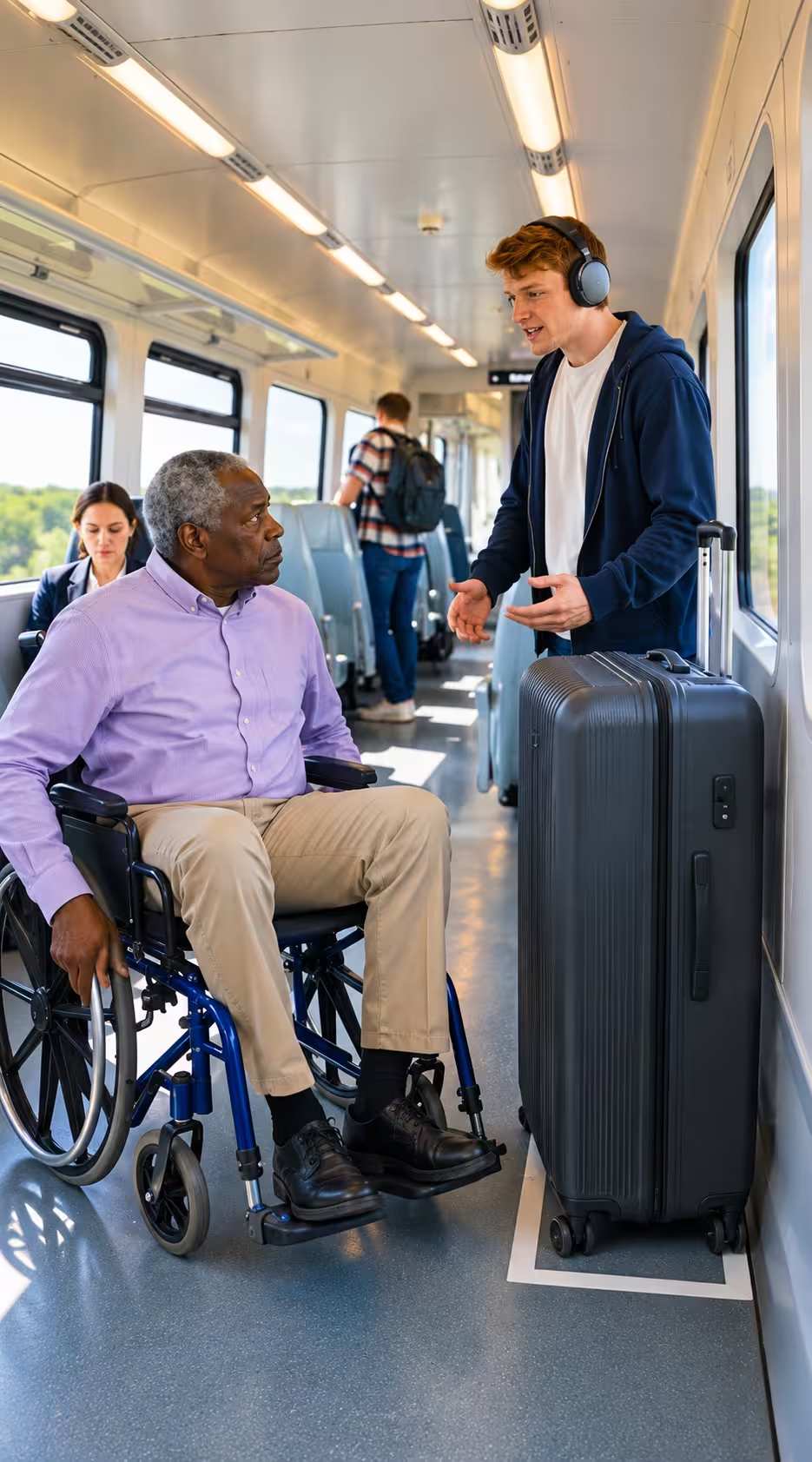
An Unexpected Conversation During a Morning Train Journey
Arthur Bennett had barely settled into his wheelchair space when another passenger approached him.
The morning train was crowded, and several travelers were searching for available seats.
A man carrying a leather briefcase stopped beside Arthur and examined the surrounding area.
“Excuse me, sir. Is someone sitting in that seat?” he asked.
Arthur looked toward the empty companion seat beside his wheelchair.
“No, you’re welcome to sit there,” he replied.
The passenger introduced himself as Richard Collins and placed his briefcase overhead.
Their conversation began pleasantly, but something soon caught Richard’s attention.
Arthur kept checking a folded paper inside his jacket pocket.
When Richard asked whether he needed assistance, Arthur hesitated before answering.
He was traveling to an important appointment, but there was one problem he hadn’t expected.
A Journey That Required Careful Planning
Arthur was seventy-eight and had used a wheelchair for several years.
He lived alone in a small town outside the city.
That morning, he was traveling to attend his granddaughter’s university graduation.
His daughter had arranged an accessible train ticket several weeks earlier.
She had also confirmed that assistance would be available at his destination.
Arthur had insisted on making the journey independently.
He wanted his family to see that he could still manage important occasions.
Richard listened as Arthur explained the arrangements written on his folded itinerary.
The paper included his train number, arrival time, and assistance booking reference.
However, Arthur had noticed something concerning shortly after boarding.
The destination printed on his ticket was not the station listed on his granddaughter’s invitation.
Richard examined both documents and noticed the difference immediately.
The ticket showed Central Station, while the graduation venue was near Riverside Station.
Arthur had assumed the two stations were connected by an accessible shuttle.
Unfortunately, his itinerary contained no confirmation of that service.
Richard suggested speaking with a train employee before they reached the city.
Arthur agreed, although he worried about arriving late.
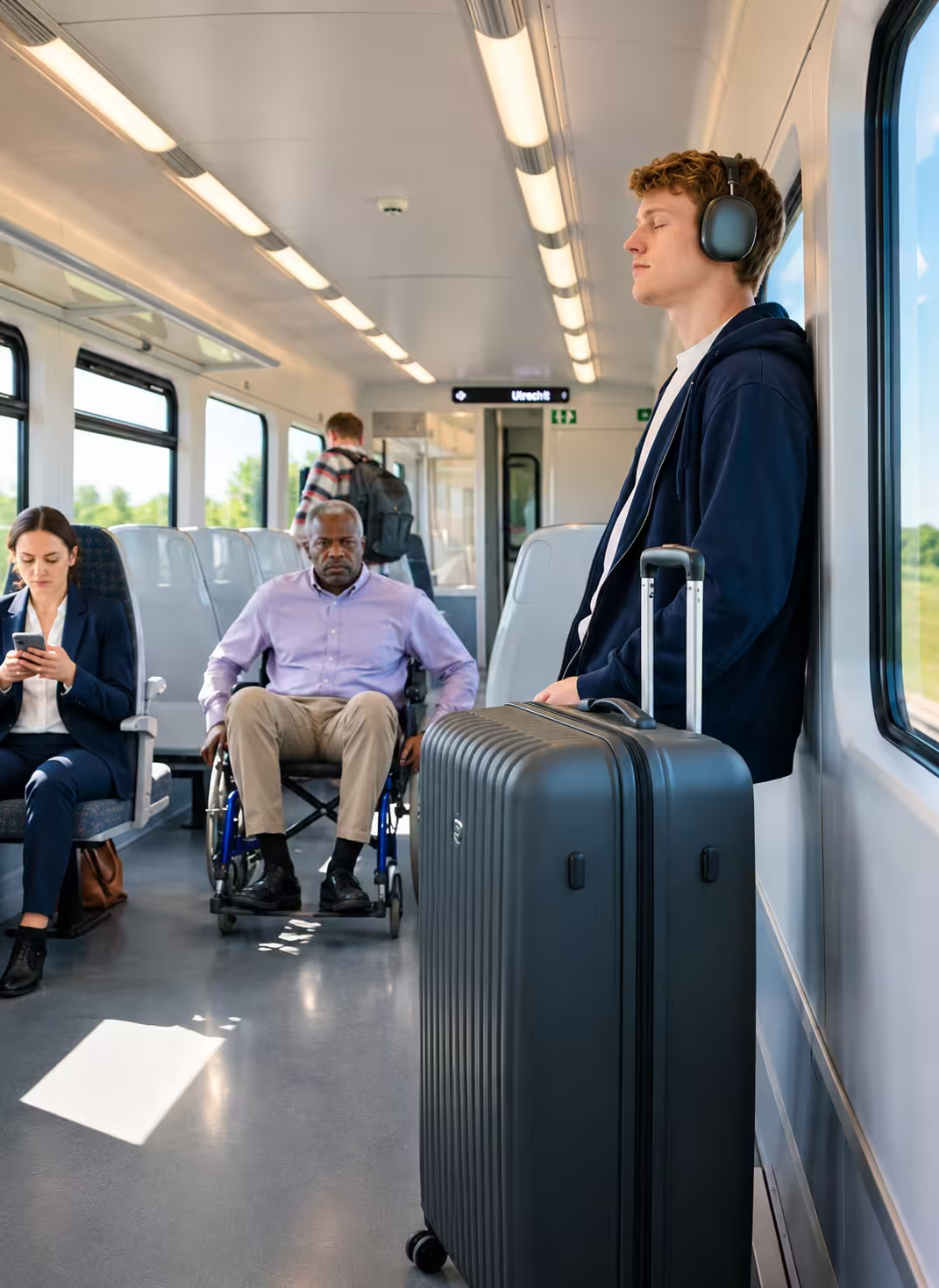
A Passenger Notices an Important Detail
Richard checked the train’s route information displayed above the carriage doors.
Riverside Station was listed as a stop before Central Station.
Arthur leaned forward to examine the display more closely.
“If we stop there, perhaps I should get off early,” he suggested.
Richard hesitated because the decision was not necessarily straightforward.
Arthur’s assistance booking had been arranged specifically for Central Station.
Leaving at another stop might mean nobody would be waiting with the required equipment.
Richard also noticed that Riverside Station had a warning beside its name.
The display indicated that some platforms had limited step-free access.
Arthur explained that he could not safely leave the train without assistance.
The gap between the carriage and platform was too wide for his wheelchair.
Richard suggested waiting until they could speak with a member of staff.
He pressed the passenger assistance button near the accessible seating area.
A recorded message confirmed that a crew member had been notified.
Arthur checked his watch and calculated the remaining journey time.
His granddaughter’s ceremony would begin less than an hour after the train arrived.
He could not afford a complicated transfer or an unexpected delay.
The Employee Arrives With New Information
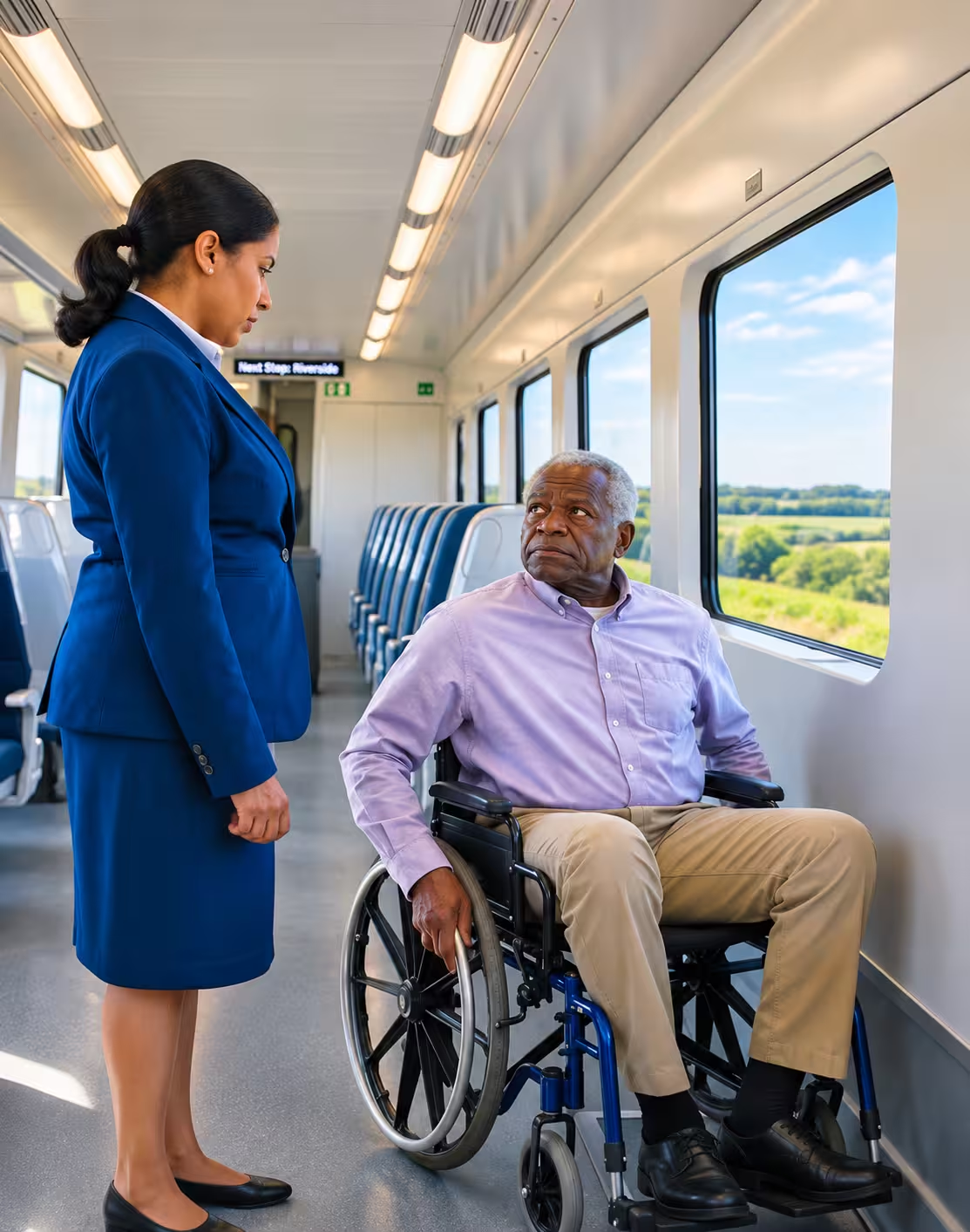
Several minutes later, a female train employee entered the carriage.
Her name badge identified her as Claire Morgan, the onboard customer service supervisor.
She greeted Arthur and asked how she could help.
Richard explained the difference between the ticket destination and the graduation venue.
Claire examined Arthur’s documents and checked the assistance booking on her handheld device.
The reservation was valid, but it listed Central Station as the arrival point.
She then checked the accessibility information for Riverside Station.
Unfortunately, the platform used by their service had no working elevator that morning.
The station’s alternative exit involved stairs, making it unsuitable for Arthur.
Claire explained that leaving the train there would not be a safe option.
Arthur looked disappointed, but he appreciated receiving a clear explanation.
He showed Claire the address printed on his granddaughter’s graduation invitation.
She recognized the university building and checked its location.
The venue was closer to Riverside, but Central Station offered an accessible street exit.
Claire suggested arranging accessible transportation directly from Central Station to the university.
The remaining question was whether a suitable vehicle could arrive in time.

A Different Plan Begins to Take Shape
Claire contacted the station assistance team through her work phone.
She explained Arthur’s destination, mobility requirements, and expected arrival time.
The coordinator confirmed that staff would meet him at Central Station.
However, accessible transportation was not included in his original reservation.
Claire asked whether the station’s approved taxi provider had an available wheelchair-accessible vehicle.
While she waited for confirmation, Richard helped Arthur check the graduation schedule.
The invitation showed that graduates would enter the auditorium before the ceremony began.
Arthur worried that he might miss his granddaughter walking onto the stage.
Claire returned with encouraging news from the station coordinator.
A wheelchair-accessible taxi could be requested for their scheduled arrival.
The provider estimated that the journey would take approximately fifteen minutes.
The timing remained tight, but Arthur now had a practical route.
Claire confirmed the pickup arrangements and recorded the vehicle booking reference.
She also contacted the station team to coordinate the train’s arrival.
Richard wrote the updated details on the back of Arthur’s itinerary.
When the train reached Central Station, Claire personally checked the platform arrangements.
A station employee arrived with the boarding ramp and positioned it securely.
Arthur carefully rolled down the ramp while Richard carried his small travel bag.
For the first time that morning, the journey seemed manageable again.
A Meaningful Arrival at the University
Outside the station, the accessible taxi was waiting near the designated pickup area.
The driver introduced himself and secured Arthur’s wheelchair inside the vehicle.
Richard handed over the travel bag and wished Arthur a wonderful graduation day.
Arthur thanked him for noticing the problem before they reached Riverside Station.
He also thanked Claire for coordinating the assistance without making him feel helpless.
The taxi arrived at the university shortly before the ceremony began.
An usher directed Arthur toward the accessible entrance beside the main auditorium.
His daughter was waiting there, holding a graduation program.
She smiled when she saw him approaching.
“I was beginning to wonder whether you’d make it,” she said.
Arthur explained that the train journey had required an unexpected change of plans.
His daughter listened as they moved toward their reserved seating area.
Moments later, his granddaughter Emma appeared near the auditorium entrance.
She had been checking whether her grandfather had arrived.
When she spotted him, she walked over and embraced him carefully.
Arthur smiled and told her he would not have missed the occasion willingly.
Together, they entered the auditorium before the graduates took their places.
The Journey That Became Part of the Celebration
Later that afternoon, Arthur sat with his family outside the university building.
Emma held her graduation certificate while relatives gathered for photographs.
Arthur described the conversation that had changed his morning journey.
A fellow passenger had noticed his uncertainty and helped examine his travel documents.
Their discussion revealed that his booked destination differed from the graduation location.
Claire’s arrival had provided the professional assistance needed to resolve the problem.
She confirmed the accessibility restrictions and arranged a safer alternative.
The station team then helped Arthur leave the train and reach his transportation.
Without those coordinated efforts, he might have faced an unnecessary delay.
Emma asked whether the experience had made him nervous about traveling independently again.
Arthur considered the question before answering.
He explained that independence sometimes included knowing when to accept assistance.
His daughter later contacted the railway company to recognize Claire’s helpful service.
Arthur also wrote a short thank-you message for Richard.
In this fictional story, an ordinary train conversation became an important part of a family’s celebration.
The journey had not gone exactly as planned, but Arthur reached the moment that mattered.
For Arthur, the greatest reward was seeing his granddaughter graduate while knowing he had made the journey to be there.