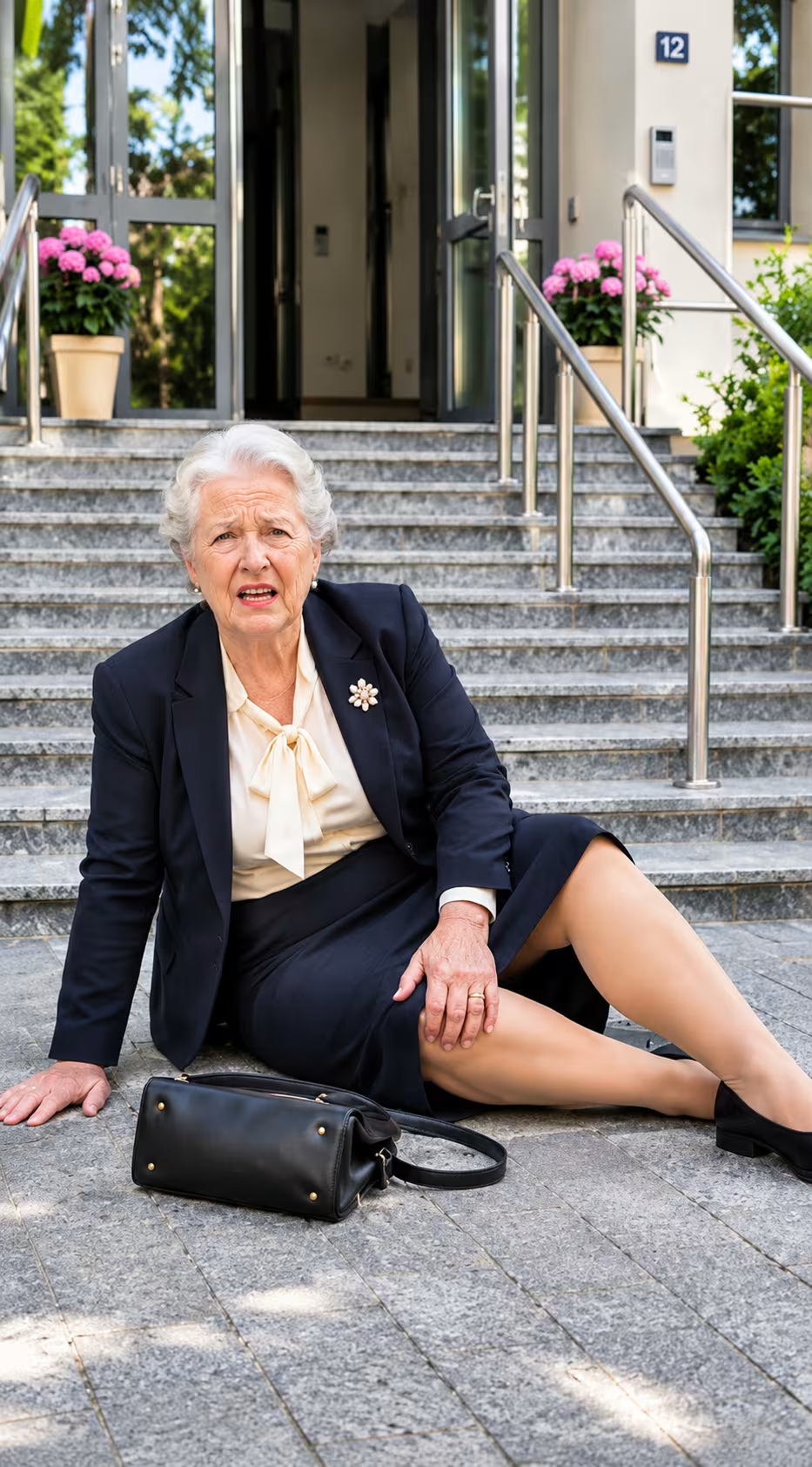
The elderly woman carefully descended a set of stairs, holding the railing as she approached the sidewalk.
Before reaching the final step, she lost her balance and fell beside the staircase.
A woman standing near the building noticed what had happened and immediately approached her.
She spoke reassuringly while checking whether the elderly woman needed medical assistance.
During their conversation, she learned that walking had become increasingly difficult for the older woman.
After arranging appropriate assistance, the woman returned with a powered wheelchair.
The elderly woman looked surprised as the wheelchair was positioned nearby, offering her a more comfortable way to continue her afternoon.
An Elderly Woman Determined to Remain Independent
Seventy-six-year-old Dorothy Ellis had lived in the same neighborhood for nearly four decades.
She enjoyed visiting local shops, attending community gatherings, and spending time outdoors.
However, mobility difficulties had gradually affected her ability to walk longer distances.
Simple activities that once required little effort had become increasingly challenging.
Dorothy remained determined to maintain her independence whenever possible.
Her family regularly encouraged her to consider additional mobility assistance.
Although she appreciated their concern, she had always preferred managing her daily activities independently.
That afternoon, Dorothy visited a community building to attend a small neighborhood gathering.
She spent several enjoyable hours speaking with friends and participating in familiar activities.
As the gathering concluded, Dorothy collected her handbag and prepared to return home.
She walked toward the building’s entrance, where several steps led down to the sidewalk.
Dorothy held the railing carefully as she began descending the staircase.
Several people were leaving through another entrance, unaware of the difficulties she was experiencing.

Losing Her Balance While Descending the Stairs
Dorothy moved slowly, concentrating on each step as she approached the bottom.
Her legs were already feeling tired after spending much of the afternoon outside.
As she reached the lower section of the staircase, she unexpectedly lost her balance.
Despite holding the railing, Dorothy was unable to steady herself completely.
She fell near the bottom of the stairs and remained on the ground.
Her handbag landed beside her, and several personal belongings slipped onto the pavement.
Dorothy attempted to understand what had happened before considering her next movement.
A woman named Rachel Monroe was walking toward the community building at that moment.
She noticed Dorothy sitting on the ground beside the staircase.
Rachel immediately approached and asked whether she needed assistance.
Dorothy explained that she had lost her balance while walking down the steps.
She also mentioned that standing independently would be difficult.
Rachel encouraged her to remain still while she arranged appropriate help.
She then contacted medical assistance and stayed beside Dorothy.
Learning About Dorothy’s Everyday Mobility Difficulties
While waiting for assistance, Rachel introduced herself and collected Dorothy’s scattered belongings.
She placed the handbag within reach and continued speaking calmly with her.
Dorothy explained that she had experienced increasing mobility difficulties over the previous several years.
Walking short distances was manageable, but stairs often presented additional challenges.
Rachel listened carefully as Dorothy described her daily routine.
She learned that the elderly woman frequently avoided certain locations because of accessibility concerns.
Dorothy admitted that she had considered using a wheelchair on particularly difficult days.
However, she had not yet arranged suitable mobility equipment.
Rachel worked with a community organization that provided accessibility support to local residents.
She was familiar with several resources available to individuals experiencing mobility limitations.
When medical personnel arrived, they carefully assessed Dorothy’s condition.
Fortunately, their initial examination revealed no apparent serious injuries.
After receiving professional guidance, Rachel discussed the possibility of arranging a powered wheelchair.
Dorothy welcomed the suggestion, hoping it would make returning home more comfortable.
Bringing a Powered Wheelchair and Helping Dorothy Sit Down
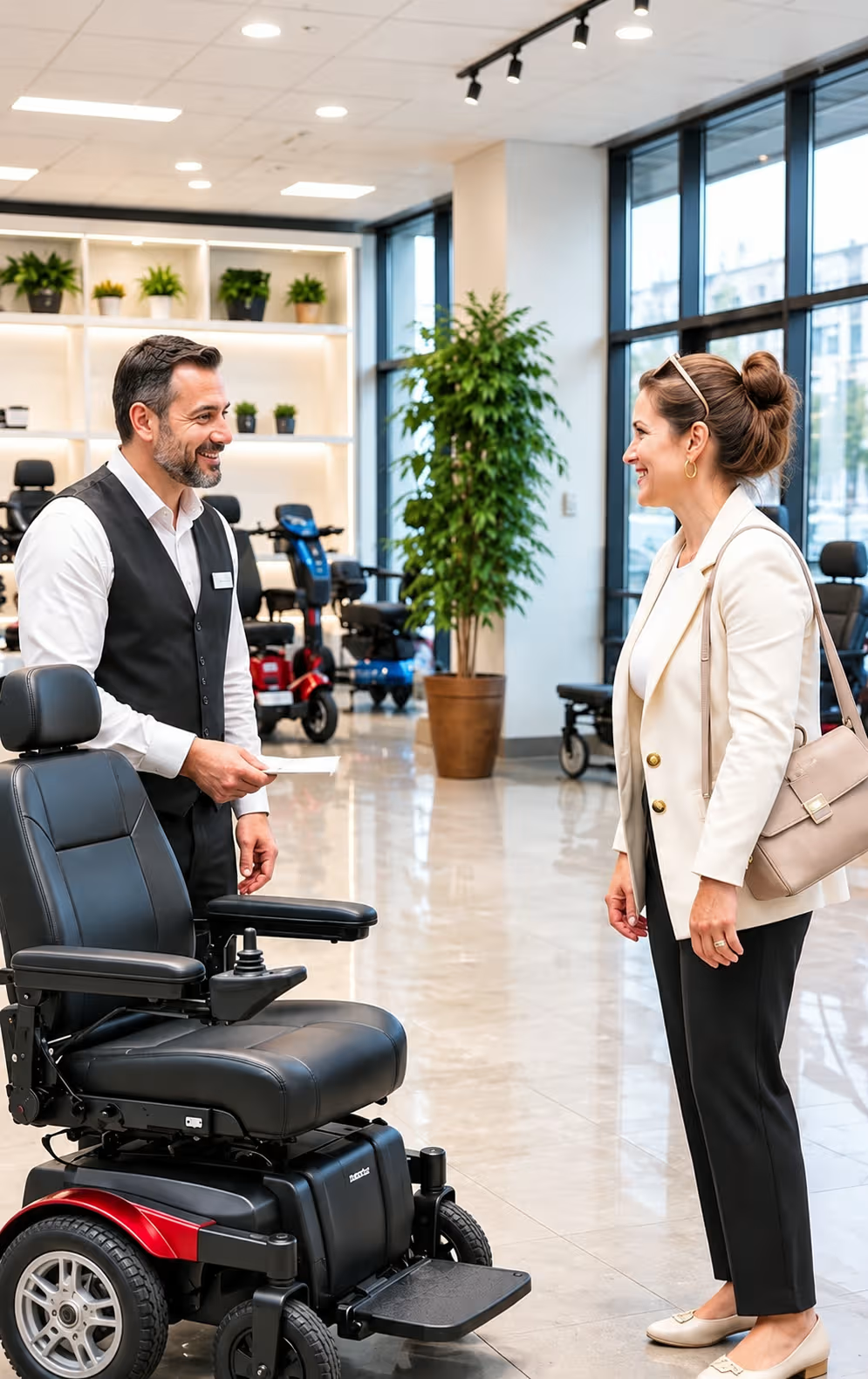
Rachel contacted a colleague at the community center and explained Dorothy’s situation.
The organization had a powered wheelchair available for temporary use by visitors requiring mobility assistance.
After confirming its suitability with the responding professionals, Rachel arranged to collect it.
Another community employee remained with Dorothy while Rachel retrieved the wheelchair.
Several minutes later, Rachel returned along the accessible pathway beside the building.
Dorothy noticed the powered wheelchair approaching and smiled with appreciation.
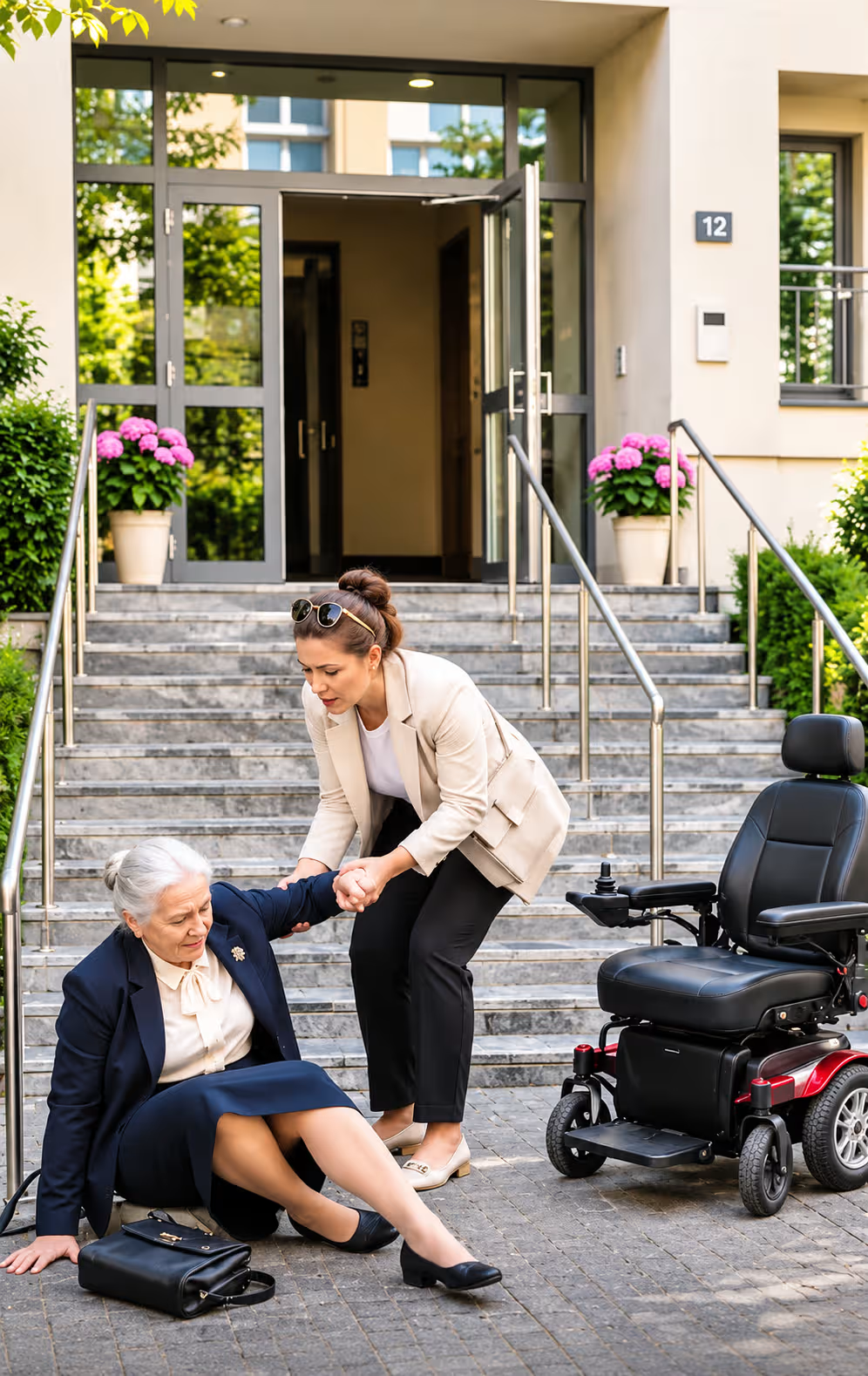
Rachel positioned it on a stable, level section of the pavement.
The medical personnel confirmed that Dorothy could safely transfer into the wheelchair with appropriate assistance.
Following their guidance, Rachel helped Dorothy move into a comfortable seated position.
She ensured that Dorothy’s handbag and personal belongings were placed securely beside her.
Dorothy rested against the wheelchair’s supportive backrest and expressed considerable relief.
Rachel explained that the equipment could help her travel without placing unnecessary strain on her legs.
A qualified community support worker subsequently demonstrated the wheelchair’s basic controls.
Dorothy listened attentively and appreciated having another option for moving around comfortably.
Discovering the Benefits of Additional Mobility Support
Rachel remained beside Dorothy while the community support worker explained the available assistance programs.
Dorothy learned that residents could request assessments for suitable long-term mobility equipment.
She had previously been unaware of several services operating within her neighborhood.
Rachel offered to help her contact the appropriate organization.
Dorothy agreed and provided permission for the necessary arrangements to be made.
After completing the recommended medical checks, she returned home with assistance from her family.
Over the following days, Dorothy discussed her mobility requirements with healthcare professionals.
An assessment helped determine whether a powered wheelchair would be appropriate for her daily activities.
Her family supported the decision and helped prepare her home for easier accessibility.
Dorothy gradually became more comfortable accepting practical assistance when necessary.
She realized that mobility equipment could support her independence rather than diminish it.
With suitable guidance, she began exploring more comfortable ways to complete familiar activities.
The experience encouraged her to approach everyday challenges with renewed confidence.
Returning to the Community With Greater Confidence
Several weeks later, Dorothy returned to the community center using a powered wheelchair suited to her needs.
She entered the building through its accessible entrance and greeted several familiar friends.
Rachel noticed her arriving and walked over to say hello.
Dorothy explained that the mobility equipment had made many everyday activities easier.
She could now attend gatherings without worrying as much about longer walking distances.
Her family was pleased that she remained active and connected to her community.
Dorothy thanked Rachel for noticing her situation and helping her explore available support.
Rachel was equally pleased to see Dorothy enjoying her familiar surroundings again.
In this fictional story, an elderly woman fell while descending a staircase outside a community building.
Another woman arranged appropriate assistance before bringing her a powered wheelchair and helping her sit comfortably.
Their encounter encouraged Dorothy to discover mobility resources that supported her everyday independence.
For Dorothy, receiving assistance became an opportunity to continue enjoying the activities and relationships that mattered most to her.
Sometimes, a thoughtful act of kindness can help someone rediscover the freedom, comfort, and confidence to enjoy life’s everyday moments.