The first thing Elena noticed was the glass. Thick, spotless, unforgiving glass that separated her from everything that mattered. It stretched from one side of the room to the other, reinforced and soundproof, with only a small intercom and a metal tray passing through the bottom. On one side stood her, clutching her coat, fingers trembling slightly. On the other side sat her father, older than she remembered, thinner, his hair almost completely gray now.
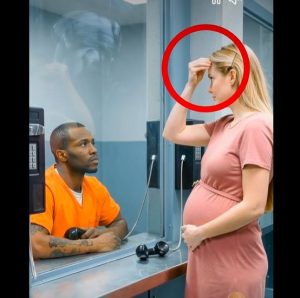
The room smelled faintly of disinfectant and cold air. Fluorescent lights hummed overhead, casting a pale glow that made everything feel distant and unreal. Elena had imagined this moment a hundred times during the past seven years, but no version in her mind had prepared her for how quiet it would be. No dramatic music, no emotional outburst. Just glass.
Her father lifted his hand slowly and pressed it against the barrier. Elena mirrored the gesture, her palm meeting his from the other side, separated by inches and an entire world of rules, mistakes, and lost time.
Seven years earlier, everything had fallen apart in a single night. A fight that spiraled out of control, a decision made in anger, a wrong place at the wrong time. The court records reduced it to dates, charges, and sentences, but Elena remembered the human details: the way her father had stood in the doorway that night, stunned and ashamed, whispering, “I’m sorry,” as police lights painted the walls red and blue.
At first, she had visited him often. Every month, sometimes twice. She brought photos, letters, and stories from the outside world. But life, relentless and indifferent, crept in. Work became demanding. Her mother fell ill. The visits grew less frequent, then stopped altogether. Each time she promised herself she would go again, guilt tightened around her chest like a knot she couldn’t untie.
“He’s not doing well,” the prison counselor had said gently. “If you want to see him, it might be a good idea not to wait.”
Now she was here, staring at the man who had once carried her on his shoulders, taught her how to ride a bike, and waited up every night until she came home safe. The glass felt cruel, almost mocking. Close enough to see every wrinkle, every tired line on his face, but far enough to remind her of everything they could no longer share.
“You look… grown,” he said finally, his voice crackling through the intercom.
Elena let out a shaky laugh. “You look stubborn. So I guess some things haven’t changed.”
His smile was small but real, and for a moment, the years between them softened. They talked about simple things at first. Her job. The weather. A neighbor who still asked about him. He listened intently, as if every word were a gift.
He shook his head firmly. “No. Don’t do that. You lived. That’s what you were supposed to do.”
There was so much more she wanted to say. How angry she had been. How afraid. How she sometimes hated him for leaving her alone to pick up the pieces. But there was also love, heavy and unmovable, sitting beneath everything else. Love that hadn’t disappeared just because walls and years had intervened.
When the visit ended, the guard motioned for her to step back. Elena stood frozen, unwilling to be the first to turn away. Her father pressed his hand to the glass again, eyes shining with unshed tears.
Those four words shattered something inside her. Not because she hadn’t heard them before, but because she hadn’t realized how desperately she still needed them.
As she walked out of the facility, the heavy doors closing behind her with a final metallic echo, Elena felt both broken and strangely whole. The glass had kept them apart physically, but it hadn’t stopped what truly mattered. Love had slipped through cracks no one could seal: memory, forgiveness, presence.
She began visiting regularly after that. Sometimes they talked. Sometimes they sat in silence, palms against the glass, sharing the space between heartbeats. She brought him books. He told her stories from his childhood she had never heard before. Slowly, carefully, they rebuilt something fragile but real.
The day he was released, there was no glass between them. Just open air, awkward hugs, and tears neither tried to hide. But even if that day had never come, Elena knew something now she hadn’t understood before.
Love doesn’t depend on freedom, perfection, or proximity. It survives concrete walls, thick glass, and years of regret. It waits. It adapts. It finds a way.