The white horse kept looking back.
Standing beside an old fence on a quiet farm road, the gentle mare pulled against the rope holding her in place. Only a few steps away, her young foals stood watching, confused and nervous because their mother could not reach them.
She tried again.
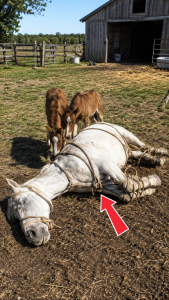
The rope tightened.
She stopped.
The mare wasn’t trying to escape.
She was trying to get closer to her babies.
The foals stayed near the fence, making soft sounds while the mother horse remained separated from them. The scene was unusual enough that a nearby farmer immediately realized something was wrong.
While checking the fields that morning, the farmer noticed the white horse standing in an area where she normally did not stay.
At first, he thought she was simply resting.
But as he approached, he saw the problem.
The horse had become tied near the fence, and the rope prevented her from moving freely.
The farmer carefully walked closer and noticed the foals waiting nearby.
The mother horse watched him closely, but she remained calm.
Instead of pulling on the rope or frightening the animal, the farmer decided to handle the situation carefully. He contacted an experienced animal handler and prepared to help safely.
While waiting, he stayed nearby and kept the area quiet.
The foals remained close to their mother, and the mare continued watching over them.
Moments like this remind us why responsible animal care and awareness are so important. Animals can become trapped or restricted by ropes, damaged fences, and other hazards if they are not checked regularly.
The rescue team soon arrived.
They carefully examined the situation before approaching the horse.
The mare appeared tired but healthy.
The foals were safe.
The main goal was simply to remove the restraint without causing stress.
The rescuers moved slowly.
They spoke softly and allowed the horse time to remain comfortable.
After several careful moments, the rope was gently loosened.
The white horse immediately stepped forward.
The first thing she did was walk toward her foals.
The young horses quickly moved closer, and the family stood together again for the first time that day.
Everyone watching smiled.
The mother horse lowered her head toward the foals as if checking that they were safe.
The reunion was peaceful.
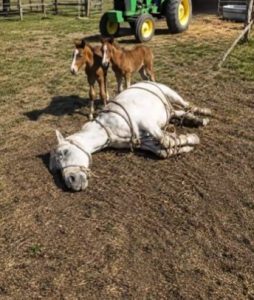
Afterward, the farmer inspected the area around the fence and removed anything that could create another dangerous situation.
He also repaired the section where the horse had become restricted, helping prevent a similar accident from happening again.
The rescue team explained that regular checks of pastures, fences, and animal areas can prevent many problems before they occur.
The farmer watched as the white horse and her foals walked together across the field.
Only a short time earlier, the mother had been unable to move freely.
Now the family was reunited.
It was a simple reminder that sometimes animals do not need a dramatic rescue.
Sometimes they just need someone to notice.
The farmer could have continued with his daily routine.
He could have assumed everything was fine.
But something about the horse’s behavior made him stop and look closer.
That decision changed the entire situation.
Animals often communicate through their actions.
A worried parent.
A nervous movement.
A repeated attempt to reach someone.
Paying attention to those signs can make a real difference.
As the afternoon sun covered the farm in warm light, the white horse grazed peacefully beside her foals.
The rope was gone.
The fear was gone.
The family was together again.
And because one farmer chose to step in, a mother horse and her babies were given the chance to continue their day safely, side by side.
Farmer Helps White Horse Found Tied Up Next to Her Foals pic.twitter.com/lpVCjJT3gO
— Animal Rescue Stories (@AnimalStory5) July 22, 2026
What should you do if you find a horse tied up or trapped?
If you find a horse tied up in an unsafe situation, approach carefully and avoid making sudden movements. Contact the owner, animal rescue services, or an experienced handler if needed. Keeping the animal calm while waiting for help is often the safest choice.
Can you rescue a trapped horse yourself?
If the horse is calm and the situation is safe, simple assistance may be possible. However, large animals can react unexpectedly when frightened. Professional help is recommended when a horse is injured, distressed, or difficult to safely release.