The road stretched quietly through the countryside, bordered by trees that leaned gently over the pavement and fields that shimmered under the afternoon sun. It was the kind of road most people traveled without much thought—just another route between places, where the scenery blurred by and small details were easy to miss.
But sometimes, one small detail changes everything.
A young woman was driving along that peaceful stretch when something unusual near the roadside caught her attention. At first, it looked like scattered feathers moving in the grass, perhaps debris stirred by wind. But as she got closer, she noticed sudden movement—uneven, desperate, alive.
She slowed immediately.
Then stopped.
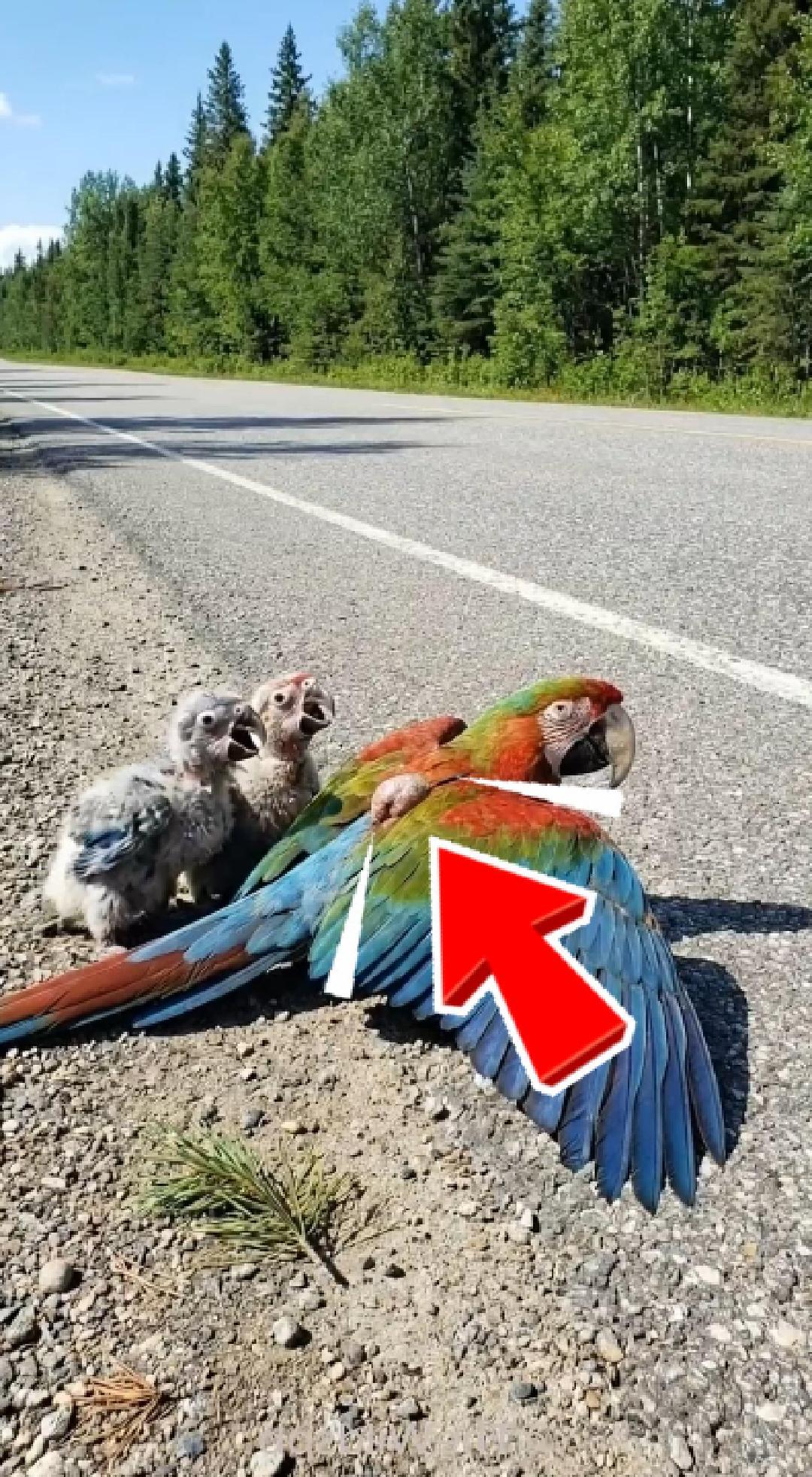
Near the edge of the road, partially hidden beneath low brush, was a mother parrot.
She was injured.
One wing was dragging awkwardly against the ground, its feathers bent and disordered, likely from a recent collision or failed escape from danger. She was not alone.
Beside her, barely protected by the grass, were two tiny chicks.
They were too young to fly.
Too small to defend themselves.
Their fragile bodies huddled close together, chirping faintly, completely dependent on the injured mother who was still trying—despite her pain—to shield them.
The sight was heartbreaking.
The mother parrot’s instincts had not faded, even in injury. She shifted weakly, placing herself between her chicks and the open roadside, where passing cars, predators, or exposure could end everything quickly.
Most drivers would never have noticed them.
But this girl did.
Without hesitation, she turned off her engine, stepped out, and carefully approached. She knew enough to understand that injured birds can panic easily, especially mothers protecting young. Sudden movement could make the situation worse.
So she moved slowly.
Her steps were cautious, her posture low, her voice soft and calm.
The mother parrot reacted immediately, lifting herself as much as she could, trying to appear stronger than she was. She spread her injured wing slightly in a weak defensive display, her body trembling with effort.
The girl stopped.
She understood.
This wasn’t aggression.
It was love.
A mother trying to protect her babies, even when she was barely able to protect herself.
The girl looked around quickly, assessing the danger. The roadside was no place for them to remain. Another passing vehicle, a stray animal, or even prolonged heat could become fatal.
She needed to act carefully.
Returning to her car, she grabbed a soft blanket and a small box from her trunk. It wasn’t professional rescue equipment, but it could provide safety and transport.
She returned slowly.
First, she focused on the chicks.
Using gentle movements, she carefully placed the blanket nearby and softly guided the tiny birds onto it. They were frightened, but weak enough to stay close rather than scatter.
Then came the mother.
This would be harder.
The parrot still tried to defend her young, despite obvious pain. The girl waited, allowing the bird to see that her chicks were not being harmed. When the mother noticed them being placed safely into the box, something changed.
Not full trust.
But enough.
The girl gently wrapped the injured bird in part of the blanket, securing her wings carefully to prevent further injury while minimizing stress. The mother resisted briefly, then settled when she realized her chicks were close by.
Within minutes, all three birds were safely inside the box—protected, shaded, and off the dangerous roadside.
The girl placed them carefully in her car and immediately changed her plans for the day.
Whatever she had been doing no longer mattered as much.
She drove straight to a local wildlife rehabilitation center.
During the drive, she kept checking on them at red lights and stops. The chicks remained close together, while the mother, though weak, stayed alert—her eyes never fully leaving her babies.
At the rescue center, trained staff quickly took over.
They confirmed that the mother parrot had likely suffered a wing injury, possibly from impact, but because help had arrived quickly, her chances were far better than if she had been left exposed.
The chicks, though vulnerable, were healthy enough to survive with care.
The staff praised the girl’s quick thinking.
Timing had mattered.
Without intervention, the family’s chances on the roadside would have dropped quickly.
The mother received treatment. Her wing was stabilized. The chicks were given warmth, food, and monitored care, always kept close enough to reduce unnecessary stress.
Days passed.
Then weeks.
The girl checked in often.
She wanted to know if they were healing.
And they were.
The mother parrot gradually regained strength. Her injury, though serious, was treatable. Her chicks grew stronger too, developing feathers and energy under careful supervision.