The restaurant sat on a quiet street corner, its warm lights spilling onto the sidewalk and illuminating the small, inviting sign above the door. It was the kind of place that had been in the neighborhood for decades, family-owned and known for its consistency, comfort, and a level of care that chain restaurants could never replicate.
The smell of simmering sauces, freshly baked bread, and roasted vegetables drifted through the open windows, drawing in patrons with both nostalgia and hunger.
That evening, the dining room was busy but not crowded. Families gathered around tables with laughter and clinking glasses, friends shared stories over steaming plates of pasta, and a few solo diners quietly worked on laptops or read newspapers.
Among the bustling tables, a man walked in who immediately stood out—not because he was loud or ostentatious, but because he didn’t fit the usual profile of the restaurant’s clientele.
He was dressed simply: a worn jacket, faded jeans, and scuffed shoes that had seen better days. His hair was slightly unkempt, and his hands bore the calluses of someone who worked with them. There was a quietness to him, a humility that contrasted sharply with the casual sophistication of the regular patrons. Some servers noticed him and exchanged glances, whispering quietly. A few customers glanced up, curiosity flickering across their faces.
The man hesitated for a moment at the entrance before a hostess approached him with a welcoming smile. “Good evening, sir,” she said politely. “Table for one?”
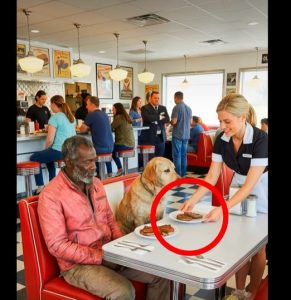
“Yes, please,” he replied softly, and followed her to a small table near the window. He seemed careful, almost apologetic, as if unsure he belonged.
Emily, the waitress assigned to his section, noticed immediately. She had worked at the restaurant for over four years and had grown accustomed to judging by experience, not appearances. She had learned that some of the most memorable meals came from people who might not have looked like they could afford the finest dishes. She approached the table with her usual professionalism, a gentle smile on her face.
“Good evening,” she said. “Can I get you something to drink while you look over the menu?”
“Just water, thank you,” he replied. His voice was steady but quiet, tinged with exhaustion.
Emily handed him the menu and gave him a moment. When she returned, she noticed the way he carefully considered each dish, weighing options not just on price but on flavor and substance.
She took his order with precision: a hearty steak, roasted vegetables, and a side of mashed potatoes—comfort food, but prepared with the restaurant’s usual attention to detail.
As the evening progressed, Emily watched him eat with a quiet dignity. He didn’t rush, nor did he fidget nervously. He savored each bite, his expressions subtle but telling: satisfaction, appreciation, and sometimes a small, contented smile.
Other customers glanced over occasionally, still wondering why someone dressed so plainly was dining in such a refined setting, but Emily treated him exactly as she would any other patron.
After finishing his meal, the man sat back, resting his hands on the table. Emily approached with a warm smile. “Can I get you anything else?”
“No, thank you,” he said. He reached into his pocket and pulled out a modest amount of cash. It was more than enough to cover the meal, though far from extravagant. “I appreciate the meal,” he added quietly.
Emily smiled. “It’s our pleasure. I hope you enjoy your evening.”
What she didn’t know was that this man, Mark, had recently experienced a series of hardships. He had lost his job after years of service, his savings were dwindling, and he had been struggling to make ends meet. That night, he had decided to treat himself—just once—to a meal that reminded him of better times.
To him, the respect and care Emily had shown were as important as the food itself. He felt seen, not judged, in a world that often assessed people by their appearance or perceived status. The warmth of the restaurant and the professionalism of its staff reminded him that dignity could exist even in difficult circumstances.
As he left, he paused at the door to thank Emily once more. “Thank you for treating me like a regular customer,” he said. “It means more than you know.”
Emily nodded, her smile genuine. “Everyone deserves respect, sir. I’m glad you enjoyed your meal.”
That evening, the restaurant continued to hum with life, unaware of the quiet impact they had on one solitary diner. But Mark walked home with a renewed sense of hope. A simple act—being served with respect, receiving attention and kindness without judgment—had lifted a weight he hadn’t realized he was carrying.