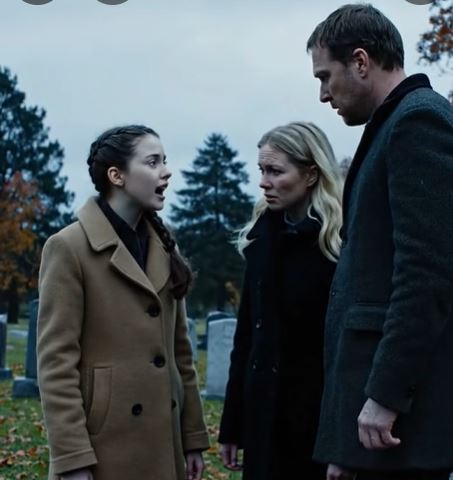
The sky was a dull gray the morning we buried my wife. Rain threatened to fall, leaving the earth soggy and heavy beneath our feet. Family and friends circled the grave, their faces drawn and solemn.

I stood there, numb, watching the coffin slowly descend into the soil. The world felt unbearably silent, and for the first time in decades, I truly felt the weight of loss pressing down on me.
But while I grieved, my son was elsewhere, smiling for photos beside his wife’s birthday cake. The images flashed across social media later that evening — balloons, laughter, candles — a stark contrast to the emptiness I felt at the cemetery.
My stomach twisted as I scrolled through the pictures. It wasn’t that he celebrated; it was that he seemed oblivious, detached, as if the life of his father’s mourning didn’t exist in his world.
I didn’t hear from him that night, and I didn’t expect to. But the next morning, there was a knock at my door. I opened it to find him standing there, impeccably dressed, a forced smile on his face, holding two cups of coffee in one hand and a thick folder of legal documents in the other.
“Morning, Dad,” he said cheerfully, as though the funeral had been a minor inconvenience in his schedule. “I thought we could get started on streamlining things — the will, the accounts, the estate. You know, make this easier for both of us.”
I stared at him, the scent of coffee doing nothing to soften the tension in the room. My fingers itched, not for paperwork, but for something stronger, something more primal: the urge to demand the respect, or at least the acknowledgment, that my grief deserved.
He took a seat across from me, laying the documents on the table with precision. “You don’t have to worry about any of this. Just sign here, here, and here,” he said, flipping through pages as though he were conducting a casual business meeting. “I just want to make sure things are settled correctly.”
I could feel the old patterns rising in me — the habit of compliance, of smoothing over conflicts for the sake of family harmony. But something in that moment, looking at his eyes so certain that my grief could be bypassed with a signature, ignited a rare determination.
“I’m not signing,” I said calmly, and he paused, caught off guard.
“What do you mean? Dad, this is just routine. We’re just getting things in order. You know how Mom would’ve wanted it,” he replied, trying to regain control.
“No,” I said again, firmer this time. “This is not routine. This is my grief. It is not a form to be processed, a transaction to be finalized. You cannot ‘streamline’ my loss, and you will not turn it into paperwork.”
His hands shook slightly as he tried to argue, but I remained seated, silent and immovable. I could see the frustration in his eyes, the disbelief that I — his own father — would resist what he considered the natural course of events.
“I am taking one final step,” I said, and for the first time, he realized this was not about money, not about property, not about convenience. “I will not let my grief be commandeered by your schedules, your assumptions, or your impatience. Mom’s memory is not a ledger, and I will honor it my way.”
The silence that followed was heavy, almost oppressive, but in that silence, the truth finally settled between us. My son, who had been so certain of control, so sure he could shape my reaction, understood for the first time that grief is not negotiable. It cannot be measured, it cannot be scheduled, it cannot be delegated.
He left that afternoon without another word. The documents remained untouched on the table, gathering dust beside my untouched coffee. And for the first time in years, I felt a quiet, resolute strength, knowing I had drawn a line — a boundary that even my own flesh and blood could not cross.
Weeks later, when he returned to reconcile, it was on my terms. We spoke slowly, cautiously, acknowledging our different ways of loving and mourning. But that day, the day I refused to hand over my sorrow like a signed contract, marked a turning point.
It shifted everything between us permanently — not with anger, but with the quiet power of self-respect and the enduring love for the woman we both had lost.
From that moment on, I realized grief is not a path anyone else can walk for you. And sometimes, the most profound act of love is simply standing firm and taking the step that no one else can take for you.