The puppy was trembling when Mark first saw it. Small, muddy, and soaked from the cold rain, it was huddled beneath a broken bench near the edge of the park, barely making a sound. Mark almost walked past. He was late, tired, and distracted by the weight of his own problems. Bills were piling up, his job felt uncertain, and the silence waiting for him at home had become unbearable. But something made him stop.
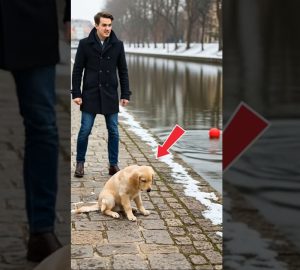
The puppy lifted its head just enough to meet his eyes. There was no bark, no whimper, only a quiet plea that didn’t need words. Mark sighed, crouched down, and slowly reached out his hand. The puppy didn’t move. It didn’t run. It just stayed there, shaking, trusting him without question. That trust hit Mark harder than he expected.
He wrapped the puppy in his jacket and carried it to his car, telling himself he would drop it off at a shelter and be done with it. He was not in a position to take on responsibility. He could barely take care of himself. Still, he stopped at the nearest gas station to buy food and a bottle of water, using money he had planned to save for the week.
At home, the puppy ate slowly, cautiously, as if afraid the food might disappear. Mark dried it with an old towel and noticed a thin scar around its neck, as if it had once worn a collar that had been ripped away. Someone had owned this dog. Someone had abandoned it.
That night, the puppy slept curled against Mark’s chest, its breathing steady and warm. Mark lay awake, staring at the ceiling, listening to a sound he hadn’t heard in years. Peace.
The next morning, Mark posted photos online, asking if anyone recognized the puppy. He called shelters. He checked lost pet listings. No one came forward. Days passed, then weeks. The puppy, whom Mark named Milo without even realizing he had done so, began to follow him everywhere. It waited by the door when Mark left for work and greeted him with uncontrollable joy when he returned. Slowly, something in Mark began to change.
Milo forced him into a routine. Morning walks replaced late mornings in bed. Conversations with strangers replaced silence. Mark laughed again, sometimes without realizing it, usually at the way Milo tilted his head or chased leaves like they were living things.
One afternoon, during a walk farther from home than usual, Milo suddenly froze. His ears went up, his body tense. Before Mark could react, Milo bolted toward a narrow alley behind an old warehouse. Mark shouted, panicked, and ran after him, heart pounding.
A man lay on the ground, barely conscious, blood seeping from a wound on his leg. A fallen ladder rested nearby. The man looked pale, his breathing shallow. Milo was barking now, frantic, circling the man and tugging at Mark’s pant leg as if demanding action.
Mark called emergency services immediately. He pressed his jacket against the wound, speaking to the man to keep him awake until help arrived. The paramedics later said that without intervention, the man would have bled out within minutes.
At the hospital, Mark learned the injured man was Thomas Hale, a well-known local entrepreneur and philanthropist. Mark didn’t recognize the name, and he didn’t care. He left quietly after giving his statement, assuming that was the end of it.
Two days later, a black car pulled up outside Mark’s apartment. A sharply dressed assistant stepped out, followed by Thomas himself, now on crutches. Milo barked once, then wagged his tail furiously, recognizing the man immediately.
Over coffee, Thomas listened as Mark explained how he found Milo, how he planned to give him away, and how everything had changed instead. Thomas was quiet for a long time. Then he told Mark the truth.