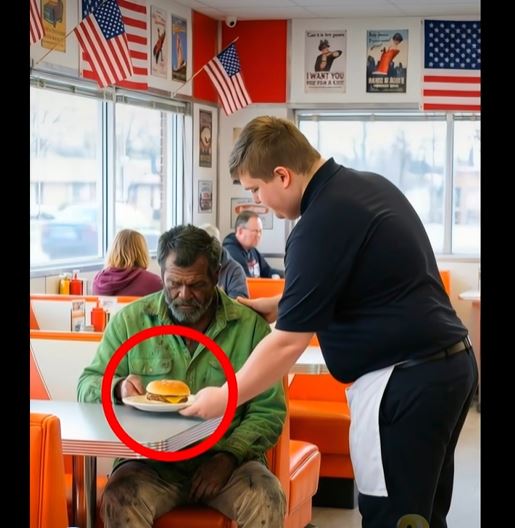
David Turner had built his restaurant from scratch. It was a small, cozy bistro tucked into a busy corner of the city, but over the years, it had gained a loyal following. Locals raved about the homemade pasta, the perfectly seared steaks, and the way the bread always seemed to come out warm from the oven.
David had poured everything into the place—long hours, sleepless nights, and more personal sacrifice than he cared to count. By the time he reached his mid-thirties, the restaurant was thriving, but so was the ego and entitlement of some of its patrons.
One morning, David found himself curious about something he had long wondered: how would people treat him if they didn’t know he owned the restaurant? Were his staff and regular customers treating him with genuine respect, or just because they assumed he was another wealthy man in a suit? He decided to conduct a little experiment.
He chose a quiet Tuesday for his plan, dressing in plain jeans and a simple hoodie, leaving behind his usual tailored shirt and expensive shoes. He tied his hair back loosely and wiped the faint traces of perfume and cologne from his neck. When he arrived at the restaurant, he left his car down the block and approached the front door as any regular person might, trying not to give himself away.
The hostess, a young woman named Claire, glanced at him as he entered. “Hi! Table for one?” she asked, her smile polite but neutral.
“Yes, please,” David said, trying to sound casual.
Claire led him to a small table near the window, one of the quieter spots in the dining room. David took a seat and watched as the restaurant buzzed around him. The servers moved with precision, balancing plates, clearing tables, and interacting with patrons, but he couldn’t help noticing something: the way some regulars glanced at him seemed subtly judgmental. A couple sitting near the bar muttered under their breath as he passed by, their eyes flicking to his plain clothes.
David watched quietly, sipping water and scanning the menu. His mind raced as he noted every small interaction: the server’s tone when she spoke to him, the way other diners treated him compared to those who appeared wealthier, and the subtle hierarchy that seemed to emerge based on appearances.
When the waitress returned to take his order, he asked for the daily special, a simple dish of grilled chicken with roasted vegetables. She smiled politely, taking his order with efficiency, but David noticed her enthusiasm was restrained compared to the excitement she often showed when serving regular patrons or those in suits.
As he waited, David observed more closely. A family of four at a nearby table waved at him—friendly, warm, seemingly without any judgment—but he realized these were exceptions. Many others treated him with polite indifference, subtle impatience, or even a quiet condescension. It stung more than he expected.
When his meal arrived, he noticed the attention to detail was still there: the chicken perfectly cooked, the vegetables tender, and the presentation flawless. Yet, the warmth of service felt different, as if he were simply another customer and not the person who had made it all possible. It was a strange, almost alien feeling, watching the life he had built being experienced by someone who seemed invisible.
Midway through the meal, the head chef, Martin, approached the table carrying a small side dish. “On the house,” he said, offering a warm smile. David looked up, momentarily startled. “I just wanted to make sure you enjoy it. We like to make our guests feel welcome.”
David nodded, impressed. Martin’s kindness was genuine, devoid of pretense or assumption. Even in his plain clothes, David could see that some people—those who truly cared about the craft—treated everyone with respect, regardless of appearance.
After finishing his meal, David quietly slipped out a generous tip, observing as Claire cleared the table without any recognition of who he was. As he walked toward the door, he caught snippets of conversations from other diners, laughter, complaints, and casual chatter, all indifferent to him personally. It was both enlightening and humbling.
Once outside, David paused on the sidewalk and allowed himself a small smile. The experiment had been revealing. While some people were polite, others indifferent, and a few subtly judgmental, he realized something crucial: respect, true respect, isn’t always automatic. It is given, earned, and sometimes withheld based on perception rather than reality.