The skyline of the city was a jagged edge of cold light, but for Silas, it had become a blur of shadows. Three years ago, he had stood at the top of that world. He was a man of high-stakes mergers, designer watches, and a calendar that dictated every second of his existence.
Then, the collapse happened—not just of the market, but of his life. A betrayal by a business partner he called a brother, a legal battle that drained every cent of his savings, and a divorce that stripped the very walls of his home. Within six months, the man who had everything was left with nothing but a suitcase and a pair of shoes that had forgotten what it felt like to walk on grass.
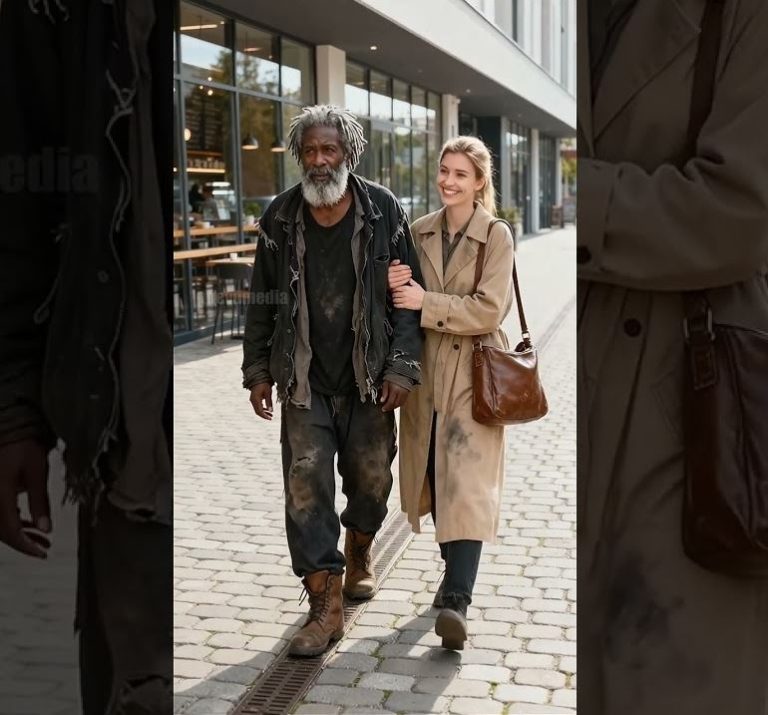
He spent a year in the gray margins of society, sleeping in shelters and working odd jobs that broke his hands and bruised his ego. He was a ghost of the man he used to be, a walking reminder that the higher you climb, the harder the earth feels when you hit it. He was the subject of pitying whispers from former colleagues who passed him on the street without making eye contact. He was, by every metric of the city, a failure.
But the city didn’t know that the vacuum left by his old life was being filled by something he had never possessed: a soul.
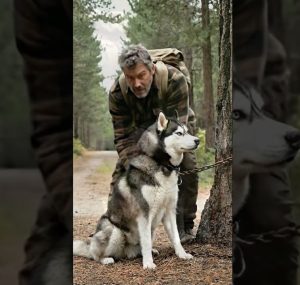
Now, Silas lives in a small, hand-built cabin on the edge of a forgotten valley in the Blue Ridge Mountains. He owns two shirts, a sturdy pair of boots, and a collection of cast-iron pans. He doesn’t have a car; he has a bicycle and a path that leads to the nearest town five miles away. His “office” is a workbench where he restores antique furniture, a craft he learned from a master carpenter during his year of wandering. He spends his mornings watching the mist roll off the ridges and his evenings reading by the light of a wood stove.
To his old circle in the city, Silas is a tragedy—a man who lost his “everything” and retreated to the woods. But when a former associate tracked him down last month to offer him a consulting job, a way to “get back on top,” he found a man he didn’t recognize. Silas was leaner, his skin tanned by the sun, his eyes no longer darting with the frantic anxiety of the next deal. He looked at the six-figure contract and politely handed it back.
“I don’t have time for that,” Silas said, his voice steady and rich. “I have to finish a cedar chest for a wedding, and the trout are biting down at the creek.”
The associate couldn’t understand. “Silas, you have nothing here. No status, no security, no legacy.”
Silas smiled, and it was a look of pure, unadulterated gold. “I have the sunrise,” he said. “I have a house that I know every nail of. I have neighbors who like me for my character, not my credit score. For the first time in fifty years, I own my time. I didn’t lose everything; I was finally relieved of the burden of carrying things I didn’t need.”
The ending explains why he is fnally living his best life. He realized that the “nothing” he was left with wasn’t a hole; it was a clean slate. He had traded the artificial roar of the world for the quiet hum of existence. He had found that when you strip away the layers of a man’s possessions, you finally find the man himself. He is living his best life because he no longer measures it by what he can buy, but by how deeply he can breathe. He was left with nothing, and in that emptiness, he found the entire world.