The storm warnings had been flashing on my phone for hours—red alerts, evacuation notices, messages begging people to stay off the roads. The hurricane was tearing up the coast, swallowing streets, snapping trees like twigs.
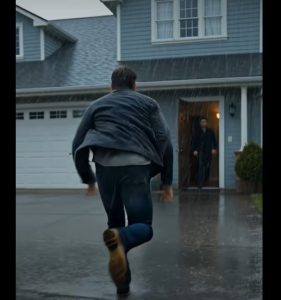
Rationally, I knew I shouldn’t go anywhere. But logic had never been what drove me when it came to my father. Guilt did. Regret did. And that night, regret was louder than the wind.
I hadn’t spoken to my father in eight years.
Not a call. Not a message. Not even a birthday card.
When I left home at twenty-two, I told myself I had no choice. We fought constantly—about my future, my choices, my stubborn refusal to live the life he thought was right for me. I wanted freedom. He wanted stability. Our arguments were volcanic, fueled by pride on both sides. The last thing I said to him still echoes in my head: “I don’t need you anymore.”
When I drove away that day, I didn’t look back. And for a long time, I convinced myself that meant I was strong.
The call came during the first wave of the storm. A number I almost didn’t recognize. The hospital. The nurse’s voice was calm, professional, and devastating. My father had suffered a major stroke. He was stable, she said, but weak. Very weak. “If there’s anything you need to say,” she added gently, “you should come as soon as it’s safe.”
The drive was a nightmare. Wind shoved my car sideways. Rain hit so hard it felt solid. Traffic lights were dead, streets flooded, debris everywhere. More than once, I thought about turning back. More than once, fear whispered that I might not make it at all. But another thought drowned everything else out: What if I’m already too late?
By the time I reached the hospital, soaked and shaking, my hands were numb—not from the cold, but from terror. The building was running on backup generators. The halls smelled like disinfectant and electricity. A nurse recognized my name immediately and led me down a quiet corridor.
This was the man who once seemed unbreakable to me. The man who carried heavy furniture by himself, who worked double shifts without complaint, who stood like a wall between me and the world when I was a child. Now he lay sunk into white sheets, his body thinner, his face pale, one side slack from the stroke. Machines hummed quietly around him, doing the work his body no longer could.
For a moment, I couldn’t breathe.
I had imagined this meeting a thousand times over the years—angry, cold, distant. I had rehearsed speeches where I defended myself, explained my absence, justified my silence. None of that mattered now. All I could see was time—lost, wasted, unrecoverable—etched into the lines of his face.
I took a step forward, then another.
“Dad,” I whispered.
His good eye shifted slowly toward the sound. It took a moment for recognition to spark. When it did, his lips trembled. He tried to speak, but only a faint sound came out. I rushed to his side, dropping into the chair like my legs no longer worked.
“I’m here,” I said quickly, desperately. “I’m here. I’m sorry. I’m so sorry.”
The words poured out of me, messy and broken. I apologized for leaving, for staying gone, for every missed call I never made. I told him I was angry back then, scared, stupid. I told him I thought distance would make things easier, but all it did was hollow me out. I told him I had driven through a hurricane because the idea of losing him without saying this was unbearable.
Tears blurred my vision. My chest hurt like it might split open.
My father lifted his hand slowly, every movement a struggle, and placed it over mine. His grip was weak, but it was there. Real. Anchoring.
I pressed my forehead against his hand and sobbed like I hadn’t since I was a child. All the anger I had carried dissolved into something raw and aching. I realized then that while I had been punishing him with my absence, I had been punishing myself even more.
We sat like that while the storm raged outside—father and child, reunited in the middle of chaos. He drifted in and out of sleep. I stayed. I held his hand through the night, through the howling wind, through the flickering lights. For the first time in years, I wasn’t running.
The damage outside was everywhere—flooded streets, shattered buildings, uprooted lives. But inside that quiet hospital room, something had been repaired. Not everything. Not magically. But enough.