The first time I noticed them, I was fourteen, hiding behind a mop closet, bucket in hand, scrubbing the polished floors of Hawthorne Prep. I had been transferred there that semester, a scholarship kid in a school that smelled of expensive cologne and the faint arrogance of privilege.
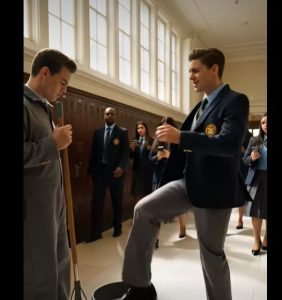
The hallways gleamed, the classrooms smelled faintly of fresh paint and leather-bound books, and everywhere I looked, wealth announced itself: designer backpacks, gold-plated pens, shoes that looked like they cost more than my entire wardrobe.
I was invisible. That was the plan. I didn’t want attention. Not the kind that came with curiosity or ridicule. My uniform was plain, my shoes scuffed, and my hands were always rough from cleaning chemicals and scrubbing pads. If anyone noticed me at all, it was only to whisper, “Who’s the janitor?” and move on.
But fear clung to me like a second skin. The rich kids—snobby, sharp, and painfully perceptive—always seemed to sense everything. I imagined them peering around corners, smirking, ready to expose me. To call me less than. To humiliate the invisible kid in the janitor’s uniform. So every day, I scrubbed, polished, and mopped with my head down, heart racing, afraid even of breathing too loudly.
They called themselves the elite circle: the juniors with perfect hair, perfect grades, perfect lives. I never wanted to be part of their world—I only wanted to survive it. But the irony was suffocating: I wanted desperately not to exist, yet part of me craved recognition, craved to be seen as more than invisible.
The fear wasn’t irrational. One slip, one spilled mop bucket, and the ridicule would follow me through every hallway, echoing in my ears long after school ended. I memorized their schedules, the patterns of their laughter, the way they clustered in groups, whispering judgments I would never hear. I counted the tiles on the floors, scrubbed extra polish into the corners, and learned every lock and key in the janitor closets, because my survival depended on knowing how to move unseen.
Weeks passed. Months. I existed in a state of quiet panic, yet strangely proud. I could navigate the school without being noticed. I had mastered invisibility. It was a skill no rich kid could buy, and no teacher could measure.
Then came the day that changed everything.
It was during the winter gala, an event that every student dreaded or adored depending on their social standing. I had been tasked with cleaning the gym between dances, moving tables, wiping spilled punch, and emptying trash. I worked silently, mopping under glittering chandeliers, my reflection ghostlike in the polished floor.
That’s when I heard it—a gasp, sharp and stunned. I froze mid-swipe, heart pounding, and slowly looked up. Across the room, one of the richest girls in school—Claire Vanderbilt, known for her biting wit and perfect posture—stood staring at me. Her friends followed her gaze. And then the whispers began.
“I… I didn’t know…” Claire stammered.
My blood ran cold.
I braced myself for the humiliation I had rehearsed in my head for years: mocking laughter, whispered insults, social exile. But instead, something unexpected happened. Claire’s eyes softened. “You’ve been cleaning all this time? Look at these floors…” She stepped forward, as if noticing me fully for the first time. “…They’re immaculate. You’ve done this all night?”
Her friends looked unsure, some whispering, others nodding, but the tension in the room shifted. No laughter. No ridicule. Just surprise. Appreciation.
Something cracked inside me. I realized that while I had been paralyzed by fear, hiding from everyone, I had also been proving something quietly: diligence, persistence, care. In my invisible work, I had left a mark that even the richest, most judgmental kids could not ignore.
Claire walked over, offered her hand, and smiled. “I’m sorry we never noticed before. You’re incredible.”
I took her hand, heart still racing, not because of the compliment, but because for the first time, I felt seen—not for my mistakes, my clothes, or my background, but for who I was and what I could do.
From that day on, the invisible janitor was no longer completely invisible. The rich kids began to acknowledge me—not mock me, not pity me, but respect me. And I began to understand something vital: fear had kept me paralyzed, but courage didn’t have to be loud. Sometimes, courage is scrubbing a floor in silence, and waiting for the world to finally notice the strength it takes to do the work no one else will.