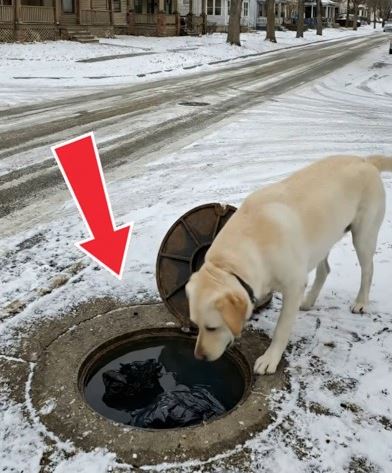
In the modern era, we have surrounded ourselves with the pinnacle of technological achievement. We have mapped the stars, split the atom, and connected the globe through an invisible web of data. Yet, for all our sophistication, we are the only species on Earth that creates “trash”—waste that the planet cannot digest. When we see a dog like Barnaby picking up a plastic bottle, the viral fame he receives is rooted in a collective sense of guilt. We find it “extraordinary” because it highlights how “ordinary” our own negligence has become.
The Paradox of Human Intelligence
The tragedy of human responsibility lies in our capacity for abstraction. A Golden Retriever is responsible because it exists in the now. It sees a foreign object in its environment, feels the instinct to retrieve, and completes the cycle. There is no internal monologue questioning if someone else will do it, or if the “system” is rigged.
Humans, conversely, are often victims of our own complexity. We have developed the “Bystander Effect” on a global scale. When we see litter, we think:
-
“I didn’t put it there, so it’s not my job.”
-
“The city pays someone to clean this.”
-
“My one small action won’t make a difference in a world of eight billion people.”
The Myth of “Away”
One of the greatest failures of human responsibility is the invention of the word “away.” When we throw something “away,” we operate under the delusion that it has ceased to exist. In reality, “away” is simply someone else’s backyard, an ocean gyre, or a landfill leaching into a water table.
Animals do not have a concept of “away.” For a dog, the trail is his home. For a whale, the ocean is her living room. When humans lost the nomad’s respect for the land and the farmer’s intimacy with the soil, we developed a “disposable” mindset. We began to treat the Earth like a hotel room rather than a home—somewhere we can leave a mess because we assume someone else will clean it up before the next guest arrives.
The Burden of Intent vs. The Beauty of Instinct
If only humans were as responsible as the Golden Retriever, we would realize that responsibility isn’t a “burden”—it’s a form of belonging.
When Barnaby picks up a can, he isn’t doing it out of a sense of moral obligation or fear of a fine. He is participating in his environment. For humans, responsibility has become synonymous with “to-do lists” and “regulations.” We have turned the act of caring for our planet into a chore, rather than a celebration of our survival.
Imagine a world where human responsibility was as instinctive as a dog’s loyalty. In that world:
-
Design would be circular: We would never create a product without knowing exactly how it would be absorbed back into the Earth.
-
The “Commons” would be sacred: Public parks and oceans would be treated with the same reverence as our own bedrooms.
-
Accountability would be immediate: We wouldn’t wait for a climate summit to change our habits; we would change them the moment we saw the “litter” in our own lives.
The Wisdom of the Storm
The scary drive in the snow mentioned earlier offers another lesson in responsibility. The storm is “responsible” in the sense that it follows the laws of physics without ego. It covers the world in white to provide moisture for the spring; it breaks weak branches to make room for new growth. It is a system of total accountability.
When humans find that drive “scary,” it’s often because we have built systems (cars, highways, schedules) that try to bypass the responsibilities of nature. We want to drive 70 mph regardless of the ice. We want to consume regardless of the waste. True responsibility, as the storm teaches us, is the willingness to slow down and align ourselves with the reality of our environment.
The Hope in the Mirror
The reason we find the Golden Retriever’s story so moving is that it touches a dormant part of our own DNA. Deep down, humans are a responsible species. For the vast majority of our history, we lived in tightly-knit communities where your survival depended on your neighbor, and your neighbor’s survival depended on the health of the land.