The sun hung low over the Syrian desert, casting long shadows across the ruins of what had once been a bustling village. Dust swirled in the air, carrying the faint scent of smoke and scorched earth. The sound of distant gunfire still echoed across the horizon, though here in the makeshift camp it seemed almost muffled. Families huddled under tarps, children clung to parents, and the air was thick with fear, exhaustion, and uncertainty.
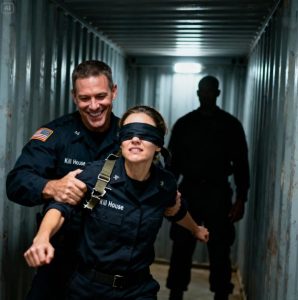
Among the displaced and the weary, two figures moved carefully through the dust. One was a young local man, hardened by months of conflict but still holding on to a spark of hope. The other was a volunteer from halfway across the world, sent to provide aid, medical care, and, most importantly, a human connection in a place where so much had been lost. They met under a crumbling wall, voices low but urgent.
The young man carried with him the remnants of his life: a small notebook, photographs of family members who had been separated or lost, and a promise he had whispered to himself in the darkest hours. He did not know if the world outside this desert even remembered their plight, but he knew one thing: survival required trust, and trust required action.
The volunteer listened carefully as the man spoke. He told of villages destroyed overnight, of neighbors gone, and of the small acts of courage that had kept people alive. Despite the chaos, there was dignity in his words, a refusal to surrender entirely to despair. As the wind picked up, throwing grit into their eyes, they found shelter behind a collapsed wall and sat together, sharing stories of home, family, and dreams that had not yet died.
It was then that the promise was made. Not written. Not formal. Spoken in hushed tones, carried on the wind and the dust around them. The volunteer promised to help connect the young man with his surviving family members, to help carry their story to the world, and to ensure that the children, even in their suffering, would have a chance to remember kindness and hope. The young man promised to do everything he could to survive, to keep his family’s memory alive, and to trust that this stranger’s words were not empty.
Days turned into weeks. The volunteer navigated bureaucracies, war zones, and countless obstacles to honor that promise. Messages were sent, documents arranged, and slowly the pieces began to move. Each small victory felt monumental, a testament to the bond forged in the dust and despair of Syria. Letters traveled across continents, and video calls eventually allowed families separated by violence to see one another’s faces again.
Meanwhile, the young man worked tirelessly to ensure the children in his care were fed, educated, and given moments of joy. He told them stories not just of sorrow but of resilience. He spoke of the stranger who had promised to help, instilling faith that even when the world seemed broken, promises could be kept.
Months later, when the first reunion finally took place, it was emotional beyond words. Families embraced, tears flowed freely, and children clung to parents they had feared lost forever. The volunteer stood quietly, watching from the side, knowing that the journey was far from over but that the core of the promise had been honored.
The experience left an indelible mark on everyone involved. The young man carried the knowledge that trust and commitment could span oceans, cultures, and languages. The volunteer returned home, forever changed by the resilience and courage witnessed in the Syrian dust.
Years later, the promise continued to ripple outward. The children grew with stories of hope and perseverance, the families stayed connected across borders, and the bond between two strangers forged in crisis remained unbroken. A simple promise, made quietly in the dust of a war-torn land, had endured, proving that even in the most devastating circumstances, human connection can transcend continents, conflicts, and time itself.