The small community center was bustling with noise that afternoon. People came in for free classes, workshops, and the warm meals served by volunteers every Thursday. It was a lively place children running around, adults chatting about their week, and retirees catching up over tea.
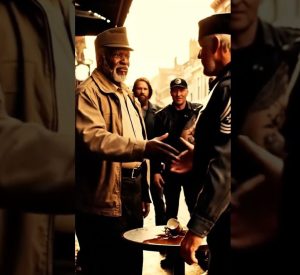
Everyone knew everyone, or at least felt like they did. But that sense of familiarity was challenged the moment the door creaked open.
A man walked in quietly, his clothes worn, his posture tired. His hair was messy, and he carried a backpack that looked older than he was. The noise in the room didn’t stop completely, but it changed. Conversations slowed. A few people exchanged uncomfortable glances.
Without saying a word, the man walked toward the registration table.
Whispers Begin
Before he even reached the desk, whispers spread like a breeze through the room.
“Who is he?”
“He looks like trouble…”
“Probably here to ask for money.”
“I hope he’s not dangerous.”
No one had spoken to him. No one knew his intentions. But assumptions filled the space around him like a fog.
A volunteer stepped forward nervously. “Hello, can I help you?” she asked cautiously, the polite tone barely hiding her unease.
The man nodded. “I’m here for the afternoon workshop. Is there still room?”
His voice was gentle. He smiled politely. But people kept staring.
A Silent Judgment
The workshop that day was a computer basics class—mostly seniors wanting to learn how to send emails or use online banking. When the man sat down in the back, a couple moved their chairs closer together, leaving a visible gap between themselves and him. Another woman clutched her purse tighter.
The instructor, Mr. Collins, noticed the tension. He welcomed the man warmly, but even he looked confused. The stranger simply sat quietly, hands folded, waiting for the class to start.
Then something surprising happened.
The First Sign Something Was Different
When Mr. Collins began explaining how to create an email account, several people struggled, typing slowly or pressing the wrong keys. The man in the back watched patiently. After a few minutes, he stood up and approached an elderly woman whose hands were trembling as she tried to type.
“May I help?” he asked softly.
She hesitated—but nodded.
Within seconds, he guided her through each step with calm clarity. He showed her shortcuts, explained security warnings, and patiently repeated things when she forgot. She smiled, relieved.
Other seniors saw this and started calling him over too. Soon, he was floating from desk to desk, helping everyone—even faster than the instructor.
The room began to soften. Suspicion faded into curiosity.
Who Was This Man?
At the end of the class, Mr. Collins approached him.
“You’re incredibly skilled,” he said. “Have you worked with computers before?”
The man nodded slowly, as if unsure whether to share more.
“I was… a software engineer,” he answered quietly. “For nearly twelve years.”
The Truth Changes Everything
The elderly woman he helped earlier walked up to him, eyes filled with warmth.
“You’re not alone,” she said. “We all go through storms. Thank you for helping us.”
Another participant added, “I judged you. I’m sorry. Truly.”
The man shook his head gently. “It’s okay. We’re taught to fear what we don’t understand.”
His kindness made the guilt hit even deeper.
Mr. Collins stepped forward and said the words that changed the tone in the room entirely:
“How would you feel about teaching a class here? We could use someone like you.”
The man’s eyes widened. “Teach? Me?”
“Yes,” Collins said confidently. “You have talent—and a good heart. That’s more than enough.”