The room was quiet except for the soft hum of classical music drifting from a small stereo in the corner. Parents waited anxiously, glancing nervously at the clock on the wall
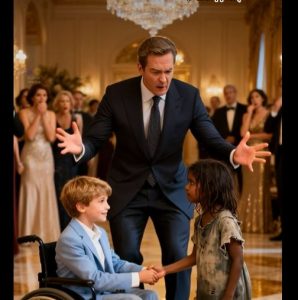
The clinic had seen many miracle stories, but today, hope was hanging by a thread. A young boy named Mateo sat in his wheelchair at the center of the room. He was eight years old, bright-eyed, and full of life, but he hadn’t been able to walk since a tragic accident two years earlier. His parents, Sofia and Javier, had exhausted every conventional therapy available, yet progress had been minimal.
Her name was Isabella, a dance therapist renowned for her unconventional methods. She was petite, with expressive eyes and a commanding presence, and when she entered the room, the air seemed to shift. Isabella didn’t wear a lab coat or carry medical charts. Instead, she carried confidence, warmth, and an unshakable belief that movement, emotion, and rhythm could heal the body in ways science alone sometimes could not.
Sofia and Javier looked at each other skeptically. They had seen so many specialists promise miracles, only to leave with disappointment. Yet there was something about Isabella—her calm assurance, the way she spoke directly to Mateo, the spark of possibility in her eyes—that made them pause.
Isabella smiled knowingly. “It’s not about forcing his legs. It’s about finding the movement within him, awakening the rhythm his body has forgotten. Tango is about connection, trust, and momentum. Sometimes, the mind just needs a spark to remind the body what it is capable of.”
Sofia’s heart ached at the thought of trying one more time, of placing hope in something so unusual. But seeing Isabella’s confidence, the subtle way she knelt to Mateo’s level and spoke to him as an equal, she nodded. “We’ll try,” she said, voice trembling.
Isabella approached Mateo slowly, holding out her hand. “Would you dance with me?” she asked. Mateo hesitated, uncertainty clouding his face. He had been through countless therapies, and none had worked. But there was something different in Isabella’s gaze, a kind of magic that felt inviting rather than intimidating. Slowly, he reached out and took her hand.
The music shifted, a slow, deep tango filling the room. Isabella guided Mateo gently, rocking him in rhythm with the music. At first, his legs remained still, dangling limply from the wheelchair. But Isabella moved with him, coaxing tiny shifts in his weight, subtle contractions in muscles he hadn’t used in years. She whispered encouragement, not commands, letting him feel the rhythm, the motion, and the connection between them.
Minutes passed, and something remarkable began to happen. Mateo’s feet twitched slightly. His knees bent and straightened almost imperceptibly, but enough that Isabella noticed and adjusted her movements to support him. The room held its breath. Parents and therapists watching through the glass wall exchanged amazed glances. Could this really be happening?
Then, slowly, astonishingly, Mateo shifted his weight forward. Isabella steadied him, her hands firm but gentle, and he planted his feet on the floor. A gasp echoed through the room. For the first time in two years, Mateo’s toes touched solid ground. He wobbled, unsure, but Isabella’s steady rhythm kept him balanced.
Mateo’s eyes widened. A smile broke across his face, a mix of disbelief and joy. The tango continued, slow and deliberate, as he took small steps forward. Each movement grew bolder, more confident. Isabella guided him through turns, gentle pivots, and glides, using the dance not just to move his legs but to awaken his courage.
Sofia and Javier could hardly contain themselves. Tears streamed down their faces as they watched their son, who had been confined to a wheelchair for years, take step after step with grace and growing confidence. Other parents in the clinic clapped softly, astonished by the transformation unfolding before them.
By the end of the session, Mateo could stand independently for a few seconds. The dance had ignited something within him—muscles responding, balance returning, and most importantly, a spark of hope he had not felt in years. Isabella smiled, knowing this was only the beginning, but the breakthrough was undeniable.
In the weeks that followed, Mateo’s progress accelerated. Dance sessions became regular therapy, blending rhythm, emotion, and movement. He began to walk longer distances, then run, laugh, and even dance for fun. The tango, once thought of as merely a performance, had become a bridge between limitation and freedom, teaching Mateo to trust his body and himself.