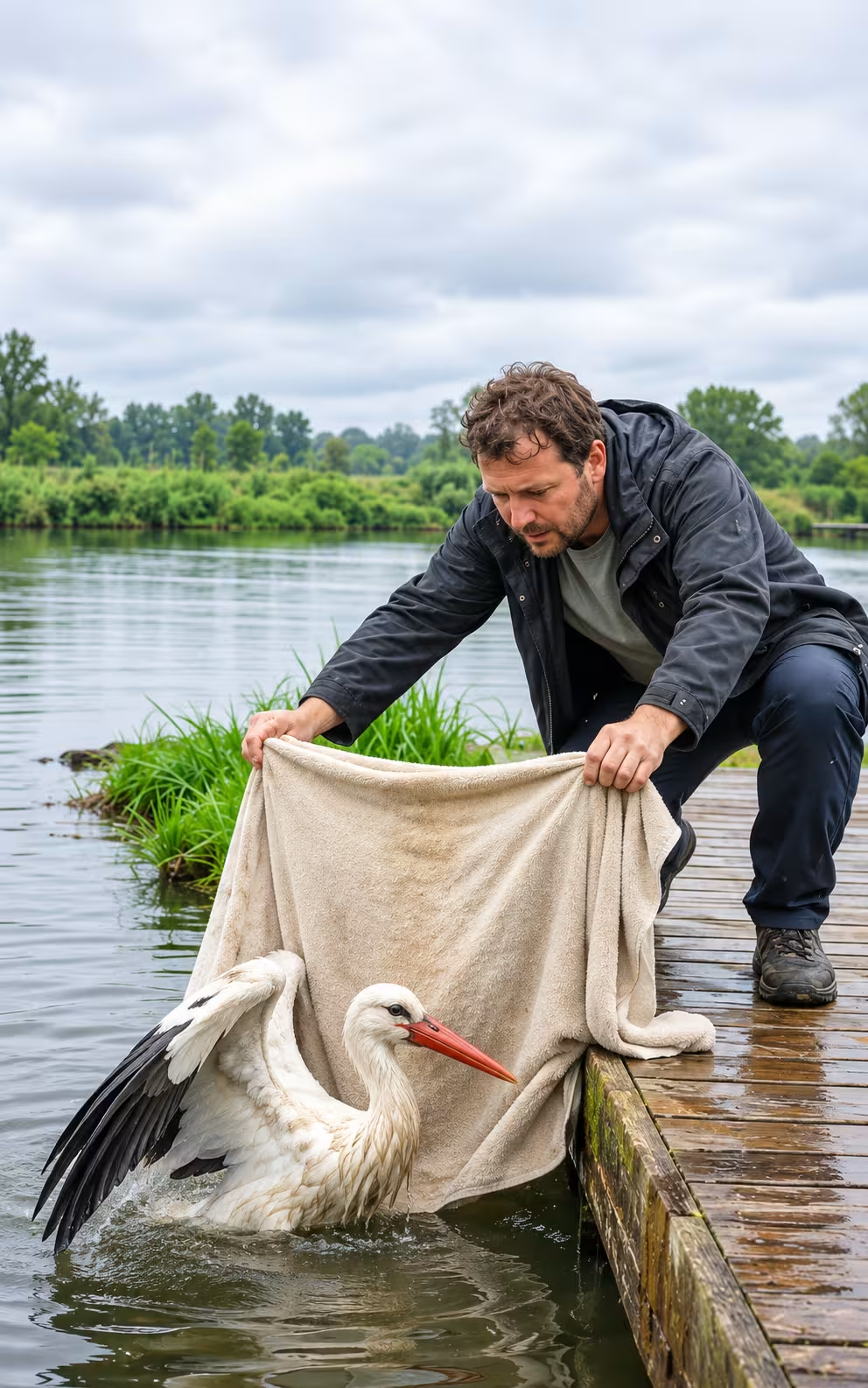
The morning was quiet when a man noticed a large white bird struggling near the edge of a pond.
Its long wings occasionally moved across the water, but it appeared unable to reach the grassy bank.
The man stopped walking and carefully observed the bird’s movements.
He recognized it as a stork, a familiar visitor to the surrounding countryside.
Concerned about its condition, he contacted a local wildlife rescue organization for guidance.
He then retrieved a clean towel from his nearby vehicle and returned to the pond.
The stork remained in the water as the man considered how to provide assistance without causing additional distress.
A Peaceful Morning in the Countryside
Forty-eight-year-old Andrew Miller enjoyed spending his mornings outdoors near his countryside home.
A large pond surrounded by open grassland was located within walking distance of his property.
The area attracted numerous birds throughout the changing seasons.
Andrew frequently observed ducks, herons, and storks while following the nearby walking paths.
He particularly enjoyed watching the larger birds move gracefully across the surrounding fields.
That morning, he decided to visit the pond before beginning his usual household responsibilities.
Recent rainfall had increased the water level and softened sections of the surrounding bank.
Andrew walked slowly along the familiar pathway, enjoying the fresh morning air.
As he approached the pond, he noticed an unusual movement near the shoreline.
A large white bird appeared to be resting partially in the water.
Andrew initially assumed it was searching for food beneath the surface.
However, its repeated attempts to move toward the bank suggested otherwise.
He stopped beside the pathway and began observing the bird more carefully.
Discovering the Stork’s Difficult Situation
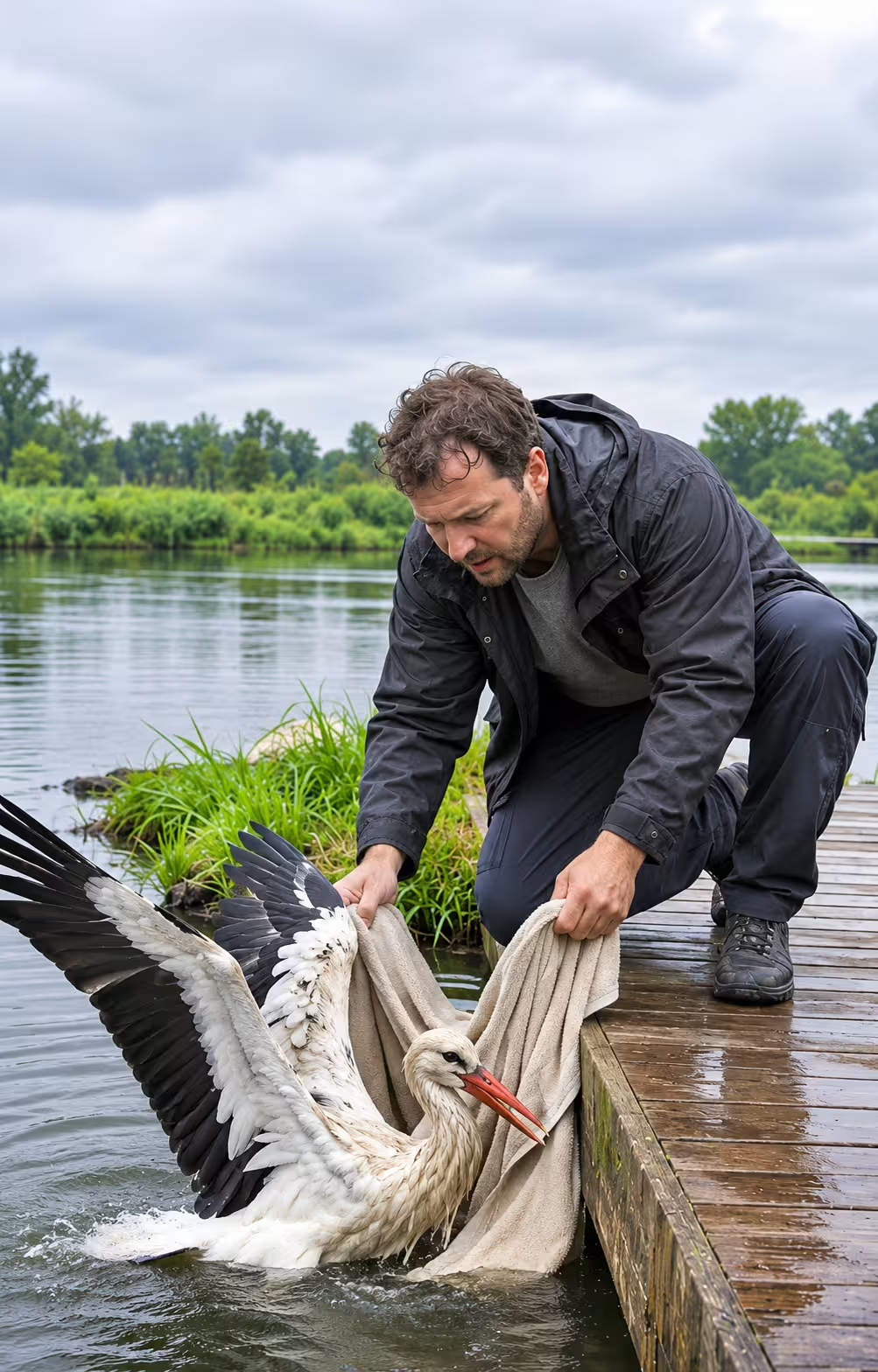
Andrew recognized the bird’s distinctive white feathers, long legs, and elongated beak.
The stork was positioned near a section of the pond bordered by slippery soil.
Whenever it attempted to move onto the bank, its feet appeared to lose their footing.
Its wet feathers seemed to make movement increasingly difficult.
Andrew could not determine exactly how the bird had entered the water.
However, he noticed that its movements were becoming less frequent.
He understood that wild birds could become frightened when approached by unfamiliar people.
Rather than immediately attempting to handle the stork, he contacted a nearby wildlife rescue organization.
A representative listened carefully as Andrew described the bird and its surroundings.
Andrew explained that the stork remained responsive but appeared unable to reach dry ground.
The representative arranged for a trained wildlife responder to visit the location.
Meanwhile, Andrew continued monitoring the bird from a respectful distance.
He hoped the stork would remain sufficiently alert until assistance became available.
Preparing a Towel to Assist the Bird
As several minutes passed, the stork continued attempting to move toward the grassy shoreline.
Andrew noticed that the bird occasionally rested its wings against the water.
He updated the wildlife representative about its apparent fatigue.
The representative explained that any intervention needed to prioritize both personal safety and the bird’s well-being.
Andrew had previously participated in community wildlife conservation activities and understood the importance of careful handling.
He remembered keeping several clean towels inside his vehicle for outdoor activities.
After confirming that the stork remained near the shoreline, he briefly returned to collect one.
The towel was large enough to provide gentle support during a supervised recovery.
When Andrew returned, the bird was still positioned near the same section of the bank.
The wildlife representative continued providing guidance while the responder traveled toward the pond.
Andrew identified a stable area of ground near the bird’s location.
He prepared to assist without entering deep water or making sudden movements.
Lifting the Stork From the Water and Onto the Grass
Following professional guidance, Andrew carefully approached the accessible section of the shoreline.
The stork noticed his presence but remained relatively still.
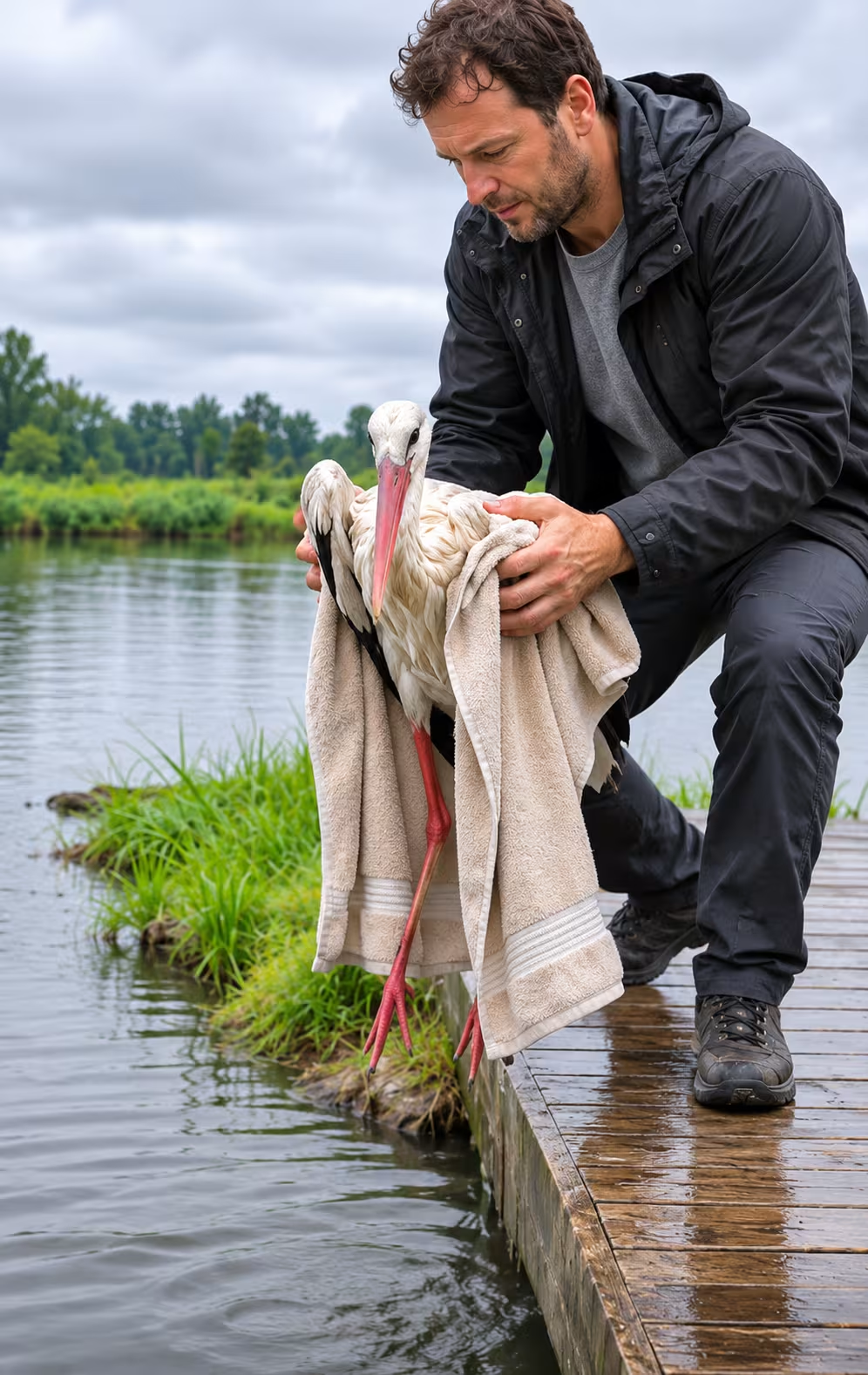
Andrew used the clean towel to gently support the bird while minimizing unnecessary handling.
He remained attentive to its movements throughout the brief recovery.
With careful assistance, he lifted the stork away from the water.
Its long legs extended slightly as droplets fell from its wet feathers.
Andrew carried the bird a short distance toward a dry section of grass.
He gently placed it on the ground and removed the towel.
The stork remained still for several moments while adjusting to its surroundings.
Andrew immediately stepped back to provide the bird with sufficient space.
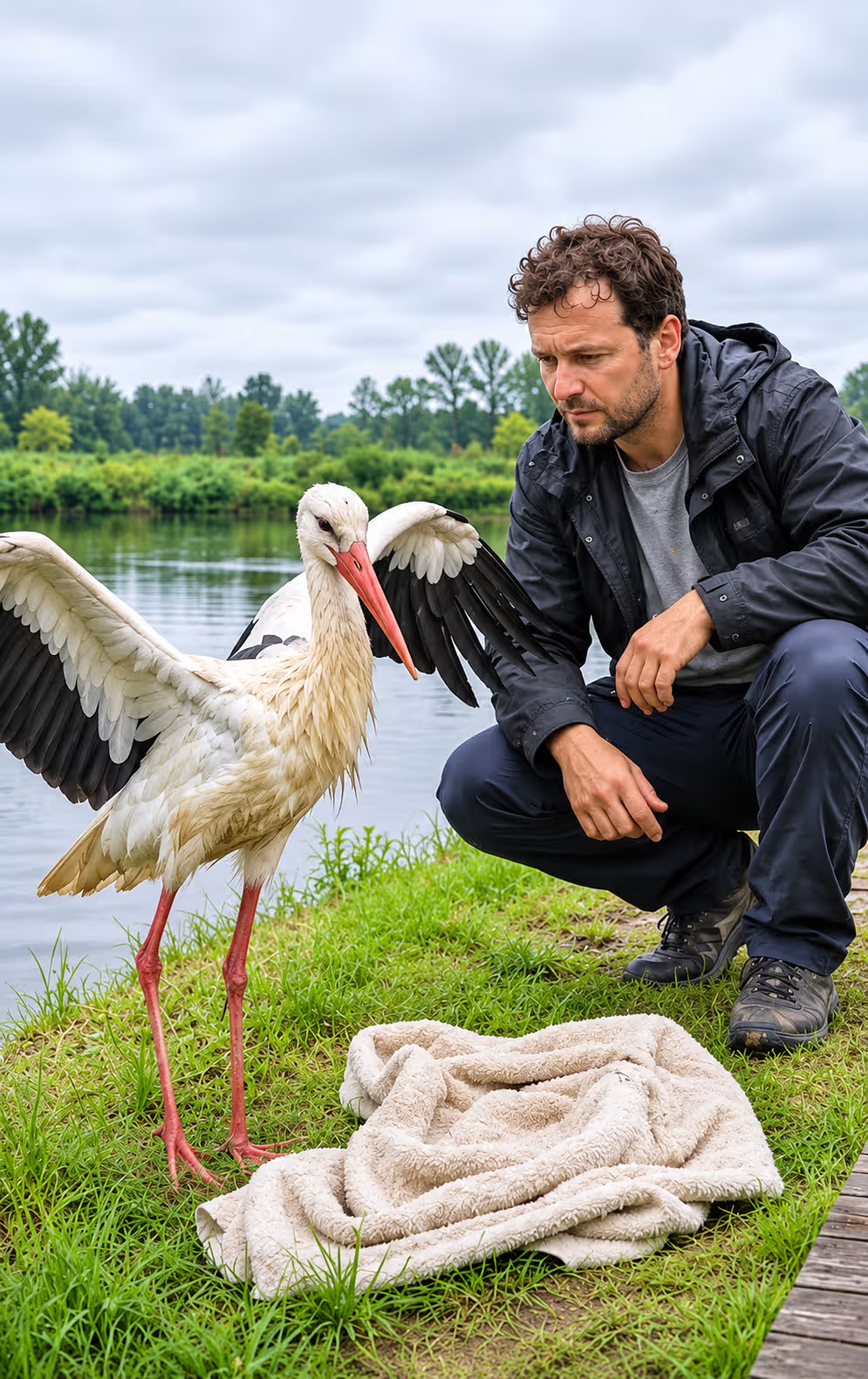
It gradually raised its head and began repositioning its wings.
The morning sunlight warmed the grassy area where the bird was resting.
Andrew watched quietly as the stork began supporting itself on its long legs.
Its movements appeared increasingly steady as it recovered from the experience.
For the first time that morning, the bird was standing comfortably on dry ground.
Watching the Stork Spread Its Wings
The wildlife responder arrived shortly afterward and observed the stork from a suitable distance.
Andrew explained how he had discovered the bird and assisted it onto the grass.
The specialist noted that the stork appeared alert and was moving independently.
They agreed to minimize disturbance while allowing the bird to recover naturally.
After resting for several minutes, the stork began walking across the grassy bank.
It occasionally paused to adjust its feathers and extend its wings.
Andrew watched with growing relief as its movements became more confident.
The bird eventually reached an open section of grass away from the pond.
It spread its large wings and lifted itself into the morning air.
Andrew followed its flight as it passed above the surrounding countryside.
The stork continued flying toward a distant field before disappearing beyond the trees.
The wildlife responder was encouraged by its steady flight and natural movements.
Andrew smiled, pleased that the bird had been able to continue its journey independently.
A Meaningful Reminder About Caring for Wildlife
During the following weeks, Andrew continued visiting the pond during his morning walks.
He occasionally observed storks feeding in the surrounding fields and resting near the shoreline.
Although he could not identify the individual bird he had assisted, their presence brought back pleasant memories.
The experience encouraged him to become more involved in local conservation activities.
He joined several volunteers who regularly inspected the area and collected discarded litter.
Their efforts helped maintain a cleaner environment for the wildlife visiting the pond.
Andrew also shared his experience with neighbors who enjoyed spending time outdoors.
He emphasized the importance of seeking professional guidance when encountering animals that appeared to need assistance.
In this fictional story, a man discovered a stork unable to leave the water independently.
Using a towel and following professional guidance, he lifted the bird onto the surrounding grass.
After resting and regaining its strength, the stork spread its wings and flew away.
The encounter demonstrated how patience, responsible assistance, and respect for wildlife could make a meaningful difference.
A quiet morning beside the pond became a lasting memory of kindness as a beautiful stork regained its strength and returned to the open sky.