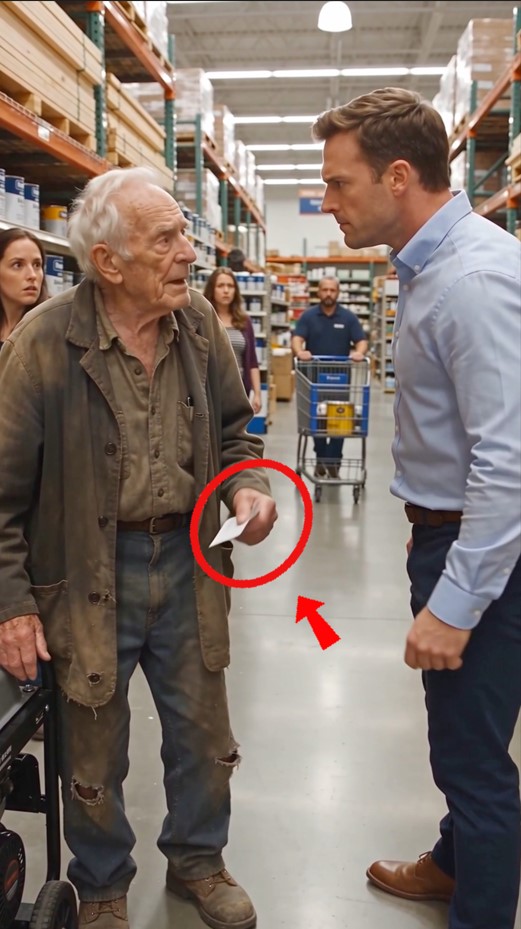
The afternoon crowd filled Harrison’s Department Store as customers searched the shelves for discounted household essentials.
Near the clothing section, an elderly man named Thomas Bennett stood quietly beside a display of winter jackets.
His brown coat was faded, his shoes were scuffed, and the sleeves of his sweater had begun to unravel.
He held a small shopping basket containing a pair of socks, a loaf of bread, and a package of batteries.
Thomas had spent years working as a maintenance technician, but since retiring, he had learned to stretch every dollar carefully.
As he examined a jacket on the rack, a store employee named Brian Mitchell approached him with an irritated expression.
“Sir, you can’t just stand here touching everything,” Brian said loudly.
Thomas turned around, surprised.
“I was only looking at the price.”
Brian glanced at his worn clothes and smirked.
“Then maybe you should look somewhere more appropriate for your budget.”
Several customers turned toward them.
Thomas lowered his eyes, gripping the shopping basket as the humiliation settled over him.
The Customer Nobody Wanted to Notice
Thomas Bennett was seventy-six years old and had lived in the same modest neighborhood for more than four decades.
He had spent most of his working life repairing heating systems, electrical fixtures, and broken equipment in public buildings.
His hands were still steady, although arthritis had begun making some tasks difficult.
After his wife, Margaret, passed away three years earlier, Thomas had become accustomed to living alone.
His pension covered his rent, utilities, medication, and groceries, but there was little left for new clothes or unexpected expenses.
The brown coat he wore had belonged to his older brother.
Thomas had repaired a loose button himself and carefully stitched a tear near the pocket.
He didn’t consider himself poor in spirit or unfortunate in life.
He was simply trying to manage with what he had.
That afternoon, he had visited Harrison’s Department Store to buy a few necessities and look for an affordable winter jacket.
He had noticed a dark blue coat displayed near the entrance, but the price tag was higher than he could comfortably afford.
He moved to another rack, hoping to find something discounted.
That’s when Brian Mitchell approached him.
Brian was a floor supervisor in his late twenties who took pride in the store’s polished appearance.
Unfortunately, he often judged customers by their clothing and assumed that anyone who looked financially comfortable deserved more attention.
When Thomas asked whether another size was available, Brian barely listened.
“Those jackets aren’t cheap,” he said. “You might want to check the clearance section.”
Thomas nodded politely.
“I was planning to.”
Instead of directing him toward the discounted items, Brian continued watching him suspiciously.
Thomas felt uncomfortable but decided not to argue.
He had come to buy a few things, not to spend his afternoon defending himself.
An Insult That Went Too Far
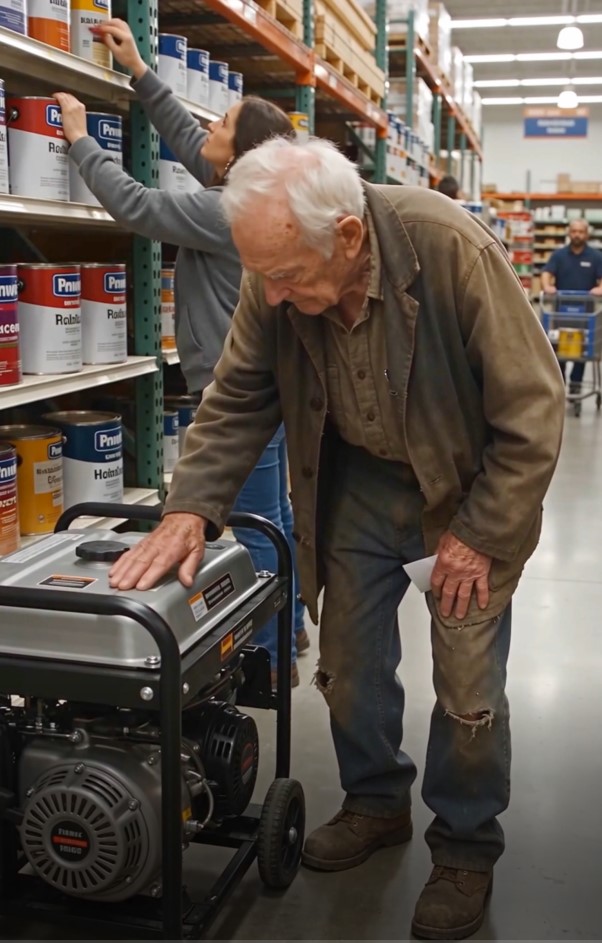
Thomas eventually found a gray jacket on a clearance rack.
The fabric was simple, the stitching looked sturdy, and the price was within his budget.
He checked the sleeves and examined the zipper before carrying it toward the nearby counter.
Brian followed him.
“Are you actually buying that?” the supervisor asked.
Thomas looked at him, confused.
“Yes, if it fits.”
Brian gave a short, dismissive laugh.
“People spend an hour trying things on and then leave everything behind. We have real customers waiting.”
Thomas glanced around.
There were only two people near the counter, and neither appeared to be waiting for assistance.
“I haven’t tried anything on,” Thomas replied calmly. “I only wanted to check the size.”
Brian raised his voice.
“Then stop wasting my time.”
A woman examining scarves turned toward them.
Another customer lowered his phone, clearly uncomfortable with the exchange.
Thomas’s shoulders tightened.
“I haven’t done anything wrong,” he said.
Brian pointed toward the entrance.
“If you aren’t planning to spend much, don’t expect us to give you special attention.”
Thomas looked down at the jacket in his hands.
He had worked for nearly fifty years without asking anyone to treat him as more important than another person.
He had repaired broken boilers during freezing winters, stayed late when public buildings needed emergency work, and helped neighbors who couldn’t afford repairs.
Yet here he was, being treated as though his appearance made him less deserving of ordinary courtesy.
“I only asked about a jacket,” Thomas said quietly.
Brian shrugged.
“And I answered you.”
Thomas considered putting the jacket back and leaving.
He didn’t want to cause a disturbance, and he certainly didn’t want strangers watching him struggle to preserve his dignity.
He placed the jacket over his arm and started toward the counter anyway.
Brian stepped in front of him.
“Let me see what’s in your basket first.”
Thomas stared at him.
“Why?”
“Because I need to make sure you’re not taking anything you haven’t paid for.”
The accusation was made loudly enough for several nearby customers to hear.
Thomas’s face reddened.
He had not stolen anything.
For a moment, he couldn’t find the words to respond.

Another Customer Refuses to Stay Silent
A man named David Reynolds had been browsing the hardware section when he heard Brian’s raised voice.
David was forty-five years old and managed a small construction company.
He had entered the store to purchase replacement batteries and a few tools for a project scheduled the following morning.
At first, he assumed the employee was dealing with a routine problem.
Then he heard the accusation against Thomas.
David looked toward the counter and saw an elderly man standing still, his shopping basket held close to his body.
Brian was speaking to him as though guilt had already been established.
David walked over.
“Excuse me,” he said. “What’s happening here?”
Brian turned toward him.
“I’m handling a store matter.”
David glanced at Thomas and then at the items in his basket.
“Did you see him take anything?”
Brian hesitated.
“I said I was checking.”
“That’s not what I asked.”
The surrounding customers grew quiet.
Thomas looked at David with a mixture of surprise and uncertainty.
He wasn’t accustomed to strangers getting involved in uncomfortable situations.
Brian folded his arms.
“Sir, I don’t need you interfering with my work.”
David remained calm.
“Then do your work professionally. You accused this man of stealing without explaining what you actually saw.”
Brian’s expression hardened.
“You don’t know the whole situation.”
“You’re right,” David replied. “But I’ve heard enough to know that insulting someone because of his clothes isn’t acceptable.”
Thomas attempted to speak.
“Please, I don’t want anyone getting into trouble because of me.”
David turned toward him.
“You haven’t done anything wrong by asking for help.”
Those words seemed to release some of the tension Thomas had been holding.
He straightened his shoulders and placed the jacket on the counter.
“I would like to buy this, please,” he said.
Brian looked between the two men, visibly irritated that the conversation was no longer under his control.
David stayed beside Thomas, making it clear that the elderly customer would not have to face the confrontation alone.
The Store Manager Arrives
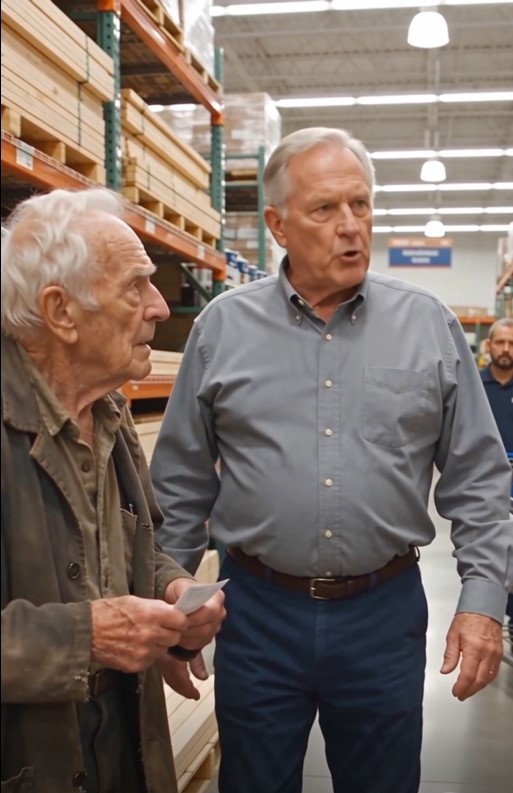
The noise attracted the attention of the store manager, Susan Miller.
She approached the counter and asked why several customers had gathered.
Brian immediately began explaining his version of events.
He claimed that Thomas had been wandering around the store without making a purchase and that he had needed to verify the contents of his basket.
Susan listened before turning toward Thomas.
“Sir, could you tell me what happened from your perspective?”
Thomas explained that he had been looking for an affordable jacket when Brian began making comments about his appearance.
He described the accusation and the demand to inspect his basket.
David confirmed what he had witnessed.
He also pointed out that Brian had publicly questioned Thomas’s intentions without presenting any evidence of wrongdoing.
Susan’s expression grew serious.
She asked Brian whether he had actually seen Thomas conceal or remove any merchandise.
Brian looked toward the floor.
“No, but I thought he might have been—”
“Based on what?” Susan asked.
Brian didn’t answer immediately.
Susan explained that store employees were expected to address legitimate concerns respectfully and follow established procedures.
A customer’s worn clothes were not evidence of misconduct.
She apologized directly to Thomas.
“I’m sorry you were treated this way,” she said. “You came here to shop, and you deserved the same courtesy as anyone else.”
Thomas nodded, still visibly shaken.
“Thank you. I don’t want special treatment. I only want to be treated fairly.”
Susan assured him that he would receive it.
She then asked another employee to complete his purchase so that Brian would not continue handling the transaction.
David stayed nearby while Thomas paid for the jacket and his other items.
The total came to less than Thomas had expected, and he carefully placed the receipt inside his wallet.
Man Treats an Elderly Customer Unfairly at a Store, Until Another Man Steps In https://t.co/tyuR0lrvVg
— Animal Rescue Stories (@AnimalStory5) October 17, 2026
A Lesson That Changed the Store
Several days later, Susan completed her review of the incident.
She spoke with the employees who had witnessed the exchange and reviewed the store’s procedures for suspected shoplifting.
Brian was formally counseled for his conduct and required to complete additional customer-service training.
Management also clarified that concerns about theft had to be handled through appropriate procedures rather than unsupported public accusations.
Brian later apologized to Thomas in a private conversation arranged by Susan.
His apology was uncomfortable but direct.
He acknowledged that he had made assumptions based on Thomas’s appearance and had spoken to him disrespectfully.
Thomas accepted the apology without pretending that the experience had been pleasant.
“I hope you treat the next person differently,” he told him.
Brian nodded.
Thomas returned to the store a few weeks later to purchase a household item.
This time, an employee greeted him warmly and helped him locate what he needed.
Nobody commented on his coat or questioned whether he belonged there.
Meanwhile, Thomas and David spoke again about the possibility of occasional consulting work.
David eventually invited Thomas to visit one of his company’s renovation projects and share his knowledge with the younger technicians.
Thomas agreed to meet the team, pleased to discover that his experience could still be useful.
The arrangement developed gradually, with no dramatic promises or sudden change in his circumstances.
It simply gave Thomas another opportunity to contribute in a field he understood well.
As for David, he continued thinking about the afternoon at Harrison’s Department Store.
He had not intervened because he expected a reward or a new friendship.
He had stepped forward because a man was being humiliated for something as meaningless as the condition of his clothes.
And he understood that dignity should never depend on how much money someone had or what they wore.
That afternoon, David reminded everyone watching that a person’s worn-out clothes reveal nothing about the worth of the person wearing them.