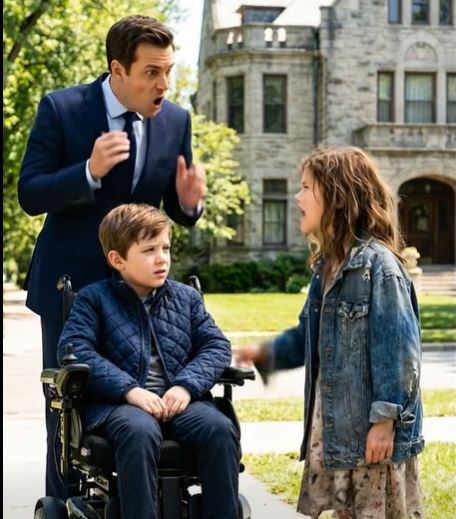
My name is Lila Moreau. I lived in a quiet suburban house with white walls and perfect lawns that hid the ugliest kind of violence. My stepfather, Victor, was a tall, successful accountant who smiled at neighbors and coached my younger brother’s soccer team.

Behind closed doors, he was a monster who treated me like his personal punching bag. The beatings started when I was nine, shortly after he married my mother. At first they were “accidents” — a shove here, a slap there.
Then they became routine. Every day after school, like clockwork, he would find a reason: I hadn’t cleaned fast enough, I looked at him the wrong way, I breathed too loudly. He enjoyed it. I could see it in his eyes — the sick pleasure he took in watching me flinch.
My mother knew. She always knew. But she was terrified of losing the comfortable life he provided — the big house, the nice car, the status. So she became his accomplice. She covered for him with teachers, neighbors, and doctors. “Lila is so clumsy,” she would say with a nervous laugh. “Always falling or running into things.” I learned early not to cry, not to scream, not to fight back. Fighting back only made it worse.
That particular afternoon in October, Victor came home in a bad mood. I had forgotten to take the trash out before he arrived. He dragged me into the garage by my hair and started hitting me with his belt. When I tried to protect my head, he grabbed my arm and twisted it violently. The crack was loud enough that even he paused for a second. Pain exploded through my body. I screamed, but he clamped his hand over my mouth.
“Shut up,” he hissed. “Or I’ll give you something to really cry about.”
My mother drove me to the hospital herself. She was pale and shaking, but her voice was steady when she spoke to the nurse at the front desk.
“She fell off her bike,” she said, not meeting anyone’s eyes. “She was going too fast down the hill. You know how kids are.”
I sat there in the waiting room, cradling my swollen, deformed arm, tears streaming silently down my face. I didn’t contradict her. I had learned long ago that telling the truth only brought more pain later, when we got home.
They took me back to an examination room. The doctor who walked in was a tall man in his forties with kind eyes and a calm, steady voice. His name tag read Dr. Michael Reeves. He examined my arm gently, asking me questions about how the “accident” happened. I gave the same story my mother had told — the bike, the hill, the fall. But when he looked at the bruises on my back, my neck, and the older scars on my legs that my shorts couldn’t completely hide, something in his expression changed.
He asked my mother to step outside for a moment so he could speak with me privately. She hesitated, but eventually left.
Dr. Reeves sat on the stool beside the bed and looked me straight in the eyes.
“Lila,” he said softly, “I need you to tell me the truth. Did you really fall off your bike?”
I started to repeat the lie, but my voice broke. The pain in my arm was unbearable, and the weight of years of fear suddenly felt too heavy to carry alone. I shook my head slowly.
“No,” I whispered.
He didn’t push me for details right away. Instead, he picked up the phone on the wall and dialed three numbers I knew too well.
“112, what is your emergency?” the operator answered.
“This is Dr. Michael Reeves at Memorial Children’s Hospital. I have a twelve-year-old girl with a broken arm and multiple injuries inconsistent with her reported story. I have strong reason to believe this is a case of ongoing physical abuse by a family member. I need child protective services and law enforcement here immediately.”
My mother burst back into the room when she heard the words “child protective services.” She started crying and pleading, telling the doctor he was mistaken, that I was dramatic, that I fell all the time. But Dr. Reeves didn’t waver. He stayed with me the entire time, holding my good hand while we waited for the authorities to arrive.
What followed was a blur of police officers, social workers, and questions. I finally told the truth — everything. The daily beatings. The way Victor enjoyed it. The way my mother covered for him. The broken bones that had been explained away as clumsiness. The nights I cried myself to sleep praying someone would notice.